Advertisement
Advertisement
March/April 2024
Balloon Pulmonary Angioplasty in CTEPH and CTEPD: Where Is This All Going?
BPA is a promising therapeutic option for inoperable CTEPH, a highly disabling consequence of PE; however, randomized controlled trials are needed to assess its ultimate benefits.
By Riyaz Bashir, MD, FACC, RVT; William R. Auger, MD, FCCP; and Kenneth Rosenfield, MD, MHCDS
Pulmonary embolism (PE) survivors frequently develop long-term exercise intolerance that markedly impairs their quality of life (QOL).1-3 Post-PE disability affects 25% to 50% of PE patients. This includes chronic thromboembolic pulmonary hypertension (CTEPH), defined as pulmonary hypertension (PH) with a resting mean pulmonary artery pressure (PAP) of > 20 mm Hg secondary to chronic thromboembolic disease.4 This long-term complication of acute PE occurs in approximately 4% of survivors.5 A more common cause of long-term disability related to PE is called chronic thromboembolic pulmonary disease (CTEPD), previously referred to as chronic thromboembolic disease (CTED). Although accurate long-term follow-up data are lacking, CTEPD is estimated to be present in up to 16% of PE survivors. CTEPD patients have normal resting hemodynamics but abnormal exercise hemodynamics and/or gas exchange parameters. Most CTEPH and CTEPD patients are disabled by their symptoms. In CTEPH patients with surgically accessible disease, surgical pulmonary thromboendarterectomy (PTE) is the first-line therapy. However, up to 40% of patients are deemed inoperable due to either comorbidities or disease in distal, surgically inaccessible vessels. Furthermore, 30% to 50% of patients continue to have exercise intolerance after PTE, despite ongoing medical therapy. Balloon pulmonary angioplasty (BPA), which involves dilation of the offending obstructive pulmonary artery lesions, is a novel revascularization therapy that is emerging as a promising therapeutic option for patients with inoperable CTEPH and for some patients with residual symptomatic disease after PTE.
CTEPH typically causes progressive symptoms of shortness of breath, fatigue, chest discomfort, dizziness, palpitations, and syncope. Some less common symptoms include hemoptysis, dry cough, exertional nausea, or vomiting. More advanced stages of CTEPH may result in the development of right ventricular (RV) failure, manifesting by jugular venous distension, hepatomegaly with abdominal distension from ascites, and bilateral lower extremity edema. If left untreated, untimely death related to progressive right heart failure has been observed, with 30% mortality at 3 years.6,7
CURRENT CTEPH AND CTEPD THERAPIES AND THEIR LIMITATIONS
PTE is a cardiovascular procedure involving deep hypothermia and periods of circulatory arrest, and it is currently considered first-line therapy for CTEPH patients with obstructive clots in vessels proximal enough to be accessed surgically. However, because most centers do not perform PTE surgery, accessibility for these patients is limited.
A recent study showed that only seven centers in the United States had performed > 50 of these surgeries over a 7-year period from 2012 to 2018.8 Additionally, approximately one-third of CTEPH patients have technically inoperable disease (ie, vessels too distal to endarterectomize), and up to 40% of patients with operable pathology are not treated with PTE due to severe comorbidities (high surgical risk), patient refusal, or residence in areas where advanced surgical facilities are challenging to access.6,9 Additionally, 30% to 50% of patients have residual or recurrent symptoms post-PTE.10 The therapeutic modalities for these inoperable patients include PH-targeted medical therapy, pulmonary rehabilitation,11 and organ transplantation.
Current guidelines recommend PH-targeted medical therapy in inoperable CTEPH patients, which has been shown to improve microvasculopathy but does not address the chronic, fibrotic, clot-related, large vessel obstructive component of CTEPH. PH-targeted medical therapy requires very expensive lifelong treatment,12 and many patients cannot tolerate these medications due to side effects.13 Therefore, there is an urgent need for new therapeutic approaches for these patients.
BPA: A THERAPEUTIC OPTION FOR INOPERABLE CTEPD AND CTEPH
BPA uses standard angioplasty techniques to dilate obstructed pulmonary arteries, restoring blood flow to the lung and alveolar tissues. The therapeutic option of BPA as an adjunct to PH-targeted medical therapy has generated enthusiasm among many United States institutions to offer BPA as a part of their pulmonary arterial hypertension programs. Instead of removing the organized fibrotic clot as with PTE surgery, BPA reestablishes lung perfusion by creating a channel through organized thrombotic material via reducing vascular narrowing from chronic fibrotic lesions. Depending on the extent of BPA-treatable target lesions, there can be significant reduction in pulmonary vascular resistance (PVR) and RV afterload, leading to improved RV function and size. Additionally, BPA can improve pulmonary parenchymal perfusion by reducing dead space ventilation (Figure 1 and Figure 2).
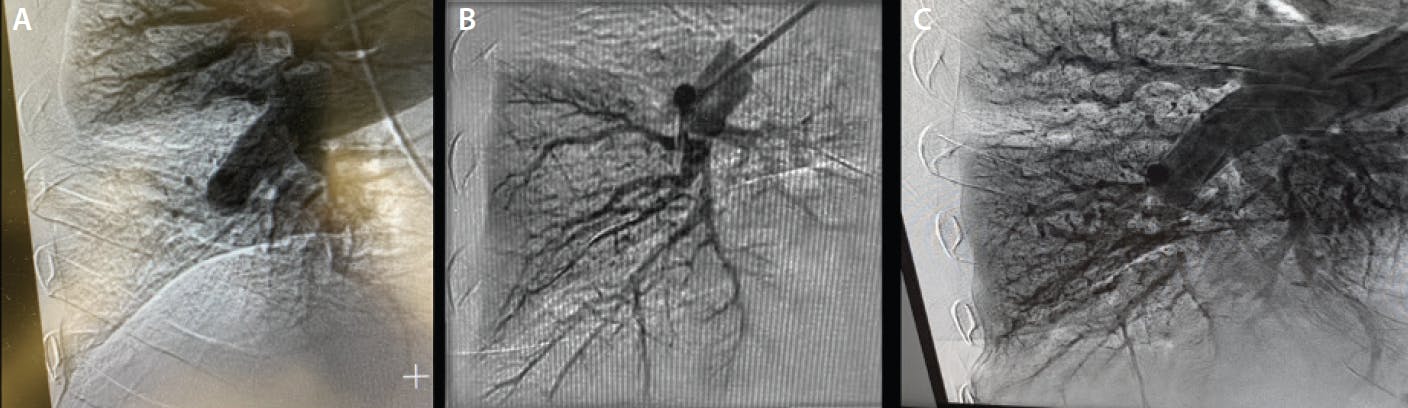
Figure 1. Right pulmonary angiogram showing lower lobe artery occlusion in a patient with severe comorbidities (A). Angiogram post-BPA showing revascularization of the lower pulmonary artery (B). Angiogram post-BPA showing restoration of the alveolar perfusion of the lower lobe (C).
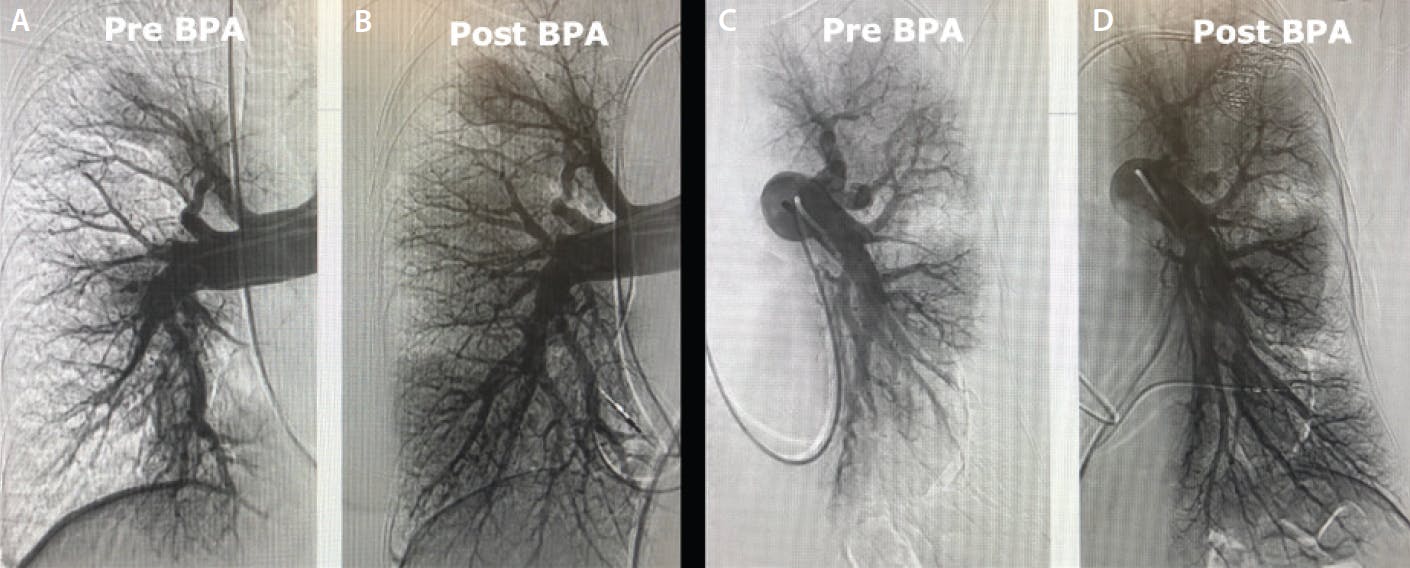
Figure 2. Pre- and post-BPA right pulmonary angiograms showing marked improvement in alveolar perfusion with BPA (A, B). Pre- and post-BPA left pulmonary angiograms showing a significant improvement in alveolar perfusion with BPA (C, D).
Efficacy of BPA in Inoperable CTEPH
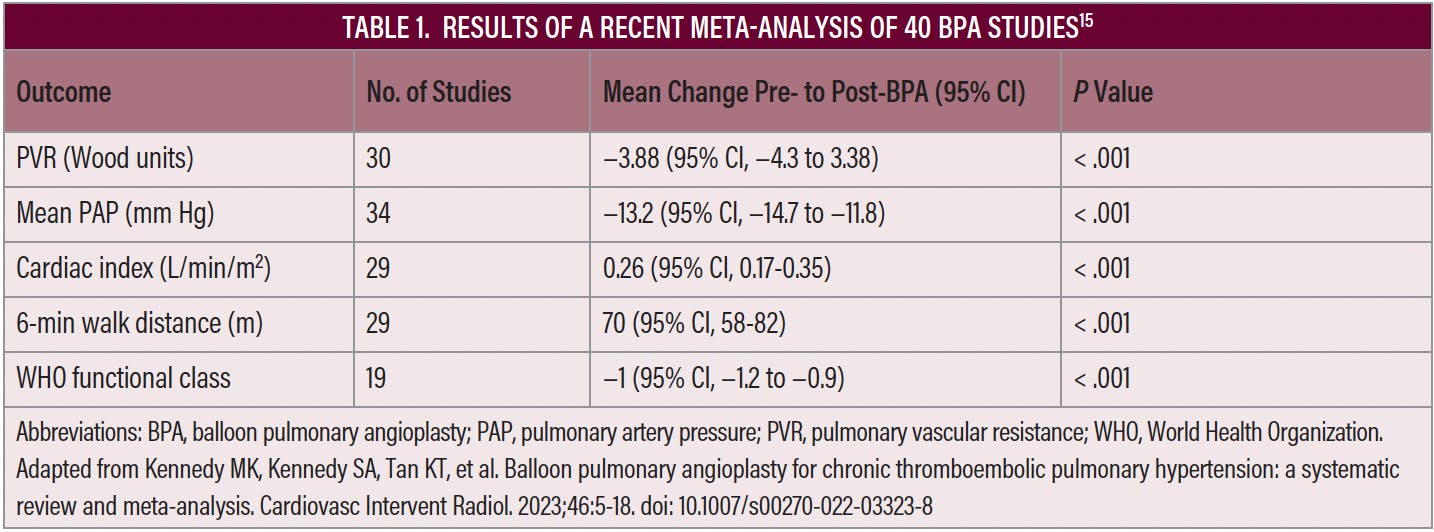
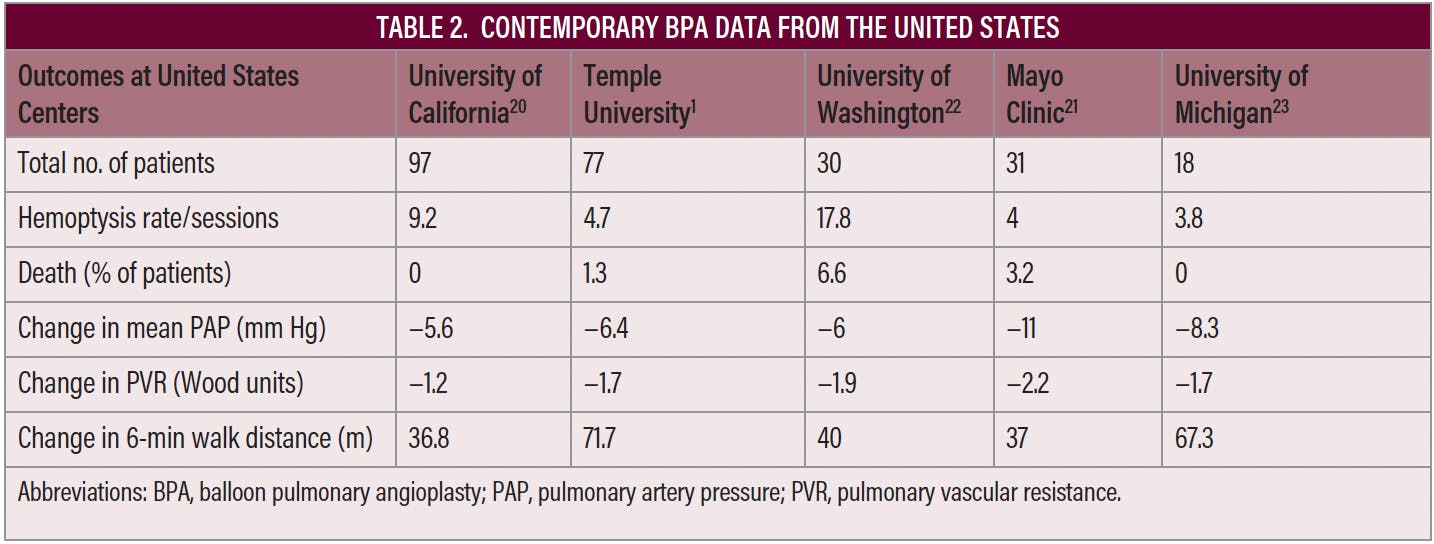
BPA outcomes have progressively improved since the initial report in 2000,14 mainly due to refinements in BPA technique, increased operator experience, and better patient selection. Observational studies have shown consistent improvements in hemodynamic and functional outcomes. In a recent meta-analysis, there was significant reduction in PVR by an average of 3.88 Wood units (P < .001) and improvement in 6-minute walk distance (6MWD) by 70 m (P < .001). World Health Organization (WHO) functional class improved by one class (P < .001) (Table 1).15 Patients undergoing BPA have demonstrated a survival rate of > 95% at 3 years compared to 77.4% in historical controls (P < .01).16,17 Published data from multiple United States centers show similar improvements in 6MWD; however, hemodynamic gains have been modest (Table 2).1,18-23 Of note, one study at Temple University showed that 46% of patients came off supplemental oxygen.22
Recently, two randomized controlled trials (RCTs) compared stand-alone BPA to medical therapy alone with riociguat (a soluble guanylate cyclase stimulator), a pulmonary arterial vasodilator. The RACE trial randomized 105 patients: 53 to riociguat and 52 to BPA.23 RACE showed that at 26 weeks, the primary endpoint of PVR was reduced by 39.9% compared to 66.7% in the riociguat and BPA groups, respectively, from baseline, (P < .0001). All secondary endpoints favored the BPA arm, including a reduction in mean PAP and improvement in 6MWD and WHO functional class. Hemoptysis or lung injury was seen in 8% of the BPA procedures; however, none led to treatment discontinuation or death. The randomized Japanese MR BPA trial enrolled 61 patients, with 32 in the BPA arm and 29 in the riociguat arm.24 At 12 months, the primary endpoint of mean PAP was reduced by 16 mm Hg in the BPA arm versus 7 mm Hg in the riociguat arm (P < .0001). Again, all secondary endpoints favored the BPA arm, including reduction in PVR and improvements in 6MWD and WHO functional class. Adverse events occurred in 12% of procedures, including 9% with hemoptysis. There were no deaths in either arm.
Complications of BPA in CTEPH Patients
As an invasive procedure, BPA carries certain risks, including hemoptysis, reperfusion injury, pulmonary edema, and lung injury.25 Other less frequent complications include the need for mechanical ventilation or cardiopulmonary support and access site bleeding. Refinements of BPA techniques, such as incorporating the use of pressure wires, undersizing the initial balloon dilations, and enhancing operator experience, have improved procedural safety.26
FUTURE DIRECTIONS
Excellent current procedural results and safety record of BPA have resulted in the European Society of Cardiology and the European Respiratory Society grade Ib recommendation of BPA for inoperable CTEPH patients in the 2022 PH guidelines. This guideline document also identified a need for an RCT to evaluate BPA as a critical research priority.4
Despite recognition of the role that BPA plays in the management of certain CTEPH patients, several questions remain. Most of the evidence supporting BPA is from observational studies that lacked appropriate controls and optimal precautions against bias. Because the operability criteria across various centers is highly variable, these studies have included heterogeneous CTEPH patients with both operable and inoperable anatomy.
The international and United States CTEPH registries have shown significant regional variations in use of BPA. In Japan, 70% of patients are treated with BPA, while 75% in the United States are treated with PTE.6,9 Not only are there differences in patient candidacy between these patient cohorts but also the demographics are distinctly different. The inexplicable female predominance in Japanese series, which is the source of a substantial amount of BPA experience, raises important unanswered questions about inoperable CTEPH diagnosis and the type of lesions being addressed. This distinction requires careful consideration as patient benefit from BPA depends on appropriately identifying chronic thrombotic lesions and appreciating that not all lesions are amenable to intervention.27
Furthermore, the time is right for a rigorously conducted multicenter RCT to assess whether adjunctive BPA can genuinely improve patient-centered clinical outcomes in inoperable CTEPH patients. Such a study could fundamentally change the treatment paradigm for post-PE patients with residual PA obstruction. Several investigational gaps need to be addressed before conducting such a trial, including standardization of the technical and pharmacological components of the BPA procedure; a reexamination of outcomes assessment, including accepted definitions for lung injury, reperfusion pulmonary edema, and pulmonary hemorrhage25; and use of a validated patient-centered outcome tool for this patient population. Furthermore, BPA is a complex, expensive, multistage invasive procedure requiring a hospital-based catheterization laboratory. Acknowledging that BPA is a component of the overall care plan for CTEPH patients, we must establish institutional standards for BPA programs and qualifications for practitioners.
Although there are clinically essential issues to address in the CTEPH patient population, the challenges seem even greater in CTEPD patients. For decades, the surgical approach to symptomatic patients with documented chronic thromboembolic lesions without PH has often been difficult to justify given the unknowns regarding the natural history of CTEPD and the observed morbidity for those who have elected to proceed with endarterectomy surgery.28 Anecdotal reports have demonstrated the feasibility and promise of BPA in this patient cohort.29,30 However, questions remain regarding its appropriateness, the efficacy of intervening on proximal versus distal vessel lesions, and the best outcome measures to evaluate the impact of BPA on ventilatory efficiency and QOL in this unique patient group.
CONCLUSION
Over the last decade, BPA has provided an important therapeutic option for patients with inoperable CTEPH and for patients with targetable lesions who exhibit significant PH, including even some patients with residual obstruction after endarterectomy surgery. The improvement in efficacy and the overall safety profile of this intervention have been remarkable. However, assessing the ultimate benefits of BPA will necessitate ongoing critical assessment with RCTs. As was noted by Dr. Kenneth Moser years ago, “The exploration of any new area inevitably produces as many questions as answers.”31
1. Bergersen L, Jenkins KJ, Gauvreau K, Lock JE. Follow-up results of cutting balloon angioplasty used to relieve stenoses in small pulmonary arteries. Cardiol Young. 2005;15:605-610. doi: 10.1017/S1047951105001770
2. Valerio L, Mavromanoli AC, Barco S, et al. Chronic thromboembolic pulmonary hypertension and impairment after pulmonary embolism: the FOCUS study. Eur Heart J. 2022;43:3387-3398. doi: 10.1093/eurheartj/ehac206
3. Rahaghi FN, San José Estépar R, Goldhaber SZ, et al. Quantification and significance of pulmonary vascular volume in predicting response to ultrasound-facilitated, catheter-directed fibrinolysis in acute pulmonary embolism (SEATTLE-3D). Circ Cardiovasc Imaging. 2019;12:e009903. doi: 10.1161/CIRCIMAGING.119.009903
4. Humbert M, Kovacs G, Hoeper MM, et al. 2022 ESC/ERS Guidelines for the diagnosis and treatment of pulmonary hypertension. Eur Heart J. 2022;43:3618-3731. doi: 10.1093/eurheartj/ehac237
5. Ende-Verhaar YM, Cannegieter SC, Vonk Noordegraaf A, et al. Incidence of chronic thromboembolic pulmonary hypertension after acute pulmonary embolism: a contemporary view of the published literature. Eur Respir J. 2017;49:1601792. doi: 10.1183/13993003.01792-2016
6. Kerr KM, Elliott CG, Chin K, et al. Results from the united states chronic thromboembolic pulmonary hypertension registry: enrollment characteristics and 1-year follow-up. Chest 2021;160:1822-1831. doi: 10.1016/j.chest.2021.05.052
7. Delcroix M, Lang I, Pepke-Zaba J, et al. Long-term outcome of patients with chronic thromboembolic pulmonary hypertension: results from an international prospective registry. Circulation. 2016;133:859-871. doi: 10.1161/CIRCULATIONAHA.115.016522
8. Bergquist CS, Wu X, McLaughlin VV, et al. Pulmonary endarterectomy for chronic thromboembolic pulmonary hypertension: an STS Database analysis. Ann Thorac Surg. 2022;114:2157-2162. doi: 10.1016/j.athoracsur.2021.11.005
9. Guth S, D’Armini AM, Delcroix M, et al. Current strategies for managing chronic thromboembolic pulmonary hypertension: results of the worldwide prospective CTEPH registry. ERJ Open Res. 2021;7: 00850-2020. doi: 10.1183/23120541.00850-2020
10. Cannon JE, Su L, Kiely DG, et al. Dynamic risk stratification of patient long-term outcome after pulmonary endarterectomy: results from the United Kingdom national cohort. Circulation. 2016;133:1761-1771. doi: 10.1161/CIRCULATIONAHA.115.019470
11. Boon G, Janssen SMJ, Barco S, et al. Efficacy and safety of a 12-week outpatient pulmonary rehabilitation program in post-PE syndrome. Thromb Res. 2021;206:66-75. doi: 10.1016/j.thromres.2021.08.012
12. Drugs.com. Drug price information. Accessed January 2, 2024. https://www.drugs.com/price-guide.
13. Narechania S, Torbic H, Tonelli AR. Treatment discontinuation or interruption in pulmonary arterial hypertension. J Cardiovasc Pharmacol Ther. 2020;25:131-141. doi: 10.1177/1074248419877409
14. Feinstein JA, Goldhaber SZ, Lock JE, et al. Balloon pulmonary angioplasty for treatment of chronic thromboembolic pulmonary hypertension. Circulation. 2001;103:10-13. doi: 10.1161/01.cir.103.1.10
15. Kennedy MK, Kennedy SA, Tan KT, et al. Balloon pulmonary angioplasty for chronic thromboembolic pulmonary hypertension: a systematic review and meta-analysis. Cardiovasc Intervent Radiol. 2023;46:5-18. doi: 10.1007/s00270-022-03323-8
16. Aoki T, Sugimura K, Tatebe S, et al. Comprehensive evaluation of the effectiveness and safety of balloon pulmonary angioplasty for inoperable chronic thrombo-embolic pulmonary hypertension: long-term effects and procedure-related complications. Eur Heart J 2017;38:3152-3159. doi: 10.1093/eurheartj/ehx530
17. Brenot P, Jaïs X, Taniguchi Y, et al. French experience of balloon pulmonary angioplasty for chronic thromboembolic pulmonary hypertension. Eur Respir J. 2019;53:1802095. doi: 10.1183/13993003.02095-2018
18. Poch DS, Mahmud E, Patel M, et al. Patient selection for balloon pulmonary angioplasty: six-year results from a high volume PTE surgical center. Pulm Circ. 2022;12:e12148. doi: 10.1002/pul2.12148
19. Anand V, Frantz RP, DuBrock H, et al. Balloon pulmonary angioplasty for chronic thromboembolic pulmonary hypertension: initial single-center experience. Mayo Clin Proc Innov Qual Outcomes. 2019;3:311-318. doi: 10.1016/j.mayocpiqo.2019.06.006
20. Carlozzi LN, Lee J, Barros LM, et al. Establishing a balloon pulmonary angioplasty program for chronic thromboembolic pulmonary hypertension: a United States single-center experience. Respir Med. 2023;211:107215. doi: 10.1016/j.rmed.2023.107215
21. Rich L, Patel N, Hyder SN, et al. Safe and effective balloon pulmonary angioplasty in the outpatient setting: the Michigan Medicine experience. J Soc Cardiovasc Angiogr Interv. 2023;2: 100589. https://doi.org/10.1016/j.jscai.2023.100589
22. Bashir R, Noory A, Oliveros E, et al. Refined balloon pulmonary angioplasty in chronic thromboembolic pulmonary hypertension. JACC Adv. 2023;2:100291. doi: 10.1016/j.jacadv.2023.100291
23. Jaïs X, Brenot P, Bouvaist H, et al. Balloon pulmonary angioplasty versus riociguat for the treatment of inoperable chronic thromboembolic pulmonary hypertension (RACE): a multicentre, phase 3, open-label, randomised controlled trial and ancillary follow-up study. Lancet Respir Med. 2022;10:961-971. doi: 10.1016/S2213-2600(22)00214-4
24. Kawakami T, Matsubara H, Shinke T, et al. Balloon pulmonary angioplasty versus riociguat in inoperable chronic thromboembolic pulmonary hypertension (MR BPA): an open-label, randomised controlled trial. Lancet Respir Med. 2022;10:949-960. doi: 10.1016/S2213-2600(22)00171-0
25. Mahmud E, Patel M, Ang L, Poch D. Advances in balloon pulmonary angioplasty for chronic thromboembolic pulmonary hypertension. Pulm Circ. 2021;11:20458940211007385. doi: 10.1177/20458940211007385
26. Jain N, Sheikh MA, Bajaj D, et al. Periprocedural complications with balloon pulmonary angioplasty: analysis of global studies. JACC Cardiovasc Interv. 2023;16:976-983. doi: 10.1016/j.jcin.2023.01.361
27. Kawakami T, Ogawa A, Miyaji K, et al. Novel angiographic classification of each vascular lesion in chronic thromboembolic pulmonary hypertension based on selective angiogram and results of balloon pulmonary angioplasty. Circ Cardiovasc Interv. 2016; 9:e003318. doi: 10.1161/CIRCINTERVENTIONS.115.003318
28. Taboada D, Pepke-Zaba J, Jenkins DP, et al. Outcome of pulmonary endarterectomy in symptomatic chronic thromboembolic disease. Eur Respir J. 2014;44:1635-1645. doi: 10.1183/09031936.00050114
29. Wiedenroth CB, Olsson KM, Guth S, et al. Balloon pulmonary angioplsty for inoperable patient with chronic thromboembolic disease. Pulm Circ. 2018;8:1-6. doi: 10.1177/2045893217753122
30. Inami T, Kataoka M, Kikuchi H, et al. Balloon pulmonary angioplasty for symptomatic chronic thromboembolic disease without pulmonary hypertension at rest. Int J Cardiol. 2019;289:116-118. doi: 10.1016/j.ijcard.2019.04.080
31. Moser KM, Houk VN, Jones RC, Hufnagel CC. Chronic, massive thrombotic obstruction of the pulmonary arteries: analysis of four operated cases. Circulation. 1965;32:377-385. doi: 10.1161/01.cir.32.3.377
Advertisement
Advertisement