Advertisement
Advertisement
July/August 2024
Calcific Coronary Lesion Imaging and Treatment
Pros and cons of the available imaging modalities and modification therapies for coronary artery calcium, plus the importance of a structured, algorithmic approach to management.
By Harshith Chandrakumar, MBBS, PGY6; Molly Silkowski, DO, PGY6; and Anbukarasi Maran, MBBS, MD
Coronary artery disease is a leading cause of mortality in the United States. Coronary artery calcium (CAC) is a highly specific feature of coronary atherosclerosis and portends major cardiovascular events, even in asymptomatic individuals.1 CAC is more prevalent in men than women in patients aged ≥ 70 years and < 40 years: 93% versus 75% and 30% versus 15%, respectively.2 It results in reduced vascular compliance and impaired vasomotor response, ultimately affecting myocardial perfusion.1 Atherosclerotic plaques are made of fibrous tissue, cholesterol crystals, and matrix materials like smooth muscle cells and calcium. There is a direct association between CAC score and atherosclerotic burden.3 Deposition of calcium can occur in the tunica media layer commonly seen in peripheral arteries (known as medial sclerosis) or in the intimal layer commonly seen in coronary arteries. Calcified nodules arise from fractured calcified sheets and can protrude into the media, potentiating thrombosis.4 Advanced age, diabetes mellitus, dyslipidemia, hypertension, smoking, kidney disease, and White race can all increase susceptibility to CAC.1 Spotty calcification predicts plaque instability, whereas heavy calcification correlates to the plaque burden. Overall, patients presenting with acute coronary syndromes have less calcium as compared to individuals with stable angina with or without prior myocardial infarction (MI) who show diffuse calcification.4
In a study involving individual pooled data from 18 randomized controlled trials evaluating drug-eluting stents (DESs), the prevalence of moderate-to-severe CAC was 31.1%.5 CAC is associated with procedural complications, including impaired stent delivery and deployment causing underexpansion, malapposition, and direct damage to the stent surface, potentially impairing local delivery of the antiproliferative agent.5 Furthermore, moderate-to-severe CAC at the lesion site is attributed to worse outcomes, including cardiac and noncardiac death, MI, repeat revascularization rates, stent thrombosis, and higher overall major adverse cardiovascular event rates.4,5 In this article, we provide an overview of imaging and treatment modalities of calcific coronary lesions.
IMAGING MODALITIES FOR CALCIUM DETECTION
Current techniques used to identify CAC include coronary CTA (CCTA), coronary angiography, intravascular ultrasound (IVUS), and optical coherence tomography (OCT).
CCTA
CCTA is the only noninvasive test capable of detecting coronary calcium. The score is divided into three categories: 0 to 100, > 100 to < 400, and > 400. Large-scale observational studies have shown that CT-based CAC scoring adds prognostic value in predicting cardiac death and MI in patients at intermediate risk for events.1,6
Coronary Angiography
Coronary angiography has a low sensitivity but high specificity for detection of coronary calcium, which could partly be attributed to suboptimal inter and intraobserver reproducibility. Coronary calcium can appear as linear radiopacities following the silhouette of coronaries. Angiographically, coronary calcium is classified into mild or none, moderate (when detected during cardiac cycle motion before contrast injection), and severe (when detected before contrast injection regardless of cardiac motion on both sides of the arterial lumen).7 Coronary angiography has a diagnostic accuracy of 59%, but provides a limited assessment of calcium depth, arc, and length.7
IVUS and OCT
Advanced intravascular imaging techniques, such as IVUS and OCT, help overcome the shortfalls of coronary angiography, providing a comprehensive assessment of the lesion calcium, and guide in choosing appropriate calcium modification tools. In a study including 440 patients, calcium was detected by angiography in 40% of lesions, IVUS in 83%, and OCT in 77%. Of the 40% seen angiographically, 30% had moderate calcium and only 10% had severe calcium.8
IVUS. On IVUS, calcified plaque is detected as an area of high echogenicity, brighter than the reference adventitia, with a characteristic acoustic shadowing. IVUS can assess the arc, length, and distribution patterns of coronary artery calcification. The arc of calcium is classified as none, one quadrant (0°-90°), two quadrants (91°-180°), three quadrants (181°-270°), or four quadrants (271°-360°) (Figure 1).
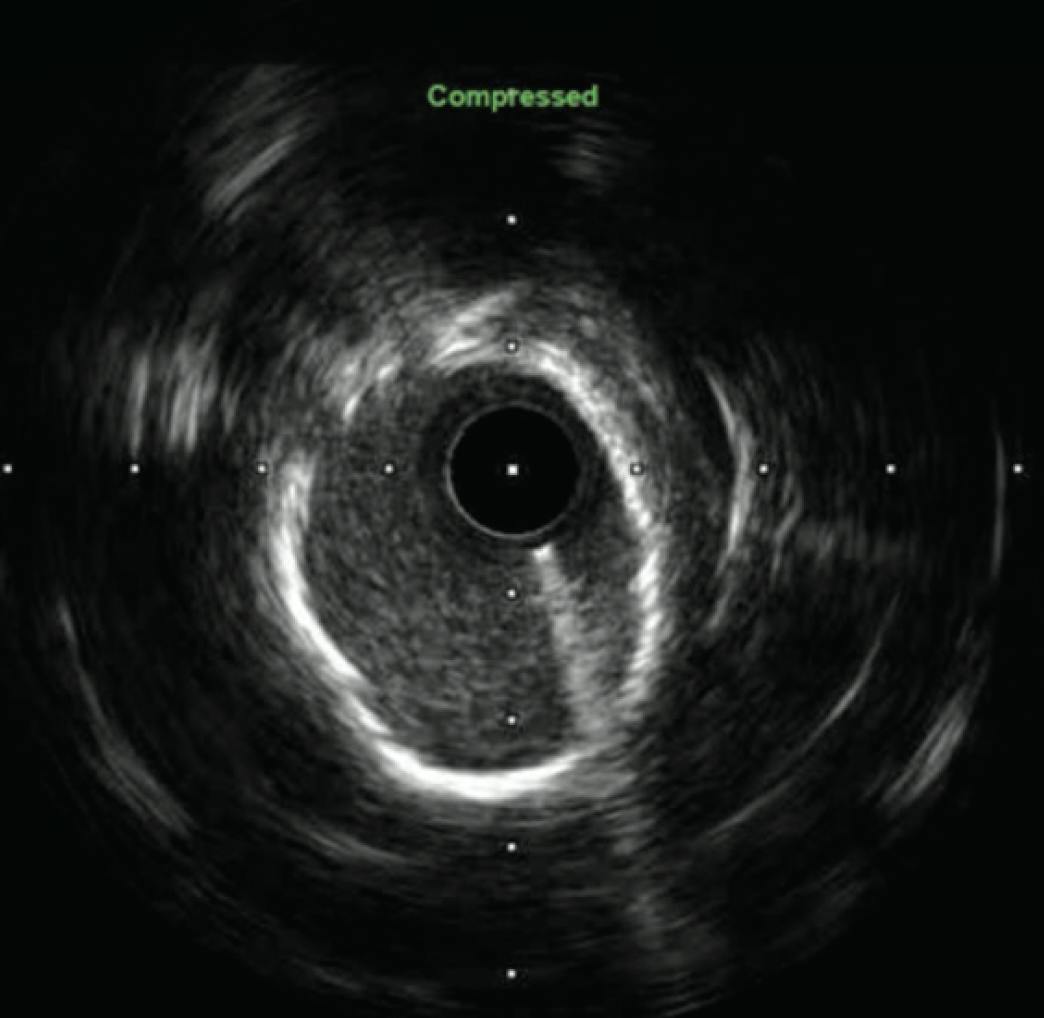
Figure 1. IVUS exhibiting calcium in all four quadrants.
Calcium location could be superficial, deep, or both. Ultrasound signals cannot penetrate calcified plaque and thus thickness and volume cannot be determined with IVUS.1,7 The following IVUS-measured morphologic characteristics of calcified plaque are shown to be associated with greater stent expansion (> 70%) with use of calcium modification tools: (1) 360º calcium arc, (2) calcium arc of > 270º with a length of calcium ≥ 5 mm, (3) calcium present in a vessel with a diameter < 3.50 mm, and (4) presence of a calcified nodule.9,10
OCT. OCT uses infrared light and provides a 10-fold higher resolution compared with IVUS. It helps visualize the calcified plaque without the artifacts, thus evaluating calcium thickness more accurately. Calcium appears as a heterogeneous area of low backscatter with low attenuation and clear borders.9 OCT can quantify calcification by size of the circumferential arc, thickness, longitudinal depth, area, and three-dimensional volume. It has a tissue penetration depth of 1 to 2 mm; in cases of large vessels or thick calcium, the far side of the plaque cannot be detected.11 Aggressive plaque modification should be considered for lesions with calcium deposit of a maximum angle > 180º (2 points), maximum thickness > 0.5 mm (1 point), and length > 5 mm (1 point). A score of 4 has a significantly higher risk of underexpansion.12
GENERAL APPROACH TO CALCIUM MODIFICATION THERAPIES
Several algorithms have been proposed to manage coronary calcium. The general approach involves imaging guidance to evaluate calcium and incorporates plaque modification therapies like atherectomy devices or specialty balloons prior to stent deployment.
CCTA may assist with preprocedural planning to assess global calcium burden, complex coronary anatomy, distribution of calcium, and presence of ostial calcium, while fractional flow reserve CT can be used for hemodynamic assessment of severe lesions. In the case of extensive calcium (cross-sectional calcium > 270º), CCTA helps with planning11; however, routine use of CCTA varies based on institutional protocols.
Intravascular imaging can be used to guide every step of percutaneous coronary intervention (PCI): at baseline, after lesion preparation, and after stent implantation.11 The 2021 ACC/AHA/SCAI Coronary Artery Revascularization guidelines gave a 2a, level of evidence B-R, recommendation for the use of intravascular ultrasound “for procedural guidance, particularly in left main or complex coronary artery stenting, to reduce ischemic events.” If intravascular imaging meets the criteria for calcium modification as previously discussed and as shown in Figure 1, adjunctive devices such as rotational atherectomy (RA), orbital atherectomy (OA), intravascular lithotripsy (IVL), or specialty balloons should be used. PCI can be performed if there is full expansion of a 1:1 balloon in two views. If initial therapies are suboptimal, further modification can be done to attain sufficient lumen gain or calcium fracture. Atherectomy devices are preferred in long, diffusely calcified lesions, specialty balloons for focal lesions, and IVL for concentric lesions with deep calcium and calcium nodules.9,11 A similar algorithm has been proposed by the European Association of Percutaneous Cardiovascular Interventions (EAPCI) consensus statement.11
RA, OA, excimer laser coronary atherectomy (ECLA), and IVL are known to be ablative devices that debulk the calcific plaque, whereas balloon-based techniques cause disruption of calcium but do not remove them.
Currently, there are multiple trials underway to assess the safety and efficacy of RA, OA, ECLA, and IVL, but no head-to-head, comparative randomized control trials between the devices have been attempted.
TREATMENT MODALITIES FOR CALCIUM MODIFICATION
RA
RA features an olive-shaped metallic burr with a diamond crystal tip that rotates at high speeds to ablate the plaque (Rotapro, Boston Scientific Corporation). Highly pressurized air is converted to rotational energy, with continuous infusion of a lubricant medium. Plaque debulking is completed via differential cutting, wherein the burr preferentially ablates inelastic tissue. The recommended burr size/artery ratio is 0.4 to 0.6. A 1.5-mm burr is used for arteries ≤ 3 mm in diameter and a 1.75-mm burr for > 3 mm. Atherectomy is performed in a pecking motion with a short ablation duration (< 30 seconds) using a 0.014-inch RotaWire (Boston Scientific Corporation). Careful technical considerations can avoid coronary slow flow or no flow.9,11 The ROTAXUS and PREPARE-CALC trials showed increased rates of successful stent deployment in patients with heavily calcified lesions.13,14 Given that 20% of patients undergoing PCI could have severe coronary calcification, a validated RotaScore can be used to assess the need for RA as the initial strategy.15 Figure 2 shows a successful case of RA-guided PCI of a chronic total occlusion (CTO) in the mid left anterior descending (mLAD)/diagonal branches with a 1.5-mm burr and 3.5- X 38-mm DES.
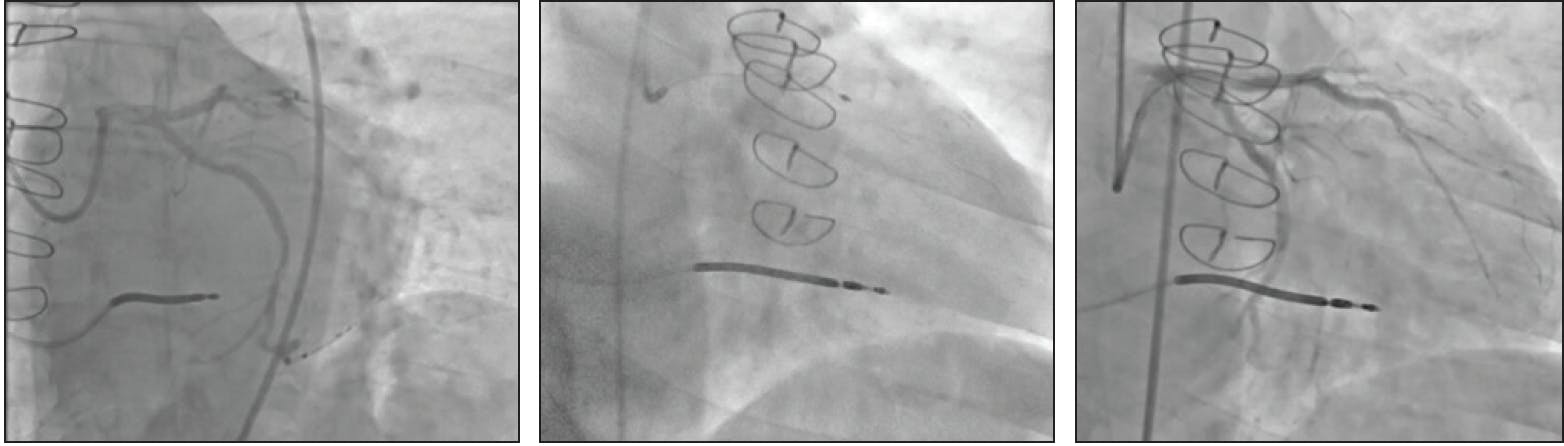
Figure 2. Successful RA-guided PCI of the CTO mLAD/diagonal branches with a 1.5-mm burr and 3.5- X 38-mm DES.
OA
The Diamondback 360 OA system (Abbott) has an eccentrically mounted, diamond-coated crown that allows for bidirectional atherectomy. The device uses centrifugal force, allowing atheroablation by a sanding mechanism while being advanced and retracted at approximately 1 mm/s. It uses a 0.014-inch ViperWire (Abbott), starting at 80,000 rpm in all vessels. In vessels with a diameter ≥ 3 mm, the speed can be increased to 120,000 bpm to achieve bigger lumen gain, not exceeding 30 seconds.9,11 The ORBIT I and II trials compared PCI with and without OA in calcified lesions, showing high procedural success for stent placement.16,17 OA should be avoided in lesions with tortuosity, severe angulation, and vessels < 3 mm in diameter as these might increase risk of vessel perforation.11,18
ECLA
Excimer laser coronary atherectomy (ECLA) debulks and modifies the tissue with photochemical, photothermal, and photokinetic properties, without causing significant thermal injury. The generated heat breaks apart cellular debris, allowing greater luminal expansion. ECLA has been infrequently used due to scant data from clinical trials and perceived complexity about its use. Current relevant indications for ECLA include balloon-uncrossable and balloon-undilatable lesions, underexpanded and underdeployed stents, diffuse in-stent restenosis, aorto-ostial lesions, moderately calcified lesions, large intracoronary thrombus, and saphenous vein grafts.19
IVL
The Shockwave C2 coronary IVL catheter (Shockwave Medical) is a novel therapy for vascular calcification. It uses a single-use balloon catheter containing spark gap–based lithotripsy that emits pulsatile sonic pressure waves to selectively interact with calcium.9,20 It is positioned across the target lesion on a standard 0.014-inch guidewire and inflated to 4 atm to deliver 10 shockwaves. IVL emitters produce electric sparks that create vapor bubbles within the integrated balloon. This leads to formation and expansion of vapor bubbles, resulting in peak acoustic pressures up to 50 atm. The pressures propagate circumferentially and transmurally, imparting compressive stress on calcified plaques and creating fractures. The balloon undergoes periodic deflation between pulse deliveries to remove residual gas bubbles and allow tissue reperfusion.20 The new-generation C2+ device delivers up to 120 pulses.
IVL received FDA premarket approval in the United States in 2021 after the Disrupt CAD III study, a prospective, single-arm trial performed in 384 patients with severely calcified coronary lesions. IVL demonstrated 92.4% procedural success and a 30-day major adverse cardiovascular events (MACE) rate of 7.8%. At 1 year, MACE occurred in 13.8% of patients with a 1.1% rate of stent thrombosis.21 In a pooled patient analysis of the Disrupt CAD I to IV studies, procedural success was seen in 92.4% of 628 patients, with low rates of complications and no slow flow or no reflow events after the procedure.22 The ability of IVL to act on concentric calcium (both eccentric and nodular), its ease of use, and reported fewer complications have increased its preferability (Figure 3).
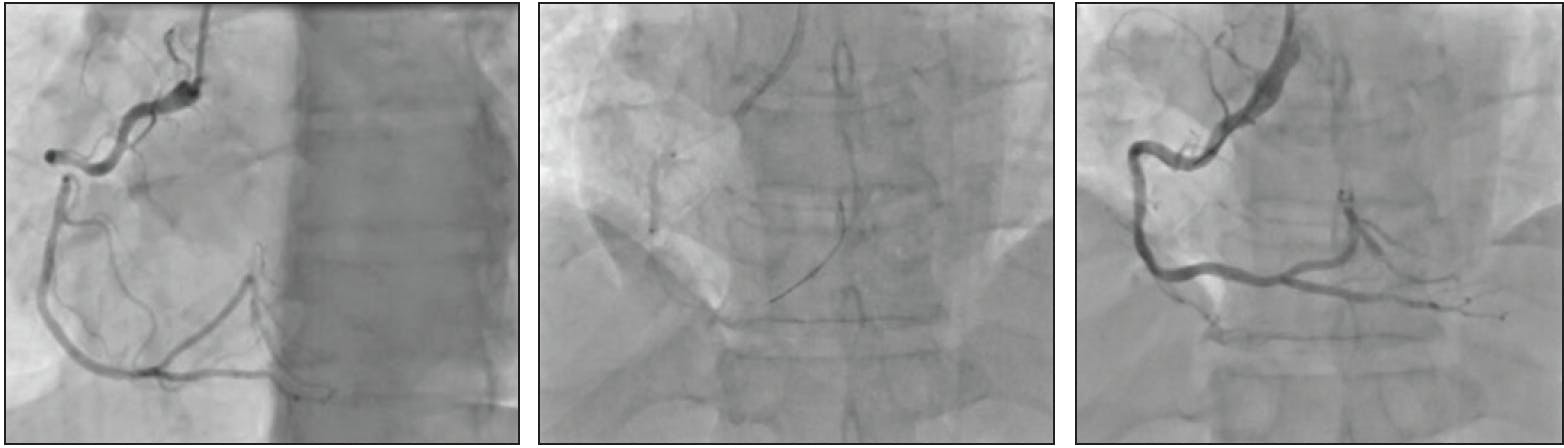
Figure 3. A severe, heavily calcified mid right coronary artery lesion successfully treated with a 3- X 12-mm IVL balloon for 90 pulses.
Balloon-Based Therapy
Conventional balloon angioplasty is usually performed with noncompliant (NC) or semicompliant balloons. These are typically used in lesions with a mild degree of calcium or to prepare heavily calcified lesions for modification. The presence of CAC increases the chances of procedural failure and complications after balloon angioplasty.1 Due to varying amounts of calcification, the force applied across the vessel wall could be uneven and more toward the most compliant vessel wall, resulting in perforation, dissection, restenosis, or MI.1,9 Further, the nonuniform expansion can impinge the balloon to the spiculated calcium, risking balloon rupture.9 High-pressure balloons (OPN, SIS Medical AG) are double-layered, super-NC balloons that can inflate up to 35 atm safely—and up to 40 to 50 atm in some cases. The disadvantage of high-pressure balloons is the increased risk of vessel perforation and inability to recross the lesion once inflated.11 Cutting balloons such as Wolverine (Boston Scientific Corporation) are NC balloons with multiple microblades on its longitudinal surface. Scoring balloons are semicompliant or NC with scoring elements on the surface. These create shallow incisions at low-pressure inflations (controlled dissections), causing localized injury and calcium fracture.9 There are three scoring balloons available in the United States: AngioSculpt (Philips), Chocolate XD (Teleflex), and Scoreflex NC (Abbott, manufactured by OrbusNeich).
CONCLUSION
Moderate-to-severe CAC increases the complexity of PCI and creates an unfavorable environment for stent deployment. With growing evidence showing improved revascularization outcomes, the use of calcium modification techniques has become indispensable. Ease of access to intravascular imaging modalities like IVUS and OCT provides better understanding and objective evidence of calcified coronary lesions. Identification of these lesions would aid in procedural planning, avoiding undue complications. Several algorithms exist based on user preference, and the SCAI and EAPCI consensus statements provide guidance for a structured approach.
1. Madhavan MV, Tarigopula M, Mintz GS, et al. Coronary artery calcification: pathogenesis and prognostic implications. J Am Coll Cardiol. 2014;63:1703-1714. doi: 10.1016/j.jacc.2014.01.017
2. Wong ND, Kouwabunpat D, Vo AN, et al. Coronary calcium and atherosclerosis by ultrafast computed tomography in asymptomatic men and women: relation to age and risk factors. Am Heart J. 1994;127:422-430. doi: 10.1016/0002-8703(94)90133-3
3. Rumberger JA, Simons DB, Fitzpatrick LA, et al. Coronary artery calcium area by electron-beam computed tomography and coronary atherosclerotic plaque area. A histopathologic correlative study. Circulation. 1995;92:2157-2162. doi: 10.1161/01.cir.92.8.2157
4. Mori H, Torii S, Kutyna M, et al. Coronary artery calcification and its progression: what does it really mean? JACC Cardiovasc Imaging. 2018;11:127-142. doi: 10.1016/j.jcmg.2017.10.012
5. Guedeney P, Claessen BE, Mehran R, et al. Coronary calcification and long-term outcomes according to generation. JACC Cardiovasc Interv. 2020;13:1417-1428. doi: 10.1016/j.jcin.2020.03.053
6. Polonsky TS, McClelland RL, Jorgensen NW, et al. Coronary artery calcium score and risk classification for coronary heart disease prediction. JAMA. 2010;303:1610-1616. doi: 10.1001/jama.2010.461
7. Mintz GS, Popma JJ, Pichard AD, et al. Patterns of calcification in coronary artery disease. A statistical analysis of intravascular ultrasound and coronary angiography in 1155 lesions. Circulation. 1995;91:1959-1965. doi: 10.1161/01.cir.91.7.1959
8. Wang X, Matsumura M, Mintz GS, et al. In vivo calcium detection by comparing optical coherence tomography, intravascular ultrasound, and angiography. JACC Cardiovasc Imaging. 2017;10:869-879. doi: 10.1016/j.jcmg.2017.05.014
9. Riley RF, Patel MP, Abbott JD, et al. SCAI expert consensus statement on the management of calcified coronary lesions. J Soc Cardiovasc Angiogr Interv. 2024;3:101259. doi: 10.1016/j.jscai.2023.101259
10. Zhang M, Matsumura M, Usui E, et al. Intravascular ultrasound-derived calcium score to predict stent expansion in severely calcified lesions. Circ Cardiovasc Interv. 2021;14:e010296. doi: 10.1161/CIRCINTERVENTIONS.120.010296
11. Barbato E, Gallinoro E, Abdel-Wahab M, et al. Management strategies for heavily calcified coronary stenoses: an EAPCI clinical consensus statement in collaboration with the EURO4C-PCR group. Eur Heart J. 2023;44:4340-4356. doi: 10.1093/eurheartj/ehad342
12. Fujino A, Mintz GS, Matsumura M, et al. A new optical coherence tomography-based calcium scoring system to predict stent underexpansion. EuroIntervention. 2018;13:e2182-e2189. doi: 10.4244/EIJ-D-17-00962
13. Abdel-Wahab M, Richardt G, Joachim Büttner H, et al. High-speed rotational atherectomy before paclitaxel-eluting stent implantation in complex calcified coronary lesions: the randomized ROTAXUS (rotational atherectomy prior to taxus stent treatment for complex native coronary artery disease) trial. JACC Cardiovasc Interv. 2013;6:10-19. doi: 10.1016/j.jcin.2012.07.017
14. Abdel-Wahab M, Toelg R, Byrne RA, et al. High-speed rotational atherectomy versus modified balloons prior to drug-eluting stent implantation in severely calcified coronary lesions. Circ Cardiovasc Interv. 2018;11:e007415. doi: 10.1161/CIRCINTERVENTIONS.118.007415
15. Fitzgerald S, Allali A, Toelg R, et al. Angiographic predictors of unplanned rotational atherectomy in complex calcified coronary artery disease: a pooled analysis from the randomised ROTAXUS and PREPARE-CALC trials. EuroIntervention. 2022;17:1506-1513. doi: 10.4244/EIJ-D-21-00612
16. Parikh K, Chandra P, Choksi N, et al. Safety and feasibility of orbital atherectomy for the treatment of calcified coronary lesions: the ORBIT I trial. Catheter Cardiovasc Interv. 2013;81:1134-1139. doi: 10.1002/ccd.24700
17. Chambers JW, Feldman RL, Himmelstein SI, et al. Pivotal trial to evaluate the safety and efficacy of the orbital atherectomy system in treating de novo, severely calcified coronary lesions (ORBIT II). JACC Cardiovasc Interv. 2014;7:510-518. doi: 10.1016/j.jcin.2014.01.158
18. Shlofmitz E, Jeremias A, Shlofmitz R, Ali ZA. Lesion preparation with orbital atherectomy. Interv Cardiol. 2019;14:169-173. doi: 10.15420/icr.2019.20.R1
19. Egred M, Brilakis ES. Excimer laser coronary angioplasty (ELCA): fundamentals, mechanism of action, and clinical applications. J Invasive Cardiol. 2020;32:E27-E35.
20. Kereiakes DJ, Virmani R, Hokama JY, et al. Principles of intravascular lithotripsy for calcific plaque modification. JACC Cardiovasc Interv. 2021;14:1275-1292. doi: 10.1016/j.jcin.2021.03.036
21. Kereiakes DJ, Hill JM, Shlofmitz RA, et al. Intravascular lithotripsy for treatment of severely calcified coronary lesions: 1-year results from the Disrupt CAD III study. J Soc Cardiovasc Angiogr Interv. 2022;1. doi: 10.1016/j.jscai.2021.100001
22. Kereiakes DJ, Di Mario C, Riley RF, et al. Intravascular lithotripsy for treatment of calcified coronary lesions: patient-level pooled analysis of the Disrupt CAD studies. JACC Cardiovasc Interv. 2021;14:1337-1348. doi: 10.1016/j.jcin.2021.04.015
Advertisement
Advertisement
