Advertisement
Advertisement
2024 Digital Exclusive No. 2
What Lies Ahead: Fellowship and Beyond
Reflections on thriving in fellowship training and beyond, including tips for keeping pace with a rapidly advancing field, how to choose a career path that aligns with your values and long-term goals, and advice for thriving in today’s dynamic health care landscape.

What are the biggest issues facing interventional cardiology (IC) fellows today, both during and after fellowship? What advice would you share for combating these challenges?
IC fellows face several challenges, both during their fellowship training and as they transition into independent practice. One of the biggest issues is the rapid advancement of technology and techniques in the field, requiring fellows to constantly update their knowledge and skills to stay current. The abundance of options here can overwhelm, leaving trainees uncertain about where to focus their efforts. Additionally, the increasing complexity of cases and patient populations adds another layer of difficulty. Patient volumes for certain rarer procedures may be inadequate after just 1 year of interventional training, thus requiring mentorship beyond training to become proficient in such cases.
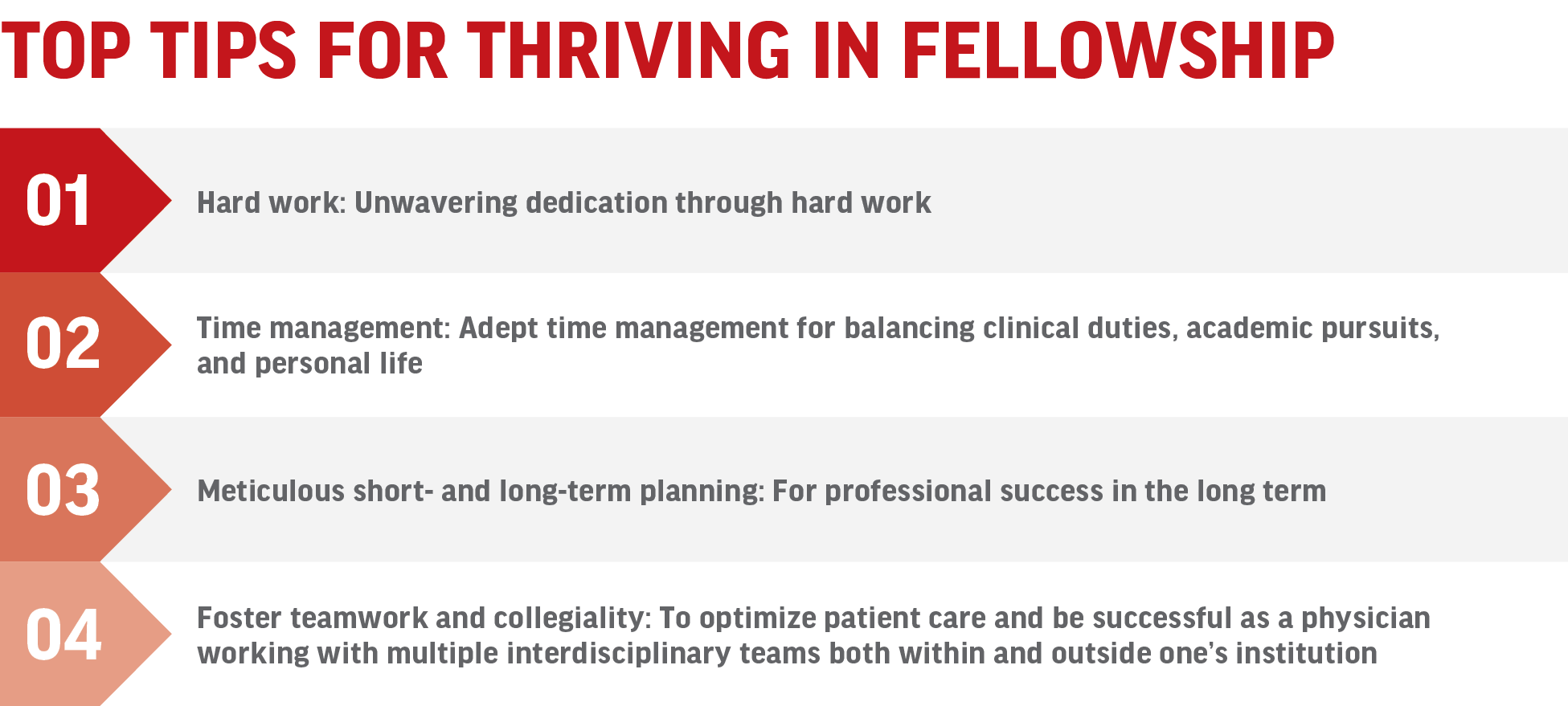
After fellowship, navigating the transition from a supervised learning environment to independent practice can be daunting, especially when faced with the pressures of managing complex cases and making critical decisions alone. After training, the dearth of suitable mentorship leaves many feeling adrift as they navigate the challenges of independent practice.
To combat these challenges, fellows should prioritize ongoing education and seek out mentorship opportunities from experienced practitioners. Developing strong clinical judgment and honing procedural skills through simulation training can also help prepare them for the demands of IC practice. Additionally, fostering a supportive network of colleagues can provide invaluable guidance and assistance when encountering difficult cases. Ultimately, maintaining a commitment to lifelong learning and continuously striving for excellence will be key to success in this dynamic and demanding field.
Another important issue facing IC fellows is the surplus of trainees vying for a limited number of jobs after training. Compounding this is the geographic mismatch between job availability and trainee preferences, with rural areas often needing more practitioners than urban locales. Moreover, the business of medicine, crucial for success in practice, is often neglected in formal training. To counter these challenges, fostering mentorship networks, seeking out different practice opportunities, and advocating for comprehensive business education within training programs are imperative steps. Additionally, cultivating a broad skill set during training can enhance adaptability to the practice they step into.
Overcoming the challenges facing IC fellows requires a multifaceted approach:
- Seek mentorship: Fellows must actively seek out experienced practitioners who can provide guidance and support throughout training and beyond. Mentorship can offer valuable insights, help navigate career decisions, and provide a network for collaboration and support.
- Explore a variety of opportunities after fellowship: Although urban positions may be more desirable, trainees should consider exploring job opportunities in other areas where there may be greater demand for interventional cardiologists. These positions often offer unique experiences, closer-knit communities, and opportunities to make a significant impact on patient care.
- Maximize hands-on experience: Fellows must take advantage of every opportunity to gain hands-on experience during fellowship and seek additional training opportunities, such as simulation labs or proctoring experiences, to supplement clinical exposure and build confidence in procedural skills.
- Stay current: It is important to keep abreast of the latest advancements in IC through continued education, conferences, and participation in research projects. Staying current with emerging technologies and techniques will help one remain competitive in the field and adapt to evolving patient care needs.
- Network and collaborate: Fellows must build relationships with colleagues both within and outside their institution to foster collaboration and knowledge sharing. It is necessary to participate in professional organizations, online forums, and networking events to expand one’s network and stay connected with peers and mentors.
- Embrace lifelong learning: Fellows must recognize that learning doesn’t end with fellowship and hence embrace a mindset of lifelong learning and continuous improvement to adapt to the changing landscape of IC. One must stay open to new opportunities, experiences, and challenges that will further professional growth and development.
- Advocate for education on nonclinical topics: Trainees need to seek out education in the business of medicine during their fellowship. Understanding the business aspects of medicine such as billing, coding, and practice management is essential for success in practice.
How would you break down the main career options for interventional cardiologists after fellowship?
IC fellows have a diverse range of career options after fellowship that allows them to tailor their path based on their interests, skills, and goals. The main options can be broken down into clinical, research, or a combination, as well as private or academic.
Fellows can choose between clinical practice, research, or a combination. Many fellows choose to pursue a career in clinical practice, focusing on core IC procedures such as cardiac catheterization, percutaneous coronary angioplasty, and other minimally invasive interventions in their chosen subspecialty. A research-focused career may include conducting clinical trials, translational research, or health outcomes research related to IC. Most of these positions are found in academic institutions, large private health centers, research organizations, or industry.
A combination of clinical work and research is an option that allows one to balance patient care with scholarly pursuits. This hybrid career path allows for both direct patient interaction and contributions to advancing the field through research and innovation.
Fellows may choose to join or establish private practice groups, providing specialized care to patients in a community setting. Private practice may offer greater autonomy, flexibility, and the opportunity to develop strong relationships with patients and referring physicians in a community setting. On the other hand is academic medicine, which involves working in teaching hospitals, medical schools, or research institutions. Academic positions may involve clinical care, teaching medical students and residents, conducting research, and contributing to academic scholarship through publications and presentations.
Interventional cardiologists can further specialize within the field, focusing on specific areas such as complex coronary interventions, structural heart interventions, peripheral vascular interventions, or critical care cardiology. These subspecialties offer opportunities for advanced training and expertise in specific areas of IC, or one could choose to combine these based on the need of their institutions. This multidisciplinary approach allows for a diverse scope of practice and may be particularly relevant in smaller health care systems where the individual subspecialties are not well demarcated.
Ultimately, the IC career path chosen after fellowship depends on a physician’s individual interests, preferences, and long-term career goals. Whether focused on clinical practice, research, or a combination of both, interventional cardiologists play a critical role in providing high-quality care to patients with cardiovascular disease.
LESSONS LEARNED ABOUT DECISION-MAKING BEFORE, DURING, AND AFTER FELLOWSHIP
During my cardiology training, the decision to pursue additional fellowships in IC and further in structural heart disease was driven by a desire to broaden my skill set and enhance my expertise beyond coronary interventions alone. I recognized the evolving landscape of IC, where structural interventions were gaining prominence due to their less invasive nature and potential for addressing complex valvular conditions. Given the need for large-bore access within both coronary and structural space, I also spent time doing peripheral interventions during my IC fellowship.
This decision-making process involved several considerations. First, I evaluated my interests and long-term career goals, recognizing the importance of staying abreast of advancements in the field and positioning myself as a well-rounded interventional cardiologist. Second, I assessed the opportunities available within my training institution and sought out mentors who could provide guidance and support in pursuing additional fellowships. Third, I weighed the potential benefits of acquiring specialized training in structural heart disease, understanding its increasing relevance in clinical practice and its potential to shape the future of IC in the valvular heart disease space. It is imminent that open heart surgery will be replaced at least partially by less invasive procedures over time, as these are being performed safely with good midterm outcomes, as noticed in the aortic valve space.
Throughout my training, I learned valuable lessons that have helped me become a good interventional cardiologist.
1. Being meticulous: It is very important to be meticulous while performing interventional procedures, whether coronary, structural, or peripheral. Following the same steps over and over again will reduce the margin of error and minimize complications. The mark of a good interventional cardiologist is excellent patient outcomes.
2. Diversifying my skill set: It is important during training to obtain hands-on experience from diverse faculty. Whenever I had time, I participated in peripheral cases during my interventional fellowship and in coronary/peripheral cases during my structural fellowship. Diversifying your skill set enhances your versatility as a practitioner and prepares you to address a broader range of cardiovascular conditions and deal with complications.
3. Embracing complexity and being prepared: Structural interventions are inherently more complex and multidimensional, and they require a thorough understanding of imaging in addition to interventional technique. We performed our own CT measurements for valve procedures during structural fellowship, which helped us understand the nuances and plan the procedures well. Embrace the challenge and recognize that mastering these techniques requires dedication, perseverance, and ongoing learning. Discussing cases with a senior mentor or reviewing films/imaging prior to the case can be very helpful for performing the procedure.
4. Be curious: Asking questions makes one a better clinician, a better researcher, and academically prolific. I was encouraged by all my mentors to present case reports, research posters, and write manuscripts. This helped me understand the data behind what we do as interventional cardiologists and to contribute to the advancement of the field.
5. Position yourself for the future: I was introduced to the Society for Cardiovascular Angiography and Interventions during my IC fellowship and have continued my involvement over the years, participating in several committees and meetings. Position yourself as a leader in the rapidly evolving interventional field by participating in regional, national, and international societies to ensure that you are well equipped to meet the evolving needs of your patients and practice.
What personal and professional factors/values do fellows need to consider when weighing their career options?
When weighing career options, IC fellows must carefully consider both personal and professional factors to ensure alignment with their values, priorities, and long-term goals.
Personal factors include the following:
- Work satisfaction: Fellows should reflect on whether their chosen career path aligns with their personal values and provides a sense of fulfillment and satisfaction. Job satisfaction is crucial for long-term career happiness and well-being.
- Time for self and family: Balancing work with personal time is essential for maintaining overall well-being and preventing burnout. Fellows should assess whether their chosen career allows adequate time for self-care, hobbies, and relaxation outside of work. Consideration of work-life balance is paramount, particularly for fellows with families or caregiving responsibilities. Evaluate whether a potential career path allows for sufficient time to spend with loved ones and engage in family activities. Assess whether the career path offers flexibility and support for important family-related events and obligations, such as weddings, childbirth, childcare responsibilities, or emergencies. Having the ability to take time off when needed, within reasonable limit, can significantly contribute to overall job satisfaction and work-life balance.
Professional factors to consider include:
- The ability to do what one likes/enjoys: Fellows should assess whether their career choice allows them to pursue the aspects of IC they enjoy the most, whether that is patient care, research, teaching, or a combination thereof. It is important that what one does in their job aligns with their short- and long-term career plans.
- Growth commensurate with years out of training: It’s crucial to evaluate the potential for career advancement and professional growth within a chosen path. This includes opportunities for leadership roles, academic advancement, and skill development over time.
- Appropriate compensation/benefits: Consideration of compensation packages, including salary, benefits, and potential for bonuses or incentives, is essential. Fellows should ensure that their chosen career path offers fair and competitive compensation relative to their skills, experience, and market standards. Big institutions may not offer large compensation but have other things of value, such as paying college tuition for self or children, opportunities to participate in research, or involvement in meetings. These options must be carefully considered when choosing the right position.
By carefully weighing these personal and professional factors, IC fellows can make informed decisions about their career paths, ensuring alignment with their values, priorities, and overall well-being.
What skills outside of medicine and technique are essential for the next generation of interventional cardiologists, and why?
Outside of medical and technical expertise, several nonmedical skills are crucial for the next generation of interventional cardiologists—specifically, business acumen, personal relationships, networking, and emotional intelligence.
- Business acumen: Understanding the business side of medicine is essential for interventional cardiologists, especially those in private practice or leadership roles. Knowledge of health care economics, billing and coding, financial management, and strategic planning enables physicians to navigate complex health care systems, negotiate contracts, and optimize practice efficiency. Business acumen ensures the sustainability and profitability of practices, allowing cardiologists to deliver high-quality care while maintaining fiscal responsibility.
- Personal relationships: Building strong, trust-based relationships with patients, colleagues, and interdisciplinary teams is fundamental to effective patient care and professional success. Effective communication, empathy, and active listening foster rapport with patients, enhancing their satisfaction and compliance with treatment plans. Collaborative relationships with referring physicians, nurses, and allied health care professionals facilitate coordinated care and improve patient outcomes. Additionally, cultivating mentorship relationships provides guidance, support, and career advancement opportunities for aspiring interventional cardiologists.
- Networking: Networking within the medical community and beyond is vital for career development, knowledge sharing, and professional advancement. Attending conferences, participating in professional organizations, and engaging in online forums enable interventional cardiologists to stay updated on the latest research, technologies, and best practices in the field. Networking also facilitates collaboration on research projects, referrals, and job opportunities, expanding professional connections and enhancing visibility within the health care community.
- Emotional intelligence: Emotional intelligence is crucial for interventional cardiologists to effectively navigate high-pressure situations, empathize with patients, and maintain collaborative relationships within multidisciplinary teams for optimal patient outcomes.
These nonmedical skills complement clinical expertise and technical proficiency, enabling interventional cardiologists to thrive in today’s dynamic health care landscape. By honing their business acumen, nurturing personal relationships, and actively networking, the next generation of interventional cardiologists can deliver exceptional patient care, drive innovation, and contribute to the advancement of cardiovascular medicine.
CIT Essentials: Recommended Resources
- Profiles & Perspectives hub: Insights from influential thought leaders in the interventional cardiology field
- Device Guide: A comprehensive listing of the available interventional cardiology devices in the United States & European Union
- Recent Digital Exclusives: Issues tackle emerging techniques and fields & hot topics in interventional cardiology, including radiation safety and sustainability
- Review our entire catalog of issues on the archive, and subscribe to stay up to date on the latest developments in technology, techniques, clinical studies, & more in the field of coronary and cardiac interventions
Advertisement
Advertisement
Latest Digital Exclusives