Advertisement
Advertisement
2024 Digital Exclusive No. 2
Charting Your Course: Picking the Best Career Path After Interventional Cardiology Fellowship
Physicians reflect on the road from fellowship to their current roles, considering the merits of various practice scenarios in interventional cardiology and the factors to weigh for each.
With Denada Palm, MD; Marianna Sargsyan, MD; Joaquim Spadoni Barboza, MD; and Adhir Shroff, MD, MPH
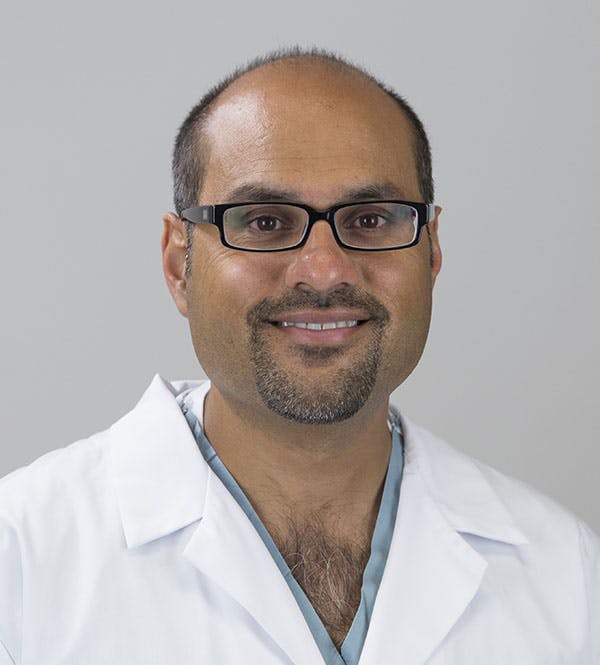
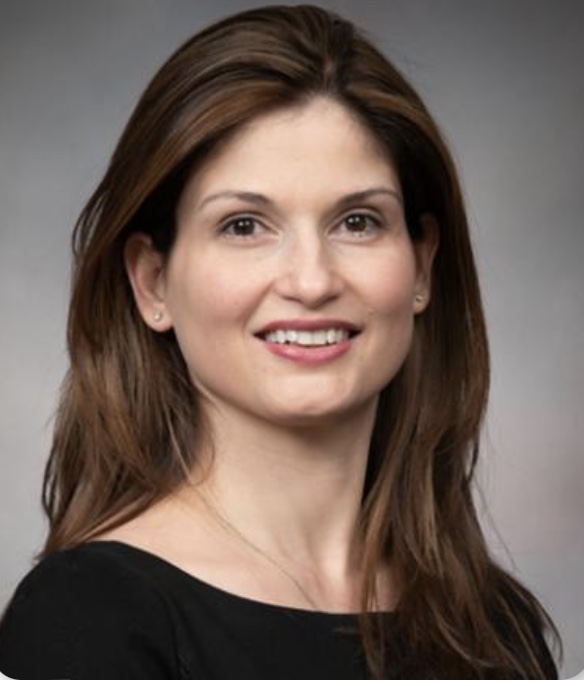
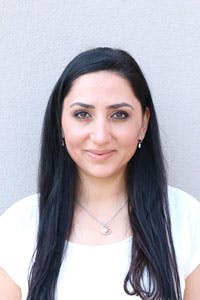
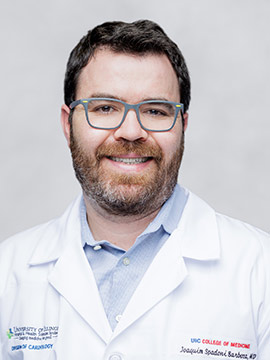
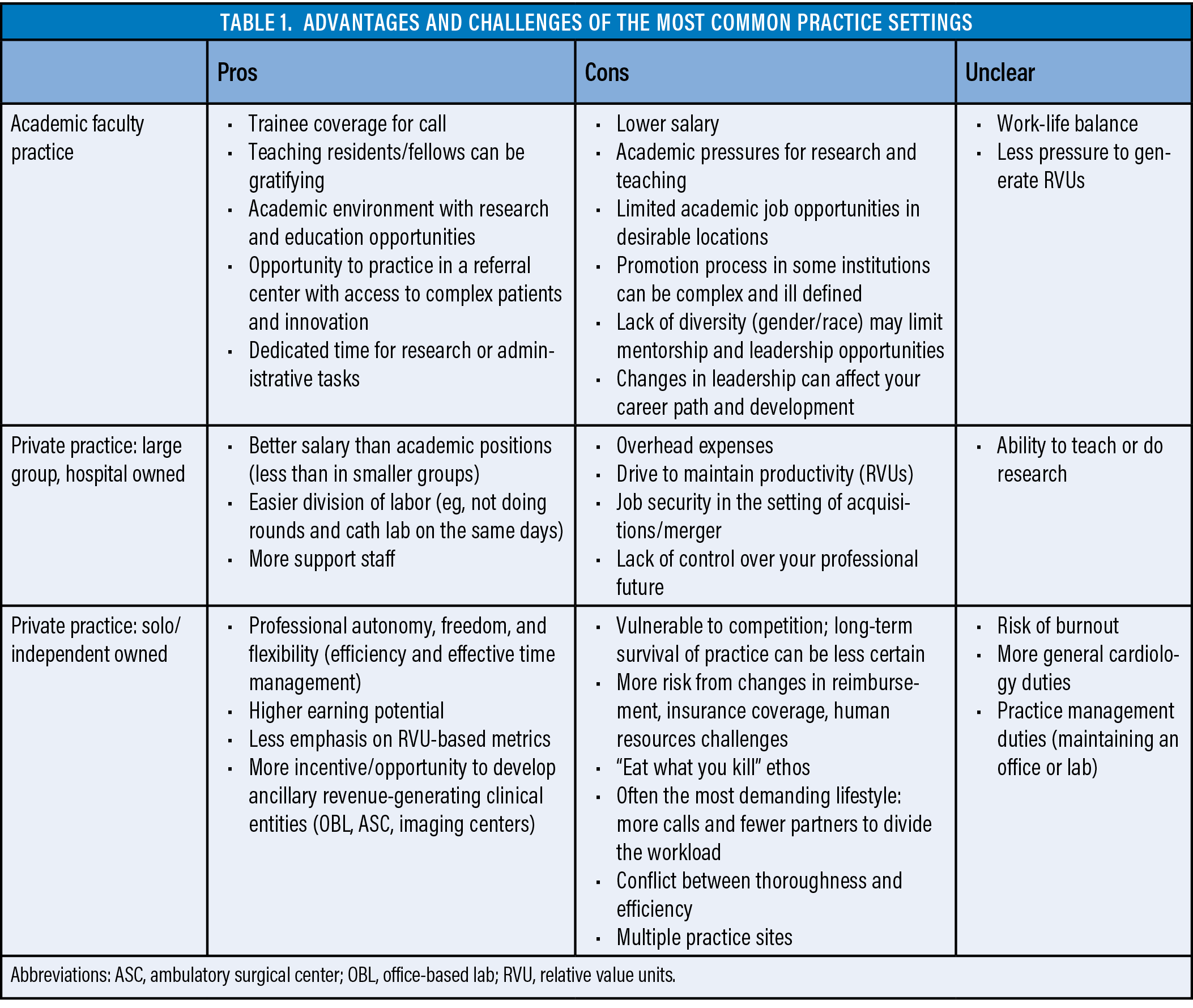
The training road is long, and after deciding to pursue a career in interventional cardiology (IC), many cardiology fellows struggle with the next series of decisions, including type of practice, geography, and subspecialization. In this brief article, we lay out the decision-making process regarding the first topic: the type of practice. Although this may be a clear choice for some, for most it is an evolving picture that continues to develop even after graduation. However, some planning can help make the transition easier and improve your chances of finding the “right” fit straight out of fellowship training. In the article, I am joined by three colleagues who have pursued different roads to their current positions. Drs. Denada Palm, Marianna Sargsyan, and Joaquim Barboza share their experiences and thoughts about various career paths and the considerations they took into account when making their decisions. Although there are infinite types of practices, we have divided them here into three broad categories: academic faculty practice, private practices that employ physicians but are owned by a larger organization, and private practices that are owned by the physicians in the practice (Table 1).
What was your IC training like, and what you were looking for in your first job?
Dr. Palm: I completed a 2-year IC training program. The first year of training focused on routine and complex coronary interventions. I then completed an additional year of training in structural IC. I was looking primarily at jobs in academic institutions after completing fellowship. Important criteria for me included a good IC group, a strong academic environment with a focus on learning and teaching, and good leadership that prioritized supporting and promoting their faculty. I was also looking for a place that would provide the opportunity to continue working with complex cases and patients in a large referral place.
Dr. Sargsyan: I learned from a diverse group of highly skilled interventional and structural cardiologists in a dynamic and fast-paced environment. I participated in complex coronary, peripheral, and structural cases across two tertiary referral centers. I was seeking a practice that would support and encourage me to perform procedures, where I could use the full range of my skills and continue to grow. Geography was also important to me.
Dr. Barboza: During my IC training, we frequently dealt with various types of mechanical support devices and their consequences in complex coronary and cardiogenic shock cases. The training was rigorous, with extended hours. For my first job, I wanted to continue focusing on complex coronary interventions. For that, I needed a large referral hospital and a supportive administration.
Dr. Shroff: My IC training occurred during 2002 to 2004. My program focused on routine coronary interventions during the first year and complex coronary/endovascular procedures in the second year. I learned a lot about how to develop an academic referral center for percutaneous coronary intervention (PCI). I was looking for a job where I could maintain and even grow my skills.
What were your biggest motivations when considering next steps (eg, geography, salary concerns, work-life balance, practice type)?
Dr. Palm: I was mostly motivated by practice type, as well as the acuity and complexity of the patient population. I was also motivated by the leadership and values of the institution at the time of my recruitment.
Dr. Sargsyan: Several key considerations guided my decision-making process: (1) a location that aligned with my personal and familial needs, (2) high patient volume and commitment to delivering state-of-the-art care, (3) a team of like-minded cardiologists who valued collaboration and fostered professional growth, (4) a relatively structured schedule with a healthy work-life balance, and (5) competitive compensation.
Dr. Barboza: My main motivation was to join a practice that allowed me to perform IC at a high level, keeping in mind that I wanted a diverse, metropolitan city for my family. After a few years of successful private practice, I started missing academic settings with more opportunities to teach as well as more protected time for long complex procedures.
Dr. Shroff: I knew that I wanted to be in Chicago due to having family in the area. I was open to different practice types, but after interviewing for several opportunities, I concluded that an academic practice would be most suitable for my professional, academic, and personal goals.
How would you describe your current practice—call nights per week, interventions per week, cath days, clinic days, etc?
Dr. Palm: I am in an academic practice in the Midwest. My practice involves procedural days in the catheterization (cath) lab and clinic and service time in consults or the cardiovascular critical care unit. When I am not on service, I am in the clinic 1 day per week and in the cath lab the rest of the time. I get one administrative day; however, this can vary with the cath lab schedule and service weeks. Typically, I am on weekday call one to two times per week and, on average, weekend call once a month.
Dr. Sargsyan: Currently, I am part of a small private practice group comprising three interventional cardiologists and one general cardiologist. Within our practice, we each balance a significant workload of noninvasive cardiology responsibilities alongside our interventional procedures. Our call schedule is structured to ensure comprehensive coverage, with each cardiologist typically on call 3 days/nights per week, and 2 weekends per month. In terms of interventions, I perform an average of three to four PCIs each week, primarily in a setting of acute myocardial infarction. We don’t have dedicated cath lab days; instead, we integrate procedures into our daily routine, which often includes rounds and interpreting noninvasive testing alongside performing diagnostic and interventional coronary procedures. This dynamic requires flexibility as I split my time between two to three hospitals throughout the week. I have 1 half-day clinic per week for now, during which I see an average of eight patients.
Dr. Barboza: I do a half-day clinic, a dedicated day for chronic total occlusions (CTOs), and an extra 1 or 2 regular cath lab days per week. I also round in the cardiac care unit (CCU) for 8 to 10 weeks a year. I am on ST-segment elevation myocardial infarction (STEMI) call for 1 week every 5 weeks.
Dr. Shroff: I do a half-day of clinic and 2 to 3 cath lab days per week. I round in the CCU 6 to 8 weeks per year. I spend 1 to 2 days per week attending to administrative duties in the section of cardiology. I am on STEMI call for 1 week every 5 weeks.
In what ways is this similar and different from what you expected?
Dr. Palm: There were changes in leadership immediately prior to me starting, which was different from expected, but the complexity and acuity of cases and patients were similar to what I expected.
Dr. Sargsyan: The absence of dedicated cath lab days in our practice and the extent of coordination required did not meet my expectations. I did not expect the institution’s constraint on resources, including equipment and staffing, for the cath labs. This has been a significant barrier that limits my ability to effectively manage long and complex interventional cases. The busy schedule also significantly reduced the potential for intellectual discussions, case planning, and double scrubbing in difficult procedures. However, there has been the expected professional autonomy and freedom.
Balancing work and personal life has proven to be more challenging than I anticipated, primarily due to the demanding call schedule and limited availability of free weekends. The requirement to carry the pager 24-7, outside of STEMI calls, has added to the intensity of the workload, leaving little time for rest or leisure activities. Additionally, managing a high patient volume across multiple hospitals without midlevel support has contributed to the workload burden.
Dr. Barboza: This is precisely what I anticipated: a lot of cath lab days and fewer clinical duties outside the lab.
Dr. Shroff: For the most part, it is exactly what I have wanted: a lot of cath procedures and fewer outpatient duties, and I get to teach and do research. However, I do wish I had more endovascular procedure volume.
If you would change something about your practice, what would it be?
Dr. Palm: It is important to regularly assess one’s career path and how both the faculty member and their leadership can promote growth. If centers cannot support career development, faculty can become frustrated, leading to high turnover.
Dr. Sargsyan: Enhancing the support structure for our team would be my main suggestion. I would prioritize advocating for the recruitment of additional noninvasive cardiologists and midlevel providers. This would enable us to implement dedicated cath lab time. Also, if possible, integrating teaching opportunities into our practice by involving medical students or residents would be a valuable addition to our team dynamics. I believe that engaging in teaching activities encourages us to stay updated on the latest advancements in our field. Given my desire to have an interventional-centered practice, I am currently exploring opportunities that align with my professional growth objectives. Furthermore, as a devoted mother to my two very young daughters, I am committed to achieving a harmonious balance between my career aspirations and family responsibilities. This balance can potentially be achieved even through part-time arrangements, offering me the flexibility needed to excel both personally and professionally.
Dr. Barboza: Academic medicine should strive to match private practice/employed compensation.
Dr. Shroff: As I mentioned earlier, I would like to have more endovascular procedures. Improved efficiency and a priority placed on growing the cardiovascular service line would allow my team and me to showcase our skills further.
CONCLUSION
In summary, IC is a diverse field with a wide array of practice types. It is important for each person to identify their priorities to organize their search and improve their chances of finding a good match. In this article, we shared our experiences with our job searches, job transitions, and current jobs, with the goal of highlighting some of the factors commonly associated with academic, large group practices and smaller group practices.
Disclosures
Dr. Palm: None.
Dr. Sargsyan: None.
Dr. Barboza: Consultant to Abiomed and Boston Scientific Corporation.
Dr. Shroff: Consultant to Medtronic and Shockwave Medical.
CIT Essentials: Recommended Resources
- Profiles & Perspectives hub: Insights from influential thought leaders in the interventional cardiology field
- Device Guide: A comprehensive listing of the available interventional cardiology devices in the United States & European Union
- Recent Digital Exclusives: Issues tackle emerging techniques and fields & hot topics in interventional cardiology, including radiation safety and sustainability
- Review our entire catalog of issues on the archive, and subscribe to stay up to date on the latest developments in technology, techniques, clinical studies, & more in the field of coronary and cardiac interventions
Advertisement
Advertisement
Latest Digital Exclusives