Advertisement
Advertisement
September/October 2023
Less Invasive Ventricular Enhancement: The LIVE Procedure and Design of the ALIVE Trial
An overview of left ventricular reconstruction with the Revivent TC system as an alternative to conventional surgical ventricular reconstruction for treatment of ischemic heart failure, with a look at lessons learned from the STICH trial and a rundown of the ALIVE trial.
By Romy R.M.J.J. Hegeman, MD; Martin J. Swaans, MD, PhD; and Patrick Klein, MD, PhD
Ischemic heart disease is a leading cause of death worldwide and can induce ischemic heart failure (IHF), especially when it remains undiagnosed or untreated.1-3
Left ventricular REMODELING POST–ANTERIOR WALL MYOCARDIAL INFARCTION AND THE STICH TRIAL
Despite early myocardial reperfusion with percutaneous coronary intervention, approximately 30% of patients with anterior myocardial infarction do not maintain cardiac function4 due to negative left ventricular remodeling with left ventricular dilation.5,6 In a patient with a negative remodeled left ventricle (LV) with akinetic and/or dyskinetic scar in the anteroseptal wall and/or apex, multiple treatment options can be considered, and surgical ventricular reconstruction (SVR) can be applied to restore the left ventricular shape, size and function.5
The STICH trial was designed to answer fundamental clinical questions regarding the added value of SVR in IHF patients.7 However, the STICH trial showed that the addition of SVR to coronary artery bypass grafting (CABG) did not result in a benefit in overall survival or survival free from cardiac hospitalization compared with CABG alone.8 After widespread discussion and critique of the limitations of this trial, the STICH trial results were reexamined and new insights provided. Most importantly, the role of changes in left ventricular end-systolic volume index (LVESVI) on outcome was underscored by demonstrating that the probability of all-cause death is significantly higher in patients who remain with a post-SVR LVESVI of ≥ 60 mL/m2.9 The cutoff value identified in STICH was later confirmed by Gaudino and colleagues, suggesting its use as the target postoperative volume in patients undergoing SVR.10 Although not significant in the STICH population, a similar trend in survival was observed regarding the magnitude of decrease in LVESVI after CABG plus SVR, using a threshold of ≥ 30% reduction in LVESVI. The lack of statistical significance might be explained by the extensive ventricular remodeling present in this population at baseline, limiting the ability of ventricular reconstruction to achieve a sufficient reduction in volume and clinical benefit.9 In line with this, Di Donato et al showed that a preoperative LVESVI > 94 mL/m2 with a postoperative LVESVI of ≥ 60 mL/m2 significantly lowers the survival rate, despite an adequate reduction of ESV of > 30%.11 This suggests that performing SVR before end-stage left ventricular remodeling may maximize treatment benefit.
Despite these valuable insights, it is important to note that patients who underwent SVR in the STICH trial underwent concomitant CABG, leaving a question of whether similar outcomes would be found in an isolated SVR population. Furthermore, due to the broad range in presence of viable to scarred myocardium in STICH patients, the results cannot be generalized for patients undergoing isolated SVR by means of scar exclusion. Although it was concluded in a substudy of STICH and STICHES (the long-term extension of STICH) that there was no association between myocardial viability status and clinical outcome,12 scar exclusion as part of left ventricular reconstruction should clearly not be performed in viable myocardium (keeping the importance of remote viable myocardium in mind). Similarly, it defies logic to assume that nonviable myocardium with diminished perfusion when revascularized should translate into improved outcomes.13
MAKING ROOM FOR EVOLUTION: LESS INVASIVE SVR
Although it has been demonstrated that adequate LVESVI reduction can be achieved in a high-volume SVR center with significantly lower mortality compared to the STICH SVR cohort, operative mortality is still relatively high, with a recently reported incidence of 7.4%.10 This highlights the operative risk of the conventional SVR procedure—even when performed in a highly experienced center. Conventional SVR is a highly invasive open heart surgical procedure that requires a full median sternotomy, with use of extracorporeal circulation and cardioplegic myocardial arrest.3 Less invasive techniques have the potential to reduce the mortality risk of left ventricular reconstruction while also maintaining similar volume reductions as seen in adequate conventional SVR. For this purpose, the less invasive ventricular enhancement (LIVE) procedure was developed.5,14
The LIVE Procedure
The LIVE procedure is based on the microanchoring technology of the Revivent TC ventricular enhancement system (BioVentrix), comprising multiple paired anchors connected by a poly-ether-ether-ketone (PEEK) tether. Via implantation of internal and/or external microanchors, exclusion of scarred myocardium can be achieved by bringing the anchors together over the PEEK tether to form a longitudinal line of apposition. Internal anchors are deployed using a transcatheter technique on the right side of the ventricular septum through the right internal jugular vein. Pairing external anchors are advanced through a left-sided minithoracotomy. After correct placement, anchor pairs are brought together under measured compression forces.3,5 Three different types of anchor pairs can be made by either combining an internal and external anchor (hybrid right ventricle [RV]–LV) or an external anchor with another external anchor (external RV-LV or LV-LV) (Figure 1). Depending on distribution of myocardial scar tissue, LIVE therapy includes multiple optional anchor pair combinations, as described in detail in other publications (Table 1).3,5
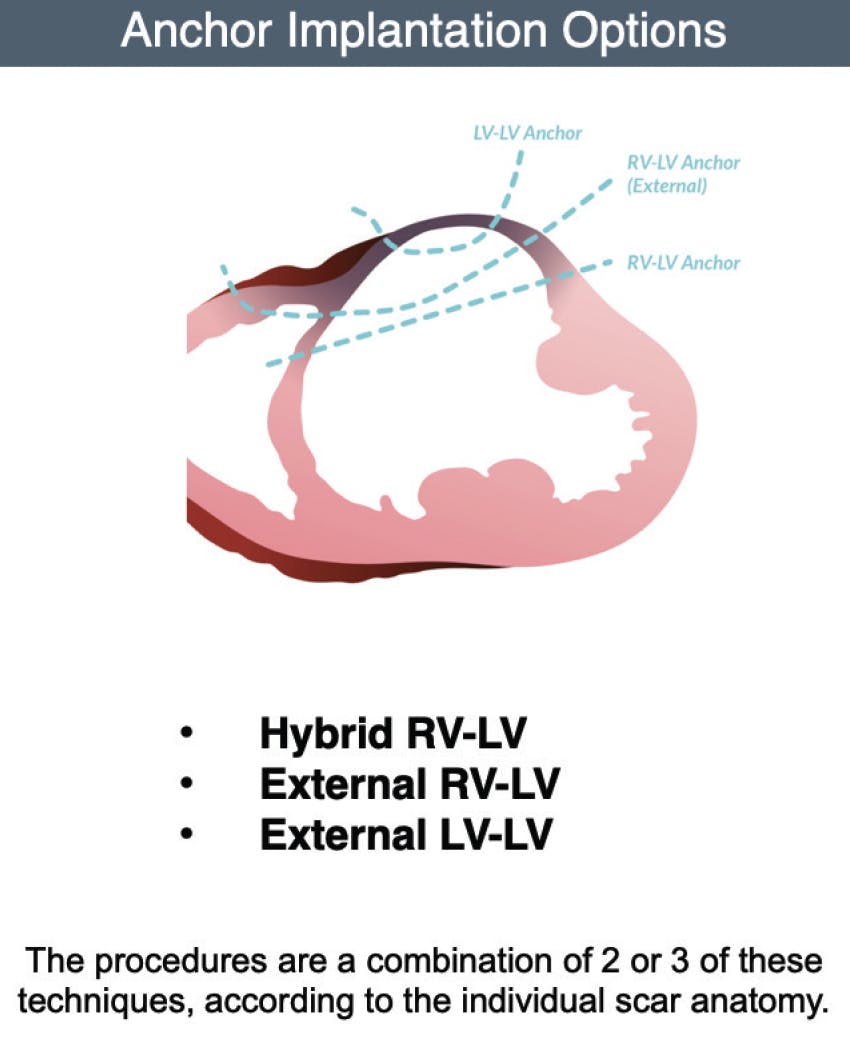
Figure 1. Anchor implantation options.
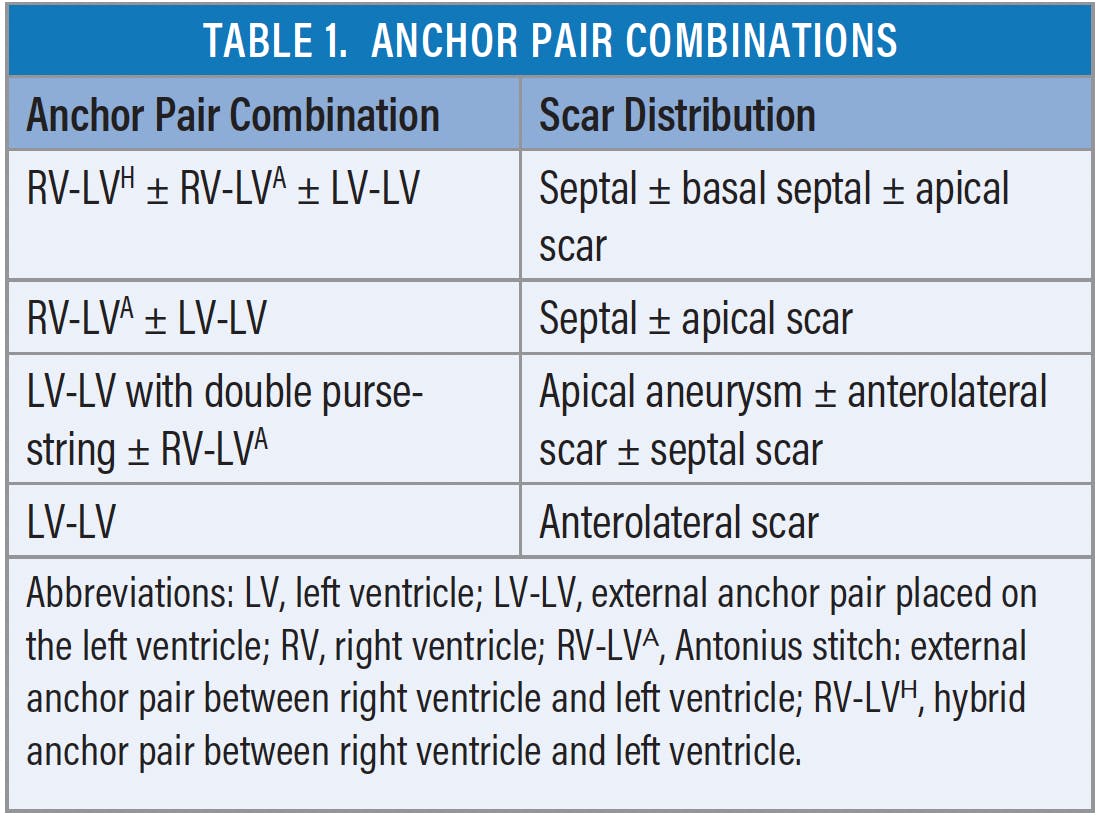
Septal scar can either be treated with one or more hybrid RV-LV anchor pairs, an external-only approach that involves placing one or more external RV-LV anchor pairs (also known as the Antonius stitch), or a combination of the previously described. In the past decade, hybrid anchor pairs were typically implanted as the basis for this procedure when aiming to exclude septal scar. External anchor pairs were subsequently added to complete the reconstruction. For example, if more septal scar is present basally to an already implanted hybrid pair(s), an additional external RV-LV anchor pair can be placed. If scar tissue is also present in the apex, additional external LV-LV anchors could then be implanted.
In a different scenario, if a true apical aneurysm is present in the absence of septal scar, external LV-LV anchor pairs can be implanted, with the addition of a double purse-string suture to complete the reconstruction of the apex (Figure 2).
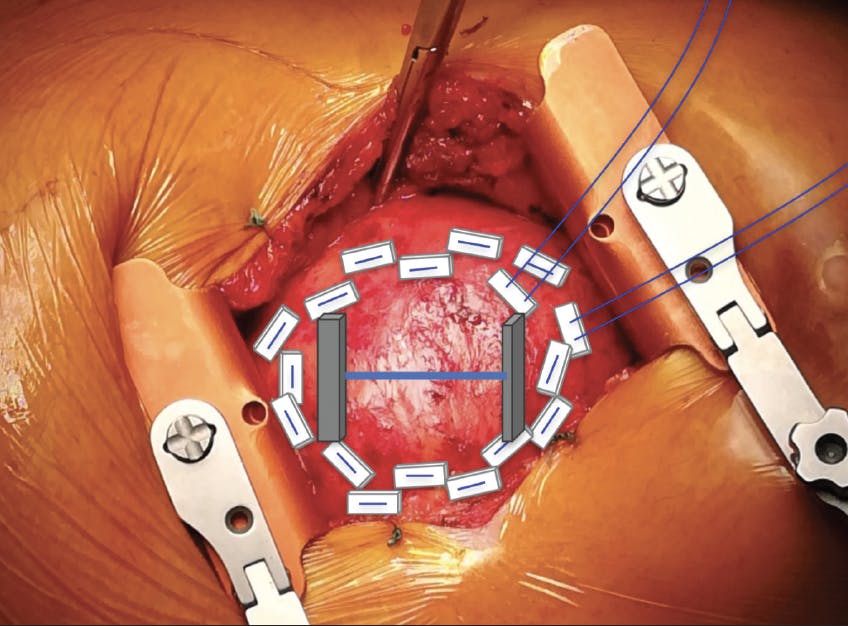
Figure 2. External LV-LV anchor pair plus double purse-string for the treatment of apical aneurysm.
Recently, a shift has taken place toward more frequent implementation of the external-only approach. Implementation of external anchors is technically easier to perform compared to a hybrid approach with use of internal anchors and could possibly further reduce the operative risk while achieving similar volume reductions.
The Revivent device and LIVE procedure are CE Marked and have been evaluated in single-arm cohort studies, including a 30-patient series from our center with 0% operative and 30-day mortality and 7% 1-year mortality (one patient due to COVID-19 and one patient due to cardiac arrest). After a mean follow-up of 2.7 years, survival was 87%. On echocardiography, the LIVE procedure resulted in significant reductions in left ventricular volumes of 41%.5
Although the LIVE procedure offers a unique minimally invasive approach to reconstructing a scarred LV, controlled comparisons to guideline-directed medical therapy (GDMT) have not been available to date. Thus, the ALIVE trial was designed to assess the safety and efficacy of the Revivent TC system on a larger scale.
THE ALIVE TRIAL
Trial Design
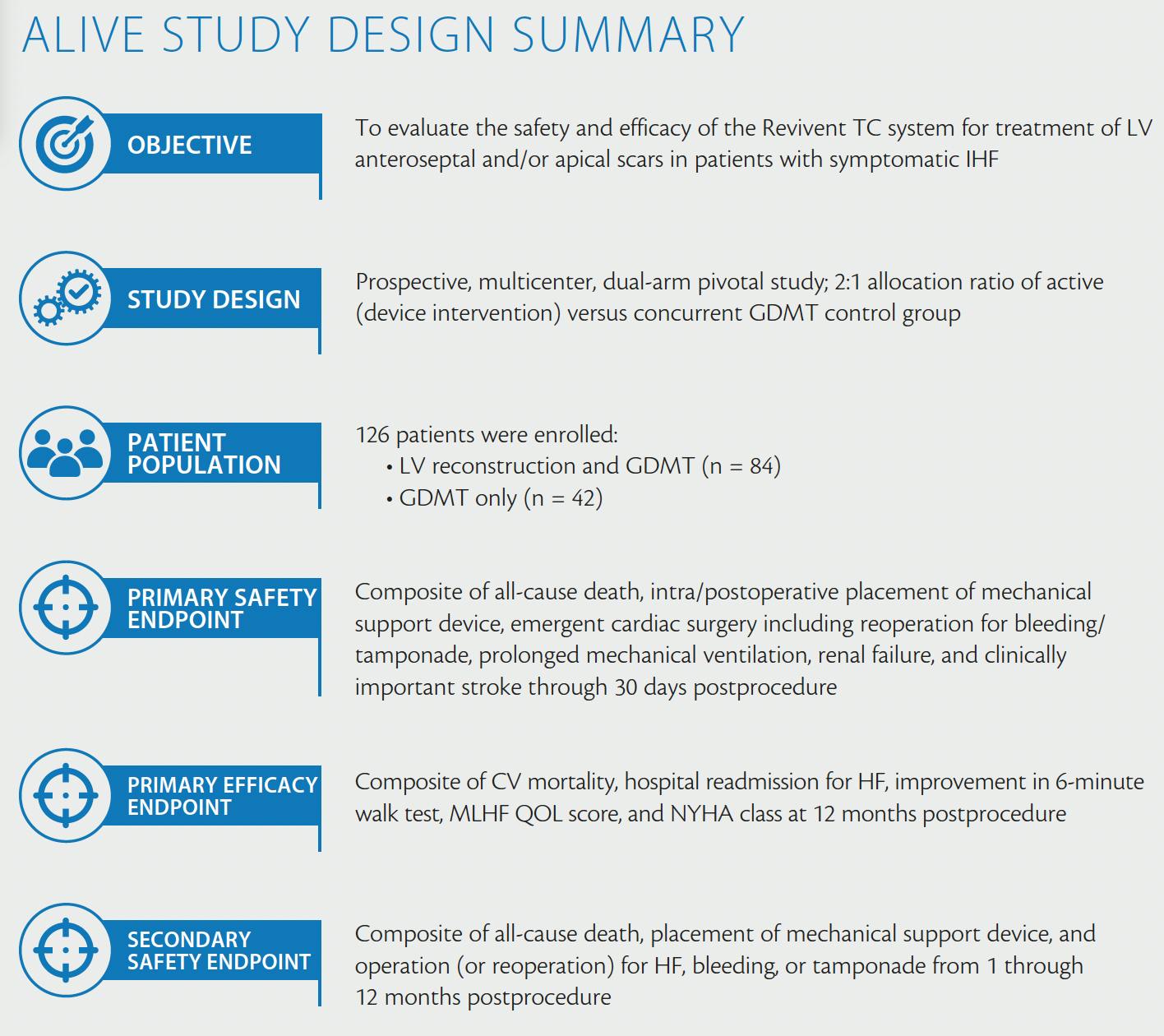
ALIVE is a prospective, multicenter, dual-arm pivotal study with a 2:1 allocation ratio of active (device intervention) versus concurrent GDMT control group (NCT02931240). The aim is to evaluate the safety and efficacy of the Revivent TC system for treatment of left ventricular anteroseptal and/or apical scars in patients with symptomatic IHF (see Sidebar). Patients allocated to the study group underwent left ventricular reconstruction with the BioVentrix Revivent TC system in addition to GDMT. Steps of the procedural technique applicable to the Revivent TC system are described in detail in a previous publication.3 Patients in the control group received GDMT only. The total sample size of this trial is 126 patients, with 84 patients enrolled in the study group and 42 patients in the control group (Figure 3). Enrollment began on August 29, 2017. All patients have now been enrolled at a total of 30 study site locations and are continuing through the follow-up phase. Total follow-up is 5 years, and results are expected to be presented in early 2024.
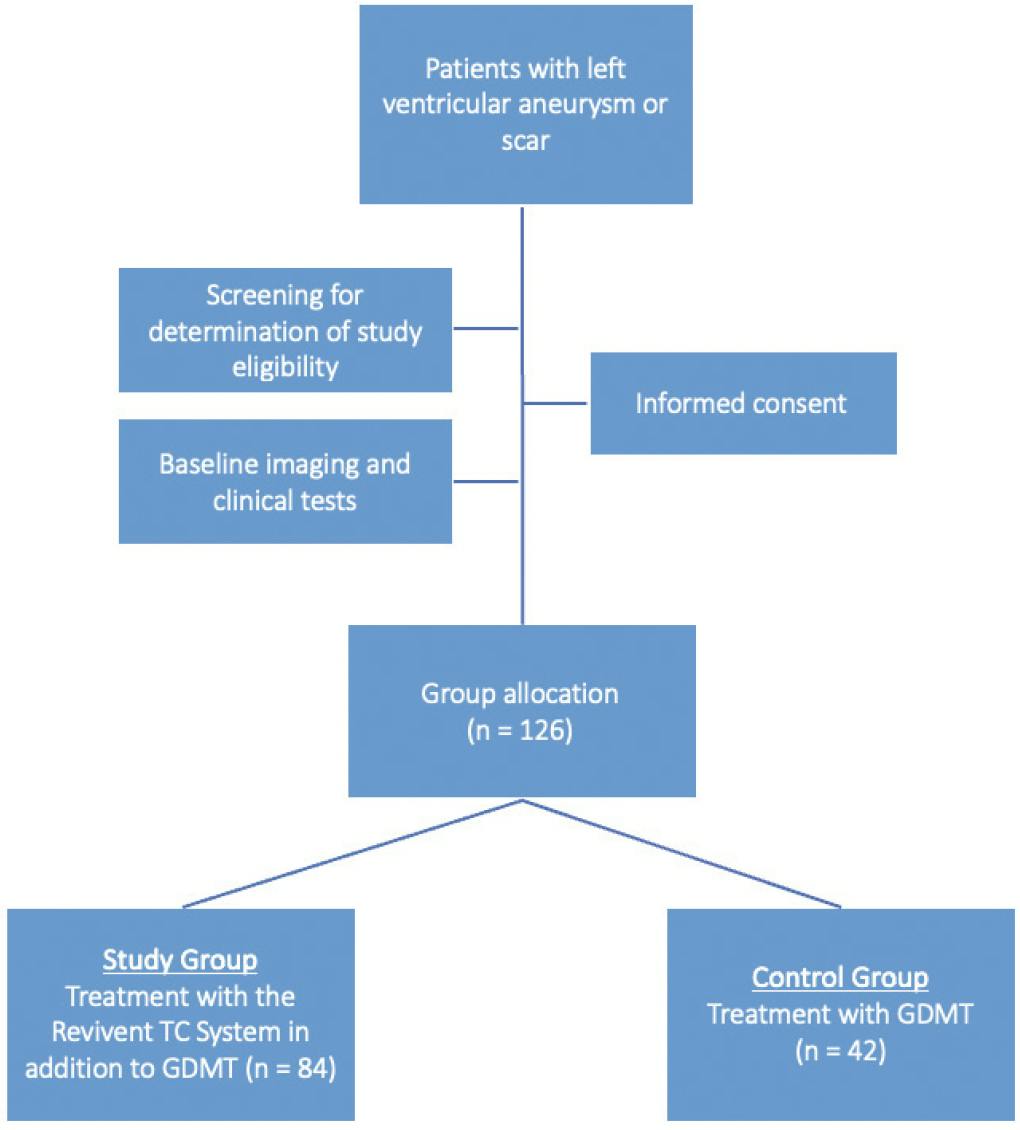
Figure 3. Flowchart of enrollment.
Patient Selection and Allocation
Patients were selected for enrollment by a heart team at each clinical site. Key inclusion and exclusion criteria are summarized in Table 2.
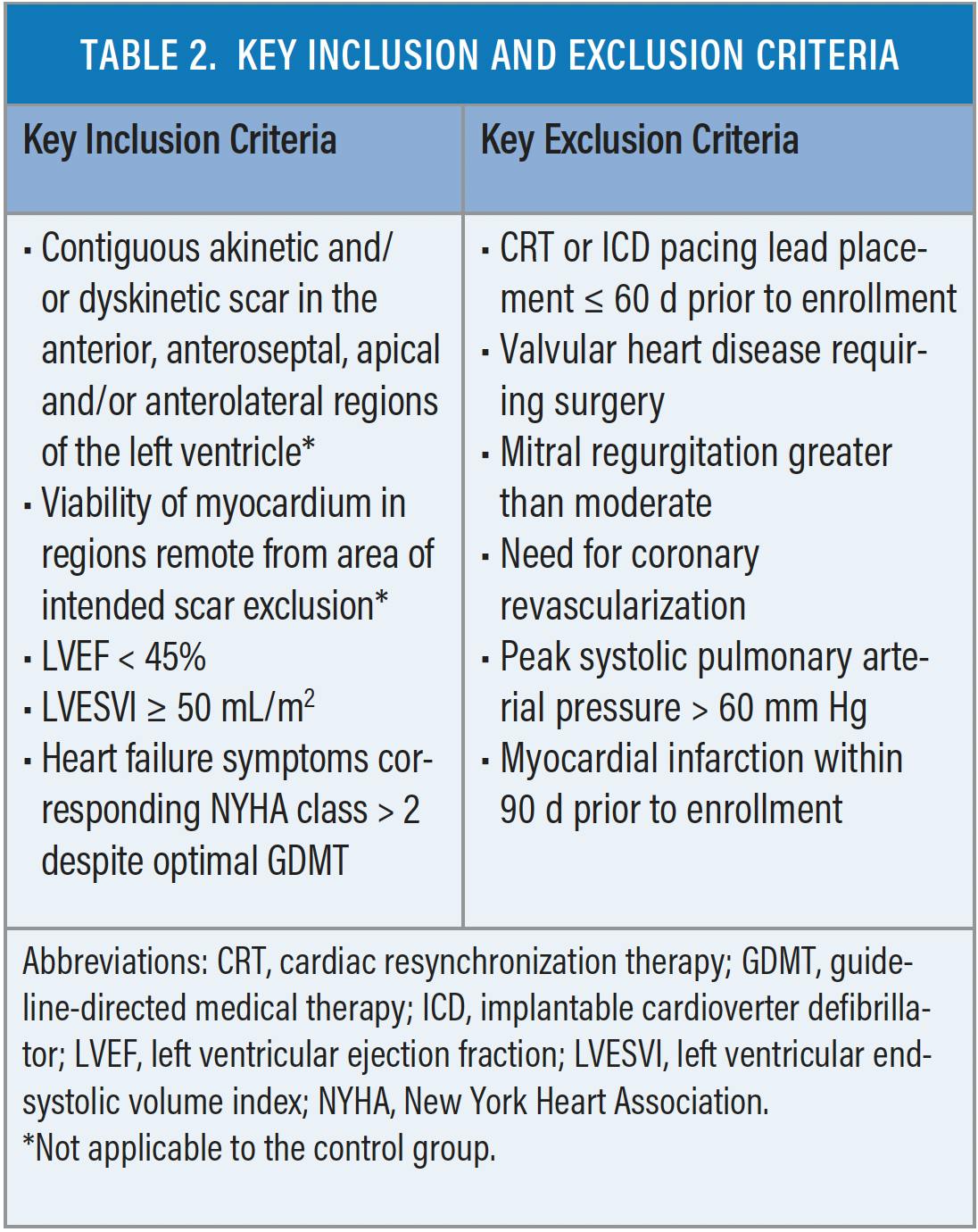
After clinical screening and obtaining signed informed consent, baseline echocardiography and imaging studies of the heart (echocardiogram, cardiac MR, or CT with contrast if MR is contraindicated) were performed to assess left ventricular geometry, morphology, and performance. This baseline echocardiogram and cardiac MR or CT were the qualifying imaging studies used for verification of patient eligibility to be allocated in the study group or the active concurrent control group.
Candidates for the study group had to meet all inclusion criteria; a patient who met all inclusion criteria except location of the contiguous scar involving septum and/or anterior, apical, and/or anterolateral regions was allocated to the control pool. In addition, if a patient had undergone previous pericardiotomy, left thoracotomy, or open heart surgery, they were also allocated to the control group. A patient could elect to be enrolled in the control group.
Outcome Measures
Primary safety endpoint. The primary safety endpoint is a composite endpoint of all-cause death, intra- or postoperative placement of a mechanical support device (intra-aortic balloon pump, ventricular assist device [VAD], extracorporeal membrane oxygenation, catheter based), emergent cardiac surgery including reoperation for bleeding or tamponade, prolonged mechanical ventilation, renal failure, and clinically important stroke (modified Rankin scale ≥ 4) through 30 days postoperatively. Data from patients treated with the Revivent TC system are compared to surgical outcome data from the Society of Thoracic Surgeons database for surgical left ventricular reconstruction.
Primary efficacy endpoint. The composite primary effectiveness endpoint is evaluated at 12 months postoperatively and compares data from the patients treated with the Revivent TC system to the control patients. The composite endpoint consists of and is tested in the following hierarchical order using the Finkelstein-Schoenfeld method:
- Cardiovascular (CV) mortality through 12 months; of note, the implantation of a VAD and heart transplantation is considered equivalent to CV mortality
- Hospital readmission for HF (time to first HF event) through 12 months
- Improvement in 6-minute walk test of ≥ 25 meters between baseline and 12 months
- Improvement in Minnesota Living with Heart Failure (MLHF) quality of life (QOL) score of ≥ 10 points between baseline and 12 months
- Improvement in New York Heart Association (NYHA) class by ≥ 1 grade between baseline and 12 months
Secondary safety endpoint. The secondary endpoint is a composite of all-cause death; placement of a mechanical support device; and operation (or reoperation) for HF, bleeding, or tamponade from 1 to 12 months (day 31 to 365) postoperatively. Data of patients treated with the Revivent TC system are compared to data from control patients. Patients in the control group are evaluated from day 31 to 365 after the date of enrollment into the study.
Statistical Analysis
The primary analysis will be performed using the intention-to-treat principle and will include all enrolled patients under the clinical protocol. A secondary per-protocol analysis will be performed that includes all patients treated with the study device according to the protocol. An as-treated analysis will be performed on all patients treated with the device regardless of any protocol violations. Patients in whom treatment with the study device was attempted but not completed were followed for safety for 30 days.
Limitations
This trial is subject to some design limitations. Importantly, the trial lacks a randomized controlled study design, thus limiting the power of comparison between the two study groups in this trial.
Second, patients included in the control group did not have to fulfill the same inclusion criteria as those enrolled in the study group. A patient could be enrolled in the control group if the scar location or left ventricular aneurysm did not permit treatment with the study device, implicating the possibility of important baseline differences between the two study arms. Moreover, if a patient had undergone previous cardiac surgery including CABG, they could be allocated to the control group. This translates into the possibility that patients in the control group have less ischemic burden, having been fully revascularized.
CONCLUSION
Data from previous cohort studies indicate that left ventricular reconstruction with the Revivent TC system can be used as a minimally invasive and at least equally effective beating heart alternative to SVR to reconstruct a negatively remodeled LV after a large anterior myocardial infarction to treat IHF.5,14,15 However, to more fully assess the safety and benefit of the Revivent TC system over GDMT in the treatment of IHF, the results of clinical trials such as the ALIVE trial are eagerly awaited. Despite some limitations in the design of the trial, this is the first dual-arm study with the aim of investigating the added value of the LIVE procedure over GDMT. Long term, a randomized controlled trial would be of value and provide further data to inform guidelines on the use of this procedure.
1. Khan MA, Hashim MJ, Mustafa H, et al. Global epidemiology of ischemic heart disease: results from the Global Burden of Disease study. Cureus. 2020;12:e9349. doi: 10.7759/cureus.9349
2. Albakri A. Ischemic heart failure: a review of clinical status and meta-analysis of diagnosis and clinical management methods. Clin Med Invest. 2018;3:1-15. doi: 10.15761/CMI.1000171
3. Hegeman RRMJJ, Swaans MJ, van Kuijk J-P, et al. State-of-the-art review: technical and imaging considerations in hybrid transcatheter and minimally invasive left ventricular reconstruction for ischemic heart failure. J Clin Med. 2022;11:4831. doi: 10.3390/jcm11164831
4. Cokkinos DV, Belogianneas C. Left ventricular remodelling: a problem in search of solutions. Eur Cardiol. 2016;11:29-35. doi: 10.15420/ecr.2015:9:3
5. Hegeman RRMJJ, Swaans MJ, Van Kuijk J-P, Klein P. Midterm outcome of hybrid transcatheter and minimally invasive left ventricular reconstruction for the treatment of ischemic heart failure. Struct Heart. 2022;6:100081. doi: 10.1016/j.shj.2022.100081
6. Zivelonghi C, Klein P, Swaans MJ, Agostoni P. Hybrid transcatheter left ventricular reconstruction for the treatment of ischaemic cardiomyopathy. EuroIntervention. 2018;13:1899-1901. doi: 10.4244/EIJ-D-17-00413
7. Doenst T, Velazquez EJ, Beyersdorf F, et al. To STICH or not to STICH: we know the answer, but do we understand the question? J Thorac Cardiovasc Surg. 2005;129:246-249.
8. Jones RH, Velazquez EJ, Michler RE, et al. Coronary bypass surgery with or without surgical ventricular reconstruction. N Engl J Med. 2009;360:1705-1717. doi: 1056/NEJMoa0900559
9. Michler RE, Rouleau JL, Al-Khalidi HR, et al. Insights from the STICH trial: change in left ventricular size after coronary artery bypass grafting with and without surgical ventricular reconstruction. J Thorac Cardiovasc Surg. 2013;146:1139-1145.e6. doi: 10.1016/j.jtcvs.2012.09.007
10. Gaudino M, Castelvecchio S, Rahouma M, et al. Long-term results of surgical ventricular reconstruction and comparison with the Surgical Treatment for Ischemic Heart Failure trial. J Thorac Cardiovasc Surg. Published online April 26, 2022. doi: 10.1016/j.jtcvs.2022.04.016
11. Di Donato M, Castelvecchio S, Menicanti L. End-systolic volume following surgical ventricular reconstruction impacts survival in patients with ischaemic dilated cardiomyopathy. Eur J Heart Fail. 2010;12:375-381. doi: 10.1093/eurjhf/hfq020
12. Holly TA, Bonow RO, Arnold JMO, et al. Myocardial viability and impact of surgical ventricular reconstruction on outcomes of patients with severe left ventricular dysfunction undergoing coronary artery bypass surgery: results of the Surgical Treatment for Ischemic Heart Failure (STICH) trial. J Thorac Cardiovasc Surg. 2014;148:2677-2684.e1. doi: 10.1016/j.jtcvs.2014.06.090
13. Katikireddy CK, Samim A. Myocardial viability assessment and utility in contemporary management of ischemic cardiomyopathy. Clin Cardiol. 2022;45:152-161. doi: 10.1002/clc.23779
14. Klein P, Anker SD, Wechsler A, et al. Less invasive ventricular reconstruction for ischaemic heart failure. Eur J Heart Fail. 2019;21:1638-1650. doi: 10.1002/ejhf.1669
15. Hegeman RRMJJ, McManus S, van Kuijk J-P, et al. Inward displacement: a novel method of regional left ventricular functional assessment for left ventriculoplasty interventions in heart failure with reduced ejection fraction (HFrEF). J Clin Med. 2023;12:1997. doi: 10.3390/jcm12051997
Advertisement
Advertisement