Advertisement
Advertisement
September/October 2023
Compensation and Production Trends for Interventionalists: A Shifting Subspecialty in a Postpandemic World
Despite staffing issues and pandemic challenges, cardiovascular specialties remain stable and show promise for the future.
For the first time since 2020, MedAxiom’s Cardiovascular Provider Compensation & Production Survey report tells a story of stability, with year-over-year data relatively unchanged. This may be welcome news after several years of tumult caused by a worldwide pandemic that was particularly hard on the health care industry. Although the overall cardiovascular field seems to be hitting a “new normal” stasis in a postpandemic world, there are some notable shifts in the subspecialty of interventional cardiology. The data highlighted herein are taken from a national cardiovascular survey conducted in 2023 that included 198 total program respondents and represented 5,806 total cardiovascular providers.
Compensation and production across all cardiovascular specialties remained stable between 2021 and 2022. Electrophysiology and interventional cardiology tied again for highest compensation, with 2022 medians of $714,976 and $709,714 per full-time (FT) employee, respectively.
PRIVATE VERSUS INTEGRATED PRACTICE: THE GAP WIDENS
The gap in median total compensation between private and integrated cardiologists narrowed in 2021 but widened in 2022, with compensation increasing for integrated cardiologists and decreasing for cardiologists in private practices. Both private and integrated practices used advanced practice providers in almost equal proportions.
When considering the subspecialty makeup of the two ownership cohorts (Figure 1), the ratio of interventional and advanced heart failure (HF) cardiologists accounts for the main distinction between private and integrated practices. Advanced HF physicians comprise approximately 4% of the total physician count in integrated programs compared to around 1% in private practices. Interventional cardiologists comprise nearly 35% of physicians in private groups but < 30% in integrated practices. In both ownership models, the subspecialty of cardiologists identifying as invasive/noninterventional continued to shrink in 2022, as it has for several years.
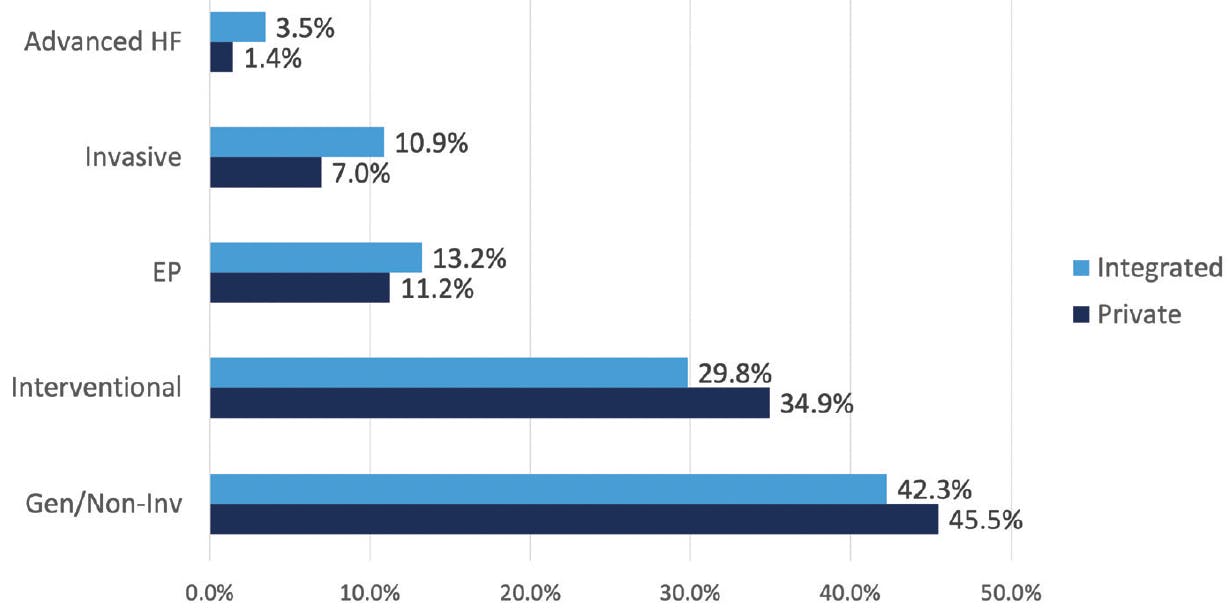
Figure 1. Cardiology subspecialty mix by ownership model. EP, electrophysiology.
In terms of work relative value unit (wRVU) production, private physicians again outpaced integrated cardiologists, regardless of specialty area. The largest differences were again seen in advanced HF cardiologists (51% Δ) and interventionalists (28%).
CATH LAB VOLUMES AND PROCEDURES IN 2022: THE “NEW NORMAL”?
After a significant drop in 2020, the volume of invasive procedures in cath labs has not fully recovered to prepandemic levels, and the ratio of percutaneous coronary intervention (PCI) to catheterizations continues to hover around 40% (Figure 2). This signals that procedural volumes may have plateaued at a “new normal.” The report data suggest that with an increase in the use of advanced imaging procedures like CTA in 2022 and beyond, the number of cath lab patients who do not require an interventional procedure after angiography will decline.
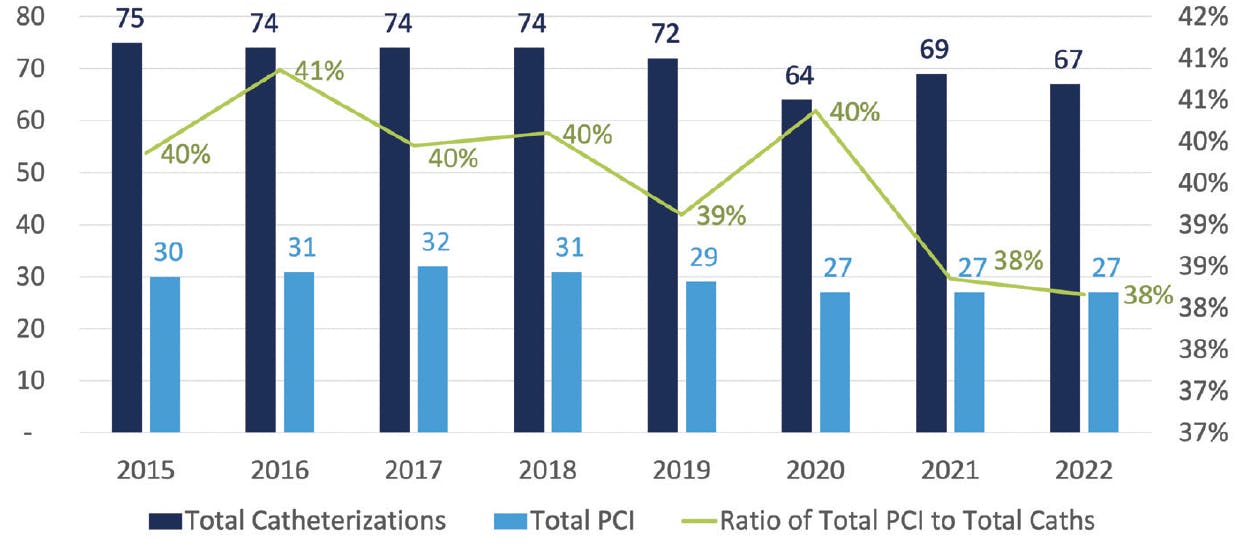
Figure 2. Median cath lab volumes per 1,000 active patients.
In the context of data from previous reports, it is unclear whether the ratio of advanced imaging studies to total catheterization volumes in 2022 is shifting up or down when looking at the median data (Figure 3). In 2022, “outlier” programs with higher volumes of advanced imaging caused the average to deviate from the median and may affect the ratio of PCIs to catheterizations in the future. When considering the raw data for these outlier programs, 10% of programs had higher median PCI-to-catheterization ratios compared to the database. This was especially true for the programs with high percentages of CTA usage.
For the past decade, interventional cardiologists have performed the majority of invasive procedures and PCIs (Figure 4 and Figure 5). The largely unchanged median of total catheterizations remained at 262 per FT interventionalist.
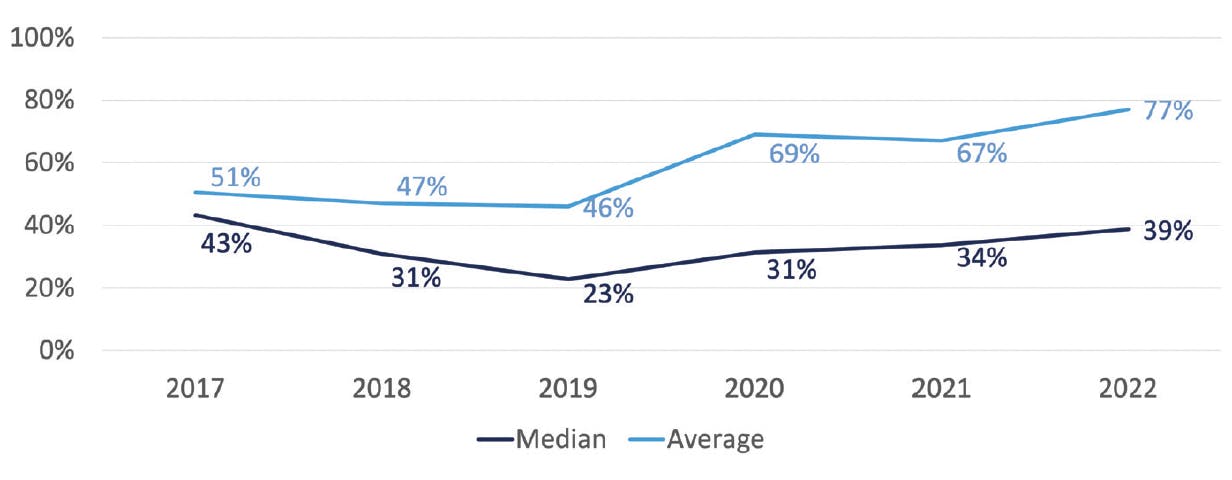
Figure 3. Ratio of advanced imaging studies to total catheterizations.
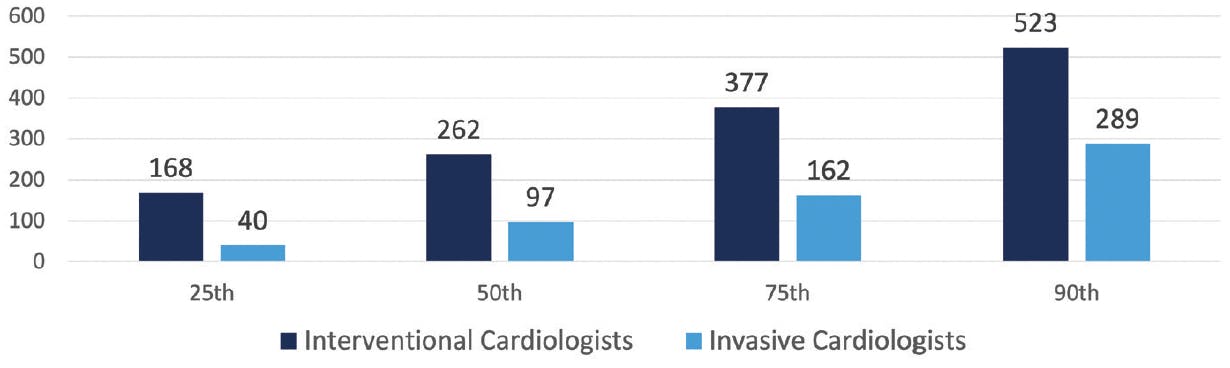
Figure 4. Catheterizations per FT equivalent cardiologist (2022 percentiles).
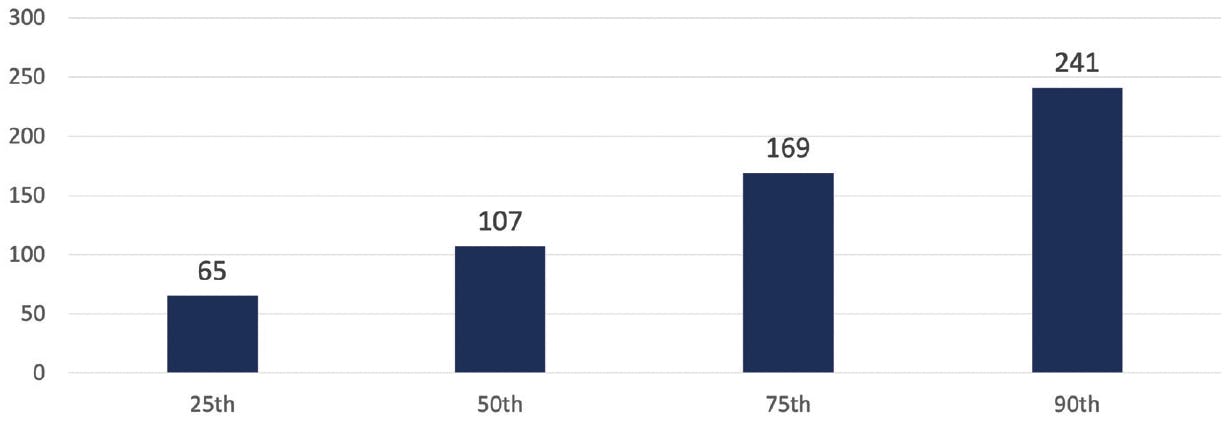
Figure 5. PCIs per FT interventional cardiologist (2022 percentiles).
The 2022 data showed a “mixed bag” in terms of advanced interventional procedures. Median transcatheter aortic valve replacement (TAVR) volumes continued to gradually increase in 2022 at the patient panel level (per 1,000 active patients) and at the per–FT interventionalist level (Figure 6). For every 1,000 active cardiology patients, there were almost three TAVRs, and the median number of TAVRs performed by individual interventionalists rose to 42 per FT physician. Median total left atrial appendage closure procedures also saw an increase, but total PCIs for acute myocardial infarction (AMI) have seen a fairly steady decrease since 2018. Median total PCI chronic total occlusion (CTO) volumes plateaued in 2022 (Figure 7).
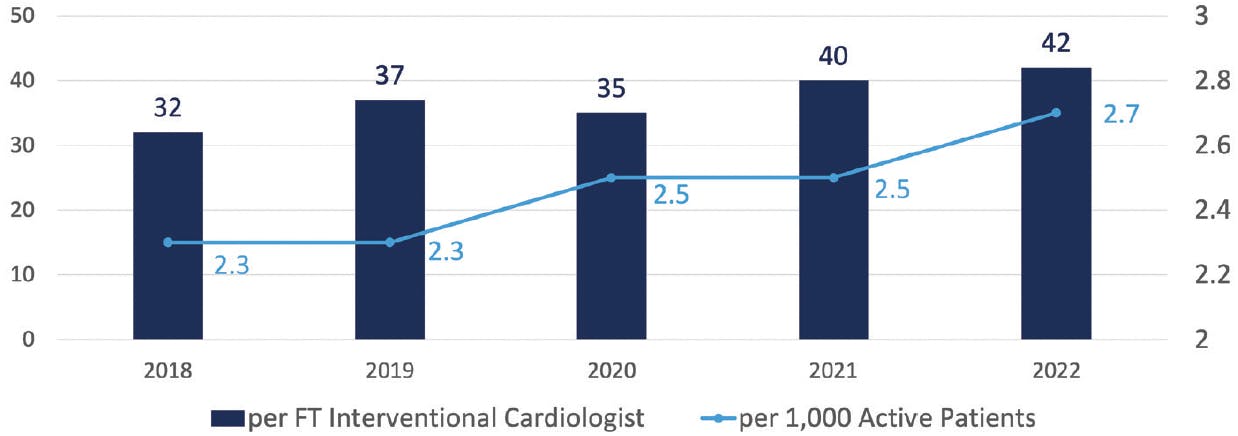
Figure 6. Median TAVR volume per FT interventionalist and panel.
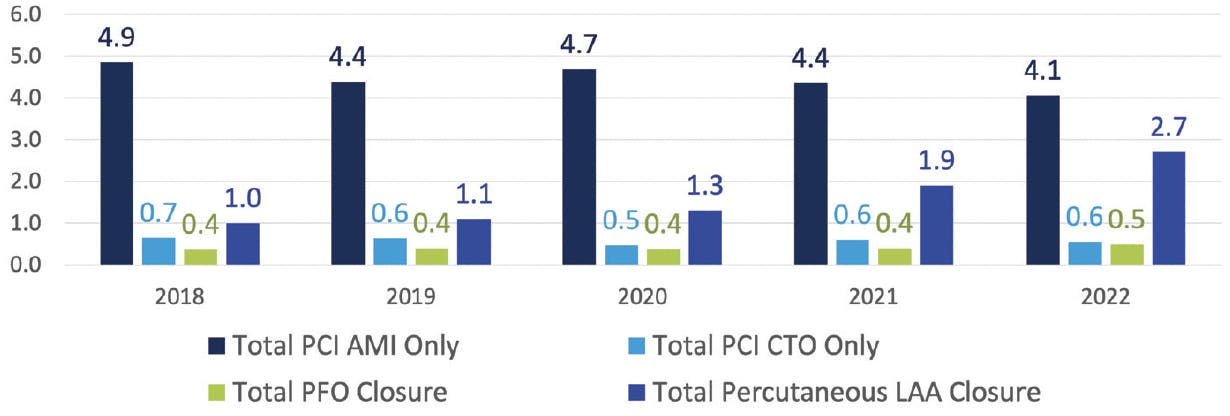
Figure 7. Median advanced interventional services per 1,000 active patients. LAA, left atrial appendage; PFO, patent foramen ovale.
INTERVENTIONAL CARDIOLOGY PRODUCTION DATA SHOW VARIETY
Due to staffing shortages and the “Great Exodus” in the cardiovascular space—particularly in high-acuity and highly technical subspecialty areas—interventional cardiology shows a range of procedural focus and practice differences. Not all interventional cardiologists perform all procedures, with many groups opting to centralize volumes with a smaller number of operators. Findings from the report showed that 93% of interventional cardiologists performing PCI will focus on AMI PCI only, while 58% of that same group perform CTO PCI procedures. Smaller percentages of interventional cardiologists perform TAVR (23%) and patent foramen ovale closures (22%).
Interventionalists also vary in the amount of time spent completing other practice activities. Some focus on performing procedures, but others concentrate more of their time on lab work, image analysis, and administrative duties. An analysis of these differences reveals a divergence in the proportion of wRVU production generated by imaging and evaluation and management (E/M) services. The report data on proportion of time spent in the lab versus imaging versus E/M services is inconclusive and cannot be used to definitively anticipate total wRVU generation or total compensation.
STRUCTURAL HEART DATA CONTINUE TO EVADE DEFINITION
MedAxiom often receives queries about the aptly named “super subspecialty” of structural heart, which shows variability much like its parent subspecialty of interventional cardiology. After polling MedAxiom membership, data showed that structural heart physicians have a diverse set of focus areas, making it difficult to clearly define the structural heart physician role for peer comparisons and compliance valuations related to compensation. Survey responses showed some physicians putting most of their efforts into structural heart procedures while most spent their time working on a combination of cardiac interventions and structural heart services.
When calculating production in terms of wRVUs, MedAxiom tracked wRVUs at the physician level and what percentage of a physician’s total comes from certain procedures or services, such as structural heart procedures. For physicians performing structural heart procedures, Figure 8 shows the differences in percentile rankings for the portion of structural heart wRVUs to total wRVUs.
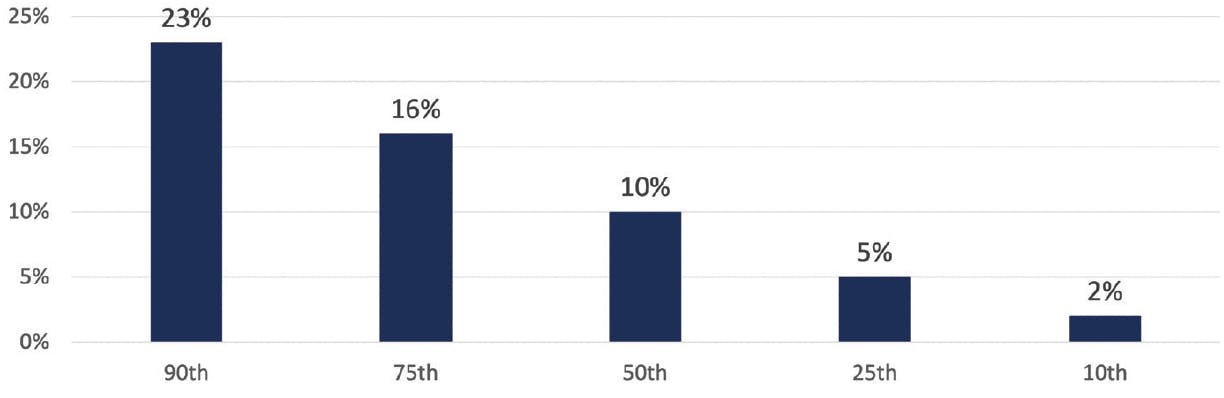
Figure 8. Percent of structural heart wRVUs to total wRVUs (2022).
While this super subspecialty evades definition, physicians in the top quartile with ≥ 16% wRVUs from structural heart procedures received a median compensation of $716,000, which shows virtually no difference (< 1%) from the overall interventional median compensation of $709,714. Although structural heart physicians have very similar compensation to their interventional counterparts, they also produced at a rate 11% lower than that of interventionalists. Structural heart physicians generated a median of 10,581 wRVUs versus interventional cardiologists who produced a median of 11,756 wRVUs.
CONCLUSIONS AND FUTURE DIRECTIONS
The year-over-year trends between the 2021 and 2022 MedAxiom Compensation & Production Survey reports paint a more stable portrait of the health care landscape and show promise for a better future in the cardiovascular business. The staffing issues that began in 2019 and were exacerbated by the pandemic have played a role in making interventional cardiology a subspecialty with slightly higher rates of deviation in practice and procedures compared to other subspecialties, despite a relatively steady cath lab volume.
Future changes in the field, such as the increasing involvement of private equity in cardiology programs, the emergence of ambulatory service centers, and the constantly evolving procedural technology in cardiac interventions, may also produce shifts in how interventional cardiologists practice. Despite these changes, interventional cardiology has weathered the storm of the pandemic years to remain close to the top of its field in terms of compensation and production.
Download the full report at medaxiom.com/compsurvey
Advertisement
Advertisement