Advertisement
Advertisement
January/February 2023
Is There a Sex-Related Difference in Response to Renal Denervation?
What do we know, and what questions do we have?
By Zainab Dakhil, FIBMS Cardiol, FABHS Med, FIBMS Med, DM Med, DM Resp, and Sara Al Raisi, MB, BCh, BAO, MRCP(UK), FRACP, PhD
Renal denervation (RDN) in the treatment of hypertension continues to evolve, with new evidence emerging regarding its safety and efficacy. This evidence is reinforced by the recognition of hypertension as a major contributor to cardiovascular morbidity and mortality and, therefore, the need for adjunct therapy aside from medication to help achieve better blood pressure (BP) control. Hypertensive women have been found to have worse cardiovascular outcomes than their male counterparts. Furthermore, female-specific factors can complicate the management of hypertension and are implicated in the overall increase in cardiovascular risks. As a result, concerns regarding the need for sex-specific consideration in the management of hypertension have been raised previously. With some studies reporting variable BP response to antihypertensives based on sex, an interesting question remains: Does the sex of a patient have an effect on response to RDN? To date, data regarding sex-related differences in response to RDN are limited, and further studies addressing this issue are warranted.
RDN was developed as a treatment option for patients with uncontrolled hypertension despite lifestyle modification and pharmacotherapy.1 Early randomized trials demonstrated a significant reduction in office BP after RDN.1-5 However, the first sham-controlled trial, SYMPLICITY HTN-3, showed no difference in BP reduction between the RDN and sham control arms.6 Nonetheless, more recent studies demonstrated a significant, although less pronounced, reduction in office and 24-hour ambulatory BP.7-11 Hypertension remains an important risk factor for cardiovascular disease in both men and women. Globally, it affects 30% of the adult population, with an estimated prevalence of resistant hypertension at 14% to 20%.12-14 A dose-dependent relationship was found between BP and mortality from cardiovascular and cerebrovascular disease.15 Thus, even a modest reduction in BP can lead to better outcomes with regard to cardiovascular morbidity and mortality.16 Recently, Mahfoud et al demonstrated that RDN significantly increased time in therapeutic range (TTR), defined as the proportion of time the patient spends within a predetermined BP (< 140 mm Hg for office systolic BP and < 130 mm Hg for ambulatory systolic BP).17 TTR was shown to be an independent predictor of cardiovascular events in hypertensive patients.18 In the study reported by Mahfoud et al, a 10% increase in TTR through 6 months post-RDN was associated with a significant reduction in cardiovascular events at 6 through 36 months.17
Hypertension in women carries a greater burden on cardiovascular health compared to men.19 Several sex-specific factors are implicated in the mechanism of hypertension in women, including hormones, pregnancy-related factors, and sympathetic activity. Although some evidence regarding sex-related variation in response to antihypertensives is available, data regarding differences in response to RDN between men and women are limited. In this article, we highlight issues that are specific to hypertension in women. Furthermore, we summarize the available data on sex-related differences in hypertension treatment, including the response to medication as well as RDN.
HYPERTENSION IN WOMEN
Overall, hypertension is more prevalent in men compared to women (52% vs 43% for United States adults aged 20 years or older). However, in adults aged 65 years or older, the prevalence is higher in women.13 Women are more likely to be aware of their condition, under treatment, or in control of their hypertension.13 The risk of cardiovascular disease was shown to be higher in women for every 10-mm Hg increase in systolic BP.19 Moreover, life expectancy was found to be shorter by approximately 5 years in hypertensive compared to normotensive women.20 Hypertension control resulted in a greater reduction in cardiovascular mortality among women compared to men and was found to have the highest impact on reducing cardiovascular mortality compared to all other risk factors.16
Sex-specific factors are implicated in the development and pathogenesis of hypertension in women. Estrogen has a protective effect in premenopausal women. It plays an important role in endothelial function and causes vasodilatation as a result of increased synthesis of nitric oxide and inhibition of sympathetic activity and renin-angiotensin-aldosterone system.21 Therefore, a sharp reduction in estrogen level after menopause results in activation of the renin-angiotensin-aldosterone system and sympathetic nervous system, which in turn increases risk of hypertension in older women.21 Moreover, an increase in endothelin level in postmenopausal women due to lack of its inhibition by estrogen can further implicate the development of hypertension by increasing renal vasoconstriction and salt reabsorption. Additionally, sex hormones can influence vascular function and are linked to arterial elasticity,22 the lack of which during menopause leads to an increase in arterial stiffness and decrease in arterial compliance. Whereas hypertensive women have a lower level of central sympathetic activity than men, there is a more dramatic increase in muscle sympathetic nerve activity (marker for central synthetic activity) in women with age that increases their risk of developing hypertension in older age.23 Hypertension is one of the most common conditions complicating pregnancy. Gestational hypertension affects 6% to 7%, and preeclampsia affects 10% of pregnancies.24 Both are associated with an increased risk of developing chronic hypertension.25 Combined hormonal contraception is associated with a small increase in BP that usually resolves after discontinuation of therapy, the mechanism of which is not fully understood.26 This risk increases with longer duration of use and in the presence of other cardiovascular risk factors, including smoking and obesity.27
Data regarding the effect of hormone replacement therapy on the development of hypertension in postmenopausal women is conflicting and, if present, it only leads to a mild increase in BP.28-31 Fibromuscular dysplasia as a secondary cause of hypertension is more common in women and should be considered in young hypertensive women.32
SEX-RELATED DIFFERENCES IN ANTIHYPERTENSIVES
Sex-related differences in hypertension treatment—including class of medications prescribed, treatment response, side effects, and pharmacokinetics—have been reported across several studies. In a large cross-sectional survey including a hypertensive United States population, women were more likely to be on treatment compared to men (61.4% vs 56.8%, respectively). Furthermore, the use of diuretics and angiotensin receptor blockers (ARBs) was more common in women (31.6% vs 22.3% for diuretic and 11.3% vs 8.7% for ARBs, in women and men, respectively). For those who were receiving antihypertensive medications, men were more likely to use ≥ 3 drugs, especially in the older population (60-69 years, 12.3% vs 19.8%; 70-79 years, 18.6% vs 21.2%; and ≥ 80 years, 18.8% vs 22.8%, in women and men, respectively).33 In other studies, women were prescribed thiazide more often than men, which could be explained by the added benefit of thiazide on bone density in postmenopausal women as a result of reduced renal calcium excretion and subsequent reduction of fracture risk.34,35 Furthermore, after adjustment for baseline variables, amlodipine was found to be associated with a better decline in diastolic BP in women with mild to moderate hypertension when compared to men (91.4% vs 83%; P ≤ .001).36
Regarding pharmacokinetics, sex variation in response to Β-blockers has been described. It has been shown that men have a quicker absorption rate of metoprolol, whereas women have slower drug clearance and smaller volume of distribution. Thus, a 50% dose reduction of metoprolol was recommended when used in healthy young women compared to men.37
Additionally, women were reported to experience more frequent adverse effect to most antihypertensives compared to men, with the exception of mineralocorticoid recepto antagonists.38,39
With regard to the BP-lowering effect on clinical outcomes, no significant difference was found between men and women in the occurrence of major adverse cardiovascular events.40,41
SEX-RELATED DIFFERENCES IN RESPONSE TO RDN
Data regarding sex-related difference in response to RDN are limited. A meta-analysis including 15 studies evaluated the efficacy of RDN in 857 patients with resistant hypertension at 6 months compared to medical therapy and/or sham procedure; it revealed that patient sex does not impact either 24-hour systolic blood pressure (meta-regression coefficient, –0.0119; 95% CI, –0.0481 to 0.0242; P = .5174) or 24-hour diastolic blood pressure (meta-regression coefficient, –0.0061; 95% CI, –0.0421 to 0.0299; P = .7407) after RDN.42
In another meta-analysis assessing the impact of RDN on renal outcomes, a univariable mixed effects meta-regression analysis performed on 48 cohorts showed that female sex was not a predictor for change in estimated glomerular filtration rate (coefficient of 0.57; CI, 0.40-1.54; P = .25).43
RADIANCE-HTN TRIO, a randomized single-blinded trial that assessed the impact of ultrasound RDN on daytime ambulatory systolic BP at 2 months in patients with resistant hypertension, demonstrated no difference in change in daytime ambulatory systolic BP according to patient sex (P = .69).44 Similar results were found in the REQUIRE and SYMPLICITY HTN-3 trials.6,45
SPYRAL-HTN OFF MED, a single-blinded randomized sham-controlled trial, recruited patients with mild to moderate hypertension on no medical therapy to evaluate the impact of RDN on baseline-adjusted difference in 24-hour systolic BP. In the prespecified subgroup analysis, the change in 24-hour systolic BP at 3 months for RDN and the sham group were similar for women and men (–2.5[–6.8 to 1.8] versus –4.8 [–7.4 to –2.2]; P = .35, respectively).8
RADIANCE-HTN SOLO, another United States RDN study, recruited patients with resistant hypertension and had a primary outcome of change in daytime ambulatory systolic BP at 12 months. A multivariate model analysis showed that male sex was a predictor for average real variability in home systolic BP after RDN (P = .003).46
In a prospective cohort involving a Chinese population with resistant hypertension and assessing the effect of RDN on mean systolic and diastolic BP reduction at 3 months, women had a better response in systolic BP reduction after RDN (Β –0.31; P = .005), whereas sex had no impact on diastolic BP response to RDN (Β –0.243; P = .051).47
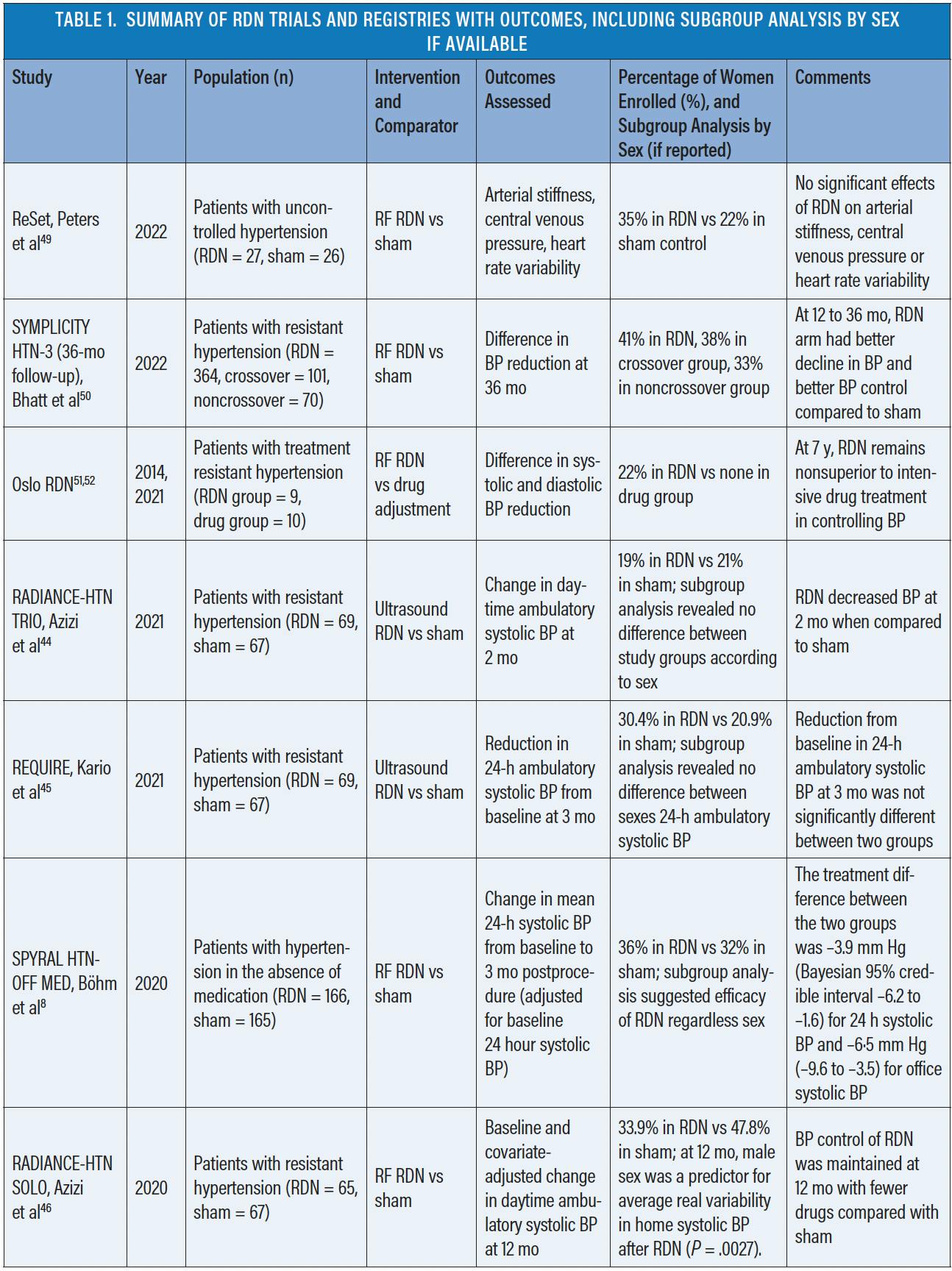
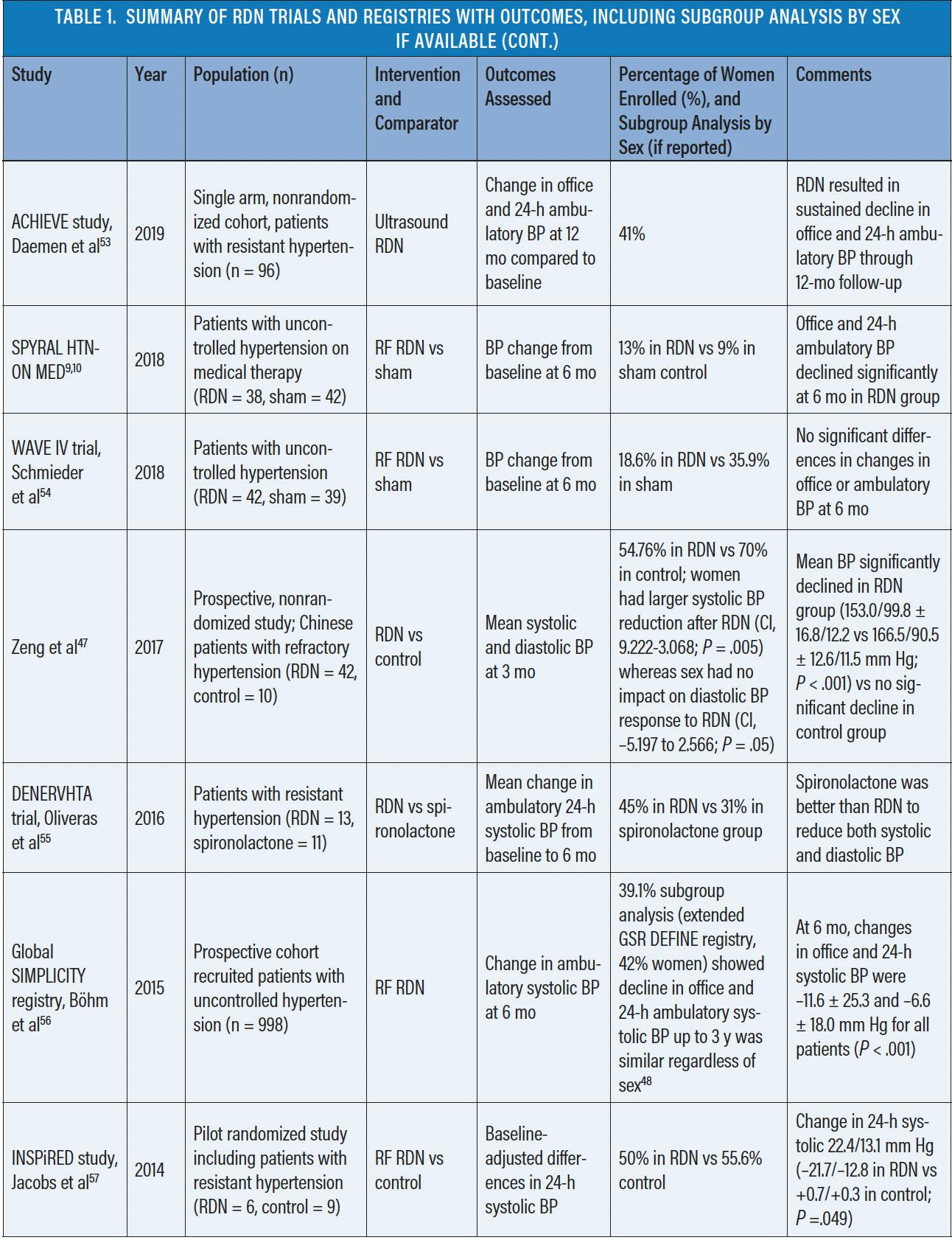
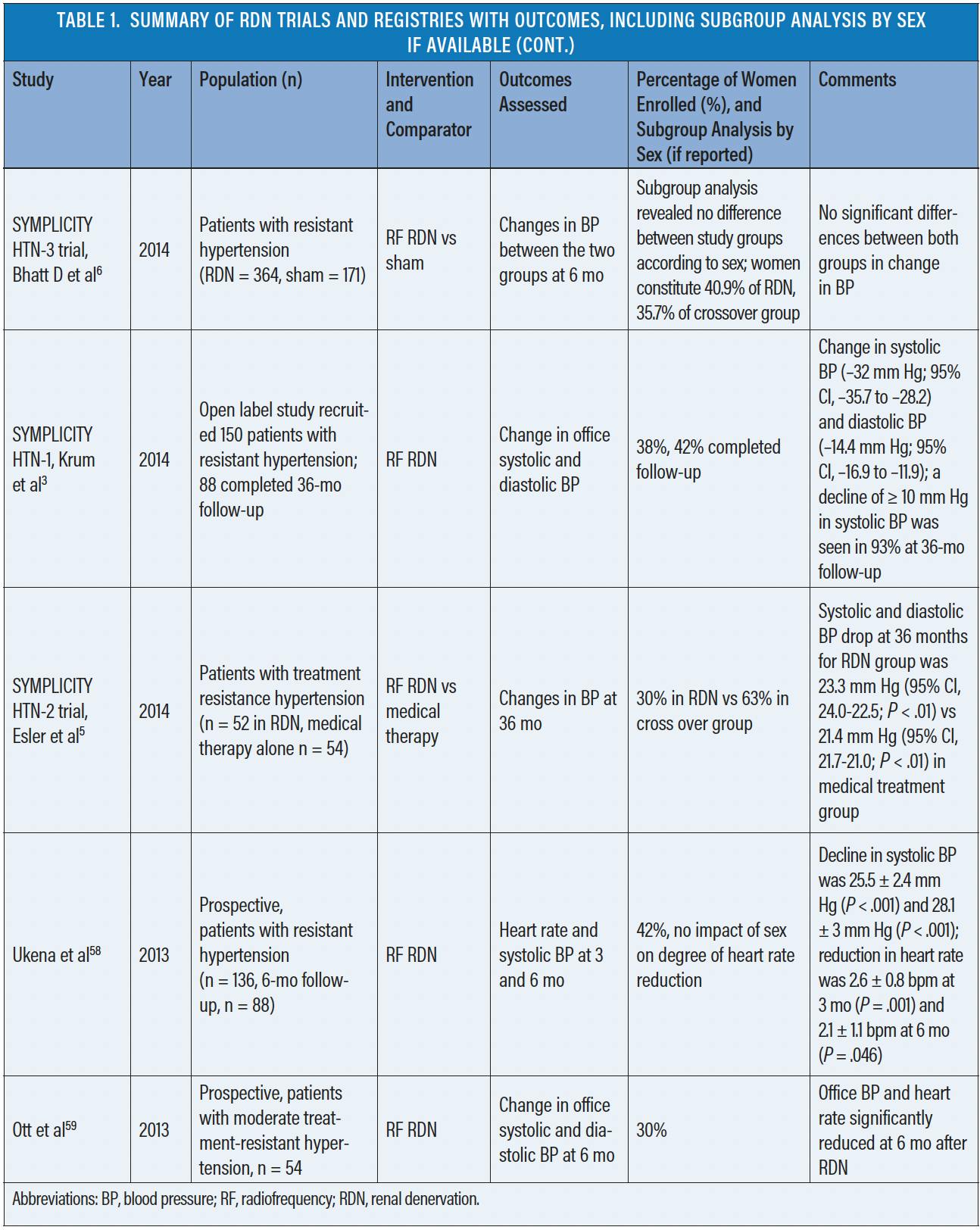
Analysis from the extended GLOBAL SIMPLICITY DEFINE registry (n = 2,872 patients, 42% women), showed no difference in office systolic or ambulatory 24-hour systolic BP reduction in women versus men (–18.4 vs –15.5, P = .13 for systolic BP for women and men, respectively; and –8.8 vs –9.3, P = .14 for ambulatory 24-hour systolic BP, respectively).48 Table 1A, Table 1B, and Table 1C3,5,6,8-10,44-59 summarizes the outcomes from RDN studies, including subgroup analysis by patient sex when included.
PERSPECTIVE
Hypertension is a major contributor to cardiovascular health in women, especially in the older population. Therefore, using all available resources to adequately control BP in hypertensive women is of paramount importance. RDN is a potential option for hypertension treatment, with new studies showing positive results. Although current guidelines have no sex-specific recommendation for hypertension treatment, awareness and understanding of factors that impact hypertension and its management in women are important to improve outcomes. The currently available data on sex-related differences in response to hypertension treatment (medication or RDN) have limitations, the reasons for which include underrepresentation of women in hypertension trials, small sample size, inclusion of heterogeneous population in meta-analyses, and differences in clinical trials designs and protocols (Figure 1). Therefore, little evidence can be generated from the existent literature, and addressing these limitations in future studies trials will help to derive a patient-centered therapeutic approach (Figure 1).
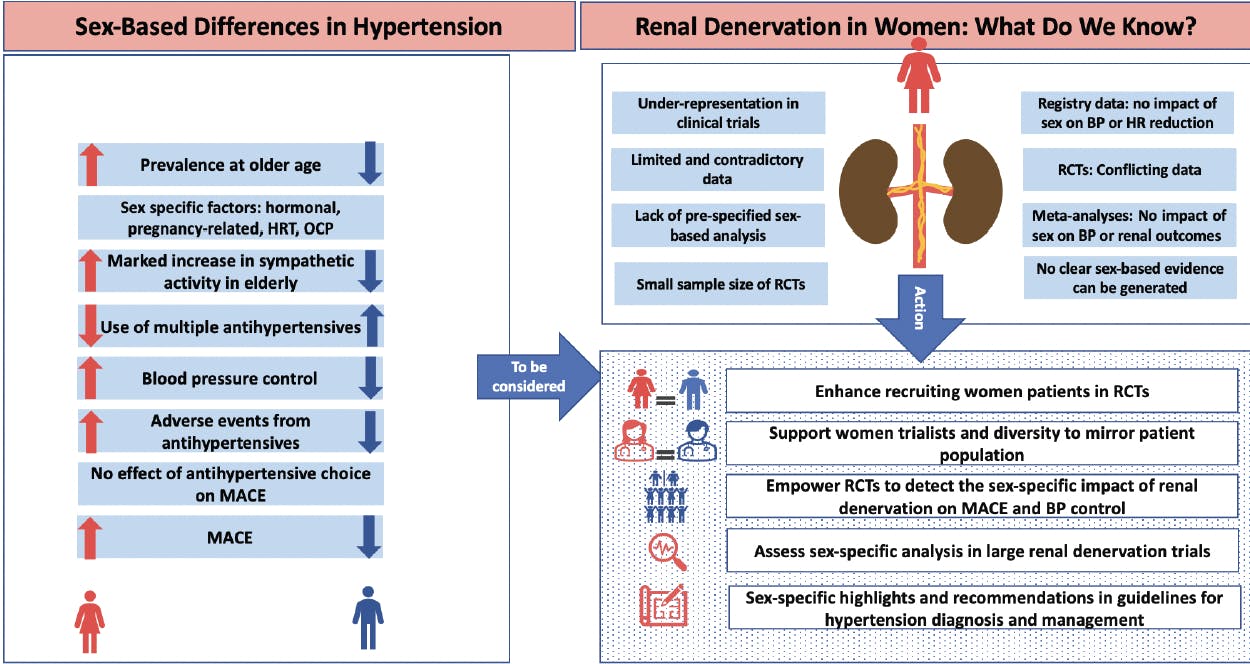
Figure 1. An illustration that summarizes sex-related differences in hypertension and currently available information regarding RDN in women, with suggestions made for future clinical trials. HR, heart rate; HRT, hormone replacement therapy; MACE, major adverse cardiovascular events; OCP, oral contraceptive pills; RCT, randomized controlled trial.
1. Krum H, Schlaich M, Whitbourn R, et al. Catheter-based renal sympathetic denervation for resistant hypertension: a multicentre safety and proof-of-principle cohort study. Lancet. 2009;373:1275-1281. doi: 10.1016/S0140-6736(09)60566-3
2. Symplicity HTN-1 Investigators. Catheter-based renal sympathetic denervation for resistant hypertension: durability of blood pressure reduction out to 24 months. Hypertension. 2011;57:911-917. doi: 10.1161/HYPERTENSIONAHA.110.163014
3. Krum H, Schlaich MP, Sobotka PA, et al. Percutaneous renal denervation in patients with treatment-resistant hypertension: final 3-year report of the Symplicity HTN-1 study. Lancet. 2014;383:622-629. doi: 10.1016/S0140-6736(13)62192-3
4. Esler MD, Krum H, Sobotka PA, et al. Renal sympathetic denervation in patients with treatment-resistant hypertension (The Symplicity HTN-2 Trial): a randomised controlled trial. Lancet. 2010;376:1903-1909. doi: 10.1016/S0140-6736(10)62039-9
5. Esler MD, Böhm M, Sievert H, et al. Catheter-based renal denervation for treatment of patients with treatment-resistant hypertension: 36 month results from the SYMPLICITY HTN-2 randomized clinical trial. Eur Heart J. 2014;35:1752-1759. doi: 10.1093/eurheartj/ehu209
6. Bhatt DL, Kandzari DE, O’Neill WW, et al. A controlled trial of renal denervation for resistant hypertension. N Engl J Med. 2014;370:1393-1401. doi: 10.1056/NEJMoa1402670
7. Townsend RR, Mahfoud F, Kandzari DE, et al. Catheter-based renal denervation in patients with uncontrolled hypertension in the absence of antihypertensive medications (SPYRAL HTN-OFF MED): a randomised, sham-controlled, proof-of-concept trial. Lancet. 2017;390:2160-2170. doi: 10.1016/S0140-6736(17)32281-X
8. Böhm M, Kario K, Kandzari DE, et al. Efficacy of catheter-based renal denervation in the absence of antihypertensive medications (SPYRAL HTN-OFF MED Pivotal): a multicentre, randomised, sham-controlled trial. Lancet. 2020;395:1444-1451. doi: 10.1016/S0140-6736(20)30554-7
9. Kandzari DE, Böhm M, Mahfoud F, et al. Effect of renal denervation on blood pressure in the presence of antihypertensive drugs: 6-month efficacy and safety results from the SPYRAL HTN-ON MED proof-of-concept randomised trial. Lancet. 2018;391:2346-2355. doi: 10.1016/S0140-6736(18)30951-6
10. Mahfoud F, Kandzari DE, Kario K, et al. Long-term efficacy and safety of renal denervation in the presence of antihypertensive drugs (SPYRAL HTN-ON MED): a randomised, sham-controlled trial. Lancet. 2022;399:1401-1410. doi: 10.1016/S0140-6736(22)00455-X
11. Mahfoud F, Böhm M, Schmieder R, et al. Effects of renal denervation on kidney function and long-term outcomes: 3-year follow-up from the Global SYMPLICITY Registry. Eur Heart J. 2019;40:3474-3482. doi: 10.1093/eurheartj/ehz118
12. Achelrod D, Wenzel U, Frey S. Systematic review and meta-analysis of the prevalence of resistant hypertension in treated hypertensive populations. Am J Hypertens. 2015;28:355-361. doi: 10.1093/ajh/hpu151
13. Tsao CW, Aday AW, Almarzooq ZI, et al. Heart disease and stroke statistics-2022 update: a report from the American Heart Association. Circulation. 2022;145:e153-e639. doi: 10.1161/CIR.0000000000001052
14. Carey RM, Sakhuja S, Calhoun DA, et al. Prevalence of apparent treatment-resistant hypertension in the United States. Hypertension. 2019;73:424-431. doi: 10.1161/HYPERTENSIONAHA.118.12191
15. Lewington S, Clarke R, Qizilbash N, et al. Age-specific relevance of usual blood pressure to vascular mortality: a meta-analysis of individual data for one million adults in 61 prospective studies. Lancet. 2002;360:1903-1913. doi: 10.1016/s0140-6736(02)11911-8
16. Patel SA, Winkel M, Ali MK, et al. Cardiovascular mortality associated with 5 leading risk factors: national and state preventable fractions estimated from survey data. Ann Intern Med. 2015;163:245-253. doi: 10.7326/M14-1753
17. Mahfoud F, Mancia G, Schmieder RE, et al. Cardiovascular risk reduction after renal denervation according to time in therapeutic systolic blood pressure range. J Am Coll Cardiol. 2022;80:1871-1880. doi: 10.1016/j.jacc.2022.08.802
18. Fatani N, Dixon DL, Van Tassell BW, et al. Systolic blood pressure time in target range and cardiovascular outcomes in patients with hypertension. J Am Coll Cardiol. 2021;77:1290-1299. doi: 10.1016/j.jacc.2021.01.014
19. Wei YC, George NI, Chang CW, et al. Assessing sex differences in the risk of cardiovascular disease and mortality per increment in systolic blood pressure: a systematic review and meta-analysis of follow-up studies in the United States. PLoS One. 2017;12:e0170218. doi: 10.1371/journal.pone.0170218
20. Franco OH, Peeters A, Bonneux L, et al. Blood pressure in adulthood and life expectancy with cardiovascular disease in men and women: life course analysis. Hypertension. 2005;46:280-286. doi: 10.1161/01.HYP.0000173433.67426.9b
21. Barton M, Meyer MR. Postmenopausal hypertension: mechanisms and therapy. Hypertension. 2009;54:11-18. doi: 10.1161/HYPERTENSIONAHA.108.120022
22. Nakamura Y, Suzuki T, Miki Y, et al. Estrogen receptors in atherosclerotic human aorta: inhibition of human vascular smooth muscle cell proliferation by estrogens. Mol Cell Endocrinol. 2004;219:17-26. doi: 10.1016/j.mce.2004.02.013
23. Hogarth AJ, Mackintosh AF, Mary DA. The effect of gender on the sympathetic nerve hyperactivity of essential hypertension. J Hum Hypertens. 2007;21:239-245. doi: 10.1038/sj.jhh.1002132
24. Vest AR, Cho LS. Hypertension in pregnancy. Cardiol Clin. 2012;30:407-423. doi: 10.1016/j.ccl.2012.04.005
25. Lykke JA, Langhoff-Roos J, Sibai BM, et al. Hypertensive pregnancy disorders and subsequent cardiovascular morbidity and type 2 diabetes mellitus in the mother. Hypertension. 2009;53:944-951. doi: 10.1161/HYPERTENSIONAHA.109.130765
26. Thorne S, MacGregor A, Nelson-Piercy C. Risks of contraception and pregnancy in heart disease. Heart. 2006;92:1520-1525. doi: 10.1136/hrt.2006.095240
27. Hage FG, Mansur SJ, Xing D, et al. Hypertension in women. Kidney Int Suppl (2011). 2013;3:352-356. doi: 10.1038/kisup.2013.76
28. Lip GY, Beevers M, Churchill D, et al. Hormone replacement therapy and blood pressure in hypertensive women. J Hum Hypertens. 1994;8:491-494.
29. Wassertheil-Smoller S, Anderson G, Psaty BM, et al. Hypertension and its treatment in postmenopausal women: baseline data from the Women’s Health Initiative. Hypertension. 2000;36:780-789. doi: 10.1161/01.hyp.36.5.780
30. Anderson GL, Limacher M, Assaf AR, et al. Effects of conjugated equine estrogen in postmenopausal women with hysterectomy: the Women’s Health Initiative randomized controlled trial. JAMA. 2004;291:1701-1712. doi: 10.1001/jama.291.14.1701
31. Karalis I, Beevers G, Beevers M, et al. Hormone replacement therapy and arterial blood pressure in postmenopausal women with hypertension. Blood Press. 2005;14:38-44. doi: 10.1080/08037050510008788
32. Rana MN, Al-Kindi SG. Prevalence and manifestations of diagnosed fibromuscular dysplasia by sex and race: analysis of >4500 FMD cases in the United States. Heart Lung. 2021;50:168-173. doi: 10.1016/j.hrtlng.2020.09.022
33. Gu Q, Burt VL, Paulose-Ram R, Dillon CF. Gender differences in hypertension treatment, drug utilization patterns, and blood pressure control among US adults with hypertension: data from the National Health and Nutrition Examination Survey 1999-2004. Am J Hypertens. 2008;21:789-98. doi: 10.1038/ajh.2008.185
34. Suchard MA, Schuemie MJ, Krumholz HM, et al. Comprehensive comparative effectiveness and safety of first-line antihypertensive drug classes: a systematic, multinational, large-scale analysis. Lancet. 2019;394:1816-1826. doi: 10.1016/S0140-6736(19)32317-7
35. Thoenes M, Neuberger HR, Volpe M, et al. Antihypertensive drug therapy and blood pressure control in men and women: an international perspective. J Hum Hypertens. 2010;24:336-344. doi: 10.1038/jhh.2009.76
36. Kloner RA, Sowers JR, DiBona GF, et al. Sex- and age-related antihypertensive effects of amlodipine. The Amlodipine Cardiovascular Community Trial Study Group. Am J Cardiol. 1996;77:713-722. doi: 10.1016/s0002-9149(97)89205-3
37. Eugene AR. Metoprolol dose equivalence in adult men and women based on gender differences: pharmacokinetic modeling and simulations. Med Sci (Basel). 2016;4:18. doi: 10.3390/medsci4040018
38. Tadic M, Cuspidi C, Grassi G, et al. Gender-specific therapeutic approach in arterial hypertension - challenges ahead. Pharmacol Res. 2019;141:181-188. doi: 10.1016/j.phrs.2018.12.021
39. Rydberg DM, Mejyr S, Loikas D, et al. Sex differences in spontaneous reports on adverse drug events for common antihypertensive drugs. Eur J Clin Pharmacol. 2018;74:1165-1173. doi: 10.1007/s00228-018-2480-y
40. Foy CG, Lovato LC, Vitolins MZ, et al. Gender, blood pressure, and cardiovascular and renal outcomes in adults with hypertension from the Systolic Blood Pressure Intervention Trial. J Hypertens. 2018;36:904-915. doi: 10.1097/HJH.0000000000001619
41. Turnbull F, Woodward M, Neal B, et al. Do men and women respond differently to blood pressure-lowering treatment? Results of prospectively designed overviews of randomized trials. Eur Heart J. 2008;29:2669-2680. doi: 10.1093/eurheartj/ehn427
42. Agasthi P, Shipman J, Arsanjani R, et al. Renal denervation for resistant hypertension in the contemporary era: a systematic review and meta-analysis. Sci Rep. 2019;9:6200. doi: 10.1038/s41598-019-42695-9
43. Sanders MF, Reitsma JB, Morpey M, et al. Renal safety of catheter-based renal denervation: systematic review and meta-analysis. Nephrol Dial Transplant. 2017;32:1440-1447. doi: 10.1093/ndt/gfx088
44. Azizi M, Sanghvi K, Saxena M, et al. Ultrasound renal denervation for hypertension resistant to a triple medication pill (RADIANCE-HTN TRIO): a randomised, multicentre, single-blind, sham-controlled trial. Lancet. 2021;397:2476-2486. doi: 10.1016/S0140-6736(21)00788-1
45. Kario K, Yokoi Y, Okamura K, et al. Catheter-based ultrasound renal denervation in patients with resistant hypertension: the randomized, controlled REQUIRE trial. Hypertens Res. 2022;45:221-231. doi: 10.1038/s41440-021-00754-7
46. Azizi M, Daemen J, Lobo MD, et al. 12-Month results from the unblinded phase of the RADIANCE-HTN SOLO trial of ultrasound renal denervation. JACC Cardiovasc Interv. 2020;13:2922-2933. doi: 10.1016/j.jcin.2020.09.054
47. Zeng L, Zhang Z, Yang K, et al. Predictive factors for efficacy of catheter-based renal denervation with standard ablation catheter in refractory hypertension. Interv Cardiol J. 2017;3:1-7. doi: 10.21767/2471-8157.100067
48. Weil J, Mahfoud F, Schmieder R, et al. TCT-559 influence of gender on blood pressure reduction after renal denervation in GSR DEFINE. J Am Coll Cardiol. 2022;80(12 suppl):B230-B.
49. Peters CD, Mathiassen ON, Vase H, et al. The effect of renal denervation on arterial stiffness, central blood pressure and heart rate variability in treatment resistant essential hypertension: a substudy of a randomized sham-controlled double-blinded trial (the ReSET trial). Blood Press. 2017;26:366-380. doi: 10.1080/08037051.2017.1368368
50. Bhatt DL, Vaduganathan M, Kandzari DE, et al. Long-term outcomes after catheter-based renal artery denervation for resistant hypertension: final follow-up of the randomised SYMPLICITY HTN-3 trial. Lancet. 2022;400:1405-1416. doi: 10.1016/S0140-6736(22)01787-1
51. Fadl Elmula FE, Hoffmann P, Larstorp AC, et al. Adjusted drug treatment is superior to renal sympathetic denervation in patients with true treatment-resistant hypertension. Hypertension. 2014;63:991-999. doi: 10.1161/HYPERTENSIONAHA.114.03246
52. Bergland OU, Søraas CL, Larstorp ACK, et al. The randomised Oslo study of renal denervation vs. antihypertensive drug adjustments: efficacy and safety through 7 years of follow-up. Blood Press. 2021;30:41-50. doi: 10.1080/08037051.2020.1828818
53. Daemen J, Mahfoud F, Kuck KH, et al. Safety and efficacy of endovascular ultrasound renal denervation in resistant hypertension: 12-month results from the ACHIEVE study. J Hypertens. 2019;37:1906-1912. doi: 10.1097/HJH.0000000000002120
54. Schmieder RE, Ott C, Toennes SW, et al. Phase II randomized sham-controlled study of renal denervation for individuals with uncontrolled hypertension - WAVE IV. J Hypertens. 2018;36:680-689. doi: 10.1097/HJH.0000000000001584
55. Oliveras A, Armario P, Clarà A, et al. Spironolactone versus sympathetic renal denervation to treat true resistant hypertension: results from the DENERVHTA study - a randomized controlled trial. J Hypertens. 2016;34:1863-1871. doi: 10.1097/HJH.0000000000001025
56. Böhm M, Mahfoud F, Ukena C, et al. First report of the Global SYMPLICITY registry on the effect of renal artery denervation in patients with uncontrolled hypertension. Hypertension. 2015;65:766-774. doi: 10.1161/HYPERTENSIONAHA.114.05010
57. Jacobs L, Persu A, Huang QF, et al. Results of a randomized controlled pilot trial of intravascular renal denervation for management of treatment-resistant hypertension. Blood Press. 2017;26:321-331. doi: 10.1080/08037051.2017.1320939
58. Ukena C, Mahfoud F, Spies A, et al. Effects of renal sympathetic denervation on heart rate and atrioventricular conduction in patients with resistant hypertension. Int J Cardiol. 2013;167:2846-2851. doi: 10.1016/j.ijcard.2012.07.027
59. Ott C, Mahfoud F, Schmid A, et al. Renal denervation in moderate treatment-resistant hypertension. J Am Coll Cardiol. 2013;62:1880-1886. doi: 10.1016/j.jacc.2013.06.023
Advertisement
Advertisement