Advertisement
Advertisement
May/June 2022
Pandemic Exacerbates Already-Challenging Cath Lab Staffing
Reviewing the current state of cardiology services across the country, the effects of staffing constrictions, and what programs can do about it.
Even before the pandemic decimated the United States workforce, health care was experiencing chronic shortages of nurses across the board. Now, as the pandemic wears on past its second year, the situation is even more dire and impacts nearly every level of health care. According to a Fitch Ratings report of the industry staffing completed in the fall of 2021, the situation is one of simple math: The number of open positions in health care outnumbers the available workers nearly two to one.1
As the labor market has tightened up, wages have increased rapidly, well beyond the normal consumer price index. Although this is good for workers, it is not good for health care systems, where staff costs represent > 60% of total expenditures. In other industries, prices can be increased to offset these wage spikes. However, the vast majority of health care revenue is paid at fixed rates per unit with third-party payors like Medicare or contracted commercial carriers. The net result is that higher staffing costs translate to lower margins. A March 2022 Kaufman Hall analysis showed hospital margins were down > 40% from prepandemic levels.2
MAGNIFIED IMPACT ON CATH LABS
Cardiac cath labs, which require specially trained support staff, are even more vulnerable when the talent pool shrinks. There have been multiple reports of hospitals having to close down their invasive services due to critical staffing absences. Given these alarming accounts, MedAxiom set out to obtain a more detailed analysis of the current state of invasive cardiology services across the country by surveying its members in April 2022. The results demonstrate a true crisis.
Just shy of every respondent (96%) reported challenges staffing their cardiac cath labs, and 85% said these challenges are more difficult than before the pandemic. Three-quarters reported similar challenges staffing electrophysiology (EP) labs, with 64% saying those challenges have increased since the pandemic started. Some labs reported 30% vacancy rates, and several noted fierce competition—both locally and with traveler agencies—for their specialized staff.
Additionally, in some markets across the United States, new cardiac ambulatory centers have opened, boasting attractive work conditions for specialty-trained lab staff. These centers typically operate Monday through Friday with no call burden, and the absence of weekends is appealing. The impact of such centers is still in its infancy because Medicare only expanded reimbursement to the ambulatory setting for a host of cardiac and EP procedures in 2020. Several states, including Michigan and Mississippi, have recently changed their Certificate of Need laws to accommodate these new centers, so it is logical that their erosion of hospital staff will only expand with time.
As for traveler staff, 85% of respondents reported having to deploy contracted labor through agencies in their cardiac cath labs, with half reporting their use in EP labs. More than half of programs rated the use of contracted labor as higher than prepandemic levels. As noted in the introduction above, hospital margins are down > 40% from early 2020 levels, in large part due to swelling staffing expenses. The expansion of traveler staff only aggravates this erosion as these resources come at a hefty premium, with costs anywhere from 50% to 100% higher than employed staff. In somewhat of an “insult to injury” testament, several programs noted that their traveler staff are their most experienced talent in the cath labs. Further dampening cardiac margins is the need to replace trained staff, with cost estimates ranging from $37,000 up to $58,000 per full-time equivalent in the cath lab.
In response to this crisis, programs have turned to several different strategies to stem the tide. At the top of the list are tactics aimed at retaining existing talent: retention bonuses, higher wages, education dollars, etc. At the MedAxiom CV Transforum Spring 2022 conference, several cath lab leaders noted how having physicians provide staff learning modules yielded tremendous team benefit at a low price tag. Another lab manager lamented how edicts from above can hurt morale and thus retention, such as when staff are sent home early to avoid overtime pay but earlier that week interrupted family time to accommodate late add-on cases.
For larger systems, particularly those with facilities in multiple different states, creating an internal travel team seems to be gaining favor. Beyond just higher wages, part of the allure of travel positions is the ability to experience other programs and other parts of the country. Some elements of this can be replicated with an inhouse pool, thereby eliminating the agency fees.
INVASIVE/INTERVENTIONAL PHYSICIAN CHALLENGES
Although not nearly as acute as the lab staffing woes cited previously, nearly one in four (24%) programs expressed challenges with finding and retaining interventional physicians. Slightly fewer (19%) said the same for EP physicians. Of note, more than three-quarters (77%) said these difficulties are about the same as they were before the pandemic started.
Several years ago, MedAxiom looked at the supply and demand curves for cardiologists in the United States (Figure 1). The analyses, which considered cardiology overall rather than just interventional physicians, projected a shortfall of > 500 cardiologists annually. This number considers more than just the raw number entering and leaving the profession. It also considers aging of the physician population and the corresponding drop in individual production, as measured by work relative value units (wRVUs). For instance, based on 2021 MedAxiom data, a full-time interventional cardiologist generates just over 10,000 wRVUs per year. That number drops 18% to < 8,200 wRVUs for a full-time interventional physician aged 61 and above. With nearly three in 10 (28%) of interventional physicians in this age cohort, the impact is real.
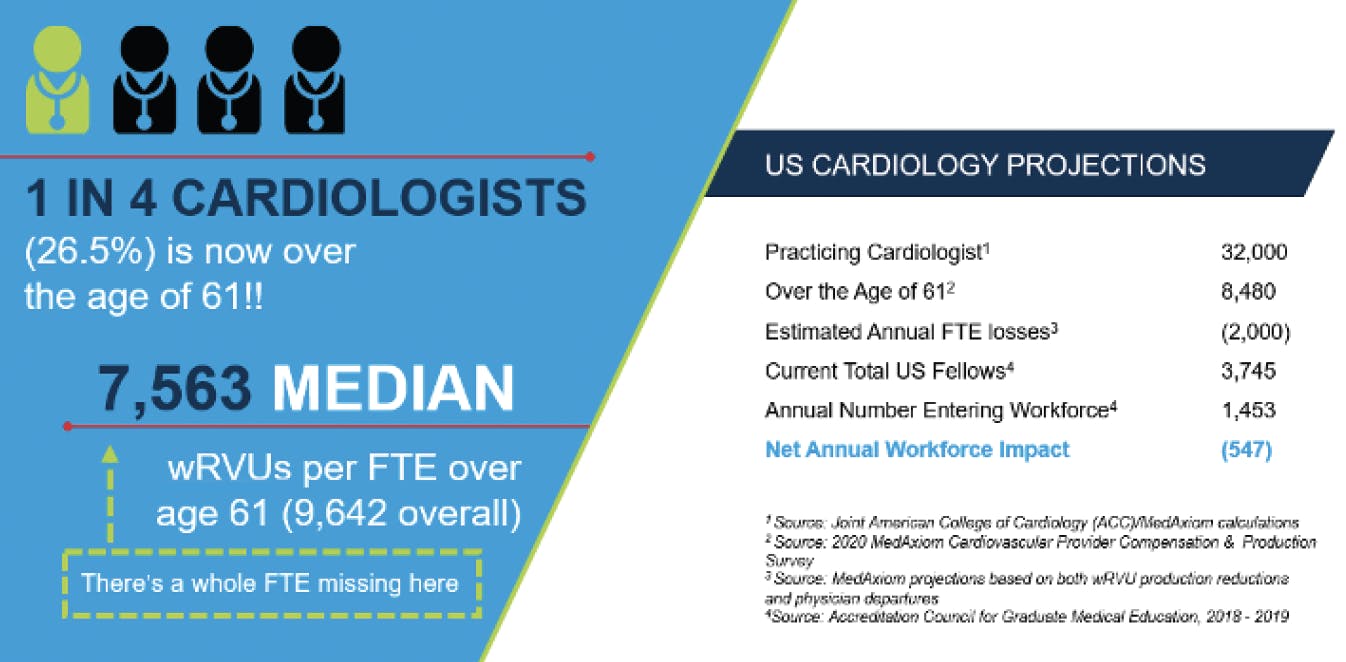
Figure 1. MedAxiom’s projected supply and demand curves for cardiologists in the United States. FTE, full-time equivalent.
These cited deficits are despite an increase in both the number of cardiology training programs and the number of graduating fellows. According to Accreditation Council for Graduate Medical Education data,3 there are 81 more fellowship programs this academic year than there were in 2012. In addition, the 3,324 programs boast 803 more cardiology fellows than in the 2012 academic year. Interestingly, programs and fellows have expanded, despite the fact that Medicare has barely increased funding for these training centers in 25 years.
Another major factor in staffing interventional programs, and perhaps the single largest driver, is call coverage. MedAxiom often finds that programs are required to build their interventional teams to first satisfy a sustainable call burden and then to satisfy volumes as a distant second. To demonstrate the high value ascribed to interventional call, a recent MedAxiom member survey provided reductions to total compensation of 25% to 50% when a cardiologist comes out of the call rotation. As further evidence of call’s outsized weight in staffing decisions, still nearly 90% of cardiologists older than 65 years are fully participating in their rotations (Figure 2). These data alone could lead to a different conclusion, but cardiology programs—particularly interventional teams—often have “forced” retirement policies for physicians discontinuing call.
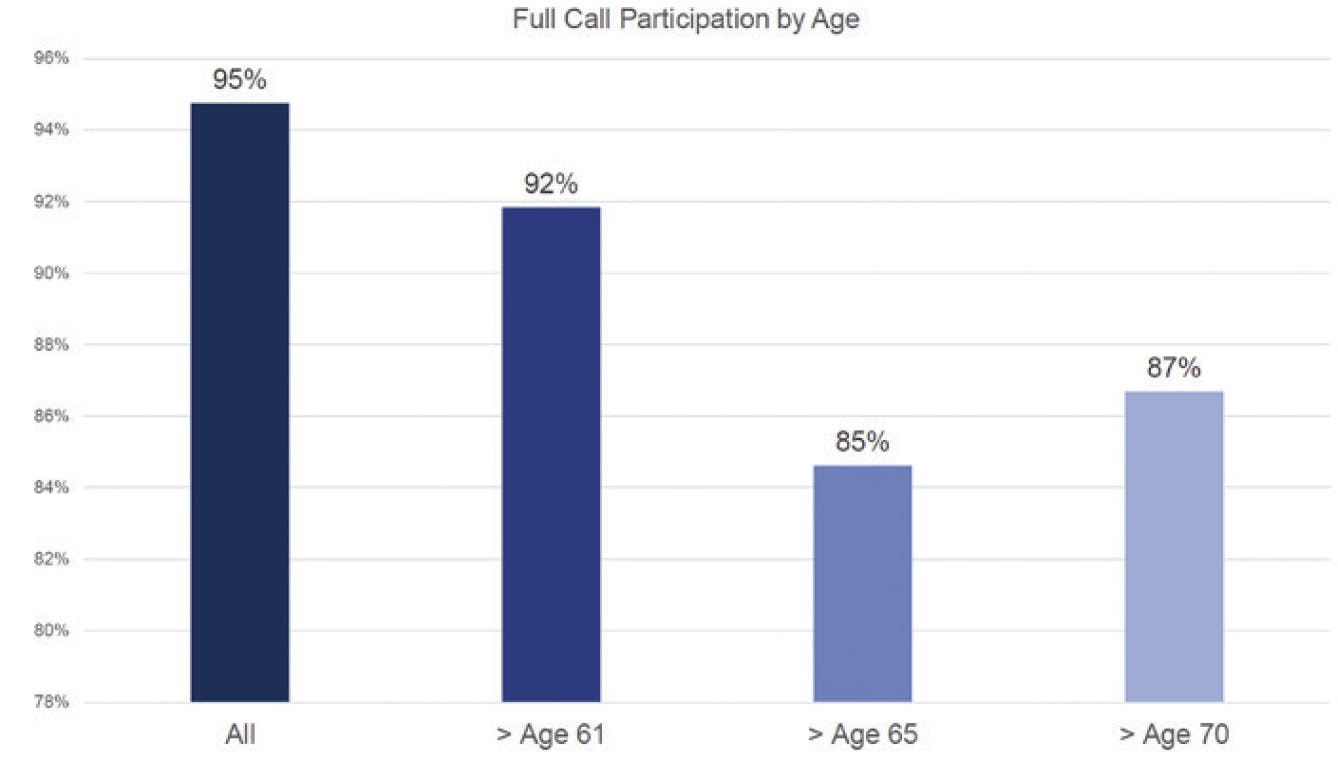
Figure 2. 2021 cardiology call participation by age.
According to MedAxiom data, total national catheterization and percutaneous intervention volumes have been flat to declining for more than a decade, so it is not these staple cardiac procedures that have created staffing deficits. Relatively new advanced procedures, like those in structural heart and advanced interventions, have increased demand side and—in some programs—siphoned off interventional staff.
Interestingly, and somewhat paradoxically, in a recent conversation on the MedAxiom member listserv, several structural heart training program leaders lamented that their graduating fellows have yet to find jobs.
CONCLUSION
There are some positive signs that the United States may finally be moving past the pandemic, but there are no indications that current staffing constrictions will ease. Programs are wise to work hard to retain the staff they already have and create environments that are attractive to a workforce that now has the ability to pick and choose. Although these statements are true for the entire health care industry, they are magnified for cardiac cath and EP labs.
Further, programs are encouraged to think innovatively and challenge traditional norms to expand attractiveness to a wider pool of talent. Allowing “work from home” opportunities, flex time, job sharing, and internal travel pools are examples that might be considered.
It is perhaps not as dire, but the cardiologist pool is also limited and will likely grow scarcer as national demand increases due to an aging population and increasing obesity rates and as the supply of cardiologists dwindles. Program leadership should strive to develop an attractive practice environment and think creatively to extend the careers of physicians who are late in their careers. Programs that can maintain well-staffed, efficient labs will have a significant leg up on those that cannot.
To access the full MedAxiom report on cath lab staffing,
visit www.medaxiom.com/reports.
1. Fitch Ratings. Not-for-profit healthcare staffing shortage has long-term effects. Published October 27, 2021. Accessed May 24, 2022. https://www.fitchratings.com/research/us-public-finance/not-for-profit-healthcare-staffing-shortage-has-long-term-effects-27-10-2021
2. KaufmanHall. National hospital flash report: March 2022. Published March 28, 2022. Accessed May 19, 2022. https://www.kaufmanhall.com/sites/default/files/2022-03/National-Hospital-Flash-Report-March-2022.pdf
3. Accreditation Council for Graduate Medical Education. Data collection systems. Accessed May 24, 2022. https://www.acgme.org/data-collection-systems/overview/
Advertisement
Advertisement