Advertisement
Advertisement
July/August 2022
A Step-by-Step Technical Guide to Coronary Thrombectomy
A review of thrombectomy with the CAT Rx, including why and how it's done, anatomy, materials, and complications.
Coronary mechanical aspiration thrombectomy utilizing the CAT Rx (Penumbra, Inc.) combines a highly trackable, flexible, atraumatic, large-bore, 6-F, guide-compatible catheter with a sustained vacuum pump for high thrombus burden percutaneous coronary intervention (PCI). In comparison to prior manual aspiration techniques, the CAT Rx may improve the efficacy of coronary thrombus removal in a safe manner.
WHY I DO IT
Despite mixed results from previous studies, high thrombus burden PCI remains a clinical challenge. PCI can be associated with distal embolization and microvascular obstruction in ≥ 15% of cases.1 Historically, manual aspiration thrombectomy has resulted in normalized myocardial blush grade 3 in only half of cases.2 Persistent microvascular obstruction is associated with left ventricular dysfunction and increased mortality after PCI.3
Unfortunately, the TOTAL trial found no long-term benefit to routine manual aspiration in ST-segment elevation myocardial infarction (STEMI) along with a higher risk for stroke, even in a high thrombus burden subset analysis.4 As a result, in 2015, the American College of Cardiology/American Heart Association/Society for Cardiovascular Angiography and Interventions guidelines regarding PCI in STEMI were updated to downgrade aspiration thrombectomy during PCI from a class IIA to a class IIB recommendation (only selective and bailout thrombectomy) and class III for routine utilization.5
Rheolytic thrombectomy (RT) with the AngioJet device (Boston Scientific Corporation) utilizes saline jets to macerate thrombus with passive aspiration. The AiMI trial suggested no benefit in STEMI, with no reduction in infarct size, thrombolysis in myocardial infarction (TIMI) flow, myocardial blush, and a higher rate of major adverse cardiac events (MACE).6 The JETSTENT trial, however, randomized high thrombus burden STEMI patients and found a lower MACE rate with RT use, although the primary efficacy endpoints were not met.7 The concern over this technology, while effective in breaking apart thrombus, is a potential higher risk of distal embolization due to its mechanism of action. Furthermore, higher rates of heart block and other dysrhythmias have been reported, possibly due to vibration from the device via activation of mechanoreceptors and also the release of adenosine from lysed red blood cells.8
Use of sustained mechanical aspiration is a potential option to mitigate risks of embolization with more effective suction. The CAT Rx system utilizes two technologies, the Penumbra Engine pump (Penumbra, Inc.), which can maintain -29 in Hg suction force (essentially pure vacuum), and a highly flexible, trackable aspiration catheter. In comparison to manual aspiration in which the aspiration force decreases rapidly as the vacuum syringe fills with blood over a period of 12 seconds, the CAT Rx maintains near pure vacuum for the duration of the procedure.9 The CAT Rx catheter is a laser-cut hypotube inside of a polymer-jacketed sleeve with multiple material transitions that make the catheter both atraumatic and effective in crossing coronary arteries. It is rapid exchange and has an outer diameter of 1.75 mm, essentially taking up the entire lumen of a 6-F guide catheter (Figure 1). Based on the results of the multicenter CHEETAH trial (400 patients), the CAT Rx was found to be safe in high thrombus burden PCI with no device-related strokes.10 Moreover, it was highly effective with final TIMI thrombus grade 0 in 99.5%, TIMI 3 flow grade in 97.5%, and myocardial blush grade 3 in 99.75%, with an extremely low rate of distal embolization (0.75%).10 This initial experience will help inform development of a randomized controlled trial, but supports the safety of this device and efficacy of large thrombus removal in acute coronary syndromes (ACS).
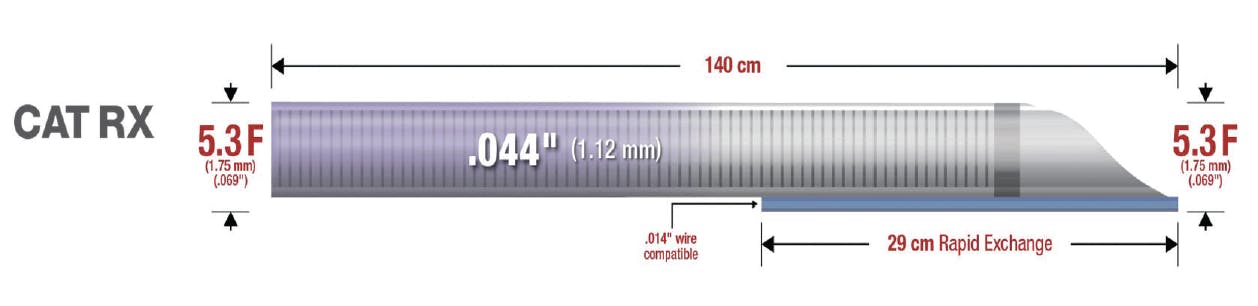
Figure 1. Characteristics of the CAT Rx catheter.
(Courtesy of Penumbra, Inc.)
HOW I DO IT
The step-by-step technique for coronary thrombectomy with CAT Rx is shown in Figure 2. Arterial access is achieved from either a radial or femoral approach, preferably with ultrasound guidance. After diagnostic angiography suggesting high-grade thrombotic occlusion, coronary intervention is performed after achieving therapeutic activated clotting time with either heparin or bivalirudin. The guide catheter should engage the coronary artery for the duration of the procedure to prevent potential reflux and cerebrovascular/systemic embolization. Wire crossing is performed with a guidewire per operator discretion. After this, if high thrombus burden persists, up-front CAT Rx is performed. We avoid initial percutaneous transluminal coronary angioplasty (PTCA), as this may increase a risk of distal embolization, and instead use the CHEETAH protocol in crossing. Initial PTCA may be necessary in the setting of delayed-presentation ACS in which the thrombus cap may be well organized and to facilitate crossing of the CAT Rx catheter. Commonly, there will be an initial cap of soft thrombus leading up to the culprit lesion. CAT Rx may reveal this culprit lesion, as was reported by 98% of operators in the CHEETAH study.10
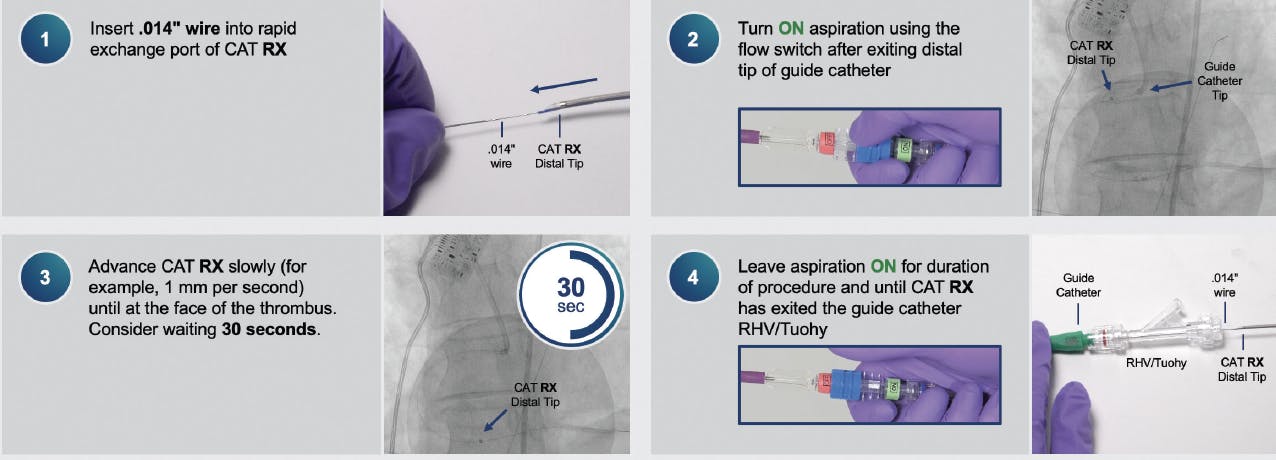
Figure 2. Stepwise approach to performing CAT Rx coronary mechanical thrombectomy. RHV, rotating hemostasis valve.
(Courtesy of Penumbra, Inc.)
While the operator is crossing the lesion with the wire, the circulating staff can insert a canister into the Penumbra Engine pump. The CAT Rx package is opened onto the field and the flexible tubing is passed off to the staff and connected to the canister. The pump is turned on once the “flow-switch” is turned to the off position to allow the pump to prime to full vacuum (four lights surrounding the ON switch). After this, the CAT Rx rapid exchange port can be simultaneously flushed and loaded onto the wire by the assistant, but the device should not enter the Touhy-Borst hemostatic valve until the aspiration tubing is connected. The moment the CAT Rx exits the guide catheter, the flow switch should be activated, and aspiration will commence. The CAT Rx is advanced to the occlusion and allowed to sit for a period of 20 to 30 seconds until it is withdrawn out of the guide catheter. Aspiration should not be turned off until the CAT Rx is out of the Touhy-Borst valve. Prior to reintroducing the catheter into the body, the guide should be aspirated and the Touhy-Borst bled back to avoid embolizing thrombus that could have inadvertently come off the CAT Rx. It is also important to flush the CAT Rx prior to reinsertion because even nonocclusive thrombus can be often present in the catheter. With more organized thrombus, it may be necessary to deeply engage the occlusion until no blood is seen aspirating back. Prolonged aspiration of at least 90 seconds or more may be necessary to remove dense plugs. Moreover, with large ectatic coronary arteries and large thrombus burden, multiple passes may be necessary.
ANATOMY
The CAT Rx device is compatible with all coronary arteries. Figure 3 shows an example case of a patient presenting with ventricular fibrillation arrest with right coronary artery STEMI. Results are shown pre-CAT Rx, post-CAT Rx, and final angiography with normalized myocardial blush. It is worth noting that up-front CAT Rx use revealed the culprit spontaneous dissection, facilitating direct stenting of the lesion without extending beyond the target area.
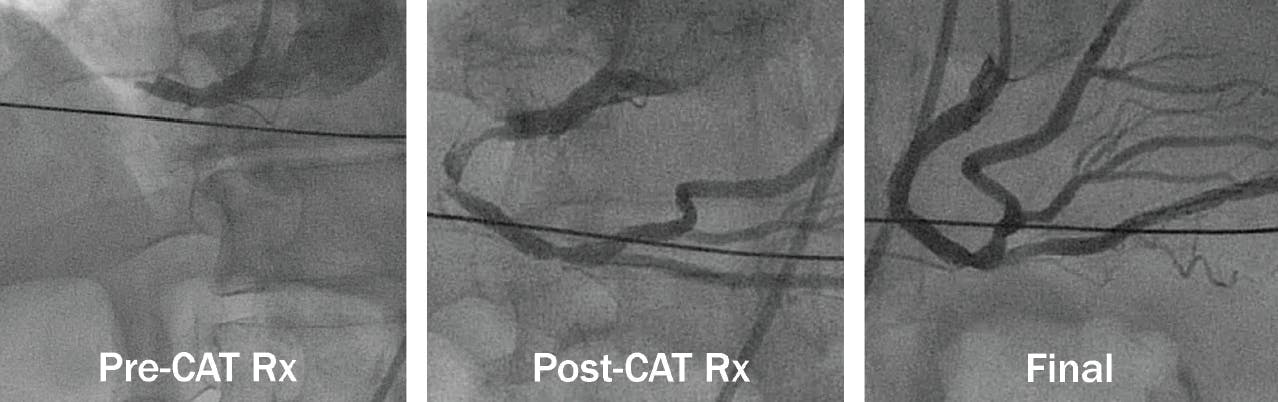
Figure 3. Right coronary artery STEMI utilizing CAT Rx.
We have also successfully used the device within bypass grafts, although these were excluded from the CHEETAH study.10 In cases of graft occlusion where the risk of no reflow is high, upfront CAT Rx use may remove laminar thrombus and facilitate subsequent placement of embolic protection devices when appropriate. In the setting of no reflow, we have also used the device to facilitate distal aspiration and have delivered intracardiac pharmacologic agents through the aspiration lumen (off label), including adenosine, nicardipine, nitroglycerin, and epinephrine.
MATERIALS
Coronary thrombectomy using the CAT Rx system can be performed using standard workhorse equipment. It is 6-F guide catheter compatible. In order to use a buddy wire, a 7-F guide is needed. It is not compatible with 6- or 7-F guide extension catheters. The CAT Rx, aspiration tubing, canister, and Penumbra Engine pump comprise the CAT Rx system. An optional separator (a wire with a small bead affixed to the end) is available to help break up thrombus but is rarely clinically used. Use of the separator requires attaching an included Touhy-Borst valve to the CAT Rx, which is then attached to the aspiration tubing. This can be excluded from routine use.
COMPLICATIONS
In the CHEETAH trial, there were no device-related serious adverse events reported.10 However, whenever dealing with high thrombus burden PCI, the risk of stroke and systemic embolization is always a possibility. Good coaxial guide catheter engagement is essential with appropriate support. Avoiding rushing the aspiration process is key to allowing for clot ingestion. Rapid aspiration will only remove soft thrombus, leaving behind more dense elements. Furthermore, pushing the device completely through an occlusion carries a small risk of distal embolization and Dottering the lesion. Although this may restore flow, capturing distal thrombus within branch vessels may become necessary.
The CAT Rx is a very atraumatic catheter, but with adequate force applied on a lesion, dissection is conceivable. If resistance is met, it is best to not force crossing. Moreover, the CAT Rx is extremely trackable, but rarely calcium or other disease may prevent crossing. Taking a small coronary balloon through the aspiration lumen and performing balloon-assisted tracking may facilitate delivery of the device. In the setting of subacute or acute stent thrombosis, it is possible to wire through stent struts of underexpanded stents. In this situation, the CAT Rx will not cross. It may be possible to still restore flow while aspirating from a distance. After this, the wire can be pulled back and readvanced/prolapsed through the true stent lumen.
In the case of ectatic coronary occlusion, thrombectomy can be challenging and may require multiple passes to be successful. Rarely, fatigue of the back end of the hypotube can occur, causing a kinking of the shaft after multiple passes. In this situation, remove the catheter and replace it to avoid fracture of the shaft. In massive thrombosis cases, multiple techniques have been proposed, including use of adjunctive glycoprotein IIB/IIIA inhibitors as well as local thrombolytics. However, there are very scant data supporting use of these strategies.
1. Henriques JP, Zijlstra F, Ottervanger JP, et al. Incidence and clinical significance of distal embolization during primary angioplasty for acute myocardial infarction. Eur Heart J. 2002;23:1112-1117. doi: 10.1053/euhj.2001.3035
2. Mongeon FP, Bélisle P, Joseph L, et al. Adjunctive thrombectomy for acute myocardial infarction: a Bayesian meta-analysis. Circ Cardiovasc Interv. 2010;3:6-16. doi: 10.1161/CIRCINTERVENTIONS.109.904037
3. Morishima I, Sone T, Okumura K, et al. Angiographic no-reflow phenomenon as a predictor of adverse long-term outcome in patients treated with percutaneous transluminal coronary angioplasty for first acute myocardial infarction. J Am Coll Cardiol. 2000;36:1202-1209. doi: 10.1016/s0735-1097(00)00865-2
4. Jolly SS, Cairns JA, Lavi S, et al. Thrombus aspiration in patients with high thrombus burden in the TOTAL trial. J Am Coll Cardiol. 2018;72:1589-1596. doi: 10.1016/j.jacc.2018.07.047
5. Levine GN, Bates ER, Blankenship JC, et al. 2015 ACC/AHA/SCAI focused update on primary percutaneous coronary intervention for patients with ST-elevation myocardial infarction: an update of the 2011 ACCF/AHA/SCAI guideline for percutaneous coronary intervention and the 2013 ACCF/AHA guideline for the management of ST-elevation myocardial infarction. Circulation. 2016;133:1135-1147. doi: 10.1161/CIR.0000000000000336
6. Ali A, Cox D, Dib N, et al. Rheolytic thrombectomy with percutaneous coronary intervention for infarct size reduction in acute myocardial infarction: 30-day results from a multicenter randomized study. J Am Coll Cardiol. 2006;48:244-252. doi: 10.1016/j.jacc.2006.03.044
7. Migliorini A, Stabile A, Rodriguez AE, et al, JETSTENT trial investigators. Comparison of AngioJet rheolytic thrombectomy before direct infarct artery stenting with direct stenting alone in patients with acute myocardial infarction: the JETSTENT trial. J Am Coll Cardiol. 2010;56:1298-1306. doi: 10.1016/j.jacc.2010.06.011
8. Zhu DW. The potential mechanisms of bradyarrhythmias associated with AngioJet thrombectomy. J Invasive Cardiol. 2008;20(8 suppl A):2A-4A.
9. Benchtop testing. Information on file. Penumbra, Inc., Alameda, CA.
10. Mathews SJ, Parikh SA, Chambers JW, et al. CHEETAH: a multicenter study of continuous mechanical aspiration thrombectomy prior to PCI in patients with high thrombus burden. Presented at TCT 2021; November 4-6, 2021; Orlando, Florida.
Advertisement
Advertisement