Advertisement
Advertisement
January/February 2022
A Personalized Approach to Antiplatelet Therapy
How to use the data to make individual patient decisions.
By Razan Elsayed, MD, and Usman Baber, MD, MS
Dual antiplatelet therapy (DAPT), comprising aspirin and an oral P2Y12 inhibitor, is a universal recommendation for patients with coronary artery disease undergoing percutaneous coronary intervention (PCI) due to its efficacy in lowering thrombotic risk as compared with other antithrombotic strategies.1,2 However, the ischemic benefit attributable to DAPT occurs at the expense of bleeding, which accrues gradually with prolonged DAPT exposure and is strongly associated with post-PCI morbidity and mortality.3 Shortening the duration and/or lessening the intensity of DAPT is now possible with use of newer-generation drug-eluting stent (DES) platforms that have altered the risk-benefit calculus for extended DAPT duration. Moreover, the Academic Research Consortium has defined high bleeding risk (HBR) using validated clinical criteria that inform both clinical decisions and study design.4 Several bleeding reduction strategies have been proposed and tested in clinical trials that aim to lower bleeding while preserving ischemic efficacy. These include dual antithrombotic therapy (DAT), very short DAPT duration (1 to 3 months) followed by antiplatelet monotherapy, early aspirin withdrawal followed by P2Y12 inhibitor monotherapy, and de-escalation. In this article, we propose a sequential approach that first considers bleeding followed by thrombotic risk to inform tailored and individualized decisions regarding both duration and intensity of DAPT after PCI (Figure 1).
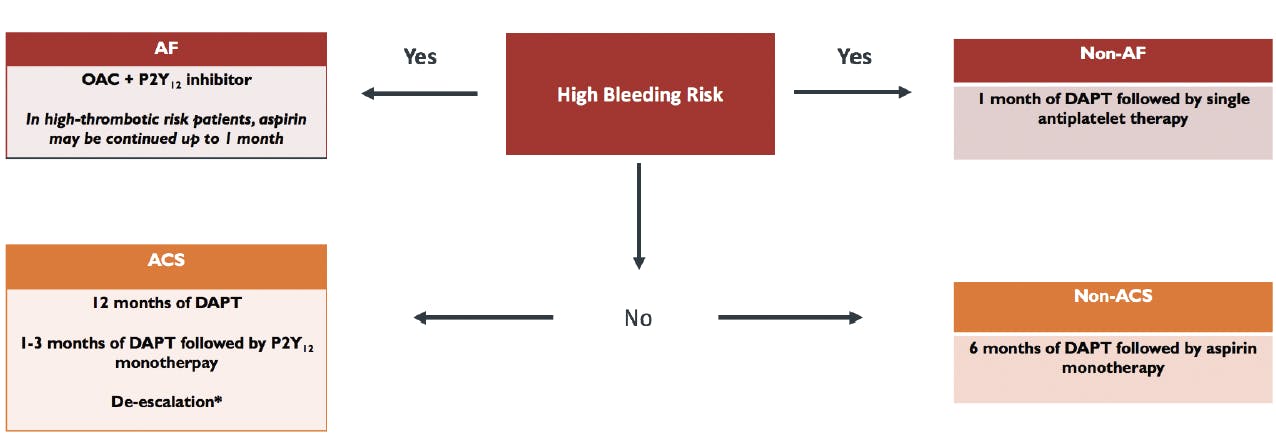
Figure 1. Antithrombotic strategies in relation to bleeding and ischemic risk after PCI. *Guided or unguided de-escalation.
HBR with ATRIAL FIBRILLATION
The most commonly cited reasons for oral anticoagulation (OAC) among patients undergoing PCI include atrial fibrillation (AF), venous thromboembolism, and mechanical heart valves.5 The obligatory need for OAC coupled with DAPT, or triple therapy, renders bleeding risk prohibitive. Several clinical trials have consistently shown that DAT, consisting of an OAC plus a P2Y12 inhibitor, is superior to triple therapy with respect to bleeding and maintains ischemic efficacy among HBR patients with AF undergoing PCI.6 In the majority of these trials, aspirin was usually discontinued at the time of discharge among patients allocated to DAT. As a result, the default strategy for most patients with AF undergoing PCI is to treat with an OAC (preferably a direct oral anticoagulant) and a P2Y12 inhibitor (usually clopidogrel) immediately after PCI. In select patients at high thrombotic and low bleeding risk (ie, high-risk acute coronary syndrome [ACS] or complex PCI), aspirin may be continued for up to 1 month after PCI. These recommendations are endorsed by multisociety statements and clinical practice guidelines.7,8
HBR without AF
Commonly encountered HBR criteria in the absence of AF include severe renal impairment, anemia, and active malignancy. To date, only one randomized trial has compared different DAPT durations among such patients. The MASTER DAPT trial randomized HBR patients who had completed 1 month of DAPT after PCI to antiplatelet monotherapy versus at least 2 additional months of DAPT.5 All patients underwent PCI with a biodegradable-polymer sirolimus-eluting stent. More than 30% of patients presented with troponin positive ACS, and the average stent length was approximately 40 mm. Among patients allocated to antiplatelet monotherapy, clopidogrel was the most commonly used agent (55.6%). Over an approximately 1-year follow-up, the abbreviated regimen resulted in a significant reduction in clinically relevant bleeding (6.5% vs 9.4%; P < .001) while maintaining noninferiority for ischemic events (6.1% vs 5.9%; P < .001).5 Similar findings were also demonstrated in several propensity-matched observational studies using durable-polymer or biodegradable-polymer everolimus-eluting stents.9,10 In aggregate, the accumulated evidence base suggests a very short duration of DAPT (1 to 3 months) followed by antiplatelet monotherapy is both safe and effective for HBR patients undergoing PCI. Nevertheless, further study is needed to identify the optimal antiplatelet regimen for maintenance therapy (aspirin vs clopidogrel) and confirm safety in patients at very high thrombotic risk.
Non-HBR with ACS
Clinical practice guidelines recommend the preferential use of the potent P2Y12 inhibitors prasugrel or ticagrelor over clopidogrel in the setting of ACS.1 These agents result in a stronger and more durable level of platelet inhibition as compared with clopidogrel. However, the salutary benefits of potent P2Y12 inhibition with respect to thrombotic risk occur at the expense of bleeding.
Accordingly, several therapeutic strategies have been examined in clinical trials in an effort to lower bleeding while preserving the benefits of strong P2Y12 inhibition among ACS patients undergoing PCI.11-15 One approach is early withdrawal of aspirin after 1 to 3 months of DAPT followed by P2Y12 inhibitor monotherapy (Figure 2). In the GLOBAL LEADERS trial, patients who had completed 1 month of DAPT after PCI were randomized to ticagrelor monotherapy for an additional 23 months versus a conventional antiplatelet strategy. Although there were no differences in the primary outcome of all-cause death or Q-wave myocardial infarction (MI) over a 2-year follow-up, a post hoc analysis suggested a benefit with ticagrelor monotherapy in the ACS subgroup at 1 year.11 Consistent with this finding, the double-blind, placebo-controlled TWILIGHT trial randomized high-risk patients undergoing PCI who had completed 3 months of DAPT to ticagrelor monotherapy versus continued DAPT with ticagrelor.16 In the ACS subgroup, which did not include ST-segment elevation MI (STEMI) patients, ticagrelor monotherapy resulted in a significant reduction in bleeding without any difference in ischemic events as compared with ticagrelor plus aspirin.12 Extending the results of TWILIGHT, the TICO trial showed concordant results with ticagrelor monotherapy in an exclusive ACS cohort that included STEMI patients.13 Although prasugrel monotherapy may yield similar results to ticagrelor monotherapy in the setting of ACS, this hypothesis requires formal testing in an appropriately powered randomized trial. In contrast, clopidogrel monotherapy was associated with an approximately twofold higher risk for both MI and stent thrombosis as compared with clopidogrel plus aspirin among ACS patients undergoing PCI who had completed 1 month of DAPT.14 The lack of benefit with clopidogrel monotherapy may reflect variability in antiplatelet effect that is accentuated in high-thrombotic-risk ACS patients.
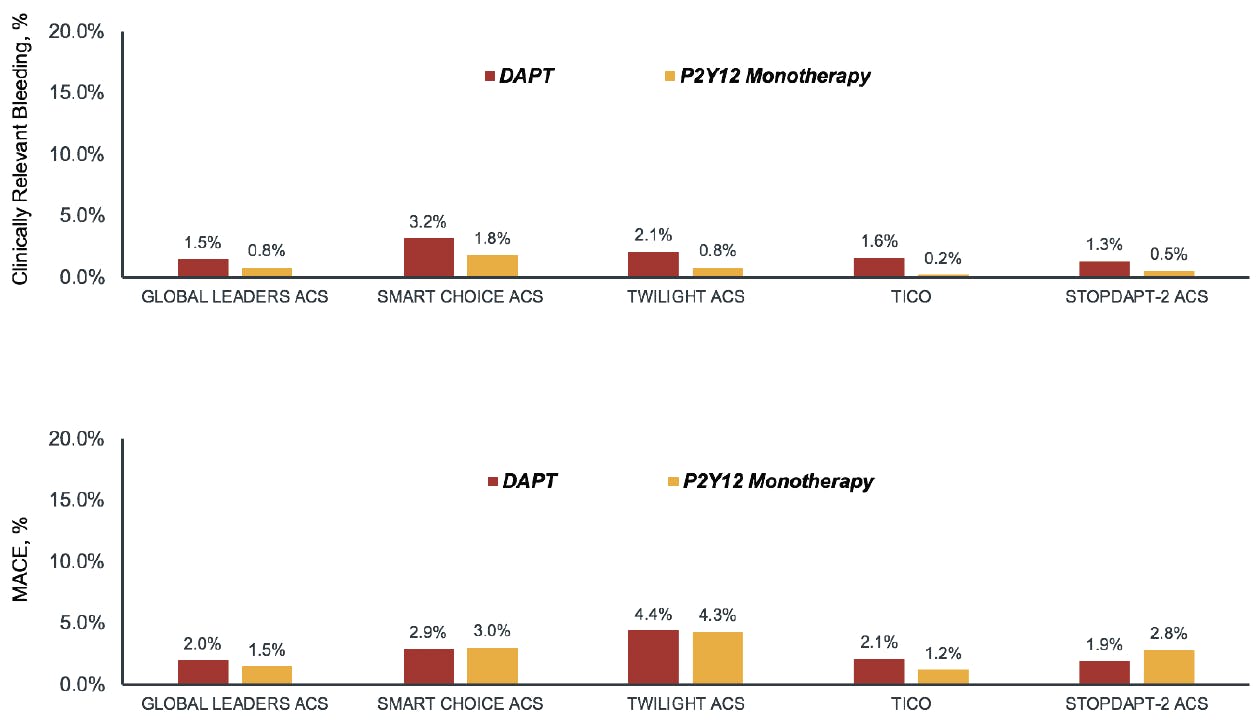
Figure 2. Bleeding and ischemic outcomes in trials comparing standard DAPT to short DAPT with P2Y12 monotherapy in non-HBR ACS patients. Bleeding outcomes include Bleeding Academic Research Consortium (BARC) types 3 to 5 for all trials with the exception of SMART CHOICE ACS (BARC 2-5) and TICO (Thrombolysis in Myocardial Infarction [TIMI] major). MACE, major adverse cardiovascular events.
Another approach in the setting of ACS involves DAPT de-escalation, defined as switching from a potent P2Y12 inhibitor to clopidogrel after a short duration of DAPT or reducing the dose of a potent P2Y12 inhibitor while maintaining DAPT (Figure 3). The putative advantage of de-escalation is that strong platelet inhibition is confined to the early period after ACS when thrombotic risk is highest, while a less intense DAPT regimen is maintained in later periods as bleeding risk accrues. De-escalation may be guided based on results of platelet function or genotype testing or unguided.17-21 In a pooled analysis comprising five randomized trials of ACS patients (N = 10,779) that compared de-escalation versus conventional DAPT, Tavenier et al found that de-escalation significantly reduced clinically relevant bleeding and major ischemic events.22 Results were consistent with both guided and unguided de-escalation (Figure 3). The comparative efficacy and safety of early aspirin withdrawal versus de-escalation is unclear given that no direct randomized comparisons of these approaches have been performed. Nonetheless, both are recommended as therapeutic approaches in ACS patients based on a patient’s risk for ischemic and bleeding events.7
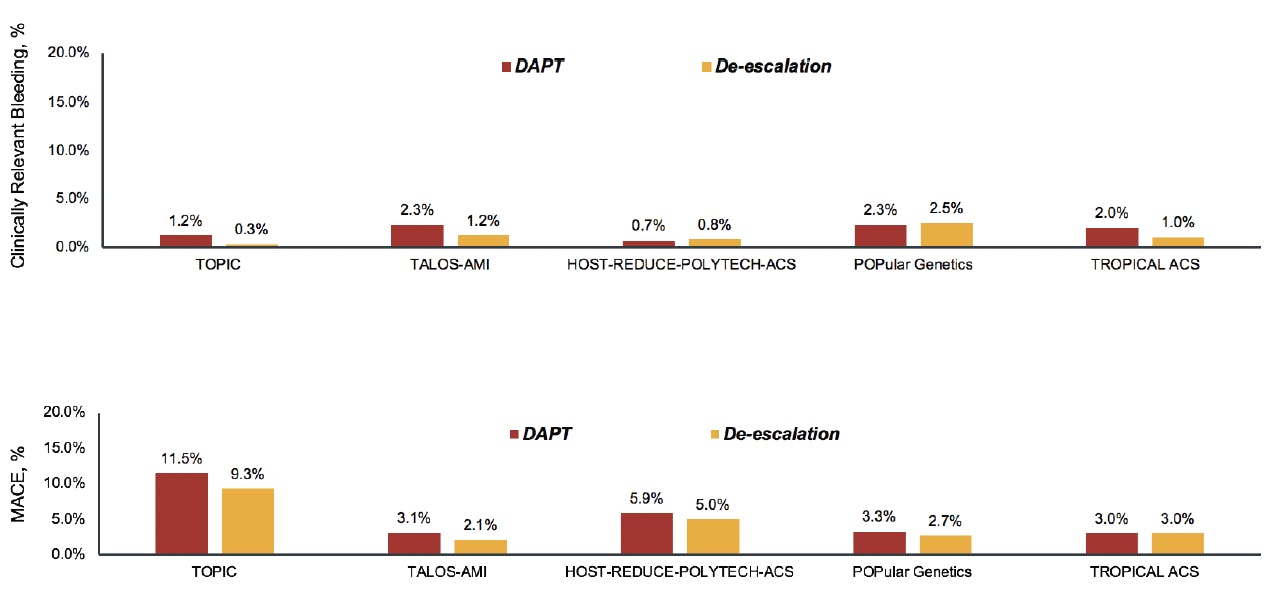
Figure 3. Bleeding and ischemic outcomes in trials comparing standard DAPT to de-escalation strategies in non-HBR ACS patients. Bleeding outcomes include BARC types 3 to 5 for all trials with exception of TOPIC (TIMI major).
Non-HBR, Non-ACS
Among non-HBR patients presenting with stable ischemic syndromes, risks for both bleeding and thrombotic events remain low. Therefore, the clinical imperative with regard to DAPT in this setting is to identify the minimum duration that will sufficiently mitigate against early and largely stent-related thrombotic events. In a pooled analysis comprising five randomized trials (N = 12,078), a 12-month versus 3- to 6-month DAPT duration was not associated with a reduction in ischemic events (odds ratio [OR], 0.96; 95% CI, 0.80-1.16). However, major bleeding was numerically increased, albeit not achieving statistical significance (OR, 1.67; 95% CI, 0.99-2.84).23 As a result, clinical practice guidelines recommend a 6-month DAPT duration in most patients presenting with stable syndromes undergoing PCI with a newer-generation DES.1
Conclusion
Therapeutic approaches with respect to DAPT after PCI are increasingly characterized by strategies to reduce the risk of bleeding without compromising ischemic efficacy. Based on results of randomized trials, evidence-based and individualized DAPT regimens may be tailored to a patient’s risk for both bleeding and thrombosis. Ongoing investigation is needed to clarify optimal antithrombotic approaches for chronic secondary prevention and compare various bleeding-reduction strategies.
1. Levine GN, Bates ER, Bittl JA, et al. 2016 ACC/AHA guideline focused update on duration of dual antiplatelet therapy in patients with coronary artery disease: a report of the American College of Cardiology/American Heart Association Task Force on Clinical Practice Guidelines. J Am Coll Cardiol. 2016;68:1082-1115. doi: 10.1016/j.jacc.2016.03.513
2. Yusuf S, Zhao F, Mehta SR, et al. Effects of clopidogrel in addition to aspirin in patients with acute coronary syndromes without ST-segment elevation. N Engl J Med. 2001;345:494-502. doi: 10.1056/NEJMoa010746
3. Baber U, Dangas G, Chandrasekhar J, et al. Time-dependent associations between actionable bleeding, coronary thrombotic events, and mortality following percutaneous coronary intervention: results from the PARIS registry. JACC Cardiovasc Interv. 2016;9:1349-1357. doi: 10.1016/j.jcin.2016.04.009
4. Urban P, Mehran R, Colleran R, et al. Defining high bleeding risk in patients undergoing percutaneous coronary intervention. Circulation. 2019;140:240-261. doi: 10.1161/CIRCULATIONAHA.119.040167
5. Valgimigli M, Frigoli E, Heg D, et al. Dual antiplatelet therapy after PCI in patients at high bleeding risk. N Engl J Med. 2021;385:1643-1655. doi: 10.1056/NEJMoa2108749
6. Lopes RD, Heizer G, Aronson R, et al. Antithrombotic therapy after acute coronary syndrome or PCI in atrial fibrillation. N Engl J Med. 2019;380:1509-1524. doi: 10.1056/NEJMoa1817083
7. Collet JP, Thiele H, Barbato E, et al. 2020 ESC Guidelines for the management of acute coronary syndromes in patients presenting without persistent ST-segment elevation. Eur Heart J. 2021;42:1289-1367. doi: 10.1093/eurheartj/ehaa575
8. Angiolillo DJ, Bhatt DL, Cannon CP, et al. Antithrombotic therapy in patients with atrial fibrillation treated with oral anticoagulation undergoing percutaneous coronary intervention: a North American perspective: 2021 update. Circulation. 2021;143:583-596. doi: 10.1161/CIRCULATIONAHA.120.050438
9. Mehran R, Cao D, Angiolillo DJ, et al. 3- or 1-month DAPT in patients at high bleeding risk undergoing everolimus-eluting stent implantation. JACC Cardiovasc Interv. 2021;14:1870-1883. doi: 10.1016/j.jcin.2021.07.016
10. Kirtane AJ, Stoler R, Feldman R, et al. Primary results of the EVOLVE short DAPT study: evaluation of 3-month dual antiplatelet therapy in high bleeding risk patients treated with a bioabsorbable polymer-coated everolimus-eluting stent. Circ Cardiovasc Interv. 2021;14:e010144. doi: 10.1161/CIRCINTERVENTIONS.120.010144.
11. Tomaniak M, Chichareon P, Onuma Y, et al. Benefit and risks of aspirin in addition to ticagrelor in acute coronary syndromes: a post hoc analysis of the randomized GLOBAL LEADERS trial. JAMA Cardiol. 2019;4:1092-1101. doi: 10.1001/jamacardio.2019.3355
12. Baber U, Dangas G, Angiolillo DJ, et al. Ticagrelor alone vs. ticagrelor plus aspirin following percutaneous coronary intervention in patients with non-ST-segment elevation acute coronary syndromes: TWILIGHT-ACS. Eur Heart J. 2020;41:3533-3545. doi: 10.1093/eurheartj/ehaa670
13. Kim BK, Hong SJ, Cho YH, et al. Effect of ticagrelor monotherapy vs ticagrelor with aspirin on major bleeding and cardiovascular events in patients with acute coronary syndrome: the TICO randomized clinical trial. JAMA. 2020;323:2407-2416. doi: 10.1001/jama.2020.7580
14. Watanabe H. Short and optimal duration of dual antiplatelet therapy after everolimus-eluting cobalt-chromium stent-2 acute coronary syndrome- STOPDDAPT-2 ACS. Presented at: ESC Congress; August 27-30, 2021.
15. Hahn JY, Song YB, Oh JH, et al. Effect of P2Y12 inhibitor monotherapy vs dual antiplatelet therapy on cardiovascular events in patients undergoing percutaneous coronary intervention: the SMART-CHOICE randomized clinical trial. JAMA. 2019;321:2428-2437. doi: 10.1001/jama.2019.8146
16. Mehran R, Baber U, Sharma SK, et al. Ticagrelor with or without aspirin in high-risk patients after PCI. N Engl J Med. 2019;381:2032-2042. doi: 10.1056/NEJMoa1908419
17. Cuisset T, Deharo P, Quilici J, et al. Benefit of switching dual antiplatelet therapy after acute coronary syndrome: the TOPIC (timing of platelet inhibition after acute coronary syndrome) randomized study. Eur Heart J. 2017;38:3070-3078. doi: 10.1093/eurheartj/ehx175
18. Kim CJ, Park MW, Kim MC, et al. Unguided de-escalation from ticagrelor to clopidogrel in stabilised patients with acute myocardial infarction undergoing percutaneous coronary intervention (TALOS-AMI): an investigator-initiated, open-label, multicentre, non-inferiority, randomised trial. Lancet. 2021;398:1305-1316. doi: 10.1016/S0140-6736(21)01445-8
19. Kim HS, Kang J, Hwang D, et al. Prasugrel-based de-escalation of dual antiplatelet therapy after percutaneous coronary intervention in patients with acute coronary syndrome (HOST-REDUCE-POLYTECH-ACS): an open-label, multicentre, non-inferiority randomised trial. Lancet. 2020;396:1079-1089. doi: 10.1016/S0140-6736(20)31791-8
20. Claassens DMF, Vos GJA, Bergmeijer TO, et al. A genotype-guided strategy for oral P2Y12 inhibitors in primary PCI. N Engl J Med. 2019;381:1621-1631. doi: 10.1056/NEJMoa1907096
21. Sibbing D, Aradi D, Jacobshagen C, et al. Guided de-escalation of antiplatelet treatment in patients with acute coronary syndrome undergoing percutaneous coronary intervention (TROPICAL-ACS): a randomised, open-label, multicentre trial. Lancet. 2017;390:1747-1757. doi: 10.1016/S0140-6736(17)32155-4
22. Tavenier AH, Mehran R, Chiarito M, et al. Guided and unguided de-escalation from potent P2Y12 inhibitors among patients with ACS: a meta-analysis. Eur Heart J Cardiovasc Pharmacother. Published online August 30, 2021. doi: 10.1093/ehjcvp/pvab068
23. Evidence Review Committee Members; Bittl JA, Baber U, Bradley SM, Wijeysundera DN. Duration of dual antiplatelet therapy: a systematic review for the 2016 ACC/AHA guideline focused update on duration of dual antiplatelet therapy in patients with coronary artery disease: a report of the American College of Cardiology/American Heart Association Task Force on Clinical Practice Guidelines. Circulation. 2016;134:e156-178. doi: 10.1161/CIR.0000000000000405
Razan Elsayed, MD
Cardiology Fellow
University of Oklahoma Health Sciences Center
Oklahoma City, Oklahoma
Disclosures: None.
Usman Baber, MD, MS
Associate Professor of Medicine
Director of Interventional Cardiology
University of Oklahoma Health Sciences Center
Oklahoma City, Oklahoma
usman-baber@ouhsc.edu
Disclosures: Receives honoraria from Amgen and AstraZeneca.
Advertisement
Advertisement