Advertisement
Advertisement
May/June 2021
An Interview With Dee Dee Wang, MD, FACC, FASE, FSCCT, FSCAI
Dr. Wang shares insights on building an interventional imaging program and recent steps forward in the field, the future of three- and four-dimensional virtual and physical printing, and the impact of the American College of Cardiology’s Emerging Faculty program on the field of interventional imaging.
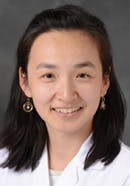
As Program Director of the interventional imaging fellowship program at Henry Ford, what advice would you give to other institutions looking to start a similar program, in terms of the most important elements to include?
Training to become an interventional imaging physician is exciting. My recommendation to programs is to build it for the needs of the heart team at their respective institutions. Every health care institution has its strengths and individual intraprocedural support needs. Build the program to your strengths and the transcatheter procedure(s) that your institution frequently performs and anticipates growing.
Each fellowship created will be different. Some fellowships may have opportunities for traditional mitral repair interventions and transcatheter aortic valve replacements. Others may expand to perform paravalvular leak closures, complex ventricular septal defect closures, and new technologies with the integration of cardiac CT/cardiac MRI. Fellows will gravitate to the fellowship that best matches their career interests. The key is to be transparent about what fellows can realistically graduate with in their skill set.
Institutions need to recognize that an advanced fellowship in interventional imaging is still fairly novel. Investment in this non–Accreditation Council for Graduate Medical Education fellowship program is a long-term commitment that most benefits health systems anticipating significant growth in their structural heart procedure volume. Funding for such an opportunity should be secured for at least 1- to 2-year commitments to allow the fellowship to grow, with a focus on education.
Earlier this year, the Centers for Medicare & Medicaid Services (CMS) national coverage determination for transcatheter edge-to-edge repair specified the need for an interventional echocardiographer as a required part of the heart team—an important milestone for the recognition of imagers. As an early advocate for interventional imaging as a specialty, what do you think needs to happen for further acceptance of this as a necessary, highly trained role? How would this recognition and more cardiologists specifically trained in interventional imaging impact the field and outcomes?
The 2021 CMS National Coverage Determination (NCD) for transcatheter edge-to-edge repair technologies was a tremendous step toward the need for recognition of interventional imaging physicians as cooperators in transcatheter procedures. It took time and perseverance to make interventional cardiology a formalized subspecialty, and it will take similar efforts for the field of interventional imaging. The key is to continue working hard to publish on our knowledge, skillsets, and procedural understanding to expand our abilities to help more patients around the world.
The impact of formal recognition is significant. It will allow community hospitals to have access to new device technologies that were previously not feasible in the absence of a sustainable reimbursement model for this heart team of physicians.
Through work with the Henry Ford Innovations Institute, you and colleagues have made great strides with three- (3D) and four-dimensional (4D) printing and planning, as well as computer-aided design, for structural heart interventions. How would you summarize the benefits you’ve seen these tools have for patient outcomes? What innovations in interventional imaging are you most excited about?
We are very fortunate at Henry Ford Hospital to have the support of our leadership (Drs. William O’Neill, Henry Kim, Eric Scher, and Scott Dulchavsky) to make the 3D/4D technologies come to life. The benefit of 3D and 4D technologies is that they allow our team to deliver personalized patient care at a level tailored to each patient’s specific anatomy. The additive value of 3D and 4D computer-aided design technology has made our procedures safer and more efficient.
We are still learning from this technology. It is nice to watch how it has been integrated as part of our clinical workflow, transforming how we train and educate our fellows, our patients, and each other.
How does the work you do with 3D printing/planning to personalize and customize care correlate to future devices? What innovations do you expect or hope to see in future commercially available options?
There are many new device technologies appearing every year. We hope our structural heart team’s know-how and understanding of 3D printing and planning will create opportunities for collaboration to optimize future devices before design freeze so we can help them impact more patients’ lives.
I’m excited to see improvement in catheter designs and anticipate this will help physicians treat many more patients than current rear-only steering, catheter-based technologies.
In recent months you’ve coauthored a few articles on the progress in transcatheter mitral valve interventions, including mitral valve replacement. What qualities would make up your ideal device?
I don’t have one ideal device. There is a lot of engineering involved in device design. We need to incorporate an understanding of pathophysiology into device design before design freeze. My ideal device would be a device that was created in collaboration with physician experts in the field of structural heart interventions before design freeze. There would be more long-term gains for patients and companies if physician engagement was appreciated earlier in the start-up phase.
Can you tell us about your United States patent for evaluating prosthetic heart valve placement?
Our initial patent was issued in July 2017 to Henry Ford Health System. The patent incorporates > 7 years of understanding developed in collaboration with the Henry Ford Innovations Institute on how to safely plan transcatheter mitral valve replacement procedures to minimize the life-threatening risk of left ventricular outflow tract obstruction in patients. Under a licensing agreement between Materialise and Henry Ford Health System, Materialise is the exclusive 3D software commercial agent for the proprietary methods and the underlying intellectual property.
This collaboration launched the development and subsequent United States FDA approval of the Mimics Enlight cardiovascular planning software (Materialise) for transcatheter mitral valve replacement. We are excited that physicians around the world will now have access to this tool we use at Henry Ford to prevent complications during the procedure.
As an interventional imaging physician, you have the opportunity to be involved in a wide variety of procedures. Which is your favorite and why?
My favorite procedures are the first-in-human procedures that require significant up-front preparation and collaboration among medical teams to ensure the success and safety of each patient.
What were the most memorable or worthwhile opportunities that came from being named one of American College of Cardiology (ACC)’s Emerging Faculty?
My most memorable experience from the ACC Emerging Faculty program is the investment made by the ACC into our individual academic careers. I felt included, supported, and part of something bigger. Through ACC’s Emerging faculty, I met colleagues and friends who were in similar career paths as myself, and together we were taught how to educate, collaborate, and communicate effectively.
The ACC Emerging Faculty program made possible the groundwork of our early advocacy efforts in interventional imaging, specifically our 2018 letter to the editor in Journal of the American College of Cardiology: Cardiovascular Imaging entitled, “Navigating a Career in Structural Heart Disease Interventional Imaging.”1 This opportunity led to three subsequent collaborations and publications:
“Interventional Imaging for Structural Heart Disease: Challenges and New Frontiers of an Emerging Multi-Disciplinary Field” in Structural Heart2
“Roundtable Discussion: Real-World Challenges in the Structural Imaging Arena” in Cardiac Interventions Today3
“Structural Heart Interventional Imagers - The New Face of Cardiac Imaging” in Arquivos Brasileiros de Cardiologia4
Our grassroots advocacy found a voice within ACC. Without the support, education, and mentorship of the faculty and leaders within ACC, it is unlikely we would have reached the 2021 milestone CMS recognition as one of the key physicians required for performance in transcatheter edge-to-edge procedures.
Acknowledgments: I am grateful to Drs. Henry Kim, Akshay Khandelwal, and William O’Neill in supporting my application to the ACC Emerging Faculty program. Thank you to Drs. Patrick O’Gara, Rick Nishimura, Carole Warnes, David Holmes, Katie Berlacher, Y.S. Chandrashekhar, Mr. Mike Monahan, Ms. Jackie Massey, and the faculty of the ACC Emerging Faculty program for their mentorship. The ACC’s Emerging Faculty program is supported by the Michael Wolk Heart Foundation, which was developed in 2005 to provide mentorship and early career opportunities for academic cardiologists.
1. Wang DD, Geske J, Choi AD, et al. Navigating a career in structural heart disease interventional imaging. JACC Cardiovasc Imaging. 2018;11:1928-1930. doi: 10.1016/j.jcmg.2018.07.010
2. Wang DD, Geske J, Choi AD, et al. Interventional imaging for structural heart disease: challenges and new frontiers of an emerging multi-disciplinary field. Structural Heart. 2019;3:187-200. doi: 10.1080/24748706.2019.1595238
3. Ho EC, Choi AD, Geske J, et al. Roundtable discussion: real-world challenges in the structural imaging arena. Cardiac Interv Today. 2019;13:67-72, 74.
4. Cavalcante JL, Wang DD. Structural heart interventional imagers - the new face of cardiac imaging. Arq Bras Cardiol. 2018;111:645-647. doi: 10.5935/abc.20180232
Advertisement
Advertisement
Interested in reading more interviews?
To read more interviews with thought leaders in the interventional cardiology field, check out our Profiles & Perspectives hub.
Read More