Advertisement
Advertisement
January/February 2021
FFR, iFR, and Other Resting Indices: Pressure-Wire Based Assessment of Ischemia
Reviewing current wire-based indices and evidence supporting their use.
By Takeshi Nishi, MD, and Yuichi Saito, MD
It is well known that apparent significant coronary stenosis on angiography sometimes does not cause significant ischemia, and vice versa. Thus, the importance of functional assessment of coronary stenosis based on coronary physiology has been increasingly recognized. Since the introduction of fractional flow reserve (FFR) more than 25 years ago, FFR-guided revascularization has become the current standard of care for functional assessment of lesion severity in patients with coronary artery disease (CAD). More recently, the instantaneous wave-free ratio (iFR) and other resting pressure–derived indices that do not require hyperemia have emerged as alternatives to FFR. This article summarizes the concepts of FFR, iFR, and other resting indices and the current evidence supporting their use.
CONCEPT AND FEATURES OF FFR
FFR is a pressure wire–based index used during coronary angiography to assess the potential of coronary stenosis to induce myocardial ischemia. FFR is defined as the ratio of myocardial blood flow in the coronary artery in the presence of epicardial stenosis compared with the flow in the same vessel in the theoretical absence of stenosis.1 Because of the linear relation between perfusion pressure and coronary blood flow during hyperemia, this ratio of maximum flows can be represented by the ratio of perfusion pressures: distal coronary artery pressure (Pd) divided by aortic pressure (Pa), under the assumption that venous pressure is close to zero. With this methodology, Pa is measured by a guiding catheter and Pd by a pressure-monitoring guidewire (Figure 1).
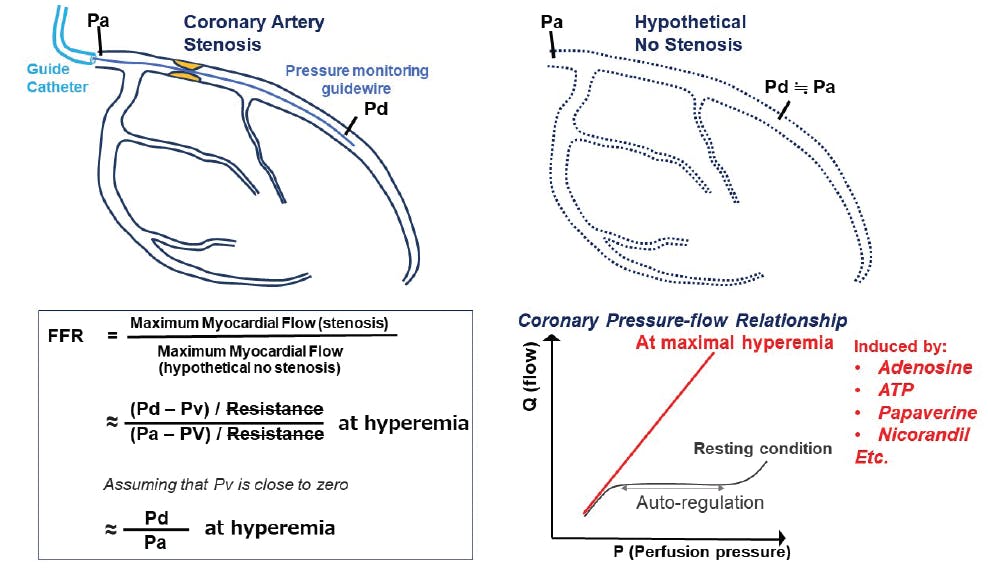
Figure 1. An overview of the concept of FFR. ATP, adenosine 5' triphosphate; Pv, central venous pressure.
FFR was first validated in a prospective, multitesting Bayesian approach where an FFR threshold value of 0.75 was identified to be associated with evidence of myocardial ischemia on noninvasive stress tests with high sensitivity and specificity.2 Multiple subsequent studies performed by numerous groups have shown that FFR values < 0.75 to 0.80 have very high specificity for identifying ischemia based on a variety of noninvasive imaging studies.3 If the FFR value is > 0.80, it is unlikely that the interrogated vessel or lesion is responsible for significant ischemia; FFR < 0.75 indicates that significant ischemia is likely inducible in the interrogated vessel. Currently, 0.80 is the best-endorsed cutoff to defer percutaneous coronary intervention (PCI) in clinical practice, as determined after validation in multiple prospective randomized trials with this threshold.4,5 Importantly, however, ischemia does not exist as a dichotomous state but as a graded continuum that can be measured by FFR on a per-vessel basis.6 FFR demonstrates a continuous and independent inverse relationship with the risk of adverse outcomes, which are modifiable by revascularization or medication (ie, the lower the FFR value, the greater the benefit from revascularization).6-9
FFR PIVOTAL TRIALS
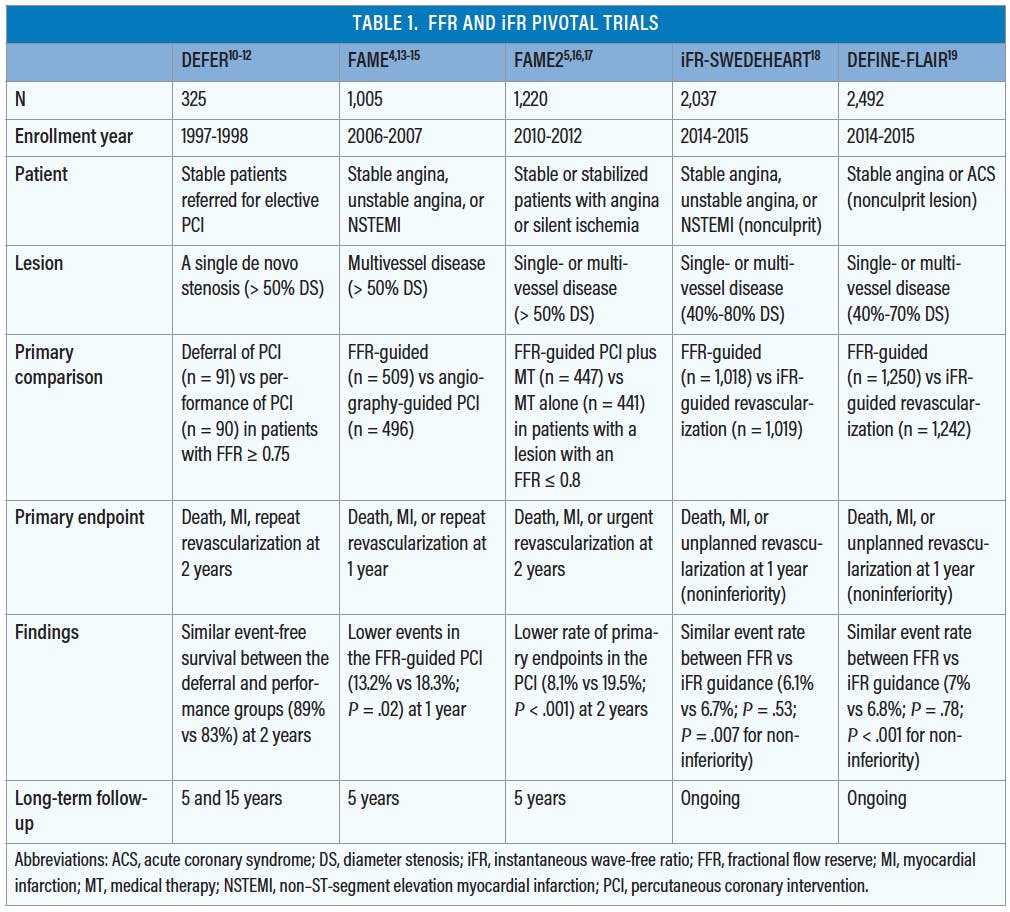
The usefulness of FFR-guided PCI is supported by robust clinical outcomes data. Three landmark, multicenter, randomized trials have tested the hypothesis of an FFR-based approach to guide revascularization in CAD, playing a very important role in establishing evidence of FFR (Table 1).4,5,10-19
The DEFER Trial
The DEFER trial included a total of 325 patients who were referred for percutaneous transluminal coronary angioplasty (PTCA) of an angiographically intermediate stenosis and ultimately showed that deferral of PTCA for functionally nonsignificant stenoses (FFR ≥ 0.75) was safe and comparable to revascularization of such stenoses with respect to outcome and symptoms at 2 and 5 years.10,11 At up to 5 years, there was no difference in mortality, myocardial infarction (MI), or revascularization related to the deferred lesions.11 Long-term follow-up of 15 years has shown that the favorable outcomes of PTCA deferral of functionally nonsignificant stenosis continued, without signs of late “catch-up” phenomenon.12
The FAME Trial
The FAME trial enrolled 1,005 patients with angiographic multivessel CAD amenable for PCI and presenting with stable angina, unstable angina, or non–ST-segment elevation myocardial infarction (< 5 days after the infarction).4 Patients were randomly assigned to either FFR-guided or angiography-guided PCI. In the FFR-guided arm, only lesions with an FFR ≤ 0.80 were treated with PCI, whereas in the angiography-guided arm, all stenoses with a ≥ 50% diameter were treated with PCI. The FFR-guided PCI strategy demonstrated a lower rate of the primary endpoint, defined as a composite of death, MI, or repeat revascularization at 1 year (13.2% vs 18.3%; P < .02). In addition, the rate of death and MI was significantly reduced in the FFR-guided PCI (7.3% vs 11.1%; P = .04).4 Subsequently, the 2-year results of FAME revealed a persistent reduction in the composite of death, MI, and repeat revascularization (17.9% vs 22.4%; P = .08). Additionally, the hard endpoints of death and MI remained significantly lower in the FFR-guided PCI patients (8.4% vs 12.9%; P = .02) at up to 2 years.13 The 5-year follow-up of the FAME trial showed that the absolute difference in cardiac events persists, although is not significant because of the smaller number of patients at risk.14 Overall, the FAME trial confirmed the long-term safety of FFR-guided PCI in patients with multivessel disease, with a lower number of stented arteries and less resource use.14,15
The FAME2 Trial
The FAME2 trial enrolled patients with stable angina or silent ischemia and one-, two-, or three-vessel disease. Patients who had at least one stenosis with an FFR ≤ 0.80 were randomized to FFR-guided PCI plus the best available medical therapy (PCI group, n = 447) or best available medical therapy alone (medical therapy group, n = 441).5 Across all lesions, patients with an FFR > 0.80 were not randomized (n = 332), and 50% of these patients (n = 166) were followed-up in a registry. The rate of the primary endpoint—a composite of death, nonfatal MI, or urgent revascularization within 2 years—was significantly lower in the PCI group than in the medical therapy group (8.1% vs 19.5%; P < .001), primarily driven by a lower rate of urgent revascularization in the PCI group (4% vs 16.3%; P < .001).5 This advantage of FFR-guided PCI compared with medical therapy alone continued at 3 and 5 years, although there was no significant difference in the rate of the primary endpoint between the PCI group versus the registry cohort at 5 years.16 It is worth noting that a lower incidence of spontaneous MI was observed in the PCI group compared with the medical therapy group at 5 years.16 Regarding symptom relief, patients in the FFR-guided PCI group reported significantly less angina up to 3 years after randomization compared with patients assigned to the medical therapy group. However, this difference was no longer significant at 5 years, by which time 51% of the patients initially assigned to the medical therapy group had undergone revascularization.16
In addition, the cost-effectiveness analysis of the FAME2 trial showed that at 3 years, the incremental cost-effectiveness ratio of PCI guided by FFR was approximately $1,600/quality-adjusted life-year (QALY) and was below a willingness-to-pay threshold of $50,000/QALY in 85% of the 10,000 bootstrap replications based on Medicare reimbursement rates, suggesting that FFR-guided PCI is economically attractive compared with medical therapy alone.17
CLINICAL GUIDELINES ENDORSING FFR FOR CLINICAL PRACTICE
With a growing body of evidence supporting FFR-guided revascularization, international guidelines now recommend FFR for guiding revascularization strategies. The latest American College of Cardiology Foundation/American Heart Association guidelines have given a class Ia recommendation for revascularization of functionally significant stenoses and a class IIa recommendation for using FFR to assess intermediate stenoses.20,21 The European Society of Cardiology and European Association for Cardio-Thoracic Surgery guidelines have given a class Ia recommendation for assessment of the hemodynamic relevance of intermediate-grade stenosis when evidence of ischemia is not available.22 Further, large-scale, real-world data support that performing PCI guided by FFR is associated with better outcomes (even reduction of death or MI) in patients with CAD.23,24
INSTANTANEOUS WAVE-FREE RATIO
Recently, iFR was introduced as a nonhyperemic alternative to FFR. This index is calculated as the ratio of resting Pd to aortic Pa over a specific period in late diastole (the so-called “wave-free period”) during which intracoronary resistance is reportedly constant and “minimal.” However, the resistance during the wave-free period without hyperemia is generally higher than the average resistance during the entire cardiac cycle in hyperemia.25 Therefore, there is discordance between iFR and FFR. When using FFR as a reference standard, iFR achieved an accuracy of approximately 80%.26,27 Nonetheless, there are potential advantages of iFR compared with FFR, such as independence from hyperemic medications (resulting in increased patient comfort) and reduced procedural time and costs.
As seen in Table 1, two recent large-scale randomized trials have shown comparable results between FFR- and iFR-guided revascularization strategies in patients with intermediate-grade stenoses.18,19 In both trials, revascularization was indicated if FFR was ≤ 0.80 or iFR was ≤ 0.89. iFR-guided revascularization was proven to be noninferior to FFR-guided revascularization for adverse cardiovascular events at 1-year follow-up of both trials, leading to iFR being included in the European guidelines as equivalent to FFR.22 In both trials, fewer revascularization procedures were performed in the iFR-guided strategy than in the FFR-guided strategy, without a clear initial difference in terms of short-term clinical outcomes. Long-term clinical outcomes data are awaited to determine the safety of higher rates of revascularization deferral by iFR given that recent randomized trials have observed a higher rate of nonprocedural MI with the conservative strategy at 5 years.16,28
NOVEL RESTING NONHYPEREMIC PRESSURE RATIOS
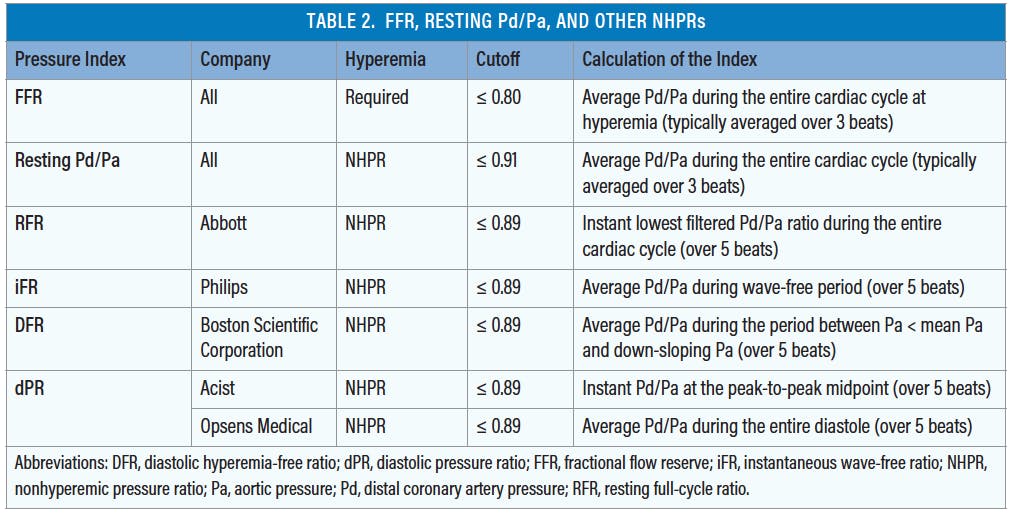
More recently, several wire-based nonhyperemic pressure ratios (NHPRs) other than iFR have been developed. These novel indices measure the ratio of Pd to Pa but differ on the phase of the cardiac cycle where measurement takes place, as shown in Figure 2 and summarized in Table 2. Essentially, the diagnostic accuracy of these novel NHPRs is almost identical to iFR. In addition, retrospective studies have shown comparable prognostic performance among NHPRs and iFR, although this has not been prospectively validated.29-32 These studies suggest that novel NHPRs and iFR could be applied clinically in a similar fashion.
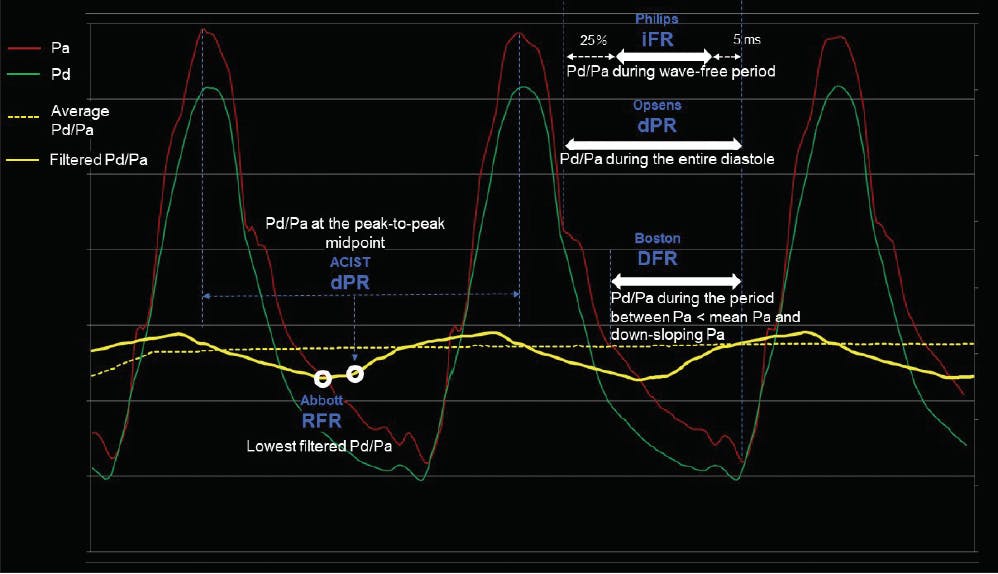
Figure 2. NHPRs and where in the cardiac cycle they are calculated. DFR, diastolic hyperemia-free ratio; dPR, diastolic pressure ratio; RFR, resting full-cycle ratio.
CONCLUSIONS
The primary goal when treating patients with CAD should be to relieve symptoms and improve their quality of life and clinical outcomes. This is best accomplished by identifying and relieving the stenoses that are responsible for myocardial ischemia and/or are at high risk for future adverse events. FFR is a simple and validated method for achieving this goal in the catheterization laboratory. Although more prospective data are needed, iFR and novel NHPRs may contribute to further adoption of wire-based physiologic assessment. We anticipate that as coronary physiologic assessment is used more, patients with CAD will more likely receive better treatment.
1. Pijls NHJ, van Son JA, Kirkeeide RL, et al. Experimental basis of determining maximum coronary, myocardial and collateral blood flow by pressure measurements for assessing functional stenosis severity before and after percutaneous transluminal coronary angioplasty. Circulation. 1993;87:1354-1367. doi: 10.1161/01.cir.87.4.1354
2. Pijls NHJ, De Bruyne B, Peels K, et al. Measurement of fractional flow reserve to assess the functional severity of coronary-artery stenoses. N Engl J Med. 1996;334:1703-1708. doi: 10.1056/NEJM199606273342604
3. Kern MJ, Samady H. Current concepts of integrated coronary physiology in the catheterization laboratory. J Am Coll Cardiol. 2010;55:173-185. doi: 10.1016/j.jacc.2009.06.062
4. Tonino PAL, De Bruyne B, Pijls NHJ, et al. Fractional flow reserve versus angiography for guiding percutaneous coronary intervention. New Engl J Med. 2009;360:213-224. doi: 10.1056/NEJMoa0807611
5. De Bruyne B, Fearon WF, Pijls NHJ, et al. Fractional flow reserve-guided PCI for stable coronary artery disease. N Engl J Med. 2014;371:1208-1217. doi: 10.1056/NEJMoa1408758
6. Johnson NP, Tóth GG, Lai D, et al. Prognostic value of fractional flow reserve: linking physiologic severity to clinical outcomes. J Am Coll Cardiol. 2014;64:1641-1654. doi: 10.1016/j.jacc.2014.07.973
7. Barbato E, Tóth GG, Johnson NP, et al. A prospective natural history study of coronary atherosclerosis using fractional flow reserve. J Am Coll Cardiol. 2016;68:2247-2255. doi: 10.1016/j.jacc.2016.08.055
8. Ahn JM, Park DW, Shin ES, et al. Fractional flow reserve and cardiac events in coronary artery disease: data from a prospective IRIS-FFR registry (interventional cardiology research incooperation society fractional flow reserve). Circulation. 2017;135:2241-2251. doi: 10.1161/CIRCULATIONAHA.116.024433
9. Nishi T, Piroth Z, De Bruyne B, et al. Fractional flow reserve and quality-of-life improvement after percutaneous coronary intervention in patients with stable coronary artery disease. Circulation. 2018;138:1797-1804. doi: 10.1161/CIRCULATIONAHA.118.035263
10. Bech GJ, De Bruyne B, Pijls NHJ, et al. Fractional flow reserve to determine the appropriateness of angioplasty in moderate coronary stenosis: a randomized trial. Circulation. 2001;103:2928-2934. doi: 10.1161/01.cir.103.24.2928
11. Pijls NHJ, van Schaardenburgh P, Manoharan G, et al. Percutaneous coronary intervention of functionally nonsignificant stenosis: 5-year follow-up of the DEFER study. J Am Coll Cardiol. 2007;49:2105-2111. doi: 10.1016/j.jacc.2007.01.087
12. Zimmermann FM, Ferrara A, Johnson NP, et al. Deferral vs. performance of percutaneous coronary intervention of functionally non-significant coronary stenosis: 15-year follow-up of the DEFER trial. Eur Heart J. 2015;36:3182-3188. doi: 10.1093/eurheartj/ehv452
13. Pijls NHJ, Fearon WF, Tonino PAL, et al. Fractional flow reserve versus angiography for guiding percutaneous coronary intervention in patients with multivessel coronary artery disease: 2-year follow-up of the FAME (Fractional Flow Reserve Versus Angiography for Multivessel Evaluation) study. J Am Coll Cardiol. 2010;56:177-184. doi: 10.1016/j.jacc.2010.04.012
14. van Nunen LX, Zimmermann FM, Tonino PAL, et al. Fractional flow reserve versus angiography for guidance of PCI in patients with multivessel coronary artery disease (FAME): 5-year follow-up of a randomised controlled trial. Lancet. 2015;386:1853-1860. doi: 10.1016/S0140-6736(15)00057-4
15. Fearon WF, Bornschein B, Tonino PAL, et al. Economic evaluation of fractional flow reserve-guided percutaneous coronary intervention in patients with multivessel disease. Circulation. 2010;122:2545-2550. doi: 10.1161/CIRCULATIONAHA.109.925396
16. Xaplanteris P, Fournier S, Pijls NHJ, et al. Five-year outcomes with PCI guided by fractional flow reserve. N Engl J Med. 2018;379:250-259. doi: 10.1056/NEJMoa1803538
17. Fearon WF, Nishi T, De Bruyne B, et al. Clinical outcomes and cost-effectiveness of fractional flow reserve-guided percutaneous coronary intervention in patients with stable coronary artery disease: three-year follow-up of the FAME 2 trial (fractional flow reserve versus angiography for multivessel evaluation). Circulation. 2018;137:480-487. doi: 0.1161/CIRCULATIONAHA.117.031907
18. Götberg M, Christiansen EH, Gudmundsdottir IJ, et al. Instantaneous wave-free ratio versus fractional flow reserve to guide PCI. N Engl J Med. 2017;376:1813-1823. doi: 10.1056/NEJMoa1616540
19. Davies JE, Sen S, Dehbi HM, et al. Use of the instantaneous wave-free ratio or fractional flow reserve in PCI. N Engl J Med. 2017;376:1824-1834. doi: 10.1056/NEJMoa1700445
20. Levine GN, Bates ER, Blankenship JC, et al. 2011 ACCF/AHA/SCAI guideline for percutaneous coronary intervention. A report of the American College of Cardiology Foundation/American Heart Association Task Force on Practice Guidelines and the Society for Cardiovascular Angiography and Interventions. J Am Coll Cardiol. 2011;58:e44-122. doi: 10.1016/j.jacc.2011.08.007
21. Fihn SD, Gardin JM, Abrams J, et al. 2012 ACCF/AHA/ACP/AATS/PCNA/SCAI/STS guideline for the diagnosis and management of patients with stable ischemic heart disease: executive summary: a report of the American College of Cardiology Foundation/American Heart Association Task Force on Practice Guidelines, and the American College of Physicians, American Association for Thoracic Surgery, Preventive Cardiovascular Nurses Association, Society for Cardiovascular Angiography and Interventions, and Society of Thoracic Surgeons. J Am Coll Cardiol. 2012;60:2564-2603. doi: 10.1016/j.jacc.2012.07.012
22. Neumann FJ, Sousa-Uva M, Ahlsson A, et al. 2018 ESC/EACTS guidelines on myocardial revascularization [published erratum appears in Eur Heart J. 2019;40:3096]. Eur Heart J. 2019;40:87-165. doi: 10.1093/eurheartj/ehy394
23. Sud M, Han L, Koh M, et al. Association between adherence to fractional flow reserve treatment thresholds and major adverse cardiac events in patients with coronary artery disease. JAMA. 2020;324:2406-2414. doi: 10.1001/jama.2020.22708
24. Parikh RV, Liu G, Plomondon ME, et al. Utilization and outcomes of measuring fractional flow reserve in patients with stable ischemic heart disease. J Am Coll Cardiol. 2020;75:409-419. doi: 10.1016/j.jacc.2019.10.060
25. Nijjer SS, de Waard GA, Sen S, et al. Coronary pressure and flow relationships in humans: phasic analysis of normal and pathological vessels and the implications for stenosis assessment: a report from the Iberian-Dutch-English (IDEAL) collaborators. Eur Heart J. 2016;37:2069-2080. doi: 10.1093/eurheartj/ehv626
26. Johnson NP, Jeremias A, Zimmermann FM, et al. Continuum of vasodilator stress from rest to contrast medium to adenosine hyperemia for fractional flow reserve assessment. JACC Cardiovasc Interv. 2016;9:757-767. doi: 10.1016/j.jcin.2015.12.273
27. Sen S, Escaned J, Petraco R, et al. Reply: is the instantaneous wave-free ratio equivalent to fractional flow reserve? J Am Coll Cardiol. 2013;62:943-945. doi: 10.1016/j.jacc.2013.05.036
28. Maron DJ, Hochman JS, Reynolds HR, et al. Initial invasive or conservative strategy for stable coronary disease. N Engl J Med. 2020;382:1395-1407. doi: 10.1056/NEJMoa1915922
29. Johnson NP, Li W, Chen X, et al. Diastolic pressure ratio: new approach and validation vs. the instantaneous wave-free ratio. Eur Heart J. 2019;40:2585-2594. doi: 10.1093/eurheartj/ehz230
30. Van’t Veer M, Pijls NHJ, Hennigan B, et al. Comparison of different diastolic resting indexes to iFR: are they all equal? J Am Coll Cardiol. 2017;70:3088-3096. doi: 10.1016/j.jacc.2017.10.066
31. Ahn JM, Ali ZA, Svanerud J, et al. IRIS-FFR registry: prognostic performance of five resting pressure-derived indexes of coronary physiology. Presented at: Transcatheter Cardiovascular Therapeutics (TCT); September 21-25, 2018; San Diego, California.
32. Lee JM, Lee SH, Hwang D, et al. Long-term clinical outcomes of nonhyperemic pressure ratios: resting full-cycle ratio, diastolic pressure ratio, and instantaneous wave-free ratio. J Am Heart Assoc. 2020;9:e016818. doi: 10.1161/JAHA.120.016818
Advertisement
Advertisement