Advertisement
Advertisement
January/February 2021
Appraising the Role of PFO Closure
A review of updated trial data, available devices, and application of patent foramen ovale closure.
Patent foramen ovale (PFO) is part of a group of entities known as atrial septal defects (ASDs), and it is a remnant of normal fetal anatomy. The PFO is a flap-like opening between the atrial septum secundum and primum at the fossa ovalis. In utero, it serves as a conduit for blood to the systemic circulation. Once the pulmonary circulation increases after birth, the functional PFO starts to close. Anatomic closure of the PFO usually occurs at about 12 months.1 However, in a certain population of people, the PFO will persist. A prospective study has shown that in the general population, the prevalence of PFO is as high as 25%,2 and data from 1988 show that the percentage is higher in young patients who have had a cryptogenic stroke, showing up to 40%.3 This has initiated tremendous interest and controversy over the years regarding the role that the PFO plays in cryptogenic stroke.
MODALITIES TO DETECT PFO
Transesophageal echocardiography (TEE) has been the gold standard for PFO detection. A meta-analysis of 164 patients that compared TEE with autopsy, cardiac surgery, and/or catheterization demonstrated a sensitivity of 89.2% and specificity of 91.4% to detect PFO.4 Another complementary and highly sensitive screening test is transcranial color Doppler (TCD) ultrasound. An investigation of 420 patients admitted for cryptogenic stroke, transient ischemic attack (TIA), or other neurologic symptoms, who underwent TCD and TEE evaluation, revealed that TCD had a sensitivity of 95% and a specificity of 92% in the diagnosis of PFO. It further concluded that TCD and TEE are complementary diagnostic tests for PFO, but TCD should be recommended as the first choice for screening because of its simplicity, noninvasive character, low cost, and high feasibility.5
Another imaging modality is intracardiac echocardiography (ICE). A recent study with 65 patients compared the findings of TEE during the initial diagnostic examination with those from ICE acquired during the interventional procedure. It showed that ICE provided adequate views of the defects and surrounding structures during the various stages of device deployment, also finding additional anatomic variations in 12.3% of the patients. ICE is a safe and high-quality imaging technique for guiding transcatheter ASD and PFO occlusion and can be useful as a modality for diagnosis in cases in which TCD and TEE are indeterminate.6 As an adjunct to the procedure, ICE removes the requirement for general anesthesia that is required with TEE.
PREVIOUS RESEARCH
Multiple clinical trials have studied the role of PFO closure compared to medical therapy in patients with cryptogenic stroke or TIA. Earlier studies include CLOSURE I and the PC trial. Both concluded that the closure of PFO was not superior and did not offer a greater benefit than medical therapy alone in the prevention and recurrence of embolic events.7,8 Initial 1-year follow-up data from RESPECT demonstrated that in the intention-to-treat analysis, there was no significant benefit associated with the closure of a PFO in adults who had cryptogenic ischemic stroke. However, closure was superior to medical therapy alone in the prespecified per-protocol and as-treated analyses, with a low rate of associated risks.9 An analysis of CLOSURE I showed that there were independent risk factors and comorbidities that could have predicted recurrent ischemic neurologic events, suggesting an alternative etiology to paradoxical embolism was responsible for recurrent events.10 A meta-analysis of PC, RESPECT, and CLOSURE I intention-to-treat analyses showed a statistically significant risk reduction in stroke and/or TIA in the PFO closure group when compared to medical treatment and an even greater benefit in patients with a substantial shunt.11
RECENT RESEARCH
More recent studies have shown a benefit toward PFO closure for cryptogenic stroke rather than medical therapy alone (Figure 1), especially when the intervention is performed in select patients. CLOSE studied patients with a PFO and associated atrial septal aneurysm or large interatrial shunt and demonstrated that PFO closure combined with antiplatelet therapy lowered the rate of stroke recurrence greater than with antiplatelet therapy alone.12 An extended follow-up of the previous RESPECT trial showed that among adults who had a cryptogenic ischemic stroke, closure of a PFO was associated with a lower rate of recurrent ischemic strokes than medical therapy alone during the extended follow-up. Also, venous thromboembolism, which comprised events of pulmonary embolism and deep vein thrombosis, was more common in the PFO closure group, alluding to the fact that the closure prevented more potential recurrences of ischemic stroke.13 The Gore REDUCE trial used the Helex septal occluder (Gore & Associates) or the Cardioform septal occluder (Gore & Associates) and found that among patients with a PFO who had a previous cryptogenic stroke, the risk of subsequent ischemic stroke was lower among those with PFO closure combined with antiplatelet therapy than those assigned to antiplatelet therapy alone. Although, the study did also find that PFO closure was associated with higher rates of device complications and atrial fibrillation.14 DEFENSE-PFO tried to determine which patients with cryptogenic stroke would be optimal candidates for closure. Researchers found that PFO closure in those with cryptogenic stroke and high-risk PFO characteristics (PFO with atrial septal aneurysm, hypermobility of atrial septum during Valsalva maneuver [phasic septal excursion into either atrium ≥ 10 mm], or PFO size [maximum separation of the septum primum from the secundum] ≥ 2 mm) resulted in a lower rate of a composite of stroke, vascular death, or thrombolysis in myocardial infarction—defined as major bleeding during 2 years of follow-up compared to the medication-only group.15
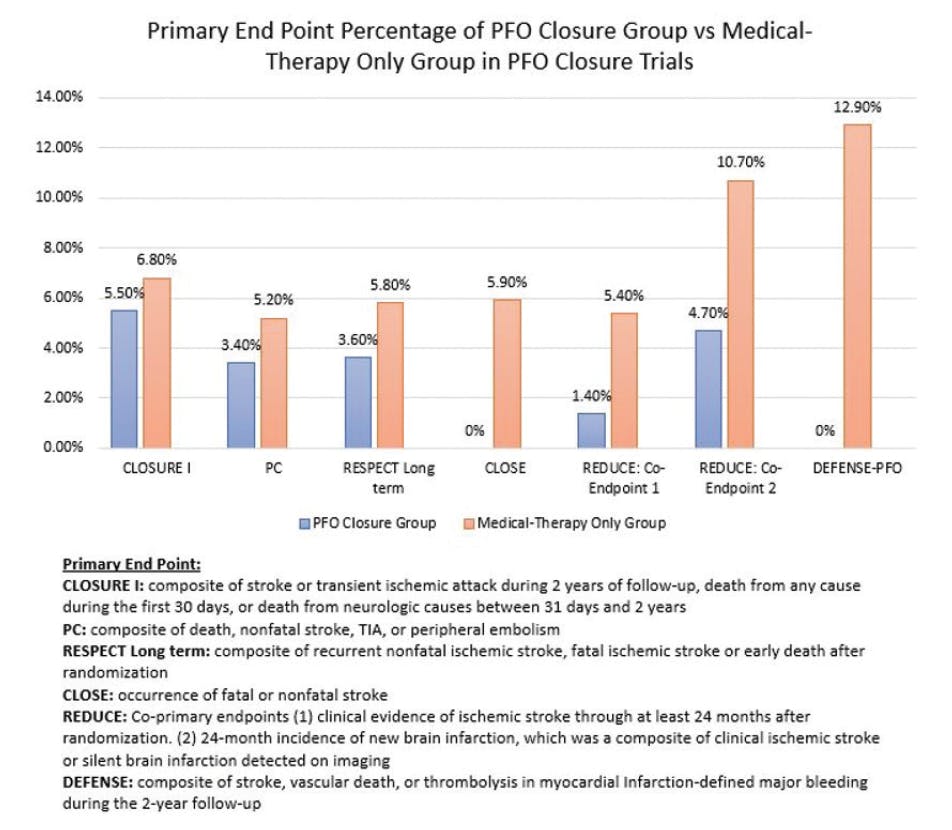
Figure 1. How PFO closure led to a reduced primary endpoint of recurrence of ischemic stroke compared to those with medical therapy alone. This effect was significant in more recent trials compared to previous studies.
Based on a patient-level meta-analysis of five randomized trials (CLOSURE I, PC, RESPECT, CLOSE, and Gore REDUCE), PFO-occluding devices decrease the risk of recurrent stroke compared with medical therapy in patients with cryptogenic stroke. Also, based on a subgroup analysis of the RESPECT trial, the efficacy of PFO closure for the prevention of stroke is enhanced in those patients with certain echocardiographic features, such as an atrial septal aneurysm or large shunt.16 Although there was a higher risk of atrial fibrillation found in patients who underwent PFO closure, based on these results, it can be concluded that in the right population of patients with high-risk PFO and cryptogenic stroke, PFO closure should be the standard of care.
Importantly, in these modern trials, an extensive evaluation prior to inclusion had been performed to exclude alternative causes of stroke. This included investigation with arrhythmia monitoring to exclude atrial arrhythmias, neurovascular imaging to exclude carotid artery disease, as well as extensive evaluation with stroke neurologists to ensure that patients had imaging-defined stroke/TIA that correlated with symptoms and had a high likelihood for embolic origin. Additionally, many of these trials were performed in patients between the ages of 18 and 60 years to exclude confounding variables that may contribute to stroke from nonparadoxical embolic origin. This has thus cemented the role of the heart-brain team to ensure appropriate patients are selected who would likely benefit from PFO closure.
RISK STRATIFICATION
The RoPE (risk of paradoxical embolism) index was created based on easily and reliably obtained variables that may be useful to clinicians for predicting the probability of discovering a PFO in a patient with cryptogenic stroke. The index gives one point each for the following: no history of hypertension, no history of diabetes, no history of stroke or TIA, nonsmoker, and cortical infarct on imaging. Age is another factor, with the patient given five points if they are between 18 and 29 years of age, down to zero points if the patient is ≥ 70 years of age. A maximum score of 10 is possible with a minimum of 0. A score of 0 to 3 suggests a stroke is 0% to 4% attributable to PFO; however, a score of 9 to 10 makes a stroke 83% to 91% attributable to a PFO.17 The RoPE score estimated attributable fraction is highly correlated to the relative risk reduction of device versus medical therapy, and it identifies patients with cryptogenic stroke who are likely to have a PFO that is pathogenic rather than incidental.18
COMMUNITY RESPONSE TO THE RESULTS
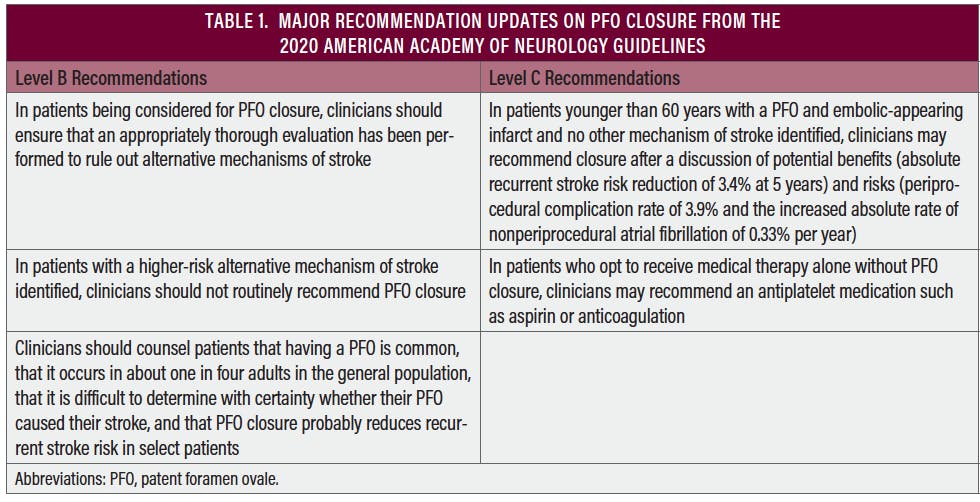
The American Academy of Neurology has updated its 2016 guidelines of PFO closure to reflect the new findings that were seen in recent studies (Table 1).19 This update in their guidelines shows the significant impact the recent trials have had and the shift toward PFO closure as a standard of care in cryptogenic stroke prevention, especially in optimized patients.
DEVICES ON THE MARKET
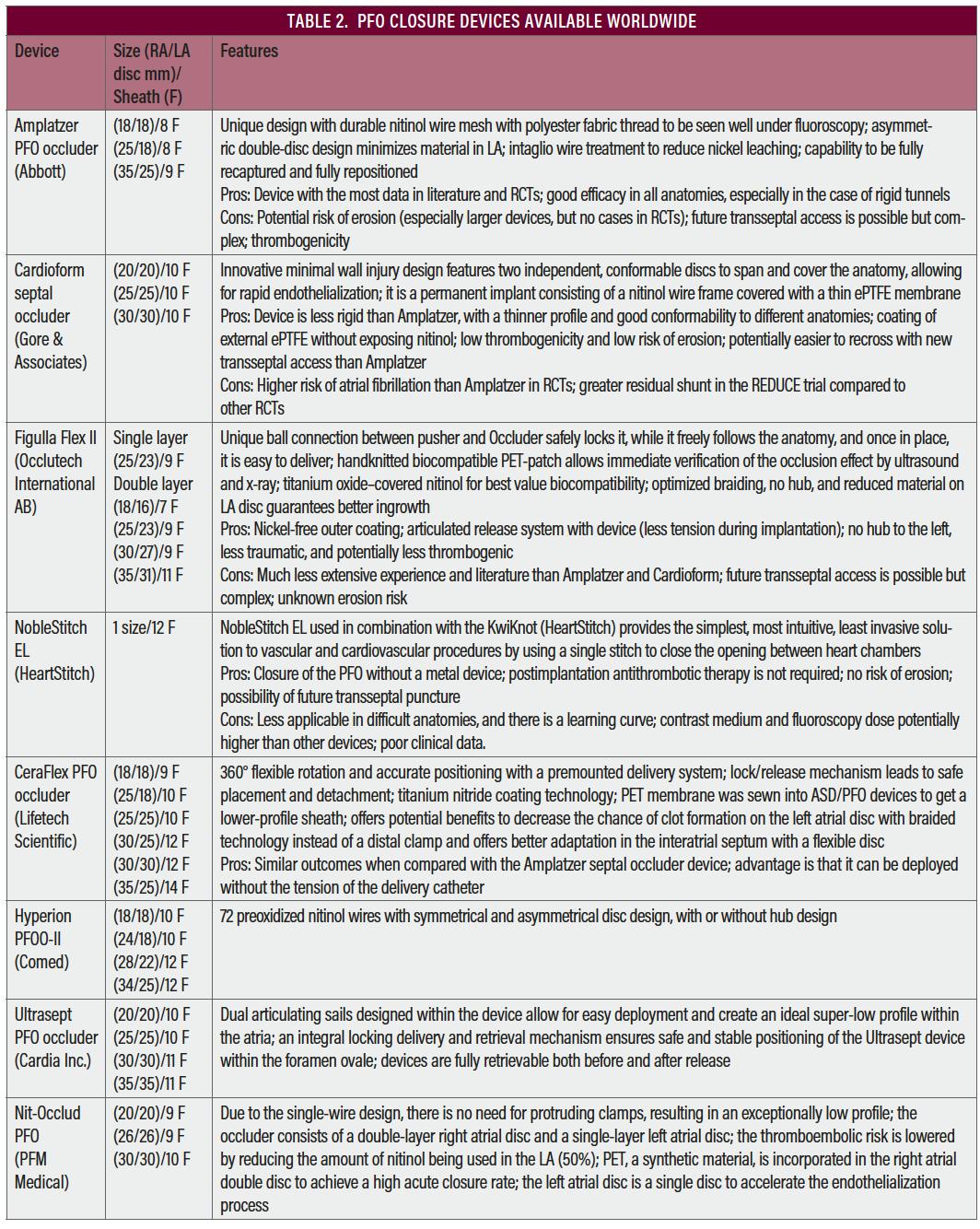
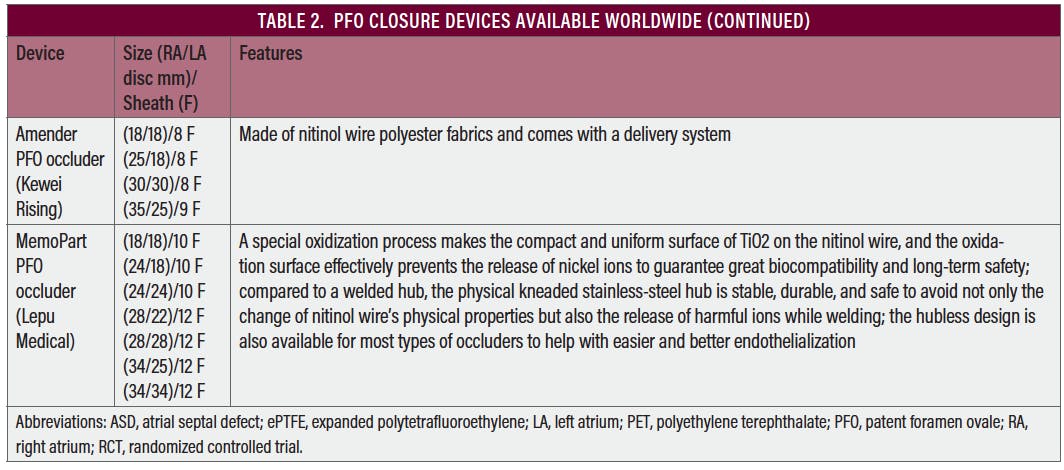
There are several commercially available ASD and PFO closure devices on the market worldwide (Table 2A and Table 2B).20,21 In the United States, only the Amplatzer PFO occluder (Abbott) and the Cardioform septal occluder are FDA approved for PFO closure.22 It is important to note the differences between the two devices. A recent single-center retrospective study comparing residual shunt rate and complications associated with six different devices used for PFO closure showed that the highest effective closure was achieved with the Cardioform device, at 100%, compared to 85% with the Amplatzer PFO device. However, the most common significant adverse event was atrial fibrillation, which was more common with the Cardioform device at 13% than the Amplatzer PFO device at 4%.23 Of note, both devices have differing mechanisms of deployment. The Amplatzer PFO device must be loaded into a catheter deployment system that is then deployed via the Amplatzer Trevisio sheath system (Abbott). The Cardioform device instead comes as a premounted device and is deployed using the proprietary Gore & Associates deployment system without the need for an additional sheath across the septum.
PEARLS OF THE PROCEDURE
At our institution, evaluation of the patient with an embolic stroke of unknown source (ESUS) begins with extensive neurologic evaluation and imaging. Diagnostics may include transthoracic echocardiography, TCD, and TEE. Contemporaneous with the evaluation of PFO anatomy, low-risk patients for atrial arrhythmia undergo mobile telemetry monitoring for 1 month. Patients at higher risk for arrhythmia will undergo electrophysiologic consultation and implantable loop recorder monitoring to exclude atrial arrhythmia for 3 to 6 months. Additional neurovascular imaging to exclude carotid vascular disease and adjunctive hematology evaluation for hypercoagulable disorders are performed.
Procedurally, we generally propose that PFO closure can be safely performed using ICE and fluoroscopy. Using a multipurpose or Judkins right diagnostic catheter and soft tip straight guidewire (such as the Magic Torque guidewire, Boston Scientific Corporation), clockwise rotation of the catheter while engaging the septum is often sufficient to cross the PFO. The catheter is advanced through the PFO and into the left atrium and the wire is then advanced through the catheter and into the left superior pulmonary vein. Following this, either the Amplatzer or Gore delivery system is advanced over the wire, and the selected device is deployed as per the instructions for use.
On occasion, due to restrictive tunnel or serpiginous defect, crossing can become challenging. In these instances, a transseptal approach can be helpful. Using a radiofrequency puncture system (Baylis Medical Company, Inc.), peri-PFO puncture can be performed, allowing for device deployment and successful PFO closure. This latter approach requires a strong knowledge of transseptal puncture and device delivery and should only be attempted by operators with significant experience.
FUTURE DEVICES
There have been multiple devices on the horizon for PFO closure, one of which is the BioStar bioabsorbable septal repair implant (Gore & Associates). This device showed successful implantation in 98% of patients, with successful closure in 92% at 30 days and 96% in 6 months. BioStar is a novel septal repair implant because it can cause biologic closure of atrial-level defects using a patient’s natural healing response, allowing for 90% to 95% of the implant to be absorbed and replaced with healthy native tissue.24 Another device, the Carag bioresorbable septal occluder (Carag AG), has also shown promise as a bioresorbable implant for PFO closure that could reduce possible long-term complications. It has demonstrated good biocompatibility with documentation of timely degradation and substitution of the polymer material by fibromuscular cells and extracellular matrix components in animal models.25 Additionally, the Figulla Flex II (Occlutech International AB) has been shown to have a 100% implantation success rate in a study done with 82 patients and no major complications or reoccurrences of cerebral thromboembolic events in 6 months. A difference with this device compared to others is a unique braiding technique in forming a single hub (microscrew) at the right atrial disc for cable connection. Consequently, there is no left atrial clamp, minimizing the amount of material implanted. This may contribute to this device’s low complication rate but a relatively high percentage of small residual shunts 6 months after closure.26 Currently the device is in use in Europe but not in the United States as it is not FDA approved. Another novel approach to PFO closure is the NobleStitch EL (HeartStitch), which is a suture-mediated “deviceless” closure of the PFO. This system is feasible in the majority of septal anatomies, providing an effective closure of PFO comparable to traditional devices, with a good safety profile in a medium-term follow-up.27 NobleStitch EL is being evaluated in an ongoing clinical trial called STITCH (NCT04339699) that is comparing it to the Amplatzer PFO occluder to prevent recurrent ischemic stroke.
OTHER ASSOCIATIONS WITH PFO
PFO has been associated with many different conditions. In 2004, a study with 230 scuba divers, of whom 63 had a PFO, showed that the presence of a PFO is related to a low absolute risk of five major decompression illness (DCI) events per 10,000 dives, the odds of which are five times as high as in divers without PFO. Additionally, the study found that the risk of developing a major DCI parallels PFO size.28
Another association has been made between PFO and migraines. A prospective analysis of 110 patients with PFO and ASD that were closed showed that 49% also experienced migraines. Of those who also had migraines, 82% of the PFO patients and 89% of the ASD patients showed that the percutaneous closure offered migraine relief.29 There is still controversy on the subject because other randomized controlled trials, such as PREMIUM and PRIMA, did not show that PFO closures were superior for migraine reduction.30,31 However, there may be a role for PFO closure according to a recent retrospective study that showed that patients who had a complete closure or also had an aura with migraines were more likely to improve with intervention.32
The third association with PFO is platypnea-orthodeoxia syndrome, a rare condition characterized by hypoxemia in the upright position that is improved in the supine position. Of the patients who had platypnea-orthodeoxia, 64.8% were classified as having “improved SaO2”; they experienced improvement or complete resolution of their dyspnea and hypoxemia after PFO closure. Patients with no change after PFO closure predominantly had a pulmonary etiology for their hypoxia, showing that PFO closure may resolve symptomatic postural dyspnea and hypoxemia and is an effective method for treating platypnea-orthodeoxia, but it is not as effective if the primary etiology of the hypoxemia is due to a pulmonary cause.33
These various studies show that PFO closure should not just be limited to cryptogenic stroke; there is a multitude of other variables when considering the percutaneous closure of a PFO.
CONCLUSION
PFO closure has evolved over the past several decades and now occupies a role as a standard of care for patients with ESUS/cryptogenic stroke. Future directions include the development of novel PFO closure devices along with expansion to treat alternative conditions possibly related to the PFO.
1. StatPearls. Hampton T, Alsaleem M, Murphy-Lavoie HM. Patent Foramen Ovale. Accessed January 4, 2021. https://www.statpearls.com/articlelibrary/viewarticle/26736/
2. Meissner I, Whisnant JP, Khandheria BK, et al. Prevalence of potential risk factors for stroke assessed by transesophageal echocardiography and carotid ultrasonography: the SPARC study. Stroke prevention: assessment of risk in a community. Mayo Clin Proc, 1999;74:862-869. doi: 10.4065/74.9.862
3. Lechat P, Mas JL, Lescault G, et al. Prevalence of patent foramen ovale in patients with stroke. N Engl J Med. 1988;318:1148-1152. doi: 10.1056/NEJM198805053181802
4. Koutroulou I, Tsivgoulis G, Tsalikakis D, et al. Epidemiology of patent foramen ovale in general population and in stroke patients: a narrative review. Front Neurol. 2020;11:281. doi: 10.3389/fneur.2020.00281
5. Komar M, Olszowska M, Przewlocki T, et al. Transcranial Doppler ultrasonography should it be the first choice for persistent foramen ovale screening? Cardiovascular Ultrasound. 2014;12:16. doi: 10.1186/1476-7120-12-16
6. Kavvouras C, Vavuranakis M, Vaina S, et al. Intracardiac echocardiography for percutaneous patent foramen ovale and atrial septal defect occlusion. Herz. 2019;44:445-449. doi: 10.1007/s00059-017-4678-7
7. Furlan AJ, Reisman M, Massaro J, et al. Closure or medical therapy for cryptogenic stroke with patent foramen ovale. N Engl J Med. 2012;366:991-999. doi: 10.1056/NEJMoa1009639
8. Meier B, Kalesan B, Mattle HP, et al. Percutaneous closure of patent foramen ovale in cryptogenic embolism. N Engl J Med. 2013;368:1083-1091. doi: 10.1056/NEJMoa1211716
9. Carroll JD, Saver JL, Thaler DE, et al. Closure of patent foramen ovale versus medical therapy after cryptogenic stroke. N Engl J Med. 2013;368:1092-1100. doi: 10.1056/NEJMoa1301440
10. Elmariah S, Furlan AJ, Reisman M, et al. Predictors of recurrent events in patients with cryptogenic stroke and patent foramen ovale within the CLOSURE I (evaluation of the STARFlex septal closure system in patients with a stroke and/or transient ischemic attack due to presumed paradoxical embolism through a patent foraman ovale) trial. JACC Cardiovasc Interv. 2014;7:913-920. doi: 10.1016/j.jcin.2014.01.170
11. Rengifo-Moreno P, Palacios IF, Junpaparp P, et al. Patent foramen ovale transcatheter closure vs. medical therapy on recurrent vascular events: a systematic review and meta-analysis of randomized controlled trials. Eur Heart J. 2013;34:3342-3352. doi: 10.1093/eurheartj/eht285
12. Mas JL, Derumeaux G, Guillon B, et al. Patent foramen ovale closure or anticoagulation vs. antiplatelets after stroke. N Engl J Med. 2017;377: 1011-1021. doi: 10.1056/NEJMoa1705915
13. Saver JL, Carroll JD, Thaler DE, et al. Long-term outcomes of patent foramen ovale closure or medical therapy after stroke. N Engl J Med. 2017;377:1022-1032. doi: 10.1056/NEJMoa1610057
14. Søndergaard L, Kasner SE, Rhodes JF, et al. Patent foramen ovale closure or antiplatelet therapy for cryptogenic stroke. N Engl J Med. 2017;377:1033-1042. doi: 10.1056/NEJMoa1707404
15. Lee PH, Song JK, Kim JS, et al. Cryptogenic stroke and high-risk patent foramen ovale: the DEFENSE-PFO trial. J Am Coll Cardiol. 2018;71:2335-2342. doi: 10.1016/j.jacc.2018.02.046
16. Mojadidi MK, Zaman MO, Elgendy IY, et al. Cryptogenic stroke and patent foramen ovale. J Am Coll Cardiol. 2018;71:1035-1043. doi: 10.1016/j.jacc.2017.12.059
17. Kent DM, Ruthazer R, Weimar C, et al. An index to identify stroke-related vs incidental patent foramen ovale in cryptogenic stroke. Neurology. 2013;81:619-625. doi: 10.1212/WNL.0b013e3182a08d59
18. Kent DM, Saver JL, Ruthazer R, et al. Risk of paradoxical embolism (RoPE)-estimated attributable fraction correlates with the benefit of patent foramen ovale closure: an analysis of 3 trials. Stroke. 2020;51:3119-3123. doi: 10.1161/STROKEAHA.120.029350
19. Messé SR, Gronseth GS, Kent DM, et al. Practice advisory update summary: patent foramen ovale and secondary stroke prevention: report of the guideline subcommittee of the American Academy of Neurology. Neurology. 2020;94:876-885. doi: 10.1212/WNL.0000000000009443
20. Astarcioglu MA, Kalcik M, Sen T, et al. Ceraflex versus Amplatzer occluder for secundum atrial septal defect closure. Multicenter clinical experience. Herz. 2015;40(suppl 2):146-150. doi: 10.1007/s00059-014-4192-0
21. Meucci F, Stolcova M, De Marco F, et al. Patent foramen ovale closure: how to choose the right device for the right patient. Article in Italian. G Ital Cardiol (Rome). 2019;20(3 suppl 1):9S-16S. doi: 10.1714/3121.31036
22. Collado FMS, Poulin MF, Murphy JJ, et al. Patent foramen ovale closure for stroke prevention and other disorders. J Am Heart Assoc. 2018;7:e007146. doi: 10.1161/JAHA.117.007146
23. Gevorgyan Fleming R, Kumar P, West B, et al. Comparison of residual shunt rate and complications across 6 different closure devices for patent foramen ovale. Catheter Cardiovasc Interv. 2020;95:365-372. doi: 10.1002/ccd.28527
24. Mullen MJ, Hildick-Smith D, De Giovanni JV, et al. BioSTAR Evaluation STudy (BEST): a prospective, multicenter, phase I clinical trial to evaluate the feasibility, efficacy, and safety of the BioSTAR bioabsorbable septal repair implant for the closure of atrial-level shunts. Circulation. 2006;114:1962-1967. doi: 10.1161/CIRCULATIONAHA.106.664672
25. Sigler M, Söderberg B, Schmitt B, et al. Carag bioresorbable septal occluder (CBSO): histopathology of experimental implants. EuroIntervention. 2018;13:1655-1661. doi: 10.4244/EIJ-D-17-00006
26. Van Den Branden BJL, Post MC, Plokker HWM, et al. Percutaneous atrial shunt closure using the novel Occlutech Figulla device: 6-month efficacy and safety. J Interv Cardiol. 2011;24:264-270. doi: 10.1111/j.1540-8183.2010.00619.x
27. Gaspardone A, De Marco F, Sgueglia GA, et al. Novel percutaneous suture-mediated patent foramen ovale closure technique: early results of the NobleStitch EL Italian registry. EuroIntervention. 2018;14: e272-e279. doi: 10.4244/EIJ-D-18-00023
28. Torti SR, Billinger M, Schwerzmann M, et al. Risk of decompression illness among 230 divers in relation to the presence and size of patent foramen ovale. Eur Heart J. 2004;25:1014-1020. doi: 10.1016/j.ehj.2004.04.028
29. Manolis AS. Impact of percutaneous closure of interatrial shunts on migraine attacks: single-operator series and review of the literature. Rev Recent Clin Trials. 2017;12:129-138. doi: 10.2174/1574887112666170328124939
30. Mattle HP, Evers S, Hildick-Smith D, et al. Percutaneous closure of patent foramen ovale in migraine with aura, a randomized controlled trial. Eur Heart J. 2016;37: 2029-2036. doi: 10.1093/eurheartj/ehw027
31. Tobis JM, Charles A, Silberstein SD, et al. Percutaneous closure of patent foramen ovale in patients with migraine: the PREMIUM trial. J Am Coll Cardiol. 2017;70:2766-2774. doi: 10.1016/j.jacc.2017.09.1105
32. Ben-Assa E, Rengifo-Moreno P, Al-Bawardy R, et al. Effect of residual interatrial shunt on migraine burden after transcatheter closure of patent foramen ovale. JACC Cardiovasc Interv. 2020;13:293-302. doi: 10.1016/j.jcin.2019.09.042
33. Mojadidi MK, Gevorgyan R, Noureddin N, Tobis JM. The effect of patent foramen ovale closure in patients with platypnea-orthodeoxia syndrome. Catheter Cardiovasc Interv. 2015;86: 701-707. doi: 10.1002/ccd.25953
Advertisement
Advertisement