Advertisement
Advertisement
March/April 2016
An Interview With Christopher J. White, MD
Dr. White discusses regulatory issues, fellowship training, and the evolving role of interventional cardiologists.
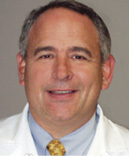
What was your experience like as the 2011–2012 President of the Society for Cardiac Angioplasty and Interventions (SCAI)? What were some of the highlights and the more challenging aspects of this role?
I think both the challenge and the highlight during my tenure was the fact that SCAI warmly embraced quality in the cath lab as its major mission. We worked on that with a project called the SCAI Quality Improvement Toolkit (also known as SCAI-QIT). We rolled out this program nationally to go through laboratories and identify “champions for quality” within the cath labs. It was extremely successful. There were champions in all 50 states, and this program continues to this day. It was the first time we publicly recognized that we had to embrace quality, and I think the SCAI team did a great job supporting this concept.
During this time, we also faced some challenges in our relationship with the American College of Cardiology (ACC) vis-à-vis the transaortic valve replacement (TAVR) program. We were trying to come to some alignment with our ACC colleagues about how best to ensure the appropriateness, quality, and data measurements for TAVR, which all revolved around the NCDR TAVI database and the relationship with the Society of Thoracic Surgeons. ACC is a much bigger society than SCAI, so we worked very hard to make sure that our members were recognized as partners in that process.
How has value-based purchasing affected your hospital, and is there any increased pressure on device companies to offer more competitive prices or conduct high-quality research?
I think, in many places, independent physicians who use cath labs are not particularly aware of the dynamics of pricing, cost structure, payment, and reimbursement of the devices that they choose to use. However, my group here at Ochsner is very deeply involved in value-based purchasing, and in fact, we have a program, which we call “Shared Savings,” in order to hit targets with those we deem as “preferred vendors” (a minimum of 60% use of the preferred vendor’s device, and 40% allowance of other vendors’ devices, if desired). We set preferred vendor contracts annually, and then we incentivize physicians to use the preferred vendors, which allows shared savings. Again, those are bottom-up processes in which we first ask the physicians about their preferences and whether the data support the use of the preferred device. For example, drug-eluting coronary stents are a commodity these days, and one is not really better than another, so we simply ask which one our physicians prefer and take that into account to make the best deal we can to please everyone. These preferences and vendor contracts are reevaluated on an annual basis. This approach is applied to any device that we decide is a commodity and a mature product that has evidence that can be considered supporting its use. If there’s no one type of device that is truly better than another, then we just try to get the best price.
This puts pressure on manufacturers, because if they really do want you to see one of their devices as superior to a competitor’s, then they need to prove that. There are an awful lot of devices out there to choose from for many of these procedures, and the onus is on them to provide evidence to support a superiority claim over less-expensive treatments. More often, the focus is on marketing and advertising to encourage physicians to use these new devices and not on building good evidence to support the claims. I do think that as more and more physicians become better aligned with their purchasers/hospitals, companies will see that we are demanding better evidence that their device is the most effective in order to earn a premium price.
Again, the shared savings model where the physician, the hospital, and the purchaser or hospital align so that they’re on the same side just makes sense, because we’re in this together to do the best we can for our patients.
What impact has the Sunshine Act had on interventional cardiologists thus far, and how might this system be improved going forward?
In terms of educational meetings, as long as they are appropriately funded through the meeting’s organizers and not to the physician individually, I don’t see the Sunshine Act getting in the way at all. However, I do see problems in that the Sunshine Act is a very blunt tool. For example, if you’re a physician doing clinical research with company or industry funding, which is growing enormously because the government/National Institutes of Health don’t fund a lot of research anymore, those research funds show up as money paid to the physician. That’s unfair because there are some doctors with very few conflicts who are doing an industry-funded research project, but it’s reported more or less the same as if the company had taken them out to a steak dinner. The tool needs to be refined because the less precise it is, the less valuable it is for anyone.
In a perfect world, it would be a privatized system instead of a government-run system, because I don’t know how sensitive the system can be when good people get painted with a negative brush. If they can identify the million-dollar abuser and out that guy, they feel they’ve done a good job, but they don’t seem to care about the collateral damage at the other end of the spectrum. I think the whole process needs to be overhauled, which really shouldn’t be too difficult because companies self report. If a category was simply added to the report that pertained to research sponsorship, that would go a long way toward clearing up any misconstrued payments.
What is the role of an interventional cardiologist in acute stroke intervention?
I think it’s a critical role. In the past 18 months, we have solidified the data that suggest that endovascular intervention for stroke is beneficial. Stroke patients who have undergone acute endovascular intervention have experienced significantly better outcomes than those who only received tPA. The problem we now face is that we don’t have enough physicians to treat stroke the way we do for heart attacks. When a patient has a STEMI, there is somebody to treat it in every community. We have a lot of cardiologists out there, and STEMI is a model for how we should treat emergent vascular conditions around the nation.
Currently, there aren’t interventionists who specialize in stroke in every city; in fact, there are entire states that have no stroke interventionists. None. Zero. The manpower could easily come from other physicians who are capable of carotid intervention. To treat stroke, you need to have the catheter skills to navigate the carotid artery, which is a huge part of carotid stenting. It makes sense to take those who are certified in carotid stenting and pair them up with noninvasive stroke neurologists. That’s what we did at Ochsner. For years, we’ve had the cardiologists do the catheter work and the neurologists take care of the stroke patient, and we work as a team.
It is absolutely critical to provide local care to offer the benefits of rapid, timely stroke reperfusion. You need to have access to these specialists within a 60-minute time window, and that’s why you’ve got to treat them in their community. There just aren’t enough neuroradiologists to do this, and I don’t see a huge swing in uptake to that specialty coming any time soon. However, there are cardiologists who are training to do carotid stenting, who easily could do take on stroke care under the tutelage and guidance of neurologists.
What does the future of interventional cardiology training look like? Is 1 year of 250 cases of coronary intervention enough for a fellow to be considered a specialist in this field?
Right now, the way that we train interventionists is that they are required to complete 1 year of training in addition to their cardiology fellowship in interventional cardiology. During that year, they have to complete 250 coronary angioplasties. That rule was put in place 20 years ago, and the role of interventional cardiologist has significantly changed since that time, as we do many, many other things. It’s not realistic to think that you can train an interventionist in 1 year with 250 coronary cases if they also want to do TAVR, renal stenting, superficial femoral artery stenting, stroke prevention, etc.
Therefore, I think there needs to be reform because the practice has changed so much that the original rules no longer apply. Every 10 years, we should evaluate these rules to see if they still make sense.
One proposal on how to update this rule would be to maintain the volume of cases, which is necessary for proficiency, but we could allow physicians to learn specific interventional techniques earlier. Instead of a cardiology training program with 3 years of general cardiology and 1 year of intervention (a total of 4 years), they could do 2 years of general cardiology and 2 years of interventional training, with year 1 focused on 250 coronary angioplasty cases and year 2 allowing more elective interventional training (ie, noncoronary training). The latter can be tailored to the individual’s interests in other areas, such as peripheral and neurovascular intervention.
Which trial results are you looking forward to most? Which have the potential to be the biggest game changer?
I think the biggest thing we are watching is the role of TAVR in lower-risk patients. TAVR has been reserved for high-surgical-risk patients who can’t undergo surgery. In Europe, they’ve started to use TAVR in more healthy people, and it seems to be working. TAVR generally works very well, and so we may be on our way to replacing surgery or at least have it become a very unusual operation in this setting. Currently, trials are underway that are comparing surgery to TAVR in moderate-risk patients. So I’m very interested in the outcome because I think that’s going to change the way we take care of our patients.
The history of medicine has always moved toward becoming less invasive. The idea of opening people’s chests to replace the valve is becoming much less prevalent. Once we find better solutions that are less invasive, it is natural for the treatment standards to morph. Of course, the surgeons will always be part of our TAVR program; we have a heart team that includes one cardiologist and one surgeon on every case. So we’re not replacing or devaluing our surgical colleagues, we’re just asking them to contribute different skillsets as part of a collaborative team.
Christopher J. White, MD
Professor and Chairman of Medicine
Chief of Medical Services
System Chair for Cardiovascular Diseases
Medical Director
John Ochsner Heart & Vascular Institute
The Ochsner Clinical School, University of Queensland
Ochsner Medical Center
New Orleans, Louisiana
(504) 842-3717; mailto:cwhite@ochsner.org
Disclosures: None.
Advertisement
Advertisement
Interested in reading more interviews?
To read more interviews with thought leaders in the interventional cardiology field, check out our Profiles & Perspectives hub.
Read More