Advertisement
Advertisement
September/October 2015
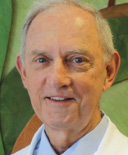
An Interview With Robert O. Bonow, MD, MS
Dr. Bonow discusses the upcoming Heart Valve Summit, what's on the horizon for mitral valves and bioresorbable stent technology, and his advice for fellows who are just entering the field.
You are Course Director for the upcoming Heart Valve Summit. What can you tell us about the goals of the summit and what attendees can expect to experience?
I’m one of the co-directors, along with two cardiologists and two surgeons. The faculty and attendees represent a great mixture of surgeons and cardiologists, as well as nurses, that represent the heart valve team. As this course has evolved over the past 10 years, we’ve been trying to keep up to date with some of the rapid advancements in the cardiac valve arena. Valve disease used to be relatively quiet. Many of us were interested in this field, but it didn’t change much. Now with advanced imaging, better ways of characterizing patients, an aging population with more valve disease, better recognition of younger people with valve disease, and the evolving transcatheter opportunities, the field has become very exciting, which has resulted in new content at this meeting every year.
Attendance is growing each year, and there are great interactions between cardiologists and cardiac surgeons. We have panels where we present real cases, with real patients. We discuss how different surgeons would approach certain topics and whether a patient would be treated differently by a referring cardiologist, including whether a patient would be referred for transcatheter versus surgical therapy. We have a lot of new topics and discussions every year, and that keeps it evolving.
Is the concept of a heart team an established concept for care now? What needs to be improved?
It’s not a new concept at all because having a heart team has been a recommendation for higher-risk patients who need coronary intervention. It is in both the European and American guidelines for patients who have advanced coronary disease. The decision for a transcatheter approach versus a surgical approach to severe coronary disease is best made when you have interaction between the interventional cardiologist, the nurses, and the surgeons. In so many cases, the referring cardiologist should be part of that discussion, too.
If you want to be a center of excellence for valve disease, being able to provide surgical and transcatheter approaches is essentially mandated now. In order to be reimbursed by Medicare for transcatheter procedures, you have to demonstrate that you have such a team, and the patient needs to be seen by both a surgeon and a cardiologist. Our experiences in Europe and the United States are that the patient outcomes are better when decisions are made that way. Some patients are straightforward candidates for surgery, but others are high risk, so a transcatheter approach is the only option. However, there is also the middle ground in which patients can go either way, and a careful, thoughtful evaluation by professionals (and a discussion with the patient and family) is critical. Sometimes, that discussion is best accomplished by getting nurses and physician assistants involved, and they function as the patient’s advocate.
The concept of a heart team is not a new one, but it is being finely tuned now because of the valve experience.
You are the Director of the Center for Cardiovascular Innovation at Northwestern University. What are the goals of the center, and what are the current focuses of yours and/or the center’s interests and research?
The term innovation can be interpreted many ways. It could be new high-tech devices or new drugs, or it could be taking what we know that works (or ought to work) and figuring out why it’s not being implemented or used. It’s a broad-based concept allowing us to look at quality issues, quality of care, and health care outcomes. At the same time, we’re looking at newer devices for diagnosing and monitoring patients with atrial fibrillation. We have several atrial fibrillation and heart failure topics, new drug development, and we’re developing different new kinds of clinical trials that are more effective in identifying target populations in whom these drugs might be most effective.
What do you foresee on the horizon for mitral valves, regarding the maturation of device technology? Are we going to be looking at a plethora of devices on the market at some point in the future, or are we going to see a few device technologies come to maturation and compete for dominance in the space?
We’ve already seen some concepts come and go, and some early clinical trials stop progress because the technology wasn’t quite ready for prime time, or the patient outcomes weren’t what was hoped for. Mitral regurgitation is a complex disorder—much more complex than aortic stenosis. The treatment of aortic stenosis with a transcatheter device is wonderful and transformative, and few would have guessed it would have worked 15 or 20 years ago. Now it is commonplace.
The mitral side is going to be entirely different because of the complexity of the mitral apparatus and the various forms of mitral regurgitation that one can encounter, such as primary regurgitation, including myxomatous mitral valve disease or rheumatic heart disease. Additionally, there are secondary forms of presentation, such as patients with left ventricular dysfunction, which could be ischemic or nonischemic. There are numerous reasons why the mitral valve can leak.
What we have so far, device-wise, is the transcatheter MitraClip (Abbott Vascular). It’s the first treatment option we have with the catheter. It has been used successfully in a large number of patients, mostly in Europe. It’s also now available in the United States for primary disease. I don’t know what the next steps are going to be—whether it will be getting greater experience with the MitraClip or a similar device, or whether it will be transcatheter mitral valve replacement, either retrograde through a transapical approach or retrograde via a transfemoral approach.
I believe that ultimately mitral regurgitation will be treated percutaneously, but we’re not exactly there yet. I believe overall that most of the valve interventions are going to be done with less invasive procedures, not only with catheters. This is going to be a whole new era, and this is just the beginning of it.
Bioresorbable stent technology: is it a success, or is the jury still out?
I’m not an interventional cardiologist, so I just follow the field as best I can, and I need to admit up front that I’m not an expert when it comes to stent design and the intricacies of bioabsorbable stents. My impression, as a noninvasive person, is that the jury is still out and that we will need to have more clinical trials and longer patient follow-up. It’s a great concept, and if it does prove to be an advance over the existing stent technology, it will be a major step forward. I’m still waiting to see definitive results.
Do you have any words of advice for fellows who are just entering into the field or practice?
There are challenges right now in finding the right training program to get you to where you want to go with your career. Most fellows are very excited about structural heart disease, and yet there aren’t that many educational programs to get training specifically for structural disease. It’s a very exciting time right now, whether you’re talking about interventional cardiology, noninvasive imaging, or heart failure. There are many training opportunities that are available, but they are increasingly competitive. I think I understand the dilemmas regarding what the next step should be as well as some of the challenges and frustrations that are out there—many of these concerns are about the current and future economics of health care.
At the same time, cardiovascular medicine is becoming so exciting that I think we have every reason to be optimistic. We still have not cured heart disease. There are a lot of patients who are going to need care. There are a lot of research opportunities as well. I tell young people to strive to do their very best. There is going to be some rejection, in terms of the position you’re leaning toward, the paper you want to have published, or the grant that you are trying to get funded. Rejection happens, but the people who succeed are the people who pick themselves up and keep going. I tell fellows to identify their sweet spot, what they find most exciting and what drove them to get into cardiology in the first place, and then go for it.
Robert O. Bonow, MD, MS, is the Goldberg Distinguished Professor of Cardiology, and Director of the Center for Cardiovascular Innovation at Northwestern University Feinberg School of Medicine, Northwestern Memorial Hospital in Chicago, Illinois. He is Past President of the American Heart Association. He has stated that he has no financial interests related to this article. Dr. Bonow may be reached at r-bonow@northwestern.edu.
Advertisement
Advertisement
Interested in reading more interviews?
To read more interviews with thought leaders in the interventional cardiology field, check out our Profiles & Perspectives hub.
Read More