Advertisement
Advertisement
January/February 2026
For Suspected Coronary Calcium Nodules, What Is Your Step-by-Step PCI Strategy?
Imaging-guided, stepwise PCI strategies for lesion preparation, calcium modification, and stent optimization in calcified nodules.
With Shrilla Banerjee, MD, FRCP, FESC; Jimmy L. Kerrigan, MD, FSCAI, FACC; and Aditya S. Bharadwaj, MD, FACC, FSCAI

Generally, our routine percutaneous coronary intervention (PCI) strategy has changed quite significantly in the last few years as technology has rapidly evolved, the availability of technology has improved, and our evidence base has driven guidelines to direct us to use particular technologies, especially when assessing challenging pathologies (eg, use of intravascular imaging per a class IA recommendation in the recent European Society of Cardiology and American Heart Association/American College of Cardiology guidelines).
We generally start with an assessment of the calcified nodule (CN). Previously, we used angiography alone, which could be challenging because you didn’t know whether the lesion you were dealing with was a nodule, thrombus, or if it was just atheroma. Now, with the use of intravascular imaging, we have much better capabilities. Intravascular ultrasound (IVUS) and optical coherence tomography (OCT) both are very helpful and allow us to look at the depth, arc, length, and whether the calcium is superficial or deep. Of course, the artificial intelligence available with both IVUS and OCT technologies is making diagnosis and assessment even easier.
Another area we’ve really improved on is lesion preparation. When I was training, direct stenting was still being used! Now, we tend to start (to palpate the lesion, if you like) with a semicompliant balloon at low pressure, then move on to the noncompliant (NC) balloons at higher pressure, followed by cutting or scoring balloons, allowing for a graduated progression in terms of complex device use. We start with the balloons, and if they do not seem to be making any progress, we have to think about more aggressive calcium modification technologies. That means atherectomy (either orbital [OA] or rotational [RA]), but often we do need intravascular lithotripsy (IVL) in addition to atherectomy for CNs rather than as an alternative or on its own.
CNs should be considered a two-part problem. The peak, which is amenable to being modified by atherectomy, and then the base, which needs to be broken up with IVL. Also, we know that these nodules tend to regrow; if you don’t modify appropriately, you may have a problem when that nodule regrows and deforms the in situ stent, and that becomes very difficult to manage.
Subsequent to modification with a variety of technologies, we move on to securing the area with stenting. Nowadays in the United Kingdom, we sometimes consider drug-coated balloon (DCB) use in this situation, which is interesting because our utilization of DCBs has evolved. We previously felt the need for some sort of scaffold to keep the artery open and prevent dissection and/or recoil. When DCBs first came out, there was a very focused indication: small vessels, diffuse disease, and long segments of distal disease. That seemed to make sense. Now, we are using them in other situations and obtaining good results. As someone who came through the early stent generation, I still find that a little bit difficult to believe, but the results speak for themselves, and I hope we will have more randomized controlled data soon to guide our DCB use.
Finally, we need an exit intravascular imaging run. Essentially this is to ensure that we have good stent apposition, an excellent stent result, good expansion, and no hidden dissections or problems lurking to ensure we have the best possible results for this particularly challenging problem.

CNs remain a conundrum in interventional cardiology, particularly regarding optimal treatment strategies to both maximize the minimal stent area (MSA) at the time of initial treatment and prevent recurrence and restenosis at the site of treatment. CNs are not rare. As Shin et al described, the prevalence of nodular calcium ranges from 2% to 30% among patients presenting with acute coronary syndromes.1 Additional analysis has shown that patients with CNs are more likely to be older, female, have diabetes, have had prior bypass, or be on hemodialysis.2 As populations in the United States and worldwide age, interventional cardiologists will continue to see these patients, and the optimal treatment strategy should be defined to optimize care.
The first step (as with all interventions, in my opinion) is imaging, if an imaging catheter will cross the lesion. In addition to giving information on proximal and distal vessel and lumen reference area and diameter (to guide stent/balloon sizing) and, potentially, depth and arc of calcification (depending on which imaging modality is used), imaging helps differentiate the presence of eruptive and noneruptive CNs. Imaging also allows us to exclude thrombus as a nodule “mimic” on angiography, as treatment of thrombus and nodular calcium greatly differs. Ali et al reported that eruptive CNs are more likely to have associated overlying thrombus and intraplaque hemorrhage and may be deformable with percutaneous transluminal coronary angioplasty (PTCA), whereas noneruptive CNs are potentially less treatable with PTCA and may require more advanced forms of calcium modification.3
My approach to treatment after imaging bifurcates depending on whether the nodule appears to be eruptive or noneruptive, because these phenotypes differ in thrombus burden, deformability with PTCA, and the need for advanced calcium modification. Either way, I first calculate the distal reference vessel and lumen diameters. For an eruptive nodule, I predilate with an NC balloon sized 1:1 to the distal reference vessel. I typically average the distal vessel diameter by external elastic lamina, then downsize by 0.25 to 0.5 mm, or alternatively average the distal lumen diameter and upsize by 0.25 to 0.5 mm. If this does not result in adequate vessel expansion, as assessed in orthogonal views with the balloon dilated to at least its rated nominal pressure, I proceed to advanced calcium modification therapies. For noneruptive CNs, which tend to be less deformable with PTCA, I proceed directly to calcium modification without NC predilatation. If good balloon expansion is achieved with an eruptive nodule, I use a drug-eluting stent, again sized 1:1 relative to the distal vessel. I will then postdilate at least 18 atm (if not higher) with the same NC balloon used to predilate the stent, followed by postdilation of the proximal edge of the stent with a larger balloon, if needed, to match the proximal reference lumen diameter so as to avoid malapposition and stent undersizing at the leading edge, which may make future access more difficult.
For noneruptive CNs, or eruptive CNs that do not yield with adequate NC PTCA, one must consider calcium modification prior to stenting. In my view, we have three valid options for the treatment of nodular calcium at this point: IVL, atherectomy, and specialty or higher-pressure NC balloon inflation (currently performed with the OPN NC balloon [SIS Medical AG]). Riley et al led an effort to codify this in a 2024 Society for Cardiovascular Angiography & Interventions (SCAI) expert consensus statement on the management of calcified coronary lesions.4 As described therein, one should assess guidewire bias to determine the optimal approach to OA use, if using. For nodules on the inferior/interior aspect of the vessel, where wire bias favors the contralateral wall, I find that using GlideAssist (Abbott) to move past the nodule and then performing atherectomy on pullback yields better results. If the nodule is on the exterior/leading edge of the artery, the opposite is true: I treat forward and then GlideAssist back to avoid damaging the contralateral wall. Either way, more runs, potentially at higher speed (120,000 vs 80,000 rpm), may be needed to fully modify the nodule. The SCAI statement also provides guidance on the use of RA: recommendations include upsizing the burr beyond the usual 50% of the reference vessel size and using a RotaWire Drive extra support (Boston Scientific Corporation) depending on the degree of wire bias.
That said, I currently prefer to start with IVL in nodular lesions, based on data from the CN subset of the DISRUPT CAD trials, which showed similar lumen gain and MSA between nodular and nonnodular calcific lesions treated with IVL.5 I generally avoid atherectomy in eruptive CNs because of concern for macerating thrombus and precipitating slow or no reflow, so in these situations I am IVL first. However, as Riley et al noted in the SCAI consensus, more pulses may be required to treat the nodule than are typically used in the management of nonnodular calcium.4 Again, device sizing is critical, and the IVL balloon size should be 1:1 with the calculated distal reference vessel measurement, as previously mentioned. Finally, the use of scoring or high-pressure (OPN NC) balloons is reasonable as an alternative to IVL. The VICTORY trial compared OPN NC with IVL in CNs.6 Outcomes were similar between groups with respect to stent expansion; approximately 25% of patients had nodular calcium, and a subgroup analysis showed no significant difference in outcomes between nodular and nonnodular lesions. Similarly, the Short-Cut trial demonstrated the noninferiority of high-pressure cutting balloon angioplasty compared with IVL and included patients with nodular calcium at a rate similar to that in VICTORY.7
Once calcium modification is complete, NC balloon PTCA should be performed prior to stent implantation for the reasons described previously. In the case of incomplete expansion (again, as assessed on orthogonal fluoroscopic views and ideally with demonstration of guidewire “centering” in the NC balloon), one may switch to an alternative calcium modification strategy. IVL or OPN NC can be used if atherectomy fails, or vice versa, keeping in mind the risk of dissection when performing OA after PTCA. Once adequate vessel preparation is achieved, I implant a drug-eluting stent as previously described and then perform postprocedural imaging to measure MSA, identify edge dissection, and ensure that the stent edges land in segments with < 50% plaque burden.
Overall, this pathology is complex to treat and is likely to increase in prevalence over the next several years. As such, becoming familiar with treatment options will become increasingly important, and I hope that newer technologies will help improve outcomes in this higher-risk patient population. For anyone reading, please do not hesitate to contact me if I can provide any assistance with this or any other issues.
1. Shin D, Galougahi KK, Spratt JC, et al. Calcified nodule in percutaneous coronary intervention: therapeutic challenges. JACC Cardiovasc Interv. 2024;17:1187-1199. doi: 10.1016/j.jcin.2024.03.032
2. Lee T, Mintz GS, Matsumura M, et al. Prevalence, predictors, and clinical presentation of a calcified nodule as assessed by optical coherence tomography. JACC Cardiovasc Imaging. 2017;10: 883-891. doi: 10.1016/j.jcmg.2017.05.013
3. Ali ZA, Spratt JC, Finn AV, et al. Identification and treatment of calcified nodules in percutaneous coronary intervention. EuroIntervention. 2025;21:e1424-e1433. doi: 10.4244/EIJ-D-25-00296
4. Riley RF, Patel MP, Abbott JD, et al. SCAI expert consensus statement on the management of calcified coronary lesions. J Soc Cardiovasc Angiogr Interv. 2024;3: 101259. doi: 10.1016/j.jscai.2023.101259
5. Ali ZA, Kereiakes D, Hill J, et al. Safety and effectiveness of coronary intravascular lithotripsy for treatment of calcified nodules. JACC Cardiovasc Interv. 2023;16:1122-1124. doi: 10.1016/j.jcin.2023.02.015
6. Bossard M. A randomized, multicenter, non-inferiority comparison of intravascular lithotripsy and super-high-pressure noncompliant balloons for treatment of calcified and refractory coronary lesions: the VICTORY trial. Presented at: Transcatheter Cardiovascular Therapeutics 2025; October 25-28, 2025; San Francisco, California.
7. Baron SJ. Randomized comparison of intravascular lithotripsy vs. cutting balloon treatment in calcified coronary artery disease–The Short-CUT trial. Presented at: Transcatheter Cardiovascular Therapeutics 2025; October 25-28, 2025; San Francisco, California.

CNs represent significant challenges during PCI, including risk of dissection, perforation, stent underexpansion, and worse long-term outcomes, including higher rates of target lesion revascularization (TLR). Identification of CNs and adequate lesion preparation are paramount to reduce the risk of complications and achieve optimal outcomes. Summarized below are key considerations and a step-by-step strategy for management of CNs during PCI (Figure 1).
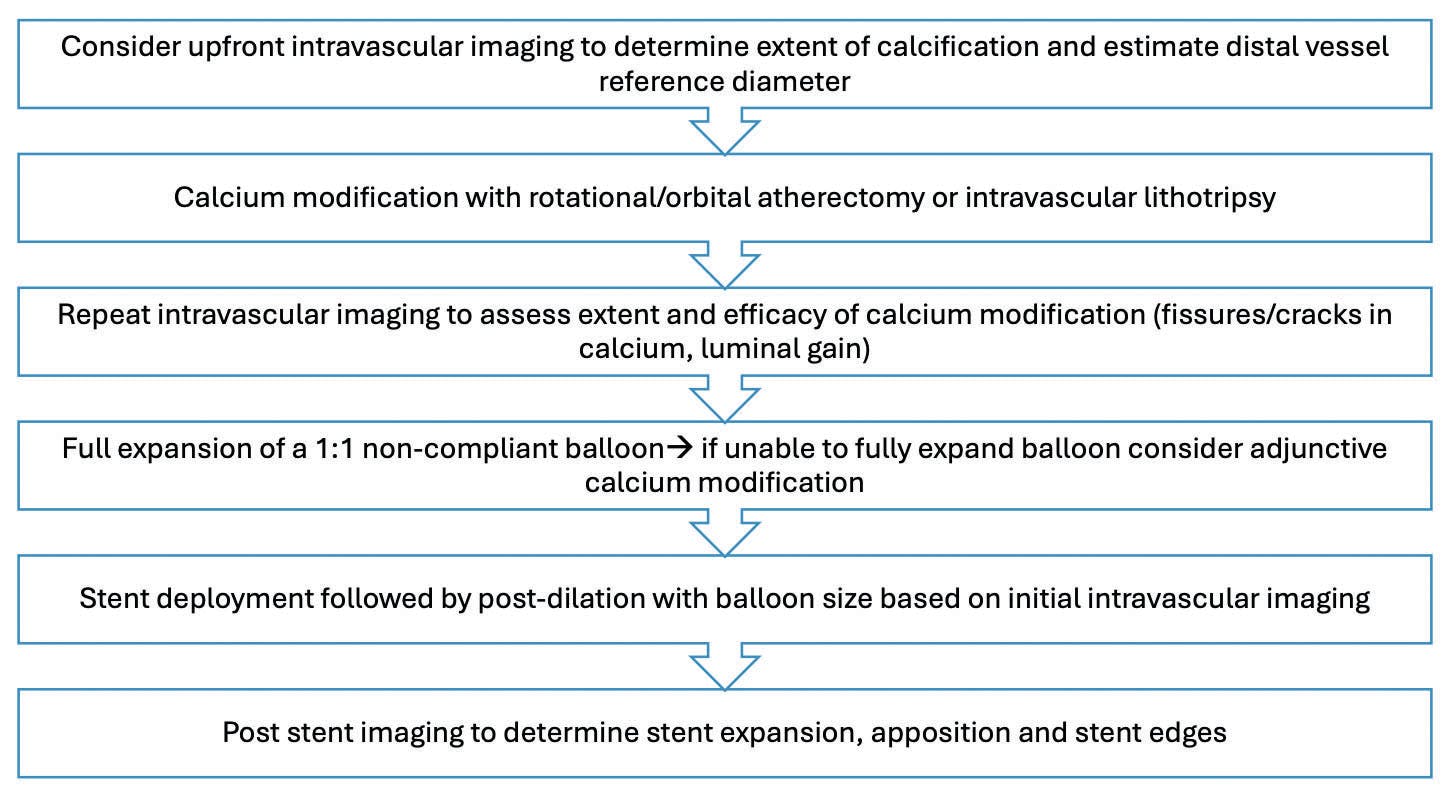
Figure 1. Step-by-step algorithm for management of CNs.
1. Study the diagnostic angiogram to identify the presence of severe calcification on fluoroscopy (seen as “tram-track” calcification) and presence of CN (seen as “eccentric” calcified lesions). Also note the location of the CN, which frequently tends to occur at hinge points in coronary arteries. Pay attention to tortuosity before and after the CN, if any.
2. Use a supportive guide catheter to provide adequate support to deliver gear, including atherectomy devices, balloons, and stents.
3. Intracoronary imaging is a prerequisite to identify CN and optimize stent expansion. High-definition IVUS and OCT help distinguish eruptive from noneruptive CNs. Eruptive CNs are characterized by a disrupted fibrous cap with overlying thrombus; they often result in acute coronary syndrome and tend to have worse clinical outcomes. Noneruptive CNs have an intact fibrous cap and tend to present as stable coronary lesions. Intracoronary imaging also helps determine the extent of calcification in the adjoining tissue (length, depth, superficial versus deep). Ideally, intracoronary imaging should be performed before lesion preparation, after lesion preparation to assess adequacy of preparation, and after stent placement to evaluate expansion, apposition, stent edges, and MSA. Despite the best lesion preparation, the stent may often appear “D shaped” in the region of the CN. Studies indicate that as long as the MSA is > 5.5 mm2, the risk of adverse events (including TLR) can be minimized.
4. Lesion preparation of the CN is of paramount importance to be able to deliver a stent and adequately expand it. CNs are also associated with severe calcification in adjoining areas and often require extensive debulking.
- RA should be the device of choice, especially in balloon/microcatheter-uncrossable lesions. Best practices include a burr-to-vessel size ratio of 0.5, speed of 160,000 to 170,000 rpm with “pecking” motion of the burr, 20-second runs with 20 seconds between runs, and avoiding decelerations > 5,000 rpm.
- OA has been demonstrated to modify superficial and deep calcium and has the ability to treat both antegrade and retrograde. The device has two speeds (80,000 and 120,000 rpm), with the latter being used to treat vessels > 3 mm.
- IVL has been shown in the OCT substudy of Disrupt CAD to be safe and effective in the treatment of CNs.1 It may be used as a standalone therapy or as an adjunct to atherectomy. Balloons are typically sized 1:1 to the vessel diameter and may require multiple cycles, with repositioning of emitters to adequately modify CNs.
- Full expansion of an NC balloon sized 1:1 to the vessel diameter is mandatory after calcium modification and before deployment of a stent.
1. Ali ZA, Kereiakes D, Hill J, et al. Safety and effectiveness of coronary intravascular lithotripsy for treatment of calcified nodules. JACC Cardiovasc Interv. 2023;16:1122-1124. doi: 10.1016/j.jcin.2023.02.015
Advertisement
Advertisement