Advertisement
Advertisement
January/February 2026
An Interview With Babar Basir, DO, FACC, FSCAI
Dr. Basir discusses his work in modern cardiogenic shock care, from the National Cardiogenic Shock Initiative and CERAMICS trial to shaping multidisciplinary shock systems, as well as his approach to research, mentorship, and building programs that advance patient care.
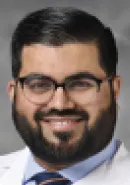
You have established yourself as a leading voice in the treatment of cardiogenic shock (CS) and were instrumental in the conceptualization and formation of the National Cardiogenic Shock Initiative (NCSI).1 How did you become interested in shock?
As I was deciding what field of medicine to pursue, I had witnessed the impact of coronary artery disease (CAD) on patients’ lives. Most impactful was seeing the effects of my father-in-law’s death from an acute myocardial infarction (AMI) and the impact it had on my wife’s family. This, along with other experiences, led me to pursue the field of interventional cardiology.
Despite my interest in CAD and AMI, there wasn’t much going on in the field. Percutaneous coronary intervention (PCI) was well established, and there were cath labs every few miles in most metropolitan areas. Luckily, as I started training, I was exposed to mechanical circulatory support (MCS) devices like Impella (Abiomed, Inc.), which at the time had recently been approved for complex PCI and was also being utilized somewhat haphazardly in shock. So, we had a relatively new technology, in a field I was really interested in, with many questions to answer; with the help of supportive mentors, it became a perfect recipe for success.
And, how has your experience with the NCSI shaped the way you approach research?
Takeaways from my experience working on NCSI include:
- The key to research is focusing on answering a relevant question in the field of your interest.
- Don’t be distracted by naysayers and criticism. Have an open mind when listening to critiques and always be respectful when defending your views, but keep going and don’t take criticism too personally.
- Conduct yourself and the research you are doing with the highest level of moral integrity. Patient care is a sacred duty that all physicians understand, but clinical research is a sacred duty as well and has the potential to impact many lives.
How does the CERAMICS trial, which you’re leading as Principal Investigator, represent the next evolution of the CSI?
There have been four major stages of the CSI so far. Stage 1 was the Detroit CSI, which was a pilot study.
Stage 2 was the NCSI, which represented a “coalition of the willing”—hospitals that wanted to use a shock protocol and system of care to provide their teams a “playbook” for AMI-CS, even those with nondedicated intensive care unit (ICUs) or MCS escalation capabilities.
Stage 3 is the CERAMICS trial, which asks, can escalation reduce AMI mortality in CS? CERAMICS will evaluate the clinical outcomes of patients with AMI-CS treated at centers equipped with comprehensive capabilities for MCS escalation. The trial will provide us a glimpse of clinical outcomes in shock centers with multidisciplinary shock teams and full MCS capabilities.
Stage 4 will be the Global CSI (GCSI), which will evaluate outcomes at international sites that are starting and growing their shock programs.
CS has made headlines in recent years with the publication of DanGer Shock as well as the Society for Cardiovascular Angiography and Interventions (SCAI) Door to Lactate Clearance (DLC) Initiative. What real-world changes do you hope to see these efforts drive in the evolution of shock care?
Overall, I get so excited seeing the interest and enthusiasm for CS continue to grow. In terms of DanGer Shock, I think the “real-world” impact has already started. The American College of Cardiology/American Heart Association 2025 guidelines provided a 2a recommendation for the routine use of Impella in AMI-CS in “DanGer-like” patients.2 I just traveled back from the third annual Gulf Heart Association–SCAI Shock meeting in Kuwait, where these guidelines updates were discussed quite heavily—even by representatives with limited access to Impella. This demonstrates the global impact of the study and guideline changes.
SCAI’s DLC initiative will hopefully also follow suit. I am particularly proud of this endeavor because even though it has the potential to impact all hospitals, in helping write the document I couldn’t help but think about the potential benefits it would bring to smaller, rural, hospitals where shock is often recognized late. Protocolizing lactate measures to provide objective evidence of worsening hypoperfusion can trigger faster therapeutic delivery and subspeciality consultation, which has the potential to greatly impact care. Late shock, particularly with multiorgan failure, is difficult for all of us to treat. Thus, focusing on early recognition and treatment in the community can be more impactful than any therapeutic intervention we have had to date.
You’ve emphasized the importance of shock phenotype when it comes to device and therapy decision-making. What are some guidelines for a phenotype-driven approach to shock and MCS?
One of the things that was really important to me was that people didn’t misinterpret the data, protocols, and recommendations that we were presenting for AMI-CS into other shock phenotypes, particularly heart failure (HF)–CS.
Nearly 10 years after the start of the NCSI, I am still regularly reminding people that a cardiac power output of 0.6 W in a chronic HF patient does not in itself indicate acute CS or mandate a MCS device. Similarly, a low pulmonary artery pulsatility index in the setting of normal right atrial pressure doesn’t necessarily mean right ventricular (RV) failure. We have made a lot of strides within this space, but more education is needed. I do want to fully acknowledge the wonderful impact the Cardiogenic Shock Working Group has had, particularly in the area of HF-CS.
You and colleagues published the SCAI SHOCK Classification in 2021, and in 2025, you studied this classification system to stratify high-risk pulmonary embolism (PE) patients.3,4 What did these findings teach you about the classification system’s versatility and/or limitations?
The success of the SCAI SHOCK Classification has been amazing to watch, and credit goes to Drs. Srihari Naidu, David Baran, and Tim Henry for all of their hard work in leading these efforts. The beauty of the classification system has been that it is simple and easy to use. Personally, the vast majority of PEs I was clinically involved with presented in shock and were being considered for MCS. As a result, I kept seeing parallels between AMI-CS and PE-CS, leading us to work toward applying the SCAI SHOCK framework to PE. SCAI is currently preparing the third iteration of the SHOCK classification, which will introduce even more granularity on PE-CS and RV failure.
Along with CERAMICS, you’re involved in numerous other clinical trials and maintain a highly active research portfolio. How do you choose your research priorities? What advice would you offer to early career physicians hoping to build a research-focused career?
For most clinicians, particularly early in their career, research is extra credit! My advice to my colleagues would be to pursue research only if you truly love it. That being said, if you love research, focus on trying to answer clinically relevant questions. Pick trials that you can recruit well into, and be present and active with the process of screening patients. Be there for the research coordinators when they have questions, and galvanize your colleagues to recruit their patients into the study. For me personally, I like to balance the kinds of research I do because I believe value comes in many ways. I still do retrospective chart-based reviews with students, residents, and fellows. I absolutely love trying to answer a question myself using investigator-initiated studies, and I of course participate in clinical trials as well.
Mentorship and teaching are important pillars for you. What do you think a strong mentorship relationship looks like in practice, on a day-to-day basis?
I think mentorship comes in many flavors. I have been blessed with so many amazing mentors who have helped me in different ways. I have had mentors in research, in clinical practice, and through societies. Mentors who are close in age and those much older than me, mentors who are friends and those who I only work with in a formal or professional manner.
One piece of advice I have is to not place your mentors on too high of a pedestal. Unrealistic expectations, or even realistic expectations that are not fulfilled, can leave a mentee with a sense of disappointment and discouragement. That being said, people who pursue medicine tend to have very caring personalities, and the vast majority of people are looking to help their colleagues achieve their goals.
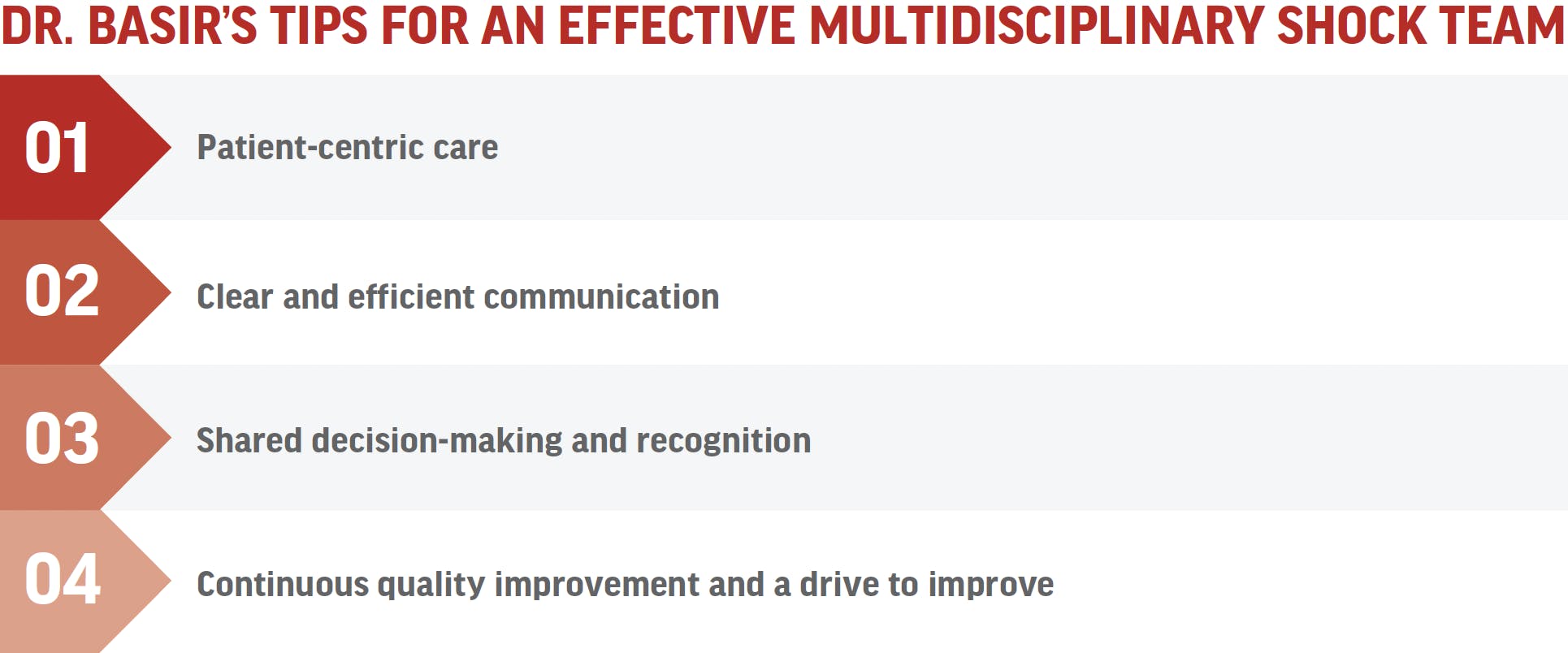
When you look at your career today, what’s the part that genuinely excites you the most? What new projects or ideas are you most eager to explore in the next few years?
I can honestly say I am excited about so many aspects of the future. I am excited about the growth of the shock program at Henry Ford. We are building a new tower, opening more ICU beds, increasing our MCS capacities, and optimizing our hub-and-spoke model. We have great support from hospital leadership and have the opportunity to create a very special program. I am really excited about helping international sites optimize shock systems of care; we are launching the GCSI, and we are working with SCAI and regional societies to create shock conferences throughout the world, including upcoming conferences in the Middle East and Asia-Pacific. I am super excited about the results of the PROTECT IV and CHIP-BCIS3 trials and the field of complex PCI. However, most interesting might be the field of novel MCS platforms, which promise to be smaller, safer, and more powerful.
One last important aspect to mention is that I am starting a really exciting time as a father as well. I have been focusing on improving my work-life balance, and I have been coaching my kids’ flag football team. They have even joined me on cardiology conferences during the summer months. I am also really excited to see them graduate middle school and start high school!
1. Basir B. A decade of quality improvement: the National Cardiogenic Shock Initiative. Cardiac Interv Today. 2025;19. Accessed November 20, 2025. https://citoday.com/articles/2025-digital-exclusive-3/a-decade-of-quality-improvement-the-national-cardiogenic-shock-initiative
2. Rao SV, O'Donoghue ML, Ruel M, et al. 2025 ACC/AHA/ACEP/NAEMSP/SCAI guideline for the management of patients with acute coronary syndromes: a report of the American College of Cardiology/American Heart Association Joint Committee on Clinical Practice Guidelines. Circulation. 2025;151:e771-e862. Published corrections appear in Circulation. 2025;151:e865, Circulation. 2025;151:e1098, and Circulation. 2025;152:e402. doi: 10.1161/CIR.0000000000001309.
3. Naidu SS, Baran DA, Jentzer JC, et al. SCAI SHOCK stage classification expert consensus update: a review and incorporation of validation studies: this statement was endorsed by the American College of Cardiology (ACC), American College of Emergency Physicians (ACEP), American Heart Association (AHA), European Society of Cardiology (ESC) Association for Acute Cardiovascular Care (ACVC), International Society for Heart and Lung Transplantation (ISHLT), Society of Critical Care Medicine (SCCM), and Society of Thoracic Surgeons (STS) in December 2021. J Am Coll Cardiol. 2022;79:933-946. doi: 10.1016/j.jacc.2022.01.018
4. Jabri A, Maligireddy A, Nasser F, et al. Risk stratification using the SCAI SHOCK classification in patients with acute pulmonary embolism. Cardiovasc Revasc Med. Published online June 19, 2025. doi: 10.1016/j.carrev.2025.06.018
Advertisement
Advertisement
Interested in reading more interviews?
To read more interviews with thought leaders in the interventional cardiology field, check out our Profiles & Perspectives hub.
Read More