Advertisement
Advertisement
September/October 2025
What Do Declining Cath Lab Volumes Mean for Cardiology Programs?
The ability to adapt to changing cath lab dynamics will be crucial for delivering high-quality, patient-centered intervention while maintaining sustainable economic growth.
Over the last several years, we’ve seen a clear trend in cardiology: invasive procedure volumes are shrinking. The 13th annual MedAxiom Cardiovascular Provider Compensation and Production Survey report results showed that both total catheterizations and percutaneous coronary interventions (PCIs) per 1,000 active cardiology patients continue their steady decline, a shift driven by smarter, more targeted care delivery and the growing use of advanced imaging to guide decisions.
INVASIVE PROCEDURE VOLUMES
Median total catheterizations fell to 60 per 1,000 active cardiology patients in 2024, while median PCI volumes declined to 22 per 1,000 patients—a nearly 31% drop since 2017 (Figure 1). For perspective, a group with 25,000 active cardiology patients would have performed approximately 1,500 catheterizations in 2024, down from 1,925 in 2017. The PCI-to-catheterization ratio also fell to 35%, countering expectations that advanced imaging would increase the percentage of PCI procedures to catheterizations.
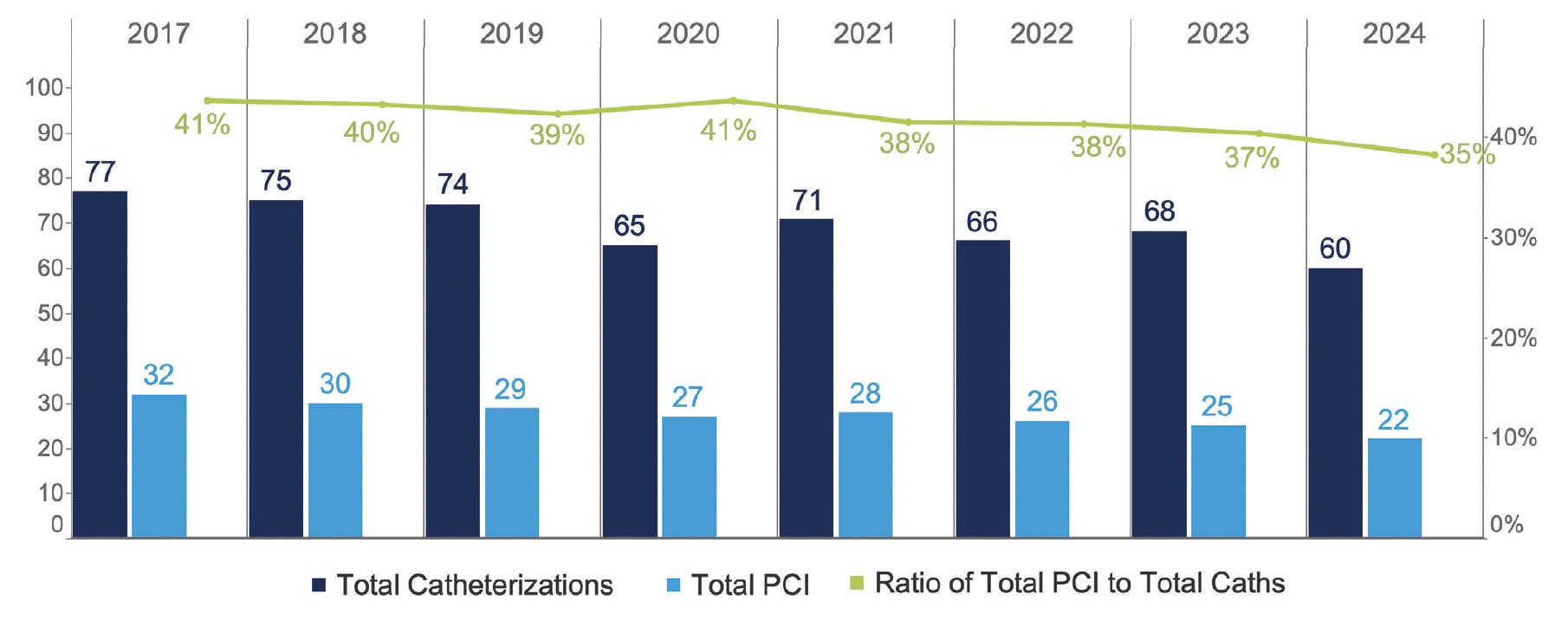
Figure 1. Median procedural volumes per 1,000 active patients.
Despite lower absolute volumes, the median number of invasive procedures per interventional cardiologist has remained stable (286 catheterizations in 2024 vs 285 in 2018), indicating that practices are aligning staff with patient volumes while maintaining individual procedural proficiency (Figure 2). Interventional cardiologists still perform more than three times as many catheterizations as their invasive, noninterventional colleagues.
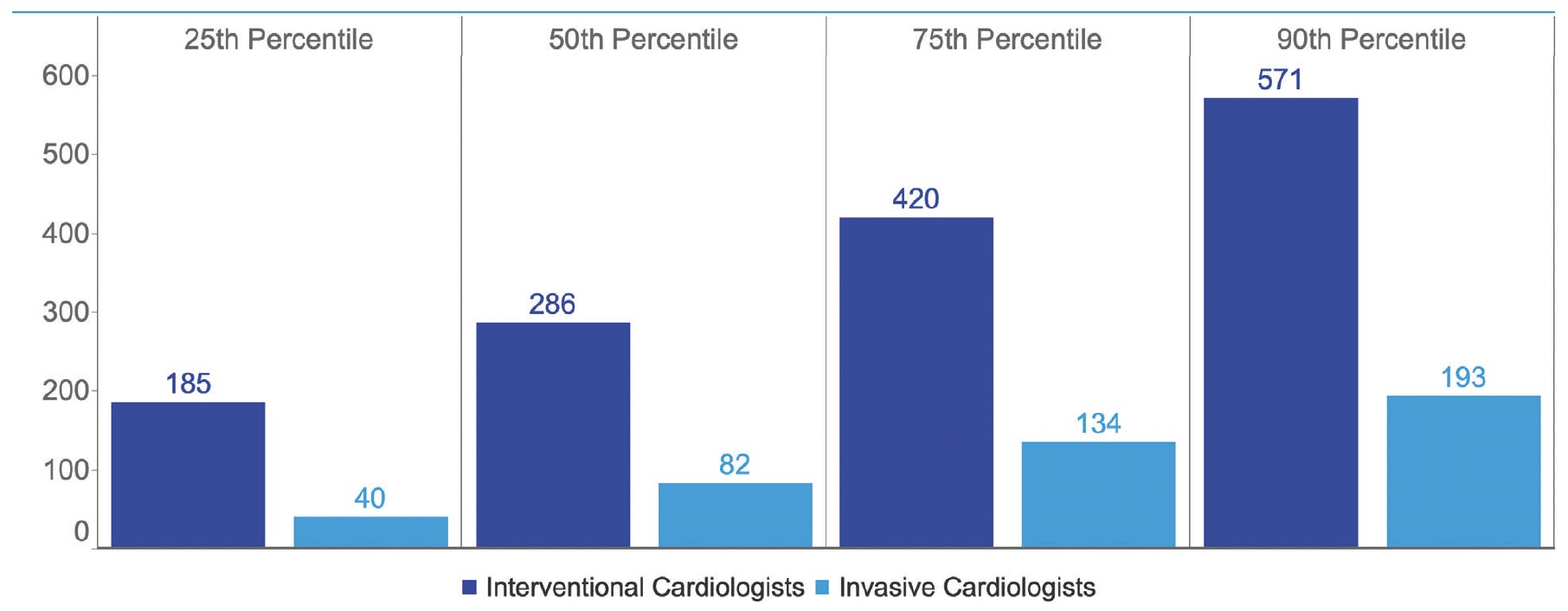
Figure 2. Catheterizations per full-time cardiologist: 2024 percentiles.
The decline in invasive procedure volumes coincides with the growth of advanced imaging to guide interventions. In recent years, there has been a noticeable trend away from invasive and noninterventional cardiologists, largely driven by advances in diagnostic imaging, preventive care, and multidisciplinary heart teams.1 With the growing emphasis on early detection and medical management of cardiovascular disease, many patients are now managed effectively without the need for invasive procedures. At the same time, the demand for interventional cardiologists has increased, while purely diagnostic invasive procedures have declined. This shift reflects both technological progress and a broader health care focus on less invasive, patient-centered approaches.
SUBSPECIALTY COMPOSITION AND COMPENSATION
Private and integrated cardiology groups differ significantly in their subspecialty mix. More than half of private practice physicians are interventionalists, compared with 29.5% in integrated groups. Conversely, general and noninvasive cardiologists represent nearly 44% of integrated groups but less than a third of private practices.
Interventional cardiologists were the second highest earners for both ownership cohorts, as full-time integrated interventionalists earned a median of $788,083 in 2024, compared with $625,000 in private practice—a 26% gap (Figure 3). Across all cardiology subspecialties, median compensation rose in 2024, even in the context of slight declines in work relative value unit production for some groups. Advanced heart failure physicians, despite higher reliance on evaluation and management services and lower procedure volumes, continue to command competitive pay, highlighting the market value of this scarce resource.
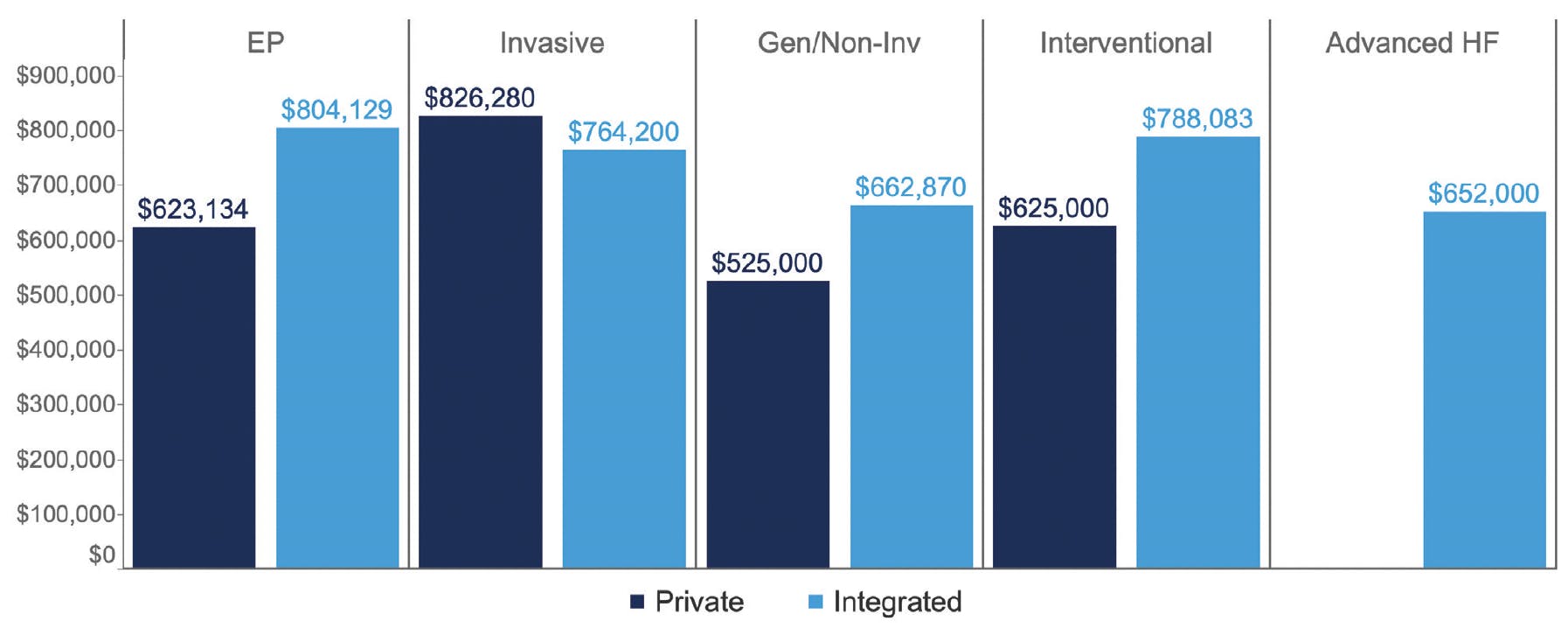
Figure 3. Median 2024 total compensation per full-time cardiologist by subspecialty and ownership. EP, electrophysiology; HF, heart failure.
CONCENTRATION AND GROWTH of ADVANCED PROCEDURES
Procedure concentration remains critical. Nearly all interventionalists perform PCI, but only about 25% complete both transcatheter aortic valve replacement (TAVR) and patent foramen ovale closure procedures. High-volume operators continue to perform disproportionately more advanced procedures than mid to lower-volume performers, highlighting the importance programs place on consolidating complex cases to maintain proficiency.
ELECTROPHYSIOLOGY AND AMBULATORY SURGERY CENTER TRENDS
Electrophysiology continues to expand, with median ablations reaching 15 per 1,000 active cardiology patients. Pacemaker and implantable cardioverter defibrillator implantations declined slightly. As cardiac ambulatory surgery centers (ASCs) proliferate and Medicare has proposed to approve ablations in the ASC setting for 2026, procedure volumes may increasingly shift out of hospitals. This migration is already happening with other cardiac procedures.
STRATEGIC IMPLICATIONS
For interventional cardiology practices, these trends underscore the importance of addressing workforce needs by having a clear vision for the program’s future and being intentional about care team development. Programs should consider the following tactics as they plan their resources:
- Align interventionalist staffing with declining overall cath volumes while maintaining access to advanced procedures.
- Focus on medical management and early detection with advanced imaging techniques to avoid unnecessary invasive procedures.
- Concentrate complex procedures among a subset of high-volume operators to ensure proficiency and efficiency.
- Recognize the market value of scarce clinical expertise, particularly among nonprocedural subspecialties.
- Expand care teams to improve efficiencies and reduce patient access constraints.
- Monitor ASC expansion and evolving reimbursement models to optimize procedural distribution and revenue.
Declining cath lab volumes don’t signal a reduction in clinical demand—in fact, demand for cardiology services increased 8% to 10% nationally in 2024. Instead, they reflect a more precise, efficient approach to care. Practices that adapt to these dynamics will be best positioned to deliver high-quality, patient-centered interventions while maintaining financial sustainability.
Advanced Procedure Volumes
Volumes for advanced procedures vary based on report findings:
- PCI for acute myocardial infarction (ST-segment elevation myocardial infarction) reached a new low of 3.4 per 1,000 active patients.
- Left atrial appendage closure climbed to 3.4 per 1,000 patients—the highest reported in recent years.
- TAVR volumes per interventionalist increased slightly (45 per full-time equivalency in 2024 vs 42 in 2023), despite a small decline in active cardiology population-level volumes.
Download Medaxiom’s latest Cardiovascular Provider Compensation and Production Survey report.
1. Walter M. Key Trends in diagnostic heart testing: CT on the rise as some traditional techniques fall out of favor. Cardiovascular Business. March 13, 2025. Accessed September 25, 2025. https://cardiovascularbusiness.com/topics/cardiac-imaging/key-trends-diagnostic-heart-testing-ct-rise-some-traditional-techniques-fall-out-favor
Advertisement
Advertisement