Advertisement
Advertisement
September/October 2025
TAVR in Complex Anatomies
Experts share their insights on performing TAVR in bicuspid aortic valves, valve-in-valve procedures, and small aortic annuli, focusing on imaging techniques, valve sizing, procedural risks, and emerging data.
With Toby Rogers, MD; Hemal Gada, MD; Gilbert Tang, MD, MSc, MBA; Christopher Bruce, MD; and Jeremy D. Rier, DO, FACC, FSCAI





What are your key considerations when planning transcatheter aortic valve replacement (TAVR) for bicuspid valves, and how do outcomes differ from tricuspid cases in your experience?
Dr. Rogers: It may sound self-evident, but not all bicuspid valves are the same. Treatment strategy and procedural outcomes are dictated by anatomy. Although most patients referred for aortic valve replacement in 2025 expect transcatheter therapy, bicuspid aortic valves often present anatomic features that make TAVR more challenging or less predictable—for example, bulky leaflet or annular calcification, calcium extending into the left ventricular outflow tract, or marked annular eccentricity. In such cases, surgical aortic valve replacement (SAVR) remains the preferred option—assuming the patient is otherwise at low surgical risk.
It is important to remember that no randomized trials have compared TAVR with SAVR in bicuspid aortic stenosis. Prospective single-arm registries of carefully selected bicuspid cases have shown excellent short- and mid-term outcomes with TAVR. In my experience, after careful case selection, outcomes in bicuspid patients are equivalent to tricuspid patients. However, there are still no robust long-term durability data for TAVR in bicuspid valves.
What imaging advancements have most impacted your ability to tackle complex TAVR cases?
Dr. Rogers: Several novel imaging modalities—including fusion imaging, three-dimensional holographic, and artificial intelligence tools—are under development to refine valve deployment, but none have yet demonstrated clear incremental value in routine practice. Procedural guidance for TAVR continues to rely on fluoroscopy supplemented by echocardiography.
The cornerstone of planning remains comprehensive preprocedural CT, typically analyzed with dedicated platforms such as 3mensio (Pie Medical Imaging). More advanced CT-based simulation software is now commercially available, enabling virtual implantation of different transcatheter heart valves (THVs) to predict annular injury or coronary obstruction risk. That said, I still find the most valuable step to be personally reviewing and manipulating the raw CT images before every case.
Finally, I am particularly interested in emerging cardiac magnetic resonance techniques, which may soon provide CT-like spatial and temporal resolution without iodinated contrast, representing a promising option for patients with advanced chronic kidney disease undergoing evaluation for TAVR.
For small annuli, what valve selection and deployment strategies do you prioritize to minimize patientprosthesis mismatch?
Dr. Gada: It's an interesting question, obviously something that has fueled a lot of research in our field. In answering this question, we try to be very data-driven in understanding exactly what the outcomes are going to lead to for these patients.
The SMART trial ends up informing a lot of contemporary thought regarding implantation of THVs in these anatomies.1 What I try to focus on is the clinical data and how it applies to a patient population—the small annuli that was specifically studied in the SMART trial to a large degree. What we know now from 2-year outcomes is that bioprosthetic valve dysfunction is much higher with intra-annular balloon-expandable platforms, namely Sapien (Edwards Lifesciences), versus the self-expanding Evolut platform (Medtronic).
I don’t think it’s healthy for a valve to have high mean gradients or other markers such as low dimensionless indices that indicate poor valve performance. I think that these speak to poor long-term clinical outcomes, which is data that will follow from the SMART trial because we're going to get annual follow-up to at least 5 years.
But right now, we're seeing some signs of issues—a higher rate of prosthetic valve thrombosis in the Sapien arm and a higher rate of transient ischemic attacks extending from year 1 to year 2 with otherwise similar clinical outcomes. These things are going to be progressive and encompassing over time. When I think about a patient with a small annulus, I consider Evolut first in the vast majority of instances, and then of course there are various other situations and comorbidities that we could take into account when choosing between THVs. I think that Evolut is the valve that has the best data for treatment in the small-annuli population for structural valve deterioration and bioprosthetic valve dysfunction outcomes, which could potentially translate to clinical outcomes with further study.
As far as cusp overlap technique, I think this is critical to achieve successful valve implantation; this is especially important with Evolut because we're trying to avoid paravalvular leak (PVL) or the need for pacemakers, which would be significant. The cusp overlap technique and what has been shown in several postmarket analyses has basically confirmed that that would lead to low pacemaker rates, low rates of PVL, and those are obviously very clinically important. As a result, I think the combination of Evolut with cusp overlap technique is really the way to go to engineer the best bioprosthetic as well as clinical outcomes for these patients.
What are the unique challenges in valve-in-valve TAVR (VIV TAVR) for bicuspid anatomies, and how can they be mitigated?
Dr. Tang: For bicuspid valves, coronary obstruction is less of an issue, as well as redo-TAVR, even when implanting the balloon-expandable valve higher because the aortic root anatomy is larger. The risk of coronary obstruction comes when the valve is shifted away from the calcified raphe (eg, right-non) toward the left coronary artery. Both balloon-expandable and self-expanding valves work well in favorable bicuspid anatomies, but the literature has shown that calcified raphe and leaflets or annulus/left ventricular outflow tract increases the risk of PVL, annular rupture, and mortality with balloon-expandable valves,2 and there is increased PVL with self-expanding valves.3
How do you approach VIV TAVR, particularly in preventing coronary obstruction or residual gradients?
Drs. Bruce and Rier: VIV TAVR is a viable option for treating failed bioprosthetic valves, although its success depends heavily on meticulous planning to avoid coronary obstruction and residual gradients. Our preprocedural approach begins with verifying the index surgical valve, ideally through detailed history and surgical records. This information can be corroborated with CT-derived dimensions. A thorough CT evaluation is essential to predict the risk of coronary obstruction and assess anatomic constraints that may influence valve selection. We also evaluate the risk of patient-prosthesis mismatch (PPM) or residual gradient based on the chosen valve. The Valve-in-Valve app (Krutsch Associates, Inc.) is particularly helpful, offering detailed assessments of the surgical valve, including its true internal diameter, which is critical for selecting the appropriate transcatheter valve. The app also outlines whether the valve is amenable to remodeling or fracture.
Coronary obstruction, although rare, can be catastrophic. It is typically caused by displaced bioprosthetic leaflets sealing off the coronary ostia or sinuses. This risk is primarily predicted by CT imaging. A virtual THV-to-coronary (VTC) distance of ≤ 4 mm signals increased risk. Sinus sequestration is suggested by a virtual THV-to–sinotubular junction (STJ) < 2 mm, particularly in patients with low or narrow STJ and small sinuses.4-8 Perfusion may be compromised even when ostial heights appear acceptable. Risk factors include low coronary height, narrow sinus of Valsalva (< 30 mm), tall or long neoskirt, and supra-annular leaflet position that may seal the sinus at the STJ.4-8 Externally mounted leaflet and stentless SAVR designs, such as Mitroflow (Sorin Group USA Inc) and Trifecta (Abbott), are consistently higher risk because their leaflets sit closer to the ostia and are more readily displaced to potentially seal the sinuses.9
When obstruction risk is high, management strategies include coronary protection (particularly when posts prevent effective leaflet modification) and leaflet modification techniques such as BASILICA (bioprosthetic or native aortic scallop intentional laceration to prevent iatrogenic coronary artery obstruction), UNICORN (undermining iatrogenic coronary obstruction with radiofrequency needle), and ShortCut (Pi-Cardia). Proper valve selection tailored to the patient’s anatomy is also critical. Residual gradients and PPM are major concerns, especially in small surgical valves. PPM risk should be quantified by estimating the indexed effective orifice area. If elevated, supra-annular self-expanding valves have a potential advantage because they offer larger effective orifice areas and reduce the likelihood of PPM. In these cases, the threshold to perform bioprosthetic valve fracture or remodeling (BVF/BVR) is lower and may depend on valve choice.10-12 When PPM risk is low, valve selection becomes less critical. However, if residual gradients persist despite optimal valve choice, BVF/BVR can be considered.10-12 These techniques improve hemodynamics and lower gradients, provided the valve type is amenable and the procedure is executed with precision. Coronary obstruction risk must be reassessed before proceeding with BVF/BVR as this might increase the risk of obstruction.
Ultimately, success in VIV TAVR hinges on integrating CT-based risk assessment, thoughtful valve selection, and adjunctive techniques such as BVF/BVR or leaflet modification. Each case should be tailored to the patient’s anatomy and clinical profile to optimize outcomes.
Can you share a challenging case and how you overcame procedural hurdles?
Drs. Rier and Bruce: One of our recent cases highlights several challenges in VIV TAVR in small surgical prostheses, inability to fracture certain valve designs, and high coronary obstruction risk due to low coronary heights (Sidebar).
Case Study: VIV TAVR in a Patient With Severe Stenosis of a Degenerated Surgical Bioprosthesis
By Christopher Bruce, MD, and Jeremy D. Rier, DO, FACC, FSCAI
CASE PRESENTATION
A woman in her early 80s with a history of diabetes mellitus, gastroesophageal reflux disease, coronary artery disease, coronary artery bypass grafting, and subsequent multivessel percutaneous coronary intervention was referred for TAVR due to severe stenosis of a degenerated surgical bioprosthesis. She had undergone SAVR a few years earlier with a 21-mm Trifecta valve.
PREPROCEDURAL EVALUATION
Transthoracic echocardiography demonstrated an aortic valve area of 0.6 cm2, a mean gradient of 43 mm Hg, peak velocity 4.1 m/s, and a dimensionless index of 0.2, consistent with severe prosthetic valve stenosis. Cardiac CT revealed low coronary heights (3.7 mm from the left coronary sinus with THV-VTC distance to the left main of 3.1 mm; 5.8 mm from the right coronary sinus with THV-VTC distance to the right coronary artery of 3.3 mm) (Figure 1 and Figure 2).
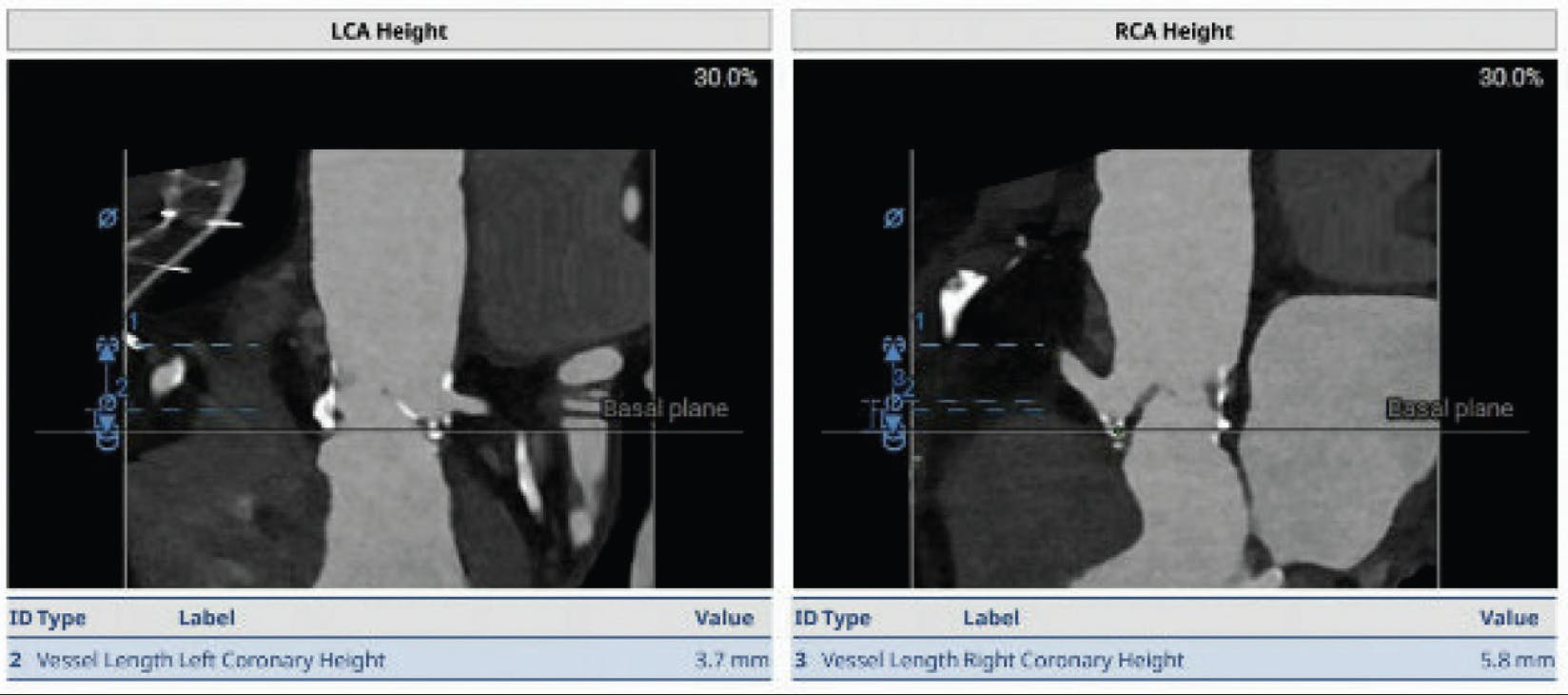
Figure 1. CT analysis: coronary heights.
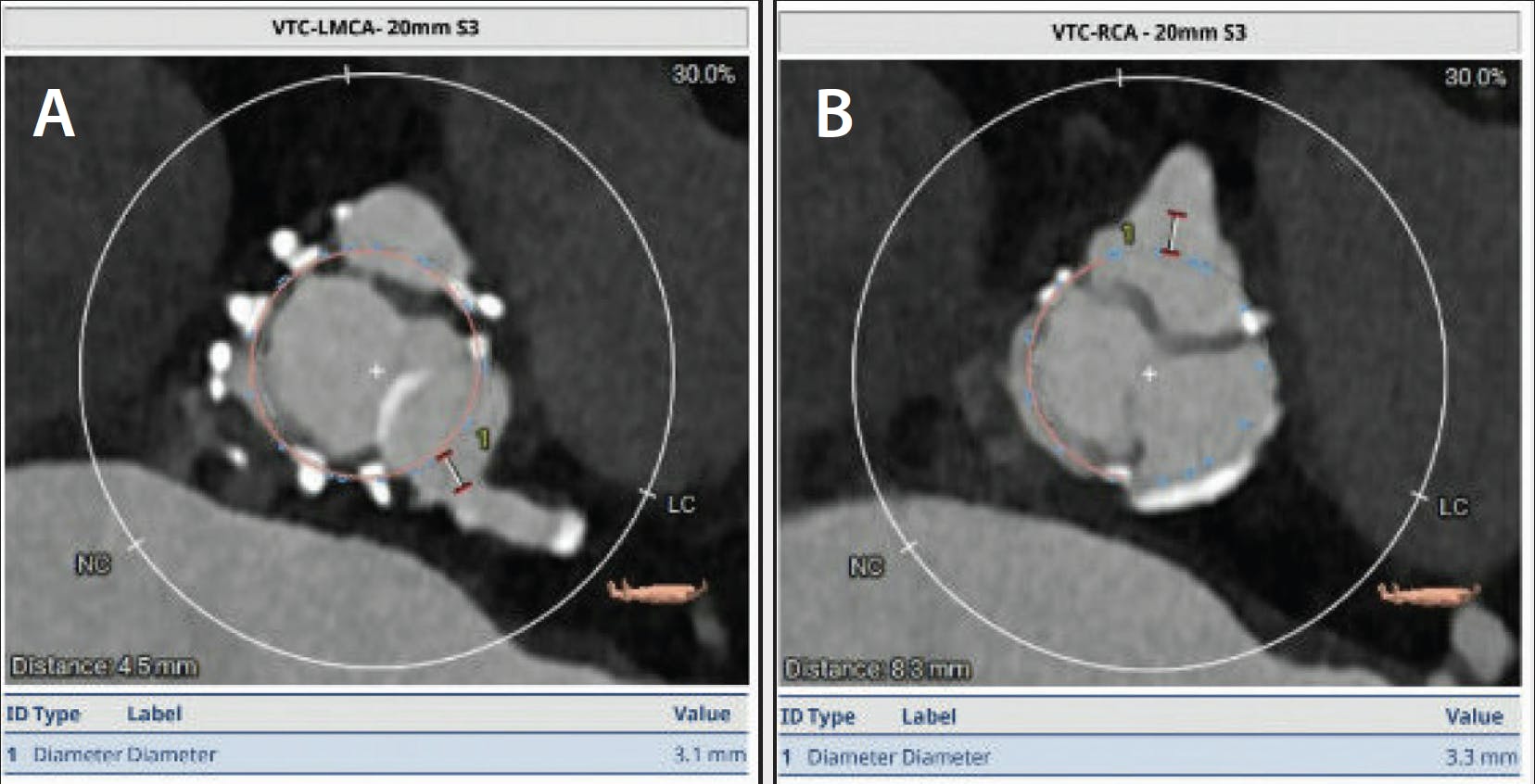
Figure 2. CT analysis: THV-VTC of the left main coronary artery (A) and RCC (B).
Given the small true internal diameter (approximately 19 mm per Valve-in-Valve app) and the fact that the Trifecta valve is not amenable to valve fracture, there was concern for impaired hemodynamics. Although a supra-annular self-expanding valve was considered, the tall skirt height raised concern for coronary obstruction due to the neoskirt plane (Figure 3). Therefore, a balloon-expandable valve with a shorter skirt was selected. The patient’s body surface area was 1.53 m2. To mitigate coronary obstruction risk, we planned sequential “doppio” balloon-assisted BASILICA (BA-BASILICA) of the left and right cusps followed by TAVR using a balloon-expandable prosthesis.
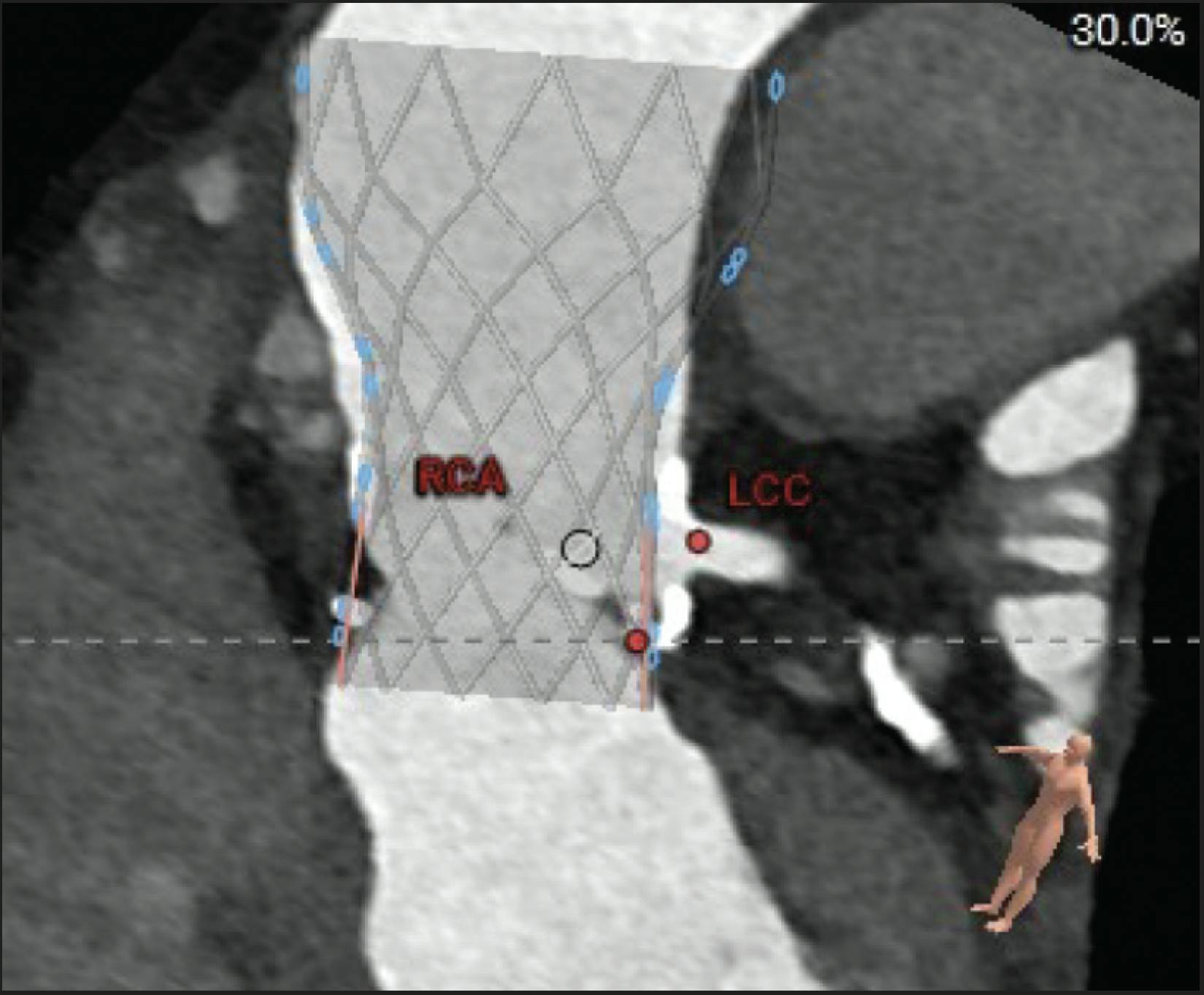
Figure 3. CT analysis: risk of skirt coronary obstruction from the skirt.
PROCEDURE
Vascular access was obtained via the right common femoral artery with a single large-bore sheath. Cerebral embolic protection using the Sentinel device (Boston Scientific Corporation) was employed given the elevated risk of embolization in VIV TAVR with leaflet modification.
The right coronary cusp leaflet was first targeted. A 6-F multipurpose catheter was advanced into the left ventricle. A V-18 wire (Boston Scientific Corporation) was positioned as a safety wire. A 20-mm Amplatz GooseNeck snare (Medtronic) was placed in the left ventricular outflow tract. A 7-F JR4 guide catheter was used as the traversal system. After checking side and en-face views on angiography, leaflet traversal was performed with an Astato 20 wire (Asahi Intecc USA, Inc.) through a PiggyBack wire converter (Teleflex) using 30 W “cut” mode electrosurgery delivered via Valleylab FT10 generator (Medtronic). After snaring the wire, balloon dilatation was performed with a 5-mm angioplasty balloon. The Astato wire was then externalized. The PiggyBack wire converter was placed back on the wire. A “Flying V” configuration was then created, and leaflet laceration was completed at 70 W with concurrent D5W flush.
The same sequence was performed for the left coronary cusp using a 7-F AL3 guide catheter and a Reuter tip-deflecting wire guide (Cook Medical). After checking the side and en-face views on angiography, leaflet traversal, balloon dilation with a 5-mm coronary balloon, and laceration were successfully completed.
After BASILICA, TAVR was performed with a 20-mm Sapien 3 Ultra Resilia valve (Edwards Lifesciences). The valve was implanted slightly deeper to mitigate the risk of skirt obstruction and was postdilated with a 21-mm True balloon (BD Interventional) to optimize expansion. Final angiography demonstrated unobstructed flow in both coronary arteries. The final invasive transvalvular gradient was 4 mm Hg (Figure 4).
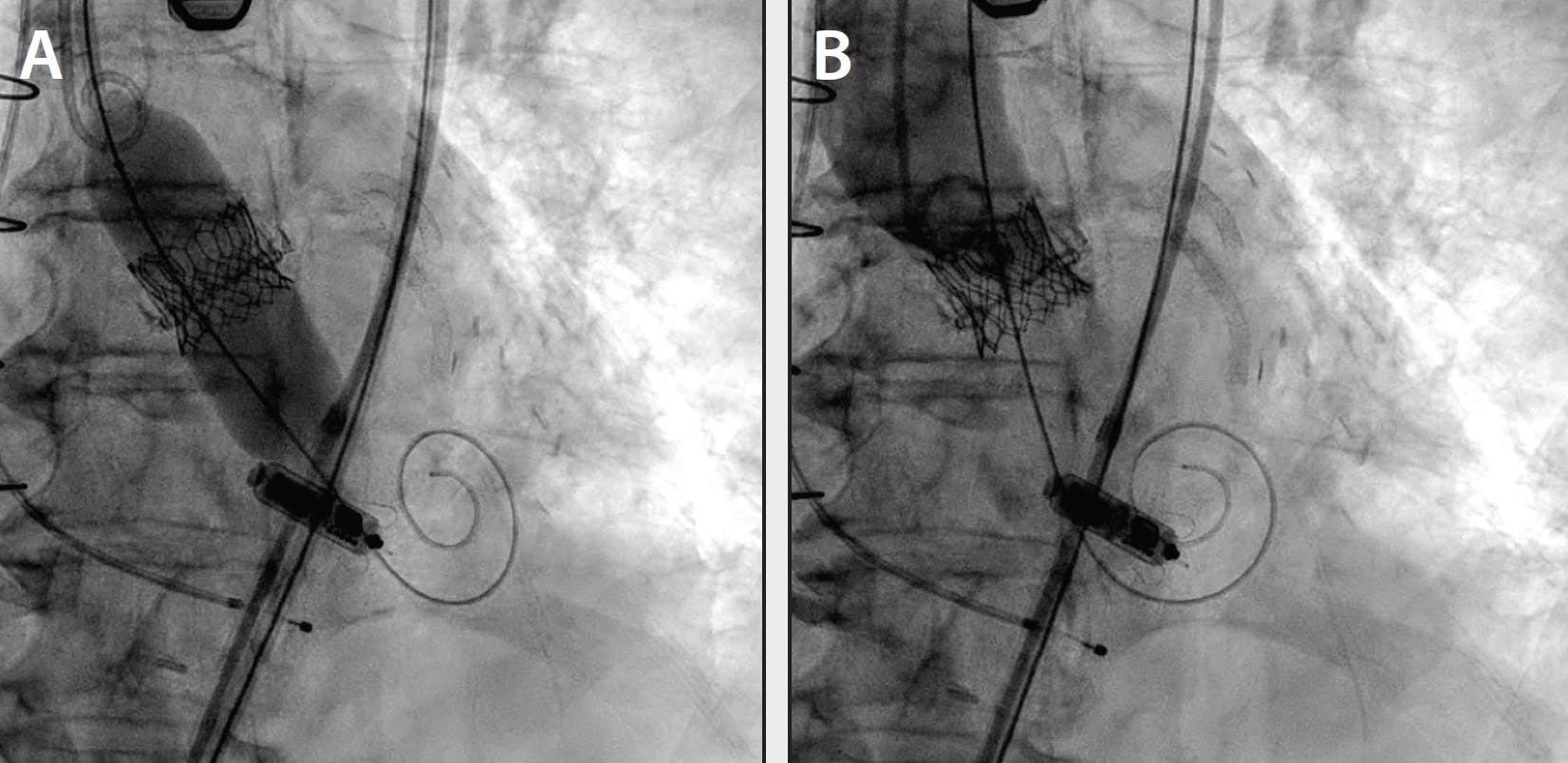
Figure 4. Valve postdilation (A); limited angiography after valve deployment (B).
OUTCOME
The patient’s postprocedural echocardiogram demonstrated a mean gradient of 8 mm Hg without paravalvular leak. She was discharged uneventfully.
DISCUSSION
This case highlights several challenges in VIV TAVR in small surgical bioprostheses. The use of doppio BA-BASILICA here enabled safe leaflet modification, while selection of a short-skirt, balloon-expandable valve optimized hemodynamics and prevented coronary obstruction.
1. Herrmann HC, Mehran R, Blackman DJ, et al. Self-expanding or balloon-expandable TAVR in patients with small aortic annulus. N Engl J Med. 2024;390:1959-1971. doi: 10.1056/NEJMoa2312573
2. Yoon SH, Kim WH, Dhoble A, et al. Bicuspid aortic valve morphology and outcomes after transcatheter aortic valve replacement. J Am Coll Cardiol. 2020;76:1018-1030. doi: 10.1016/j.jacc.2020.07.005
3. Forrest JK, Yakubov SJ, Deeb GM, et al. Fiveyear outcomes after transcatheter or surgical aortic valve replacement in lowrisk patients with aortic stenosis. J Am Coll Cardiol. 2025;85:1523-1532. doi: 10.1016/j.jacc.2025.03.004
4. Khan JM, Lederman RJ. BASILICA works, but are we any better at predicting who needs it? JACC Cardiovasc Interv. 2022;15:508-510. doi: 10.1016/j.jcin.2022.02.003
5. Lederman RJ, Babaliaros VC, Rogers T, et al. Preventing coronary obstruction during transcatheter aortic valve replacement: from computed tomography to BASILICA. JACC Cardiovasc Interv. 2019;12:1197-1216. doi: 10.1016/j.jcin.2019.04.052
6. Khan JM, Babaliaros VC, Greenbaum AB, et al. Preventing coronary obstruction during transcatheter aortic valve replacement: results from the multicenter international BASILICA registry. JACC Cardiovasc Interv. 2021;14:941-948. doi: 10.1016/j.jcin.2021.02.035
7. Khan JM, Kamioka N, Lisko JC, et al. Coronary obstruction from TAVR in native aortic stenosis: development and validation of multivariate prediction model. JACC Cardiovasc Interv. 2023;16:415-425. doi: 10.1016/j.jcin.2022.11.018
8. Bruce CG, Greenbaum AB, Babaliaros VC, et al. Safeguards and pitfalls for bioprosthetic or native aortic scallop intentional laceration to prevent iatrogenic coronary artery obstruction during transcatheter aortic valve replacement—the BASILICA technique. Ann Cardiothorac Surg. 2021;10:700-707. doi: 10.21037/acs-2021-tviv-26
9. Hensey M, Sellers S, Sathananthan J, et al. Bioprosthetic valve leaflet displacement during valve-in-valve intervention: an ex vivo bench study. JACC Cardiovasc Interv. 2020;13:667-678. doi: 10.1016/j.jcin.2019.10.021
10. Allen KB, Chhatriwalla AK, Saxon JT, et al. Bioprosthetic valve fracture: a practical guide. Ann Cardiothorac Surg. 2021;10:564-570. doi: 10.21037/acs-2021-tviv-25
11. Chhatriwalla AK, Allen KB, Depta JP, et al. Outcomes of bioprosthetic valve fracture in patients undergoing valve-in-valve TAVR. JACC Cardiovasc Interv. 2023;16:530539. doi: 10.1016/j.jcin.2022.12.019
12. Meier D, Puehler T, Lutter G, et al. Bioprosthetic valve remodeling in nonfracturable surgical valves: impact on THV expansion and hydrodynamic performance. JACC Cardiovasc Interv. 2023;16:1594-1608. doi: 10.1016/j.jcin.2023.03.035
Disclosures
Dr. Rogers: Consultant to Edwards Lifesciences, Medtronic, Boston Scientific, Abbott, Anteris, and Transmural Systems; advisory board for Medtronic; equity interest in Transmural Systems; co-inventor on patents, assigned to National Institutes of Health, for transcatheter electrosurgery devices.
Dr. Gada: Consultant to Abbott Vascular, Boston Scientific, Edwards Lifesciences, and Medtronic.
Dr. Tang: Speaker's honoraria and served as a physician proctor, consultant, advisory board member, TAVR publications committee member, RESTORE study steering and screening committee member, APOLLO trial screening committee member and IMPACT MR steering committee member for Medtronic; speaker's honoraria and served as a physician proctor, consultant, advisory board member and TRILUMINATE trial anatomic eligibility and publications committee member for Abbott Structural Heart; advisory board member for Boston Scientific; consultant for Shockwave Medical, Anteris, Philips, Edwards Lifesciences, Peija Medical, and Shenqi Medical Technology; and speaker’s honoraria from Siemens Healthineers.
Ds. Bruce: Co-inventor on patents, assigned to the National Institutes of Health, for transcatheter electrosurgery devices.
Dr. Rier: Consultant to Edwards Lifesciences, Medtronic, Terumo, and Shockwave Medical; speakers bureau for Abbott.
Advertisement
Advertisement