Advertisement
Advertisement
May/June 2025
From Individuals to Impact: Building Teams to Drive Quality and Performance in ASC Cath Labs
Strategic staffing in ambulatory surgical centers is crucial for high-quality, cost-effective interventional cardiology care.
Since 2020, the Centers for Medicare & Medicaid Services (CMS) has continued to expand the ambulatory surgical center (ASC) fee schedule to include a growing list of cardiovascular procedures that were previously restricted to hospital settings.1 This pivotal policy change has accelerated the rise of cardiovascular ASCs nationwide, particularly in states without stringent certificate of need regulations. With CMS broadening its reimbursement criteria and private payers following suit, health systems are increasingly integrating ASCs into their cardiovascular care strategies.
This integration is a key component of a broader transition from traditional care delivered in the medical center to contemporary approaches based in the community, and it has become paramount for health systems to ensure appropriate care is provided in the appropriate setting.2 As part of a major care transformation initiative, the American College of Cardiology (ACC) and MedAxiom, an ACC company, have created a foundational document introducing a series of chapters designed to provide a comprehensive framework for health systems to effectively integrate community-based care into their delivery models. The document, entitled “A Foundation for Integrating Community-Based Care Into Health Systems,” draws upon extensive clinical knowledge, guidelines, and resources and emphasizes a holistic approach to optimize care delivery.
Along with the foundational document and a set of artificial intelligence in health care tools, ACC and MedAxiom have released a new chapter as part of this care transformation initiative: “Transitioning Care: A Phased Approach to Cardiovascular ASC Development.” This chapter provides practical guidance for planning, building, staffing, and operating cardiovascular ASCs effectively. A central theme of the chapter is the vital connection between strategic staffing and performance management in interventional cardiology.
THE ROLE OF STAFFING IN QUALITY CARDIOVASCULAR CARE
Unlike hospital-based cath labs, ASC cath labs benefit from a more predictable schedule, allowing for deliberate and efficient staffing models. Although the core clinical roles remain the same (registered nurses [RNs] and technologists [RTs]), the outpatient setting demands precise staffing strategies to balance quality care with cost-effectiveness.3
RNs in the ASC cath lab must hold RN or BSN degrees and have at least 6 months of critical care experience, such as in the intensive care unit, emergency department, or hospital-based cath labs. Their qualifications also include current basic life support and advanced cardiac life support certifications and at least 15 hours of heart disease–specific continuing education every 3 years, including 1 hour of radiation safety. Technologists must hold a registered cardiovascular invasive specialist or RT credential, have more than 1 year of cardiovascular cath lab experience, and meet the same training and certification standards.3
More than a regulatory necessity, this foundation of clinical expertise is critical to ensuring safe, high-quality interventional care in a lower-acuity setting. Nurses and technologists play essential roles in patient assessment, moderate sedation, emergency management, and procedural support—functions that directly influence outcomes, safety, and patient satisfaction.4
DESIGNING EFFECTIVE COVERAGE MODELS
In addition to qualifications, coverage models are a cornerstone of ASC performance. Typical staffing involves a flexible three- to four-person team and adjusts based on procedure type and patient complexity. For example, a standard three-person team might include a circulating RN, a scrub technologist, and a monitor role. If nurse-led sedation is involved, a fourth RN is added to focus exclusively on sedation management, preserving patient safety and procedural efficiency.
Such models must also be tailored to ASC procedures, such as cardiac implantable electronic device placements, which may follow similar staffing patterns. The key is maintaining team versatility while ensuring clear role delineation and seamless collaboration—factors that contribute to fewer complications, faster throughput, and better patient outcomes.
LINKING STAFFING TO PERFORMANCE MANAGEMENT
Strategic staffing isn’t just about day-to-day operations—it directly ties into long-term performance management. Using the quadruple aim framework, ASCs can evaluate their staffing models in the context of clinical outcomes, operational efficiency, patient satisfaction, and team engagement. Properly staffed cath labs not only enable better outcomes but also foster a culture of accountability and continuous improvement.
To support data-driven quality improvement, the ACC has launched the National Cardiovascular Data Registry (NCDR) CV ASC Registry Suite, the first national registry tailored to cardiovascular procedures performed in outpatient settings. This tool enables ASCs to benchmark their outcomes against national standards, identify opportunities for improvement, and demonstrate value to payers and patients. For facilities already participating in hospital-based registries like CathPCI or the EP Device Implant Registry, the transition is streamlined.
Additionally, ACC offers a cath lab accreditation program designed to ensure ASC labs meet high standards in clinical governance, competency, and operational protocols. Accreditation helps codify best practices in staffing and performance, giving both providers and patients confidence in the care being delivered.
MEASURING OPERATIONAL EFFICIENCY
To evaluate whether an ASC is delivering care cost-effectively, it’s essential to track several operational metrics. For ASC cath labs, achieving efficiency and managing the cost of care is critical for long-term sustainability. A study by MedAxiom identified key performance indicators (KPIs) that remain valuable for assessing site performance (Figure 1).
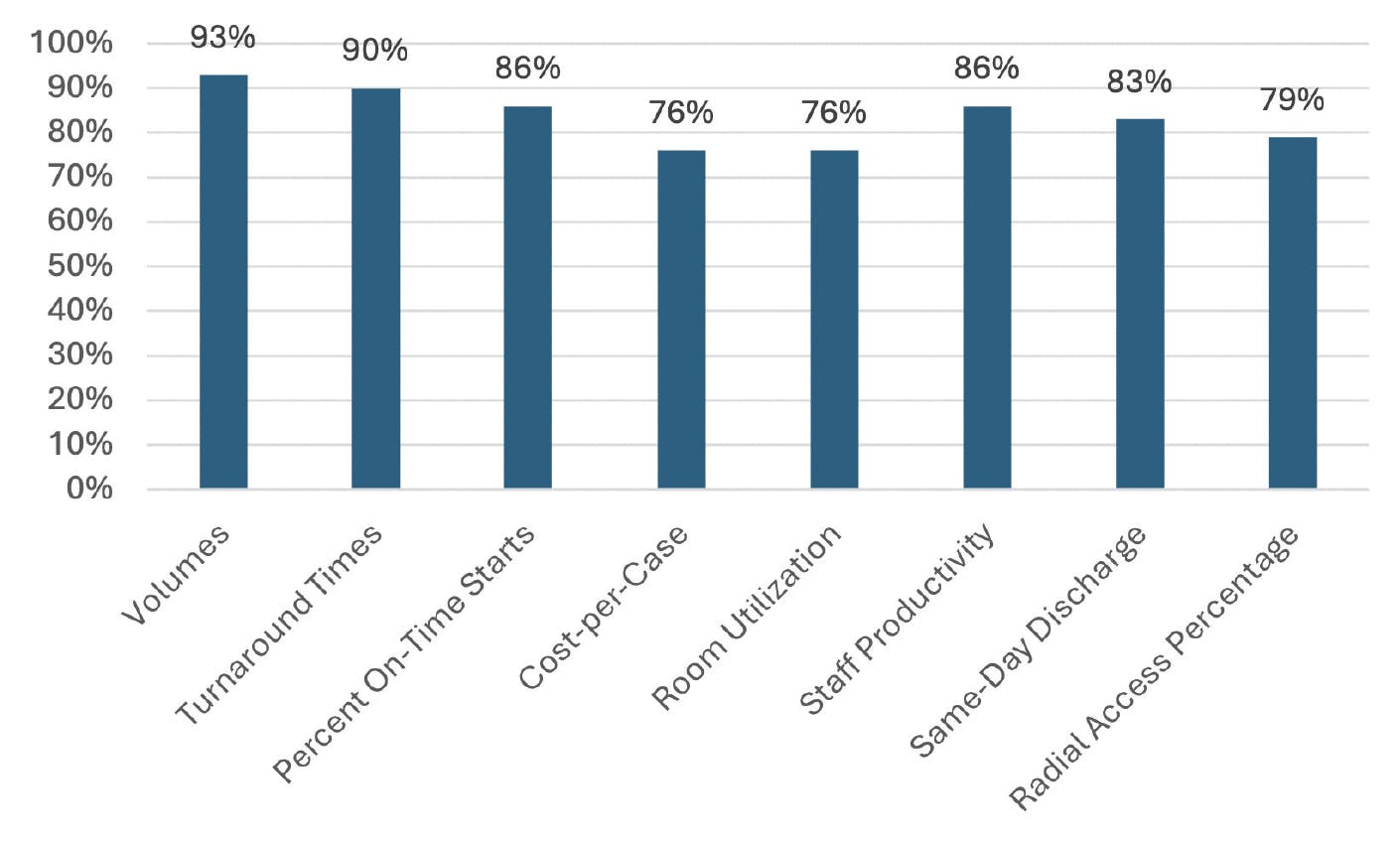
Figure 1. Programs that measure each operational KPI. Reprinted with permission from MedAxiom. Leveraging cardiovascular procedure lab data to achieve performance excellence. Accessed April 17, 2025.
https://app-na1.hubspotdocuments.com/documents/21895907/view/515130553?accessId=88d631
Monitoring trends in these metrics and benchmarking against other ASCs can be a powerful strategy for performance management. Resources like MedAxiom’s MedAxcess ASC Benchmarking tool provide meaningful insights to support this effort.
Starting January 2025, ASCs serving Medicare patients must conduct patient experience surveys. Similar to the Hospital Consumer Assessment of Healthcare Providers and Systems (HCAHPS) survey used in hospitals, the CMS now requires ASCs to administer the Outpatient and Ambulatory Surgery CAHPS survey. This mandatory survey is tied to Medicare reimbursement and helps ASC leadership better understand patient satisfaction and likelihood of recommending the facility. Benchmarking these results provides deeper insight into performance relative to peers.
In addition to patient feedback, understanding team experience is also important—even if not required for reimbursement. High staff turnover can be costly, and physician engagement plays a vital role in quality care delivery. Many ASCs conduct annual staff surveys using validated tools that offer benchmarking insights. Although these tools don’t have to be ASC-specific, those focused on procedural care are especially useful.
As organizations define which data elements to track, identify sources, and establish consistent collection methods, they can develop dashboards to visualize and monitor these key metrics effectively.
CONCLUSION
As cardiovascular care continues its shift toward outpatient settings, the importance of strategic ASC staffing cannot be overstated. The new ACC/MedAxiom chapter on ASC development provides a roadmap for aligning clinical roles, team structure, and performance management to achieve high-quality, cost-effective interventional cardiology care. By investing in the right people, roles, and processes, health systems can ensure their ASC cath labs are not only compliant but positioned for clinical excellence and sustainable growth.
To learn more about NCDR registries, visit NCDR.com.
To learn more about MedAxcess, visit MedAxiom.com/MedAxcess.
1. Kaczor K, Davis A. Key considerations when bringing cardiology procedures to the ambulatory surgery center. Becker’s ASC review. October 26, 2021. Accessed February 14, 2025. https://www.beckersasc.com/cardiology/key-considerations-when-bringing-cardiology-procedures-to-the-ambulatory-surgery-center.html
2. Bhatt AB, Biesbrock GK, Biga C. Best practices for transforming cardiovascular care delivery and implementation: a modern framework. J Am Coll Cardiol. 2025;85:1580-1582. doi: 10.1016/j.jacc.2025.02.020
3. Abu-Fadel M, Bagai J, Gasperetti C. SCAI quality improvement toolkit: operator staff and training requirements. Society for Cardiovascular Angiography & Interventions. Accessed February 14, 2025. https://scai.org/sites/default/files/2021-02/Operator%20and%20Staff%20Requirements.pdf
4. Intersocietal Accreditation Commission. IAC standards and guidelines for cardiovascular cath accreditation. Accessed April 17, 2025. https://scai.org/sites/default/files/2021-02/Operator%20and%20Staff%20Requirements.pdf
Advertisement
Advertisement