Advertisement
Advertisement
July/August 2025
When Is Enough Enough? Rethinking Staffing and Utilization in Today’s Cath and EP Labs
Understanding how your lab operates to determine and optimize staffing, utilization, and planning needs.
By Denise Busman, MSN, RN, CPHQ, FACC, and Katie Willerick, MA
In an era where demand for cardiovascular procedures is surging and procedural complexity is steadily increasing, cath and electrophysiology (EP) labs face an urgent question: When is enough enough?
How can we balance rising procedural demand, increasing case complexity, and limited staffing resources while maintaining quality, efficiency, and financial viability?
This article explores the evolving realities of cath and EP lab staffing, utilization, and strategic planning, offering insights into how labs can optimize operations and decide whether they need to scale up or simply work smarter.
THE NEW REALITY: DEMAND, COMPLEXITY AND CAPACITY CHALLENGES
Today’s cath and EP labs are grappling with growing procedural demand fueled by the global rise in cardiovascular disease (CVD). Over the past 3 decades, CVD prevalence has nearly doubled, with more elderly patients and comorbidities driving complexity. While inpatient cardiovascular procedures are projected to grow by 8%, outpatient procedures are expected to rise by a staggering 25% over the next decade.1 As the hospital-based procedural mix shifts toward high-complexity, labor-intensive cases, traditional staffing models are no longer sufficient.
Adding to this challenge is the changing nature of full-time equivalencies. A team of three staff members today doesn’t necessarily offer the same support it did 5 years ago. Each procedure may now require different technical proficiencies, varying levels of training, and access to rapidly advancing technologies. It’s no longer a question of head count alone—it’s about the right people, with the right skills, at the right time.
WORKFORCE PRESSURES: SHORTAGES AND BURNOUT
These ongoing challenges limit cath labs and EP labs as procedural needs climb. The burden of call schedules, expanded weekend operations, and frequent overtime is burdensome for clinical teams. Interventional and EP staff now routinely perform procedures on Saturdays to keep up with demand and facilitate hospital throughput, a shift that further contributes to burnout.
The problem isn’t just recruitment, but also retention. Rural health centers are especially affected due to difficulty attracting and keeping talent. The aging workforce compounds this strain: 27% of cardiologists are aged > 61 years, and many experienced clinicians are opting to reduce their hours or retire early.2 Simultaneously, ambulatory surgical centers (ASCs) and industry roles offer more balanced lifestyles than clinical care, drawing trained staff away from hospital settings.
Technology adds another layer of complexity. Although advanced imaging and interventional approaches promise greater precision and efficiency, they also require new competencies. Having state-of-the-art tools doesn’t improve care delivery if staff aren’t trained or available to operate them.
THE OPERATIONAL AND FINANCIAL TIGHTROPE
Hospitals are increasingly expected to do more with less. Budgets are tight, but the pressure to invest in equipment, maintain adequate staffing levels, and expand procedural capacity continues to mount. When staffing and utilization are not aligned, the consequences ripple across the system: longer wait times, higher overtime costs, procedural delays, and ultimately lost revenue.
At the heart of the issue are two simple but crucial questions: How many procedures should your lab be performing per day? And, can your current resources realistically support that volume without jeopardizing staff well-being or patient safety?
KNOWING THE NUMBERS: METRICS THAT MATTER
While most programs can report their annual volume, that metric alone doesn’t provide the full picture. Key operational indicators, such as average case time, room utilization, room turnaround time, on-time first case starts, and staff-to-case ratios, offer far more insight into whether a lab is functioning efficiently.
Consider the tool in Figure 1 for defining your room utilization. This calculation can help a program not only maximize cases but also optimize efficiency without staff burnout or patient delays. MedAxiom recommends a goal of 80% to 85% room utilization, and the measure can be calculated by day, week, or month to see trends in efficiency.
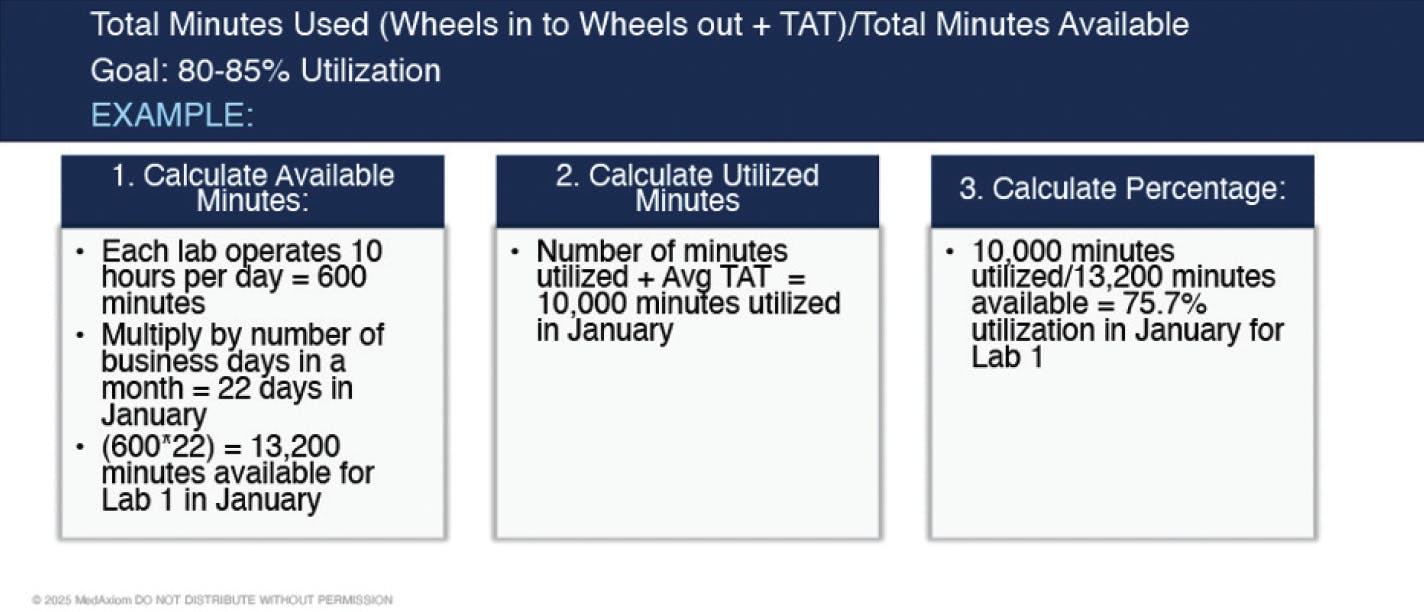
Figure 1. A calculation to define your room utilization. TAT, turnaround time.
Understanding throughput is essential. Are your rooms operating near peak efficiency? Are there days with consistently lower utilization? Are delays systemic or isolated? Once these questions are answered, labs can begin differentiating between problems that require optimization and those that justify expansion.
OPTIMIZATION VERSUS EXPANSION: WHAT THE DATA TELL YOU
Too often, the default solution to rising demand is to build or hire. However, expansion is an expensive, long-term commitment that may not always be necessary. If room utilization rates are < 75%, there is likely room to improve. On the other hand, if a program consistently runs > 85% utilization, with efficient workflows and minimal delays, expansion may be warranted.
Optimization efforts can take many forms. Improving turnaround times, enforcing timely starts, cross-training staff, reallocating procedures to underused rooms, and leveraging predictive scheduling tools can all yield meaningful gains without additional capital investment. Even minor improvements such as addressing delays to on-time starts for the first case can improve results over time.
When optimization opportunities have been exhausted and data consistently show that capacity is maxed out, then expansion becomes a more justifiable step. That could mean adding procedure rooms, hiring more staff, or investing in hybrid labs to accommodate advanced procedures more efficiently. For lower-acuity cases, partnerships with ASCs can help free up hospital resources for more complex interventions.
RETURN ON INVESTMENT: THE BUSINESS CASE FOR EFFICIENCY
Even a short delay in the cath lab can result in lost productivity. Scaling that loss across hundreds of procedures adds up quickly.3 Conversely, investing in technologies that reduce procedure time, such as pulsed field ablation for atrial fibrillation, can result in significant revenue gains, especially when combined with process improvements that increase throughput.
Same-day discharge protocols offer another example. For percutaneous coronary intervention, same-day discharge can provide a relative reduction of up to 50% of health system costs, adding up to substantial cost avoidance over time.4 Standardization of supplies and procedural workflows also enhances financial performance, supporting both cost reduction and predictability.
BUILDING THE FUTURE ON DATA
Ultimately, determining whether a lab needs more staff, more space, or simply better processes starts with a clear understanding of how it currently performs. Programs must examine their own performance data (room utilization, staff-to-case ratios, procedural delays) and benchmark that against national standards. MedAxiom’s 2025 Cath and EP Lab Utilization and Staffing Trends Survey Report offers a valuable resource for those seeking to assess their performance in a broader context. MedAxiom’s Care Transformation Services team also offers strategic guidance in identifying and collecting metrics if your program doesn’t know where to start.
The goal isn’t to do more just for the sake of volume but to strike a balance: safe, efficient, sustainable operations that benefit both patients and staff. Whether the next step is optimization or expansion, data should guide the way.
In cath and EP labs across the country, the question “When is enough enough?” doesn’t have a simple answer. But with the right tools, metrics, and mind set, every program can begin moving toward one.
Learn more about MedAxiom’s 2025 Cath and EP Lab Utilization and Staffing Trends Survey Report here.
1. Roth GA, Mensah GA, Johnson CO, et al. Global burden of cardiovascular diseases and risk factors, 1990-2019. Update from the GBD 2019 study. J Am Coll Cardiol. 2020;76:2982-3021. doi: 10.1016/j.jacc.2020.11.010
2. Writing Committee; Walsh MN, Arrighi JA, Cacchione JG, et al. 2022 ACC health policy statement on career flexibility in cardiology: a report of the American College of Cardiology Solution Set Oversight Committee. J Am Coll Cardiol. 2022;80:2135-2155. doi: 10.1016/j.jacc.2022.08.748
3. Bruckel J, Lee A, Boudoulas KD. Strategies for cost-effective care in the cath lab. Society for Cardiovascular Angiography & Interventions. March 16, 2023. Accessed June 30, 2025. https://scai.org/quality-improvement-tools/qi-tips/strategies-cost-effective-care-cath-lab
4. Writing Committee; Rao SV, Vidovich MI, Gilchrist IC, et al. 2021 ACC expert consensus decision pathway on same-day discharge after percutaneous coronary intervention: a report of the American College of Cardiology Solution Set Oversight Committee. J Am Coll Cardiol. 2021;77:811-825. doi: 10.1016/j.jacc.2020.11.013
Advertisement
Advertisement