Advertisement
Advertisement
July/August 2025
An Interview With Wayne Batchelor, MD, MHS, MBA
Dr. Batchelor discusses how his experience as an interventional cardiologist provides insight into his role as President of the Medicine Service Line at Inova Health System, the role of administration in promoting innovation and evidence-based care, his passion for health disparity research, the importance of sustainability in the cath lab, and more.
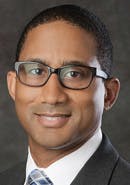
You’ve experienced medicine and interventional cardiology (IC) from varied vantage points: as a physician-executive, an educator, a clinician, in both private and academic practice, etc. What aspect of the IC field did you find most appealing when you started, and how has that evolved?
When I entered the field, I was initially drawn to the unique blend of intellectual rigor, technical challenge, and the immediate, potentially life-saving impact of IC. The ability to restore perfusion and reverse shock within minutes was—and remains—exhilarating. Over time, my appreciation has deepened beyond technical execution. I’ve become increasingly focused on my executive physician leadership role, addressing disparities in cardiovascular care, and performing clinical research that reflects real-world populations.
Earlier this year, you took on a new role as President of the Medicine Service Line at Inova Health System. What are your goals in this new position? What insight does your experience as a clinician, and specifically an interventional cardiologist, give to this leadership role?
As President of the Medicine Service Line, my priority is to elevate quality, patient outcomes, team member engagement, and growth across Inova’s medical specialties. My experience in IC—where precision, urgency, and multidisciplinary collaboration are essential—has shaped my leadership approach. I try to promote data-driven care and the advancement of health equity and innovation across the continuum. Fortunately, Inova values leaders who understand the frontline experience, and that clinical grounding helps me build credibility and alignment with our teams.
Over the years, you’ve become a voice for health care disparities in IC. As you’ve entered into this new institutional leadership position, how would you describe the role administration can/should play in advocating for continued research?
I believe that research, innovation, and widespread adoption of evidence-based care all help drive patient outcomes in large health systems. Health care leaders should be a catalyst for research and innovation—not just supporters. Support may come from institutional resources, external resources, and other indirect means, such as fostering a culture of intellectual curiosity and clinical excellence. All of this must also be seen through the lens of health equity. As a physician-executive interested in clinical research, I try to embed scientific inquiry and health equity into the DNA of our system, while remaining true to the primary strategic direction of our health system.
You are invested in improving representation of underrepresented minorities in clinical trials. As a Principal Investigator, what have you historically found to be effective ways of engaging underrepresented groups in research?
Success starts with understanding the viewpoints of all stakeholders involved in clinical research. For underrepresented patients and communities, trust and culturally competent engagement are paramount. I’ve found that partnering with trusted local organizations, hiring diverse research coordinators, and simplifying trial logistics (assisting with transportation, literacy-appropriate materials, flexible hours) all help. I am also very interested in understanding the impact of research site selection on ensuring that our clinical trials represent the intended use population. Importantly, we must ensure that patients see themselves represented among the investigators and study leadership—diversity at the top fosters inclusivity throughout.
Structural heart disease is an area of expertise for you—what advances and/or changes in practice do you think we’ll see here within the next decade? What do you hope to see?
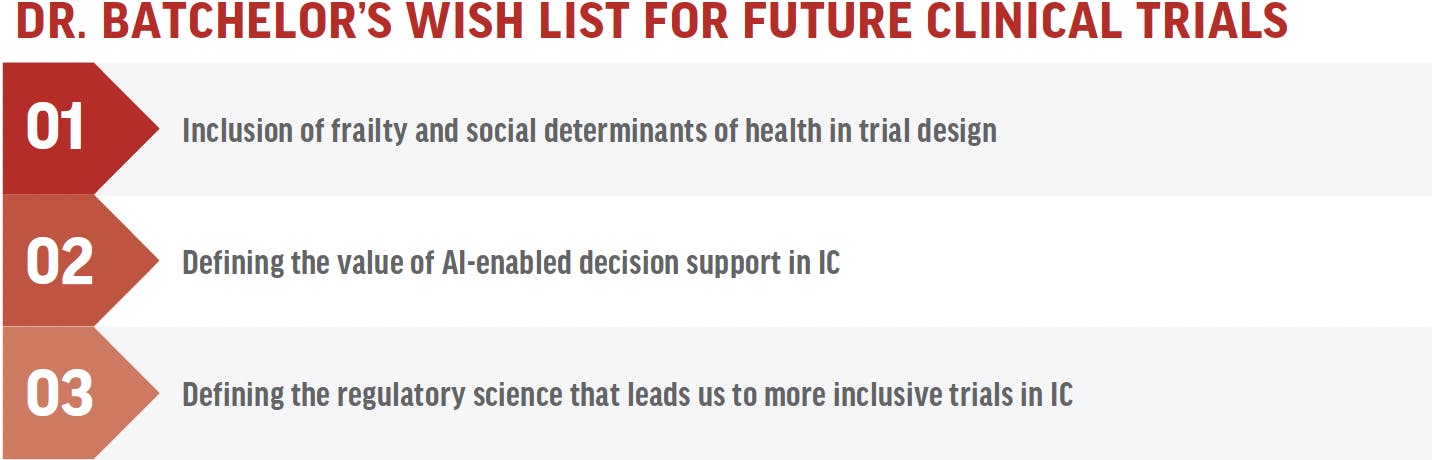
I hope to see transformative growth in transcatheter valve therapies, especially the tricuspid space, and continued device innovation and further refinement of valve repair and replacement techniques. I am hopeful that the full potential of artificial intelligence (AI) will be appreciated in IC and that it will be used to reduce treatment disparities, rather than amplify them. I also hope to see durable long-term transcatheter solutions for younger patients with valvular heart disease, as well as more equitable access to these therapies across racial, socioeconomic, and geographic boundaries. Beyond innovation, the next frontier is ensuring that technical advances are effectively scaled in a manner that reaches all who might benefit.
If you were given the opportunity and funding to design a research initiative of your choosing in the cardiogenic shock space, what would be your focus?
This has become a difficult question in the wake of the DanGer Shock trial, which has shifted our thinking on cardiogenic shock and hemodynamic support. Still, there remain many unanswered questions in this space and much room for pragmatic trial designs that evaluate novel hemodynamic support devices, protocolized shock teams/networks, and the prognostic value of biomarkers. We still need to define which phenotypes of cardiogenic shock respond best to specific hemodynamic support and pharmacologic therapies, define optimal antithrombotic therapies for acute myocardial infarction shock, and validate shock outcomes in more diverse populations. We also need to define best practices for weaning off hemodynamic support and which left ventricular unloading methods are best under various scenarios. We will have some good data emanating from ongoing shock registries, but more research will be needed in these areas and others.
You and colleagues published a paper in JACC: Cardiovascular Interventions on sustainability in the cardiac cath lab.1 What do you think are the most accessible first steps toward a more sustainable lab?
This is an important topic that we don’t speak about enough. I credit Drs. Mirvat Alasnag and Bina Ahmed for conceiving this viewpoint article that points out the carbon footprint of hospitals, in particular high-use, high-energy, high-waste areas like cath labs and operating rooms. It’s ironic that the health care sector has placed little to no emphasis on reducing greenhouse gas emissions that lead to so many health issues. We need to adopt better practices for reducing waste and promoting reuse and recycling. Some simple steps include reducing single-use plastics, using more energy-efficient equipment, and working with vendors to reduce packaging waste. Ultimately, we need to build a culture of sustainability—through staff education and accountability—to achieve a long-term positive impact on the environment.
What does your ideal day look like?
An ideal day would start off in the cath lab learning a new technique or solving a technical challenge. This would follow with time with my Medicine Service line executive leadership team and end with family time—perhaps a nice bike ride on Virginia’s trails or eating at a terrific restaurant in Washington, DC, with family and friends. Like most, I find balancing work and family time difficult, but this is one of the keys to happiness.
1. Alasnag M, Ahmed B, Jones T, et al. Cardiac catheterization laboratory sustainability: what it is and why it matters. JACC Cardiovasc Interv. 2023;16:2034-2039. doi: 10.1016/j.jcin.2023.06.004
Advertisement
Advertisement
Interested in reading more interviews?
To read more interviews with thought leaders in the interventional cardiology field, check out our Profiles & Perspectives hub.
Read More