Advertisement
Advertisement
2025 Digital Exclusive No. 1
Managing the Pregnant Patient in the Cath Lab and Minimizing Fetal Risk
The importance of multidisciplinary discussion; considerations regarding radiation exposure, contrast use, procedural sedation, and patient positioning; and options for the pregnant operator.
As the average age at pregnancy increases in America, cardiologists are seeing a greater number of conditions requiring invasive and interventional procedures in the cardiac catheterization laboratory (cath lab). Indications for invasive therapy include, but are not limited to, ST-segment elevation myocardial infarction (STEMI), non-STEMI, pulmonary embolism, severe valvular disease, significant congestive heart failure, pulmonary hypertension, and cardiogenic shock. Although optimization of cardiac conditions prior to pregnancy by cardio-obstetrics physicians has reduced the risk of poor outcomes in many patients, there are still women who require intervention. In general, pregnant patients should receive similar care to their nonpregnant counterparts; however, there are some nuances to the management of pregnant patients in the cath lab. This article reviews the importance of multidisciplinary discussion; shares considerations for exposure to ionizing radiation, contrast administration and procedural sedation, and patient positioning with respect to the pregnant patient (Figure 1); and discusses options for the pregnant operator.
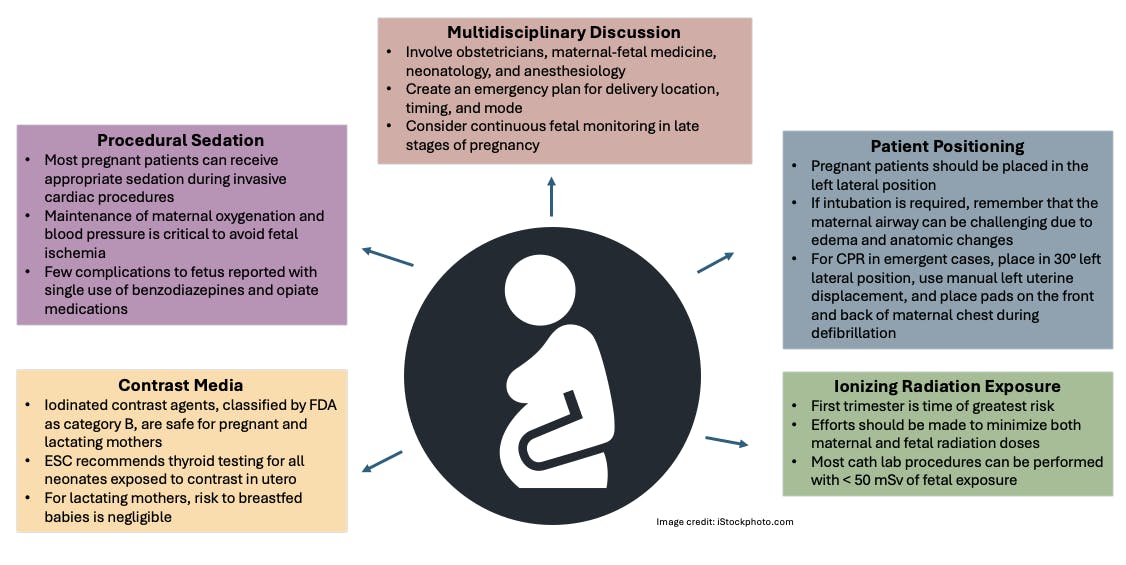
Figure 1. Key elements for managing pregnant patients in the cath lab.
MULTIDISCIPLINARY DISCUSSION AND PLANNING
Whenever cath lab intervention is considered in a pregnant patient, a multidisciplinary conference, when feasible, is ideal. Obstetricians, maternal-fetal medicine specialists, neonatologists, and anesthesiologists are some of the stakeholders who may need to be present. Considerations prior to catheterization depend upon the stage of pregnancy and fetal viability, as well as the urgency of the procedure. Creation of an emergency plan is critically important, and decisions regarding delivery location, timing, and mode should be made, particularly in advanced stages of pregnancy. Frequently, with the most ill patients in the third trimester, continuous fetal monitoring may be indicated. Physicians should prepare for emergent delivery if necessary.
EXPOSURE TO IONIZING RADIATION
Exposure to ionizing radiation is frequently the biggest concern on the part of both the patient and the care team when considering invasive cardiac procedures. Ionizing radiation is defined as an electromagnetic or particulate energy that results in the production of ions through interaction with matter. Both deterministic and stochastic effects are consequences of radiation exposure. Deterministic events are dose-dependent and predictable, while stochastic effects occur by chance and are unrelated to dose. The threshold for concern is a fetal exposure of > 50 mSv for in utero deterministic effects of radiation.1 The first trimester of pregnancy, during organogenesis, is the time of greatest risk, with a significant decrease as the pregnancy progresses through the second and third trimesters. Although intervention may be required during pregnancy, attempts should be made to avoid first-trimester exposure. Throughout all stages of pregnancy, efforts should be made to minimize both maternal and fetal radiation doses, including abdominal shielding (from underneath the patient), use of radial access, use of ultrasound for access, saving fluoroscopic images, use of collimation, and use of intravascular ultrasound or optical coherence tomography for coronary procedures. The vast majority of cath lab procedures can be performed with significantly less than 50 mSv of fetal exposure.
ADMINISTERING CONTRAST MEDIA
The administration of contrast media is required for many invasive cardiac procedures in the cath lab. The FDA classifies iodinated contrast agents as pregnancy category B drugs, as they are considered safe for pregnant women and lactating mothers. Iodinated contrast dye may cross the placenta, entering both the amniotic fluid and fetal circulation.2 Theoretically, this contrast exposure may suppress fetal thyroid function; however, neither animal nor human studies have shown teratogenic or mutagenic effects or adverse effects on the fetal thyroid.3 The fetal thyroid starts to become active and produces hormones around the beginning of the second trimester, with a resultant increase in iodine uptake, and the fetal thyroid is highly sensitive to fluctuations in maternal iodine concentration during this time.4 The European Society of Cardiology recommends thyroid testing for all neonates who have had in utero contrast exposure. For breastfeeding mothers, iodinated contrast agents are completely cleared from the mother’s bloodstream in 24 hours (half-life in blood is 2 hours). Less than 1% of the administrated iodine agent is excreted in milk, and < 1% of it is assumed by the breastfed baby.5 Lactating mothers should not be advised to “pump and dump” after a procedure using contrast media, as the risk to the breastfed baby is negligible.
PROCEDURAL SEDATION
Procedural physicians are frequently concerned about administering procedural sedation to pregnant patients. To safely sedate patients during pregnancy, it is important to understand some of the physiologic and hemodynamic changes that occur in the pregnant woman. First, there is an increase in maternal oxygen consumption and a reduction in lung capacity, which may lead to a rapid decrease in maternal PaO2 during even very brief periods of apnea. Although short periods of maternal hypoxia may be well-tolerated, maintenance of maternal oxygenation and blood pressure are critical to avoid fetal ischemia. A full airway assessment should be performed prior to the procedure, and the appropriate measures must be taken to avoid fetal hypoxemia. Benzodiazepines, such as midazolam, which is a commonly used anxiolytic in the cath lab, has not been associated with significant malformations. Regarding opiate medications, there appear to be few neonatal complications with short-term or single use. Administration of opiates or benzodiazepines when delivery is imminent may result in sedation of the fetus and decreased responsiveness postdelivery. All pregnant patients, with very few exceptions, should receive cautiously appropriate sedation when undergoing invasive cardiac procedures.
POSITIONING OF THE PREGNANT PATIENT
Particularly in the later stages of pregnancy, patient positioning is critical. Pregnant patients should be placed in the left lateral position on the cath lab table to reduce internal vena cava compression and maintain uterine perfusion, particularly in the third trimester. If intubation is required, it is critical to remember that the maternal airway can be challenging due to edema and anatomic changes. Finally, in the rare case of cardiac arrest, the patient should be placed in a 30° left lateral position for CPR. The American Heart Association recommends manual left uterine displacement (using a hand to deviate the uterus to the left) throughout CPR.6 Emergent hysterotomy, or evacuation of the maternal uterus, may be required to optimize the effectiveness of maternal CPR, and it should be considered if the cardiac arrest occurs beyond 20 weeks of gestation and exceeds 4 minutes in duration. If defibrillation is required, the pads should be placed on the front and back of the maternal chest. There is only minimal risk to the fetus with direct current cardioversion for the mother.
CONSIDERATIONS FOR PREGNANT OPERATORS
Patients are not the only pregnant women in the cardiac cath lab. Although women remain underrepresented in interventional cardiology, there are an increasing number of female physicians choosing this specialty.7 As discussed previously, the fetal dose limit in the United States is < 50 mSv, with a recommended dose of < 5 mSv. Of note, this number is five times higher than the maximal fetal dose allowed in Europe, where the < 10 mSv fetal dose limit (< 1 mSv recommended) keeps most female operators out of the cath lab for the majority of their pregnancies. Once again, there are both stochastic and deterministic effects of ionizing radiation. Although we cannot control the stochastic events, which are random and not dose dependent, we can focus on deterministic events and dose reduction strategies. It is not until 100 mSv of radiation that there is a discernable risk of childhood cancers and malformations.8
Considerations to Minimize Radiation Exposure for Pregnant Operators
- Obtain a fetal dosimeter, worn at the waist level inside of the lead.
- Wear lead at the thickness from 0.5 to 1 mm, with a pregnancy half apron of 0.5 mm for additional protection during the most vulnerable parts of pregnancy.
- Employ lead reduction programs (eg, AlluraClarity, Innova).
- Maximize table height and distance between the patient and image intensifier.
- Avoid steep angles and use tailored shielding.
For pregnant operators, reduction in dose across the pregnancy is the goal (Sidebar 1). The first step in preventing radiation effects is to obtain a fetal dosimeter, which should be worn at the waist level inside of the lead. Lead thickness from 0.5 to 1 mm is recommended, and many women choose to wear a pregnancy half apron under 0.5-mm lead for additional protection during the most vulnerable parts of pregnancy. Lead reduction programs, such as the AlluraClarity (Philips) or Innova systems (GE Healthcare), should be employed. The table height and distance between the patient and table should be maximized, and image intensification should be reduced. Avoidance of steep angles and use of tailored shielding, such as the RadPad (Worldwide Innovations and Technologies, Inc.) should be employed. Pregnant operators rarely exceed the 50 mSv fetal dose limit, despite spending much or all of their pregnancies performing procedures. Furthermore, there are no data to indicate that breastfeeding or lactation is affected by ionizing radiation. Patients and operators should not be discouraged from using pumped milk or breastfeeding after cath lab exposure. Newer innovations, including Zero-Gravity lead (CFI Medical, distributed by Biotronik), the Radiaction system (Radiaction Medical), the EggNest-XR system (Egg Medical), the Rampart system (Rampart ic, LLC), the Protego radiation protection system (Image Diagnostics, Inc.), and robotic-assisted percutaneous coronary intervention, will likely continue to decrease the need for wearable lead and radiation exposure during pregnancy. Overall, it is safe to continue performing cath lab–based procedures throughout pregnancy, as long as radiation limits are respected.
SUMMARY
A number of conditions may require cardiac catheterization during pregnancy. As the maternal population ages, the need for these procedures will likely increase. Understanding the physiology of pregnancy and lactation; the potential risks of radiation, contrast, and sedation exposure; and minimizing these risks is critical to caring for both mothers and babies during invasive and interventional cardiac procedures.
1. Park K, Bortnick AE, Lindley KJ, et al. Interventional cardiac procedures and pregnancy. J Soc Cardiovasc Angio and Interv. 2022;1:100427. doi: 10.1016/j.jscai.2022.100427
2. Leek JC, Arif H. Pregnancy Medications. In: StatPearls. StatPearls Publishing; 2022. Updated July 24, 2023. Accessed February 3. 2025. https://www.ncbi.nlm.nih.gov/books/NBK507858/
3. Webb JAW, Thomsen HS, Morcos SK. The use of iodinated and gadolinium contrast media during pregnancy and lactation. Eur Radiol. 2005;15:1234-1240. doi: 10.1007/s00330-004-2583-y
4. van Welie N, Portela M, Dreyer K, et al. Iodine contrast prior to or during pregnancy and neonatal thyroid function: a systematic review. Eur J Endocrinol. 2021;184:189-198. doi: 10.1530/EJE-20-0627
5. American College of Radiology. ACR Manual on Contrast Media. American College of Radiology; 2024:88-92. Accessed February 3, 2025. https://www.acr.org/Clinical-Resources/Clinical-Tools-and-Reference/Contrast-Manual
6. Jeejeebhoy FM, Zelop CM, Lipman S, et al. Cardiac arrest in pregnancy: a scientific statement from the American Heart Association. Circulation. 2015;132:1747-1773. doi: 10.1161/CIR.0000000000000300
7. Cheney AE, Vincent LL, McCabe JM, Kearney KE. Pregnancy in the cardiac catheterization laboratory: A safe and feasible endeavor. Circ Cardiovasc Interv. 2021;14:e009636. doi: 10.1161/CIRCINTERVENTIONS.120.009636
8. McCollough CH, Schueler BA, Atwell TD, et al. Radiation exposure and pregnancy: when should we be concerned? Radiographics. 2007;27:909-917. doi: 10.1148/rg.274065149

Advertisement
Advertisement

Latest Digital Exclusives