Advertisement
Advertisement
May/June 2024 Supplement
Sponsored by Medtronic
Women With Aortic Stenosis
Assessing the challenges of AS underdiagnosis and under-referral in women.
By Priscilla Wessly, MD, and Renuka Jain, MD
Aortic stenosis (AS) stands as the leading type of valvular heart disease, with a worldwide prevalence of 12.4% in the general population.1 Notably, the incidence of AS increases with age, indicating a growing risk in an aging population. Established guidelines for the diagnosis and management of AS do not incorporate sex-specific approaches in treatment despite significant research demonstrating sex-based differences in AS presentation, progression, and clinical outcomes.2-4 Women with AS are underdiagnosed and under-referred, a situation that not only delays critical interventions, such as surgical or transcatheter aortic valve replacement (TAVR), but also results in worse health outcomes for women.5,6 There are numerous factors that contribute to the underdiagnosis and under-referral of AS in women.
CHALLENGES IN DIAGNOSIS
Women with severe AS have a distinctive patient profile shaped by both physiologic and epidemiologic factors. They tend to present at a later age with atypical symptoms, advanced symptoms, and a higher functional impairment compared with men.7 Women are more likely to present with New York Heart Association (NYHA) class III-IV heart failure symptoms and renal insufficiency.8 Despite presenting with more severe symptoms and a higher NYHA class, women frequently underreport the severity of their symptoms.9 Given these factors, at presentation of the disease, women have higher rates of older age and hypertension, greater renal insufficiency, and a tendency toward frailty.10 Calculated Society of Thoracic Surgeons (STS) scores are higher in women presenting for treatment, indicating a more challenging surgical risk profile and increased comorbid conditions.11,12,13
Sex-based differences are evident in the anatomy, calcification patterns, and fibrosis of patients with AS (Figure 1). Studies have demonstrated that women exhibit distinct patterns of calcification and fibrosis.10,14 Although there is a strong correlation between the hemodynamic severity of AS and the aortic valve (AV) calcium load as measured by multidetector computed tomography, research has highlighted that women, when compared with men with similar AS severity, present with a lower AV calcium load even after indexing for body surface area and a smaller left ventricular outflow tract.15 Further studies, such as that by Simard et al, have shown that women are more likely to have greater amounts of valvular fibrosis, localized in dense connective tissue, than men with equivalent hemodynamic AS severity and valve weight density.16 The extent of fibrosis correlated well with the amount of calcification in men but not in women. Therefore, echocardiographic visualization of calcium on the aortic valve will not correlate with severity of AS in women to the same extent as in men.
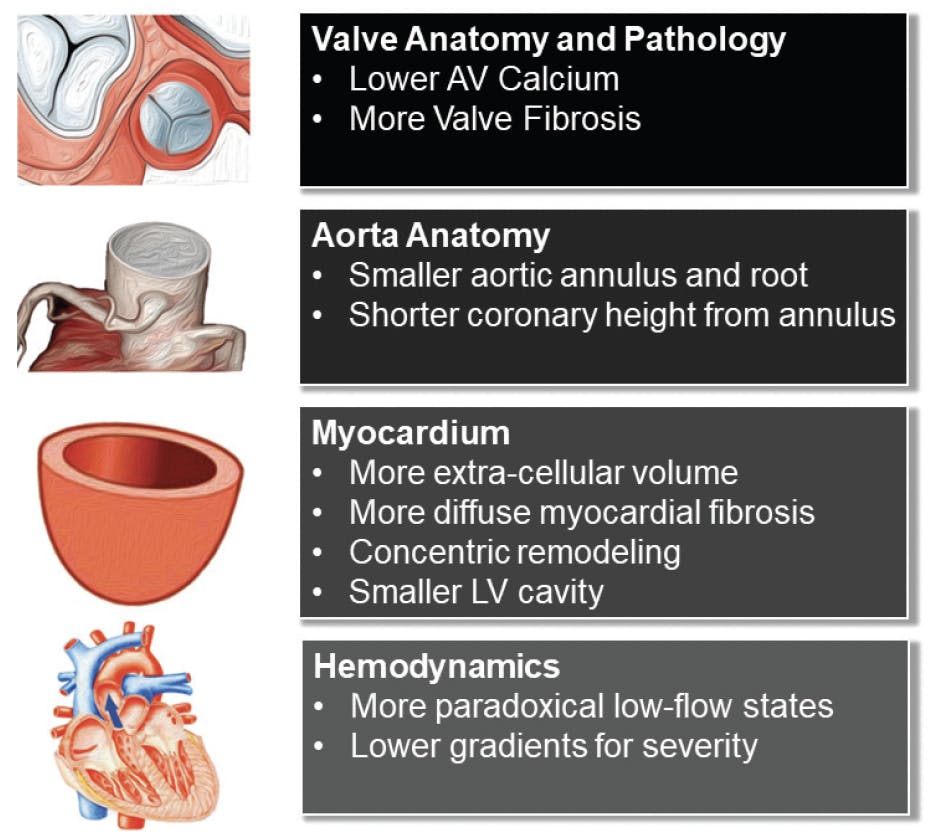
Figure 1. Unique characteristics of AS in women compared with men. LV, left ventricular.
Women also typically have smaller aortic annuli relative to their body surface area.10,14 In a study on AV replacement for severe AS, women constituted 80% of patients with an AV annulus diameter of ≤ 21 mm.14 Patients with smaller aortic annuli have altered valve hemodynamics, typically characterized by higher gradients and prosthesis-patient mismatch (PPM). This mismatch often results in ineffective regression of left ventricular hypertrophy. In addition, these patients face an increased risk of developing congestive heart failure, diminished exercise capacity and higher mortality rates. Additionally, small prosthesis sizes exacerbate PPM, leading to high gradients that elevate mechanical stress on the valve, potentially accelerating structural valve deterioration.17-21
Using echocardiography, women also have been found to have distinct hemodynamic profiles, which makes the diagnosis of severe AS more difficult. Notably, women have a higher incidence of paradoxical low-flow, low-gradient AS with a preserved ejection fraction.22 This subset of patients, characterized by smaller, hypertrophied left ventricles, presents with unique flow patterns that lead to discordant values of mean gradient and AV area, which can lead to an underdiagnosis of severe AS. Despite having smaller AV areas, larger indexed AV areas, and lower peak velocities and mean gradients than men, women typically have lower stroke volumes, adjusted for body size, compensated by a higher heart rate. The utilization of a unified cutoff for low stroke volume across both sexes in current guidelines fails to capture these sex-specific differences, thereby contributing to the disproportionately high prevalence of low-flow AS with preserved ejection fraction in women.
Sex also influences the pathophysiologic response of the left ventricular myocardium to AS. Studies show that women exhibit smaller left ventricular volume and mass than men but develop more pronounced concentric left ventricular hypertrophy and higher left ventricular ejection fraction. Women more commonly demonstrate normal or concentric remodeling.23 Notably, women with concentric hypertrophy have a 60% higher risk of all-cause or cardiovascular mortality.24 Women present with a larger extracellular volume fraction and similar late gadolinium enhancement levels as compared to men. Women developed more diffuse fibrosis than men independent of AS severity.25 This could serve as an indicator for earlier valve replacement in women; however, further studies are needed.
For these reasons, AS severity is more frequently underestimated in women, leading to delays in diagnosis. There is a critical need for sex-based diagnostic approaches in AS management.26
FACTORS THAT CONTRIBUTE TO UNDER-REFERRAL
The underdiagnosis and under-referral of AS in women stem from a complex interplay of clinical, diagnostic, and systemic influences. Women’s symptoms are often subtler and less typical, leading to later-stage diagnoses. The absence of sex-specific diagnostic standards further complicates the accurate assessment of AS severity in women, with societal and clinical predispositions favoring more conservative treatment paths. This cautious approach is intensified by the limited inclusion of women in clinical trials, which hampers the development of evidence-based recommendations tailored to their distinct needs. Historical observations from the late 2000s revealed that 69% of patients with severe AS were not referred for AV replacement, with women accounting for 75% of this demographic.27 The reluctance to refer was mainly owing to presentation with symptoms atypical of AS or the presence of other significant health conditions. By 2017, the percentage of women referred for AV replacement had only marginally improved to 37%.6
The advent of TAVR introduced a shift toward improving the sex-based disparity in referrals, yet notable challenges remain. Women now account for 36% to 54% of participants in pivotal TAVR trials, with higher percentages in high- and intermediate-risk groups.28-35 This persistent disparity gives emphasis to the urgent need for enhanced referral processes and the development of clinical protocols that guarantee equitable treatment for women with AS. Such initiatives are crucial to ensuring that women benefit equally from the latest advancements in valve replacement technologies, ultimately improving outcomes for this underserved population.
Underdiagnosis and referral bias in AS have dire consequences, affecting patient survival and quality of life by causing delays in AV replacement, including TAVR. Delays not only increase mortality but also lead to more frequent emergency department visits and hospitalizations, thereby inflating health care costs and significantly diminishing patient quality of life.36,37 The risk of sudden cardiac death in patients with asymptomatic severe AS is approximately 1% per year, escalating sharply upon symptom onset, underscoring the need for prompt detection and management.38,39 The economic implications are profound, with untreated severe AS leading to costly interventions and an increased demand on health care resources. Sex-based disparities also affect treatment outcomes, with women facing higher in-hospital mortality rates, more complications, and a more challenging recovery, highlighting the critical need for early diagnosis and referral to reduce adverse outcomes in AS, especially among high-risk groups.6,38
CLINICAL OUTCOMES WITH AORTIC VALVE REPLACEMENT
There is a differential impact of sex on outcomes between TAVR and surgical AV replacement. Women receiving surgical AV replacement exhibit higher in-hospital mortality rates than their male counterparts. Even after adjusting for risk factors, women tend to experience more vascular complications and require more blood transfusions. Additionally, women are more likely to be discharged to a nursing home or skilled nursing facility after AV replacement.7 In contrast, with TAVR, outcomes such as 30-day device success, early safety outcomes, permanent pacemaker implantation rates, paravalvular leak, bleeding, and 1-year outcomes did not significantly differ between sexes. However, meta-analyses reveal that women, who make up 48.6% of TAVR recipients, experience higher rates of vascular complications, bleeding events, and strokes. Despite these challenges, they show lower instances of significant moderate to severe paravalvular aortic regurgitation. These findings underscore the need for further research and extended follow-up to fully understand these trends. Remarkably, women displayed a survival advantage over men in TAVR when adjustments were made for baseline demographics, clinical factors, and valve type. Despite the higher rates of complications, there was no difference in mortality between sexes.40
The variances in outcomes observed between the sexes after valve replacement can be partially attributed to the differences in left ventricular reverse remodeling. Women tend to show more concentric remodeling and hypertrophy, accompanied by less myocardial fibrosis and superior systolic function compared to men. After TAVR, women exhibit more rapid and pronounced regression in left ventricular mass and dimensions.41 Additionally, they experience more significant reductions in left ventricular mass index. In conclusion, although women fare worse than men in surgical AV replacement, they fare equally well with TAVR.
CONCLUSION
Despite a similar prevalence of AS in men and women, women face distinct challenges, including atypical clinical presentations, diagnostic complexities, under-referral, and a higher risk of adverse outcomes. These challenges are compounded by systemic biases and a lack of representation in clinical research, leading to a one-size-fits-all treatment approach that fails to account for the unique physiologic and epidemiologic characteristics of women with AS. Addressing these issues through specific strategies such as recognition of symptom and anatomic differences, establishing sex-specific diagnostic thresholds, educating to overcome gender bias, adjusting disease severity perception, and increasing female enrollment in clinical trials is crucial for the tailored, effective management of aortic stenosis in women (Figure 2).
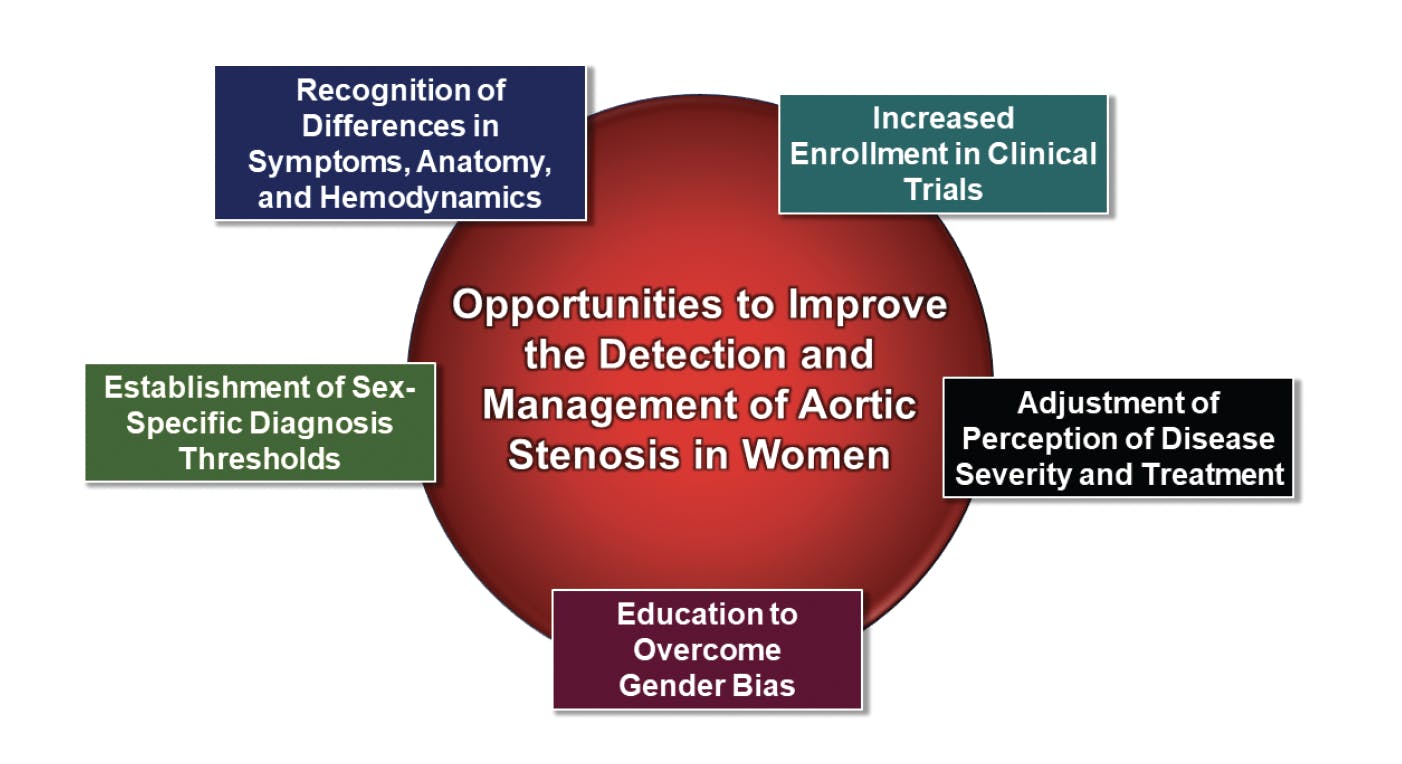
Figure 2. Opportunities to improve diagnosis and referral patterns in women with AS.
Closing the sex-based gap in AS care is not just a matter of clinical urgency; it is a critical step toward achieving equity in health care outcomes and enhancing the quality of life for all patients with this debilitating condition.
1. Osnabrugge RL, Mylotte D, Head SJ, et al. Aortic stenosis in the elderly: disease prevalence and number of candidates for transcatheter aortic valve replacement: a meta-analysis and modeling study. J Am Coll Cardiol. 2013;62:1002-1012. doi: 10.1016/j.jacc.2013.05.015
2. Ito S, Miranda WR, Nkomo VT, et al. Sex differences in LV remodeling and hemodynamics in aortic stenosis: sex-specific criteria for severe stenosis? JACC Cardiovasc Imaging. 2022;15:1175-1189. doi: 10.1016/j.jcmg.2022.02.007
3. Kuneman JH, Singh GK, Milhorini Pio S, et al. Sex differences in left ventricular remodelling in patients with severe aortic valve stenosis. Eur Heart J Cardiovasc Imaging. 2022;23:781-789. doi: 10.1093/ehjci/jeab174
4. Hervault M, Clavel MA. Sex-related differences in calcific aortic valve stenosis: pathophysiology, epidemiology, etiology, diagnosis, presentation, and outcomes. Struct Heart. 2018;2:102-113.
5. Elbaz-Greener G, Rahamim E, Abu Ghosh Z, et al. Sex difference and outcome trends following surgical aortic valve replacement from the National Inpatient Sample (NIS) Database. J Cardiovasc Surg (Torino). Published February 9, 2024. doi: 10.23736/S0021-9509.23.12729-7
6. Chaker Z, Badhwar V, Alqahtani F, et al. Sex differences in the utilization and outcomes of surgical aortic valve replacement for severe aortic stenosis. J Am Heart Assoc. 2017;6:e006370. doi: 10.1161/JAHA.117.006370
7. Fuchs C, Mascherbauer J, Rosenhek R, et al. Gender differences in clinical presentation and surgical outcome of aortic stenosis. Heart. 2010;96:539-545. doi: 10.1136/hrt.2009.186650
8. Tribouilloy C, Bohbot Y, Rusinaru D, et al. Excess mortality and undertreatment of women with severe aortic stenosis. J Am Heart Assoc. 2021;10:e018816. doi: 10.1161/JAHA.120.018816
9. Nau DP, Ellis JJ, Kline-Rogers EM, et al. Gender and perceived severity of cardiac disease: evidence that women are “tougher.” Am J Med. 2005;118:1256-1261. doi: 10.1016/j.amjmed.2005.08.006
10. Iribarren AC, AlBadri A, Wei J, et al. Sex differences in aortic stenosis: identification of knowledge gaps for sex-specific personalized medicine. Am Heart J Plus. 2022;21:100197. doi: 10.1016/j.ahjo.2022.100197
11. Szerlip M, Gualano S, Holper E, et al. Sex-specific outcomes of transcatheter aortic valve replacement with the SAPIEN 3 valve: insights from the PARTNER II S3 high-risk and intermediate-risk cohorts. JACC Cardiovasc Interv. 2018;11:13-20. doi: 10.1016/j.jcin.2017.09.035
12. Chandrasekhar J, Dangas G, Yu J, et al. Sex-based differences in outcomes with transcatheter aortic valve therapy: TVT registry from 2011 to 2014. J Am Coll Cardiol. 2016;68:2733-2744. doi: 10.1016/j.jacc.2016.10.041
13. Williams M, Kodali SK, Hahn RT, et al. Sex-related differences in outcomes after transcatheter or surgical aortic valve replacement in patients with severe aortic stenosis: Insights from the PARTNER Trial (Placement of Aortic Transcatheter Valve). J Am Coll Cardiol. 2014;63(15):1522-1528. doi:10.1016/j.jacc.2014.01.036
14. Jander N, Gohlke-Bärwolf C, Bahlmann E, et al. Indexing aortic valve area by body surface area increases the prevalence of severe aortic stenosis. Heart. 2014;100:28-33. doi: 10.1136/heartjnl-2013-304443
15. Aggarwal SR, Clavel MA, Messika-Zeitoun D, et al. Sex differences in aortic valve calcification measured by multidetector computed tomography in aortic stenosis. Circ Cardiovasc Imaging. 2013;6:40-47. doi: 10.1161/CIRCIMAGING.112.980052
16. Simard L, Côté N, Dagenais F, et al. Sex-related discordance between aortic valve calcification and hemodynamic severity of aortic stenosis: is valvular fibrosis the explanation? Circ Res. 2017;120:681-691. doi: 10.1161/CIRCRESAHA.116.309306
17. Leone PP, Regazzoli D, Pagnesi M, et al. Predictors and clinical impact of prosthesis-patient mismatch after self-expandable TAVR in small annuli. JACC Cardiovasc Interv. 2021;14:1218-1228. doi: 10.1016/j.jcin.2021.03.060
18. Tasca G, Brunelli F, Cirillo M, et al. Impact of valve prosthesis-patient mismatch on left ventricular mass regression following aortic valve replacement. Ann Thorac Surg. 2005;79:505-510. doi: 10.1016/j.athoracsur.2004.04.042
19. Herrmann HC, Daneshvar SA, Fonarow GC, et al. Prosthesis-patient mismatch in patients undergoing transcatheter aortic valve replacement: from the STS/ACC TVT registry. J Am Coll Cardiol. 2018;72:2701-2711. doi: 10.1016/j.jacc.2018.09.001
20. Bleiziffer S, Eichinger WB, Hettich I, et al. Impact of patient-prosthesis mismatch on exercise capacity in patients after bioprosthetic aortic valve replacement. Heart. 2008;94:637-641. doi: 10.1136/hrt.2007.116673
21. Rodriguez-Gabella T, Voisine P, Puri R, et al. Aortic bioprosthetic valve durability: incidence, mechanisms, predictors, and management of surgical and transcatheter valve degeneration. J Am Coll Cardiol. 2017;70:1013-1028. doi: 10.1016/j.jacc.2017.07.715
22. Hachicha Z, Dumesnil JG, Bogaty P, et al. Paradoxical low-flow, low-gradient severe aortic stenosis despite preserved ejection fraction is associated with higher afterload and reduced survival. Circulation. 2007;115:2856-2864. doi: 10.1161/CIRCULATIONAHA.106.668681
23. Kostkiewicz M, Tracz W, Olszowska M, et al. Left ventricular geometry and function in patients with aortic stenosis: gender differences. Int J Cardiol. 1999;71:57-61. doi: 10.1016/s0167-5273(99)00114-x
24. Capoulade R, Clavel MA, Le Ven F, et al. Impact of left ventricular remodelling patterns on outcomes in patients with aortic stenosis. Eur Heart J Cardiovasc Imaging. 2017;18:1378-1387. doi: 10.1093/ehjci/jew288
25. Tastet L, Kwiecinski J, Pibarot P, et al. Sex-related differences in the extent of myocardial fibrosis in patients with aortic valve stenosis. JACC Cardiovasc Imaging. 2020;13:699-711. doi: 10.1016/j.jcmg.2019.06.014
26. Guzzetti E, Poulin A, Annabi MS, et al. Transvalvular flow, sex, and survival after valve replacement surgery in patients with severe aortic stenosis. J Am Coll Cardiol. 2020;75:1897-1909. doi: 10.1016/j.jacc.2020.02.065
27. Freed BH, Sugeng L, Furlong K, et al. Reasons for nonadherence to guidelines for aortic valve replacement in patients with severe aortic stenosis and potential solutions. Am J Cardiol. 2010;105:1339-1342. doi: 10.1016/j.amjcard.2009.12.056
28. Leon MB, Smith CR, Mack M, et al. Transcatheter aortic-valve implantation for aortic stenosis in patients who cannot undergo surgery. N Engl J Med. 2010;363:1597-1607. doi: 10.1056/NEJMoa1008232
29. Smith CR, Leon MB, Mack MJ, et al. Transcatheter versus surgical aortic-valve replacement in high-risk patients. N Engl J Med. 2011;364:2187-2198. doi: 10.1056/NEJMoa1103510
30. Adams DH, Popma JJ, Reardon MJ, et al. Transcatheter aortic-valve replacement with a self-expanding prosthesis. N Engl J Med. 2014;370:1790-1798. doi: 10.1056/NEJMoa1400590
31. Leon MB, Smith CR, Mack MJ, et al. Transcatheter or surgical aortic-valve replacement in intermediate-risk patients. N Engl J Med. 2016;374:1609-1620. doi: 10.1056/NEJMoa1514616
32. Reardon MJ, Van Mieghem NM, Popma JJ, et al. Surgical or transcatheter aortic-valve replacement in intermediate-risk patients. N Engl J Med. 2017;376:1321-1331. doi: 10.1056/NEJMoa1700456
33. Mack MJ, Leon MB, Thourani VH, et al. Transcatheter aortic-valve replacement with a balloon-expandable valve in low-risk patients. N Engl J Med. 2019;380:1695-1705. doi: 10.1056/NEJMoa1814052
34. Thyregod HG, Steinbrüchel DA, Ihlemann N, et al. Transcatheter versus surgical aortic valve replacement in patients with severe aortic valve stenosis: 1-year results from the All-Comers NOTION Randomized Clinical Trial. J Am Coll Cardiol. 2015;65:2184-2194. doi: 10.1016/j.jacc.2015.03.014
35. Popma JJ, Deeb GM, Yakubov SJ, et al. Transcatheter aortic-valve replacement with a self-expanding valve in low-risk patients. N Engl J Med. 2019;380:1706-1715. doi: 10.1016/j.jacc.2015.03.014
36. Albassam O, Henning KA, Qiu F, et al. Increasing wait-time mortality for severe aortic stenosis: a population-level study of the transition in practice from surgical aortic valve replacement to transcatheter aortic valve replacement. Circ Cardiovasc Interv. 2020;13:e009297. doi: 10.1161/CIRCINTERVENTIONS.120.009297
37. Galper BZ. The TAVR DELAY Registry: rates of early referral to a structural heart team in a large integrated healthcare system. Cath Lab Digest. 2023. Available at https://www.hmpgloballearningnetwork.com/site/cathlab/meeting-update/tavr-delay-registry-rates-early-referral-structural-heart-team-large. Accessed February 29, 2024.
38. Everett RJ, Clavel MA, Pibarot P, et al. Timing of intervention in aortic stenosis: a review of current and future strategies. Heart. 2018;104:2067-2076. doi: 10.1136/heartjnl-2017-312304
39. Perera S, Wijesinghe N, Ly E, et al. Outcomes of patients with untreated severe aortic stenosis in real-world practice. N Z Med J. 2011;124:40-48.
40. O’Connor SA. Revisiting sex equality with TAVR: a colloborative, patient-level meta-analysis of 11,310 patients. J Am Coll Cardiol. 2015;66:221-228. doi: 10.1016/j.jacc.2015.05.024
41. Chen S. Women had favorable reverse left ventricle remodeling after TAVR. Eur J Clin Invest. 2020;50:e13183. doi: 10.1111/eci.13183
Advertisement
Advertisement