Advertisement
Advertisement
July/August 2024
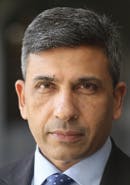
An Interview With Faisal Sharif, MD, PhD, FESC, FACC, FRCPI
Prof. Sharif shares what “translational cardiovascular medicine” looks like in practice, his work with CURAM and BioInnovate, insights from running an RDN center of excellence, and more.
Translational cardiovascular medicine is a key area of interest for you. What drew you to the translational approach, and what are some examples of this in practice in your own research? In your clinical work?
As an interventional cardiologist, I have a keen interest in cardiovascular medical devices. Over the last few decades, we have seen a significant shift from cardiac surgery to minimally invasive cardiac procedures and witnessed the introduction of multiple novel medical devices for cardiovascular diseases. The ability to assess novel concepts and designs for unmet cardiovascular needs is very exciting, and translational medicine allows me to do this very effectively. One example includes the early feasibility, first-in-human studies for novel pulmonary artery pressure sensor technology for advanced heart failure (Cordella, Endotronix). Similarly, we recently used inferior vena cava sensor technology for heart failure patients in FIRE-1.
Among various roles related to research and clinical trials, you’re a Principal Investigator with the CURAM Research Center for Medical Devices. What aspect of your work here are you most excited about currently?
CURAM is a Science Foundation Ireland–funded, world-leading center for medical device innovation. This allows academic cardiologists (among others) to work with industry and CURAM to brainstorm unmet needs, develop collaborative research projects, and build appropriate research teams. CURAM enhances academic research in cardiovascular medicine through mentoring of PhD students and postdocs and leads to new designs and concepts, as well as new generations of intellectual property. If these efforts are successful, it may eventually lead to a new start-up concept for commercialization. Currently, I am working on renal artery denervation (RDN) technology to improve procedural- related outcomes.
Your institution, University Hospital Galway, is a center of excellence in RDN, and you recently published an article on RDN referral pathways.1 As RDN acceptance grows, what are some essentials new adopters should know when setting up and running an RDN practice?
We started the RDN program at Galway University Hospital in 2011. The first thing we did was set up a multidisciplinary hypertension clinic to appropriately select the right patients for this therapy. Ruling out secondary causes, ensuring pharmacotherapy adherence and tolerance, and setting patient expectations are key to the success of an RDN program. The second essential component is setting up the procedural protocol to ensure safe and effective treatment, along with development of standard operating procedures. Finally, I believe it is crucial that these patients are followed-up postprocedure to ensure that all metrics are recorded. These steps will lead to better patient outcomes and further enhancement of device- and procedure-related outcomes.
In another publication, you and colleagues considered the future of RDN trials in an analysis of major adverse cardiovascular events (MACE) versus blood pressure (BP) as drivers of outcome data, concluding that BP is an appropriate surrogate endpoint but long-term information through registries is needed.2 What else would you like to see in the next phases of RDN trials?
The overall goal of RDN is to reduce sympathetic activity. High or abnormal sympathetic activity levels is not only associated with propagation of hypertension but also with other metabolic disorders, such as diabetes mellitus, obstructive sleep apnea syndrome, and inflammatory diseases. The next phase of devices will aim to further reduce sympathetic activity. We need to see a predictable and consistent drop in blood pressure and improve nonresponder rates after RDN. The next generation of medical devices would test these concepts in clinical trials.
You’ve led the charge in your practice for many transformative innovations, including transcatheter aortic valve placement, RDN, and optical coherence tomography. What innovations on the horizon do you predict will have a similar impact on the field?
I think the future will be about accomplishing precision medicine for each individual patient. This can be realized through wider adoption and integration of multimodal imaging and utilization of data analytics in clinical medicine. We have already seen superior transcatheter aortic valve implantation (TAVI) procedural outcomes with use of CT scans and novel postprocessing software for TAVI procedures. Using this novel software gives us accurate guidance on the best angle and ideal depth for aortic valve implantation. This is one example of patient-specific precise medicine.
We are seeing more options for remote monitoring and sensing technology for patients with heart failure, something you explore frequently. How have you seen this technology impact clinical workflows and patient satisfaction, and where are the future research needs here?
Remote monitoring of patients with heart failure via pulmonary pressure sensors is the only technology that has been shown to reduce both heart failure–related mortality and repeat hospitalizations. We have performed phase 1, 2, and 3 clinical trials with this technology, and results have been astonishing. We noted a 97% reduction in heart failure–related hospitalizations, high levels of patient engagement with the heart failure team, proactive management of heart failure treatment, and significantly higher implementation of guideline-directed heart failure treatment. This program very clearly highlights superior outcomes with patient empowerment.
Can you tell us about the purpose and structure of BioInnovate, for which you are Non-Executive Director? What value does this fellowship add to one’s practice?
BioInnovate Ireland is a national health technology innovation program based at the University of Galway. The program is the only global affiliate of the Stanford Biodesign methodology and leverages this approach to provide a talented multidisciplinary pool of innovators with the opportunity to develop novel medical innovations and shape the future of health care globally. It applies needs-led innovation and entrepreneurship to real-world health care problems. This unique approach allows the identification and validation of unmet clinical needs with an associated market opportunity and facilitates the development and commercial derisking of emerging technologies in the medtech sector.
The goal of the program is to educate BioInnovate Ireland fellows and industry trainees, with the goals of developing the next generation of medtech leaders, embedding design capabilities in Irish companies, and driving the creation of new Irish start-ups. The program is supported by Enterprise Ireland.
When surveying the current landscape of cardiovascular clinical trials, whether globally or specifically in Ireland, where are the biggest gaps?
There are a number of clinical trials assessing novel drug-coated balloons as a treatment option for coronary artery disease. Novel innovative devices are being developed for aortic, mitral, and tricuspid repair and replacement. Heart failure monitoring and treatment devices are also being evaluated in clinical trials. There is a need to incorporate more novel RNA interference-based medications to be tested for dyslipidemias and chronic inflammatory conditions. Pulmonary hypertension and diastolic heart failure are other areas that need more innovation and technologies to improve outcomes.
How do you stay grounded amid a packed schedule of clinical obligations, academic research/innovation projects, and teaching duties? Do you have any favorite pastimes?
I think this is an extremely important question. When you run a busy clinical service and highly demanding academic career, the responsibility is significant. The academic part of the job brings many additional responsibilities: generating grant income to sustain essential research posts, time for research students and PhD/postdoc mentoring, meeting funding authorities’ deadlines, publishing and presenting in international/national meetings, etc. It is very important to bring oneself back to family and be sure to spend quality time together. It is of course important to have some “me” time for relaxing, and I enjoy outdoor activities.
1. Leahy N, Wagener M, Shahzad S, et al. Exploring potential referral pathways for renal artery denervation and developing a centre of excellence in Ireland. SN Compr Clin Med. 2024;6:32. doi: 10.1007/s42399-024-01647-9
2. Haider SA, Wagener M, Iqbal T, et al. Does renal denervation require cardiovascular outcome-driven data? Hypertens Res. Published online March 11, 2024. doi: 10.1038/s41440-024-01598-7
Advertisement
Advertisement
Interested in reading more interviews?
To read more interviews with thought leaders in the interventional cardiology field, check out our Profiles & Perspectives hub.
Read More