Advertisement
Advertisement
September/October 2023 Supplement
Sponsored by Abbott
Therapeutic Benefits of TEER With the MitraClip™ Device
Setting the bar for transcatheter mitral valve repair with unparalleled outcomes.
The continual design evolution over four generations of MitraClip™ (Abbott) products has established the foundation of transcatheter edge-to-edge repair (TEER) therapy and set a bar to which other emerging repair devices and methodologies are compared. MitraClip devices are intentionally designed to repair a regurgitant valve by restoring leaflet coaptation while also providing a second important benefit of applying a stabilizing effect on the valve annulus. Together, these mechanisms reduce mitral regurgitation (MR) while favorably improving the long-term function of the mitral valve (MV) and left ventricle. The design features of MitraClip TEER systems have evolved to improve the amount of MR reduction achieved (Figure 1) and further enhanced the effectiveness of the beneficial mechanisms as described in this article.
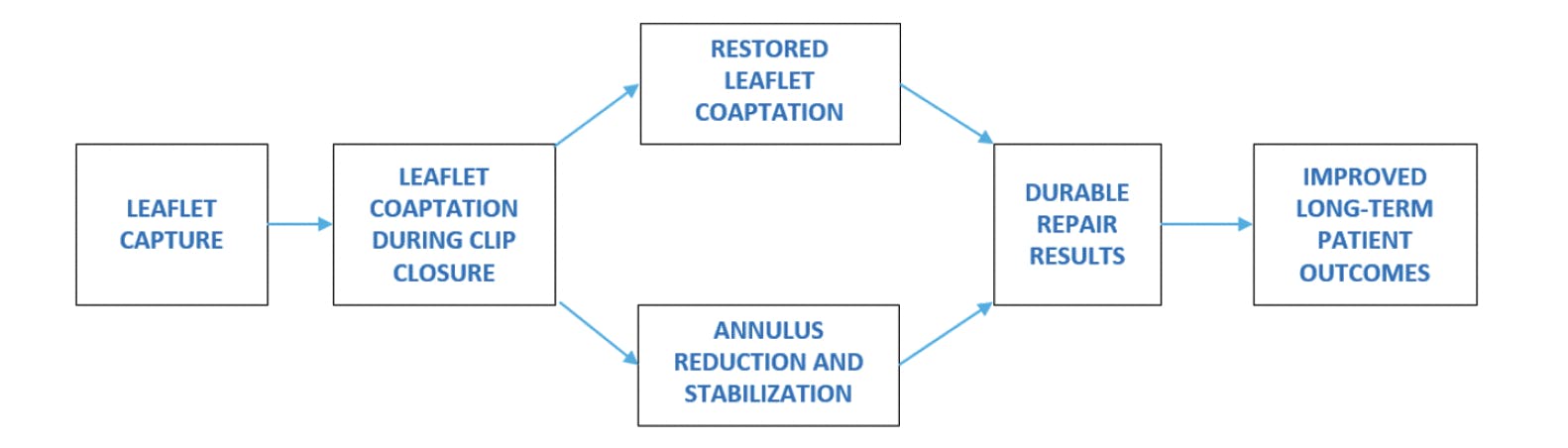
Figure 1. Therapeutic benefits of MitraClip™ TEER.
LEAFLET CAPTURE AND RESTORED COAPTATION
MitraClip devices enable the user to restore leaflet coaptation during cardiac systole. With each generation, MitraClip devices have increased the amount of leaflet that can be captured and coapted through a wider grasping angle and improved gripper (NT), longer Clip arms (MitraClip XTR), independent leaflet capture functionality (G4), and wider Clip arms (G4 NTW and XTW Clip sizes). Importantly, even with the introduction of new larger Clip sizes, smaller Clip sizes continue to be used at significant rates. In all device generations, the gripper design secures leaflets deep inside the Clip arms with rows of frictional elements distributed along the full length of the gripper. As shown in Figure 2, the entire length of leaflet inserted in a G4 XTW Clip during leaflet grasping (at an arm angle of 120°) is maintained within the Clip arm during the closure of a Clip. When measuring leaflet insertion with simulated leaflets made of a range of materials (such as foam and silicone) and of different thicknesses (up to approximately 3-mm thick), leaflet insertion during grasping was found to be the same as after closure. The position of the gripper frictional element rows (along the entire gripper length and particularly the innermost rows) secure leaflets in place and prevent any slippage or loss of leaflet insertion during Clip closure. This design ensures that the full amount of leaflet inserted is retained, which maximizes the restored coaptation after the Clip is closed onto leaflets.
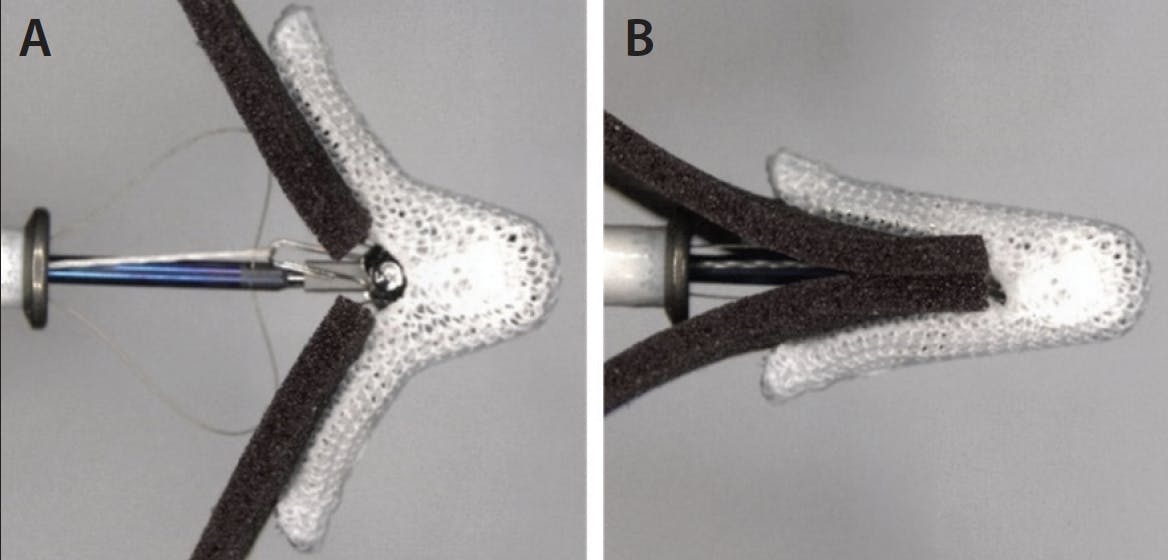
Figure 2. Leaflet insertion and coaptation with simulated (foam) leaflets after grasping (A) and Clip closure (B).
ANNULUS REDUCTION AND STABILIZATION
In chronic MV disease, the MV annulus tends to enlarge and flatten as heart failure (HF) progresses to a worsened state.1,2 This pathologic change to the valve anatomy is interrupted and reversed by the implantation of MitraClip device(s), which restores long-term coaptation and provides an annulus cinching effect. This annulus cinching effect of MitraClip device implantation was first described in 2012 by Feldman and St. Goar based upon observations in the EVEREST trial3 and has since been further described in subsequent studies (Table 1).4-14 This annulus remodeling effect is more prominently observed in secondary MR (SMR) disease; however, some studies listed in Table 1 have also demonstrated annulus reduction in primary MR (PMR), particularly when PMR sample size was large or when the XTR device was evaluated.4,5 The study time frames encompass large sets of patients and include follow-up out to 1 year, thus indicating that the effects of annular reduction and related MR reduction are maintained over time, and no studies reported any adverse trends in mean gradient. As noted in several studies (Table 1), annulus changes were observed directly after Clip implantation including reduction in valve annulus area, reduction in the anterior-posterior (AP) diameter, increase in ellipticity, and partial restoration of the saddle-shape of the valve annulus. These observations illustrate the sustained annuloplasty effect of the MitraClip device and highlight the importance of implant material choice. Unlike more flexible materials like nitinol and polymeric sutures, the MitraClip device’s unique locking mechanism and Elgiloy® (Elgiloy Specialty Metals) arm design stabilizes the annulus and results in restored leaflet-to-leaflet coaptation throughout the cardiac cycle.15,16
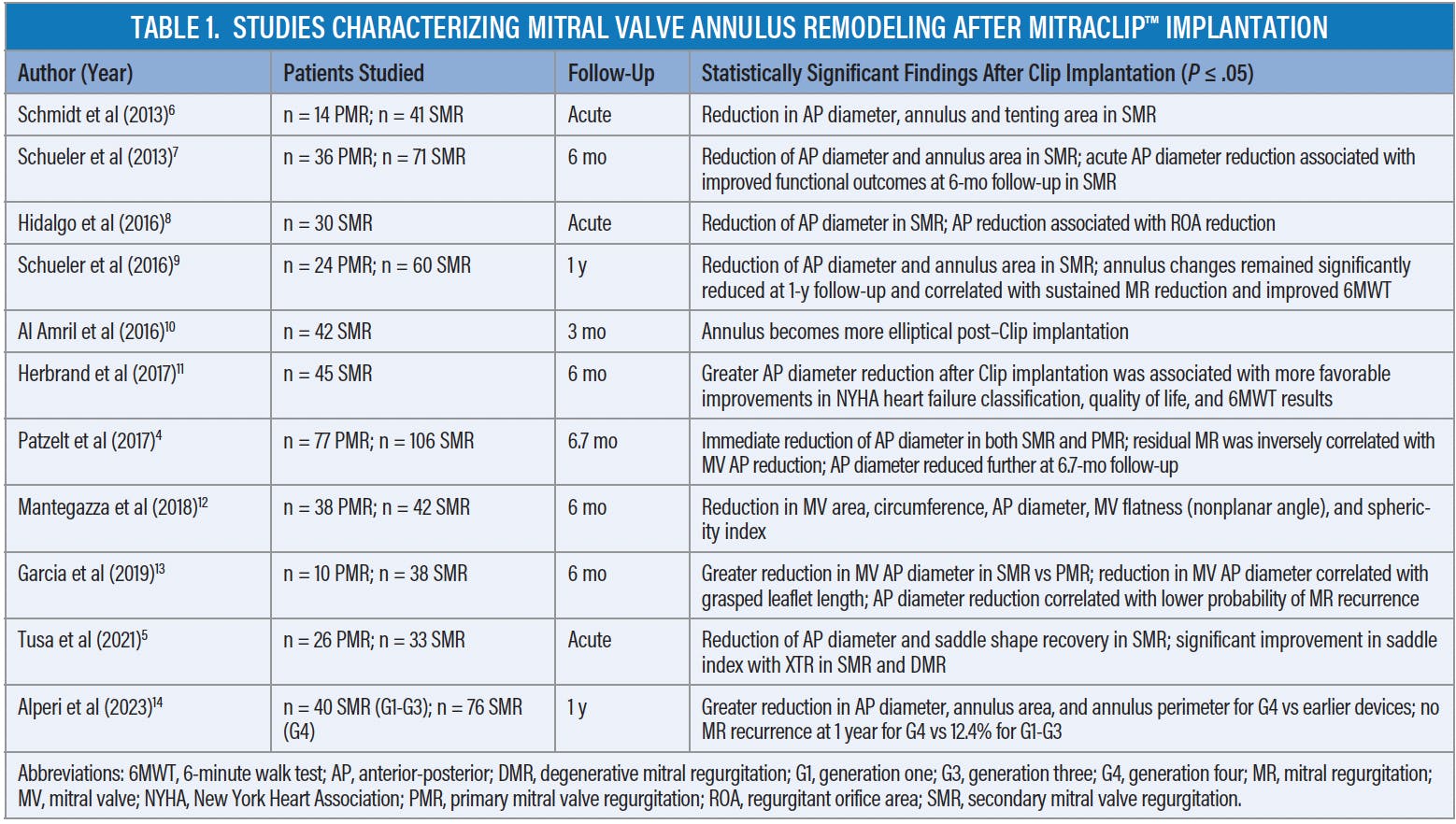
As shown in Figure 3,4,15 dynamic annular measurements obtained throughout the entire cardiac cycle indicate that Clip implantation provides constant support and stability to the annulus during both systole (when the valve seals during ventricular contraction) and diastole (when the valve dynamically enlarges to support filling of the ventricle).15 The amount of AP reduction achieved during a MitraClip procedure has been found to correlate with the amount of MR reduction achieved during TEER therapy, which supports the importance of this annulus remodeling effect on cardiac hemodynamics.4,8,11 Studies listed in Table 1 also concluded that AP reduction correlates with improved New York Heart Association (NYHA) functional class and 6-minute walk tests scores, which provide measures of HF and quality of life.9,11 Finally, studies incorporating the recently available longer (MitraClip XTR) and wider arms (MitraClip G4) have indicated an increased remodeling effect on the annulus. This finding suggests that the longer and wider stable Clip arm designs in the MitraClip G4 product support the annulus to a greater extent than the smaller first-generation Clip size.5,14 These studies also support that the MitraClip G4 system allows users to select among four Clip sizes to better tailor and optimize the overall repair by achieving better long-term MR reduction and greater annulus remodeling benefits while maintaining acceptable MV gradients that remain stable over time.14,17
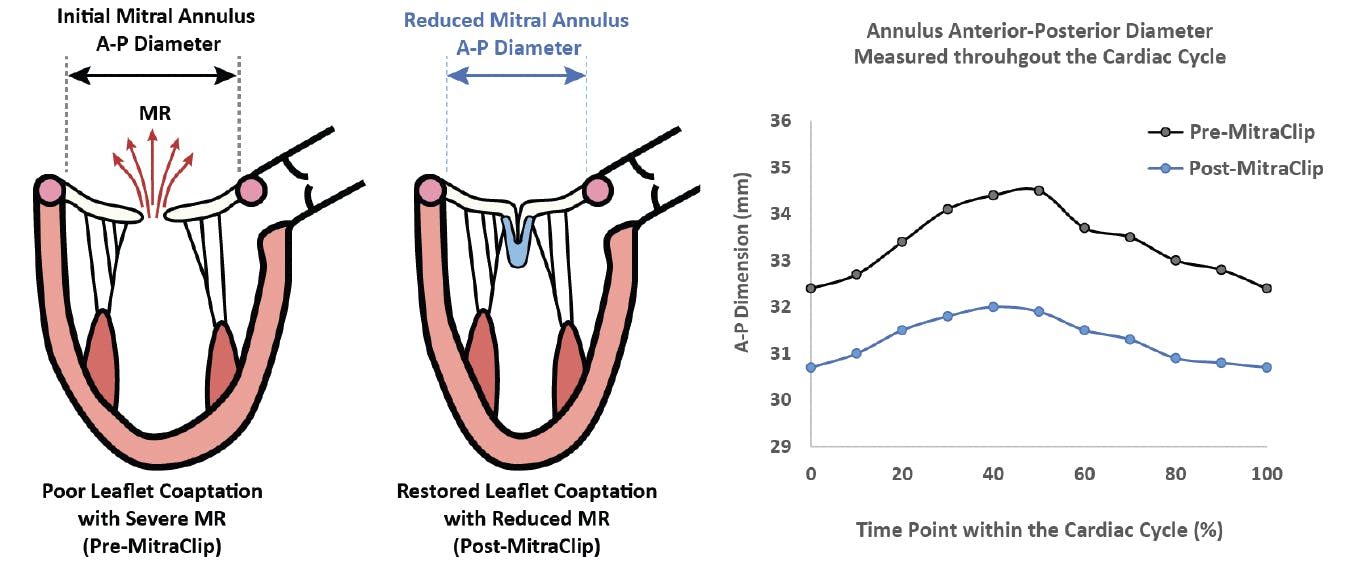
Figure 3. Illustration of MV AP diameter reduction due to MitraClip™ implantation (left) alongside AP diameter difference plotted throughout the cardiac cycle (right). Note that the black line indicates AP diameter prior to Clip implantation and the blue line indicates AP diameter after Clip implantation.
VENTRICULAR REMODELING
In secondary MV disease, the left ventricle becomes progressively more spherical and enlarges as HF progresses.18 As demonstrated in the COAPT™ RCT, patients with severe SMR treated with MitraClip and guideline-directed medical therapy (GDMT; device group) had significant reductions in left ventricular end-diastolic volume (LVEDV) and left ventricular end-systolic volume (LVESV) over 2 years when compared to patients in the control group treated with GDMT alone.19 These data are plotted in Figure 4,19 indicating that Clip implantation can produce immediate reduction in LVEDV and significantly slows down the progression of ventricular enlargement at time points out to 2 years. As indicated by the difference between the curves, the benefit of MitraClip device implantation over the control group increases over time.
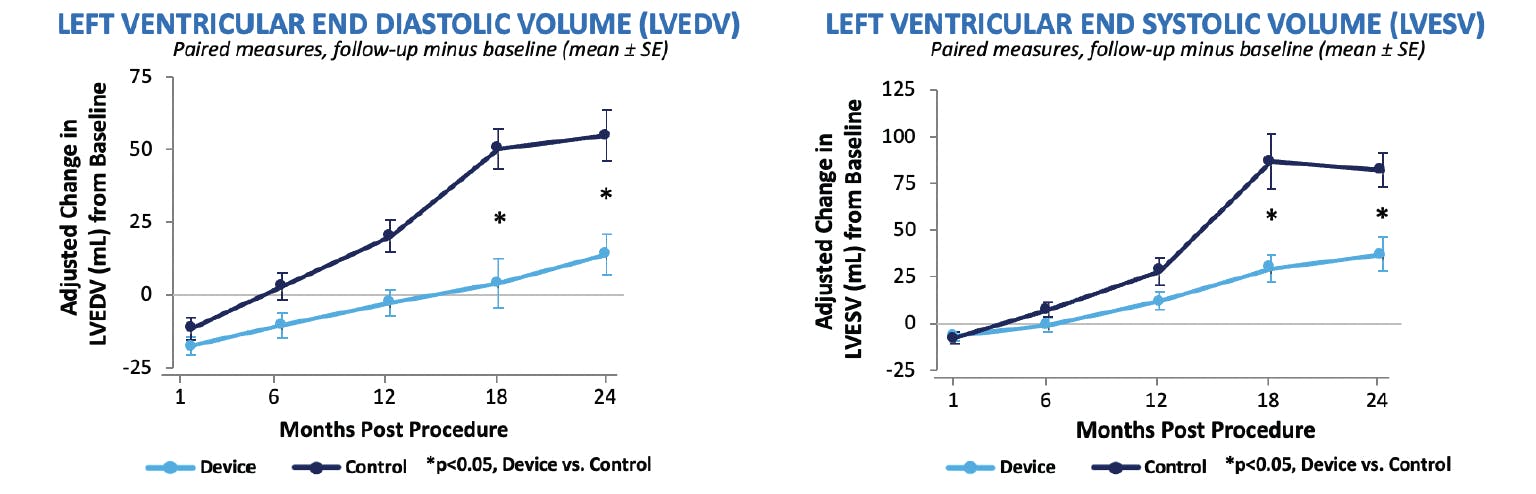
Figure 4. Two-year LVEDV and LVESV data from the COAPT study comparing MitraClip™ plus GDMT (device group) and GDMT alone (control group).19
DURABLE MR REDUCTION AND LONG-TERM QUALITY-OF-LIFE IMPROVEMENT
The most profound difference made by the MitraClip therapy is the impact it has had on peoples’ lives. Since the first Clip was implanted some 20 years ago, more than 200,000 patients and their families have benefited from the MitraClip TEER therapy in real-world clinical practice. As demonstrated in recent larger contemporary studies, EXPAND and EXPAND G4, patients treated with MitraClip devices implanted feel better—experiencing significant improvements in NYHA functional class and quality of life (as measured per Kansas City Cardiomyopathy Questionnaire [KCCQ] score) with these improvements being maintained through 30 days and 1 year after MitraClip implantation. EXPAND reported NYHA functional class I or II in 80.1% at 30 days and 80.3 % at 1 year, and KCCQ scores of 67.0 at 30 days and 70.2 at 1 year.20 Even at 5 years, MR reduction is sustained across multiple studies in PMR and SMR populations with previous generation devices (Figure 5),16,21,22 and as reported in the COAPT trial, symptomatic status per NYHA class was improved throughout follow-up and consistent reductions in the risks of death and hospitalization for HF were observed.17 Throughout all MitraClip device generations and all the clinical evidence, the outcomes are abundantly clear: patients feel significantly better in the days and years after treatment with MitraClip TEER therapy.23
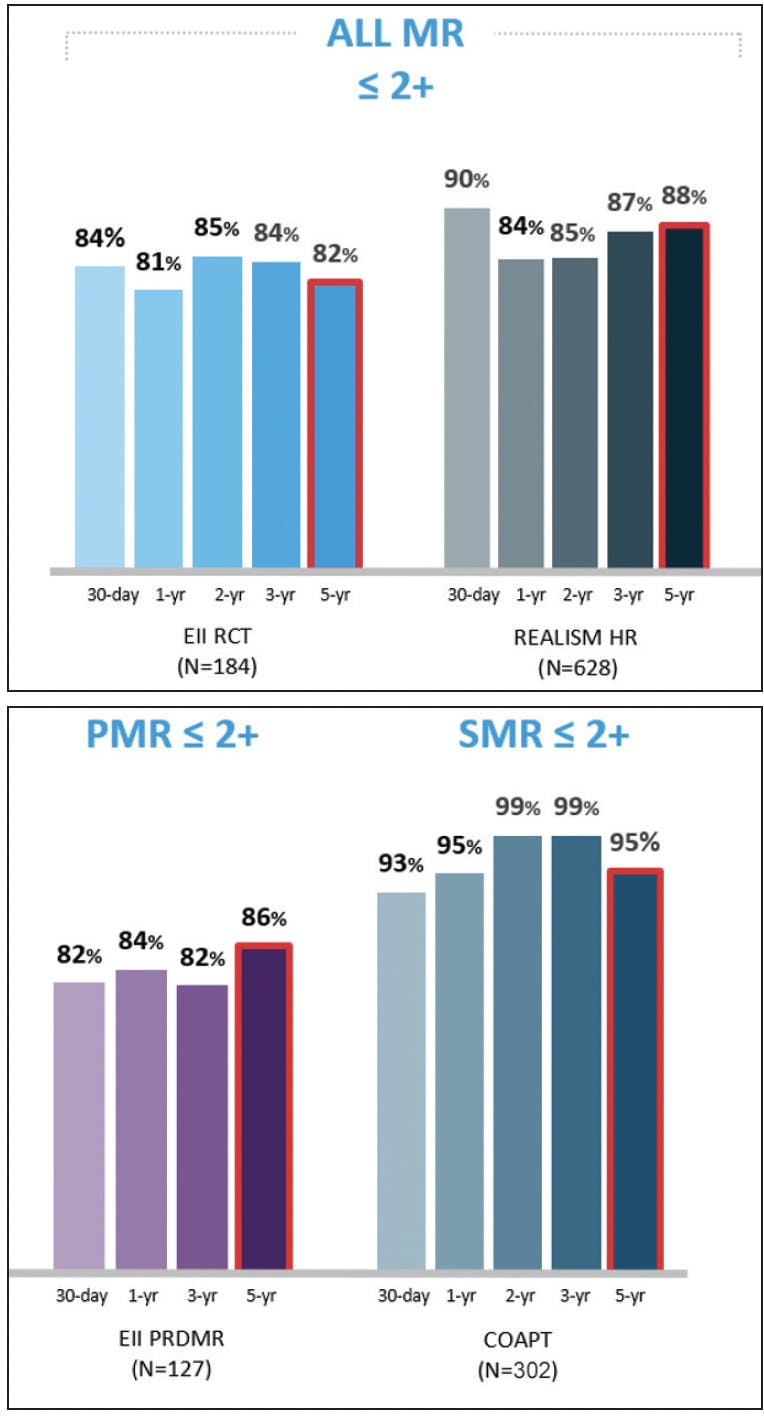
Figure 5. Percentage of patients with MR of ≤ 2+ at follow-up time points out to 5 years after MitraClip™ device implantation for all MR, primary MR, and secondary MR disease states.16,21,22
1. Antoine C, Mantovani F, Benfari G, et al. Pathophysiology of degenerative mitral regurgitation: new 3-dimensional imaging insights. Circ Cardiovasc Imaging. 2018;11:e005971. doi: 10.1161/CIRCIMAGING.116.005971
2. Watanabe N, Ogasawara Y, Yamaura Y, et al. Mitral annulus flattens in ischemic mitral regurgitation: geometric differences between inferior and anterior myocardial infarction: a real-time 3-dimensional echocardiographic study. Circulation. 2005;112(9 Suppl):I458-I462. doi: 10.1161/CIRCULATIONAHA.104.524595
3. St Goar F. Development of percutaneous edge-to-edge repair: The MitraClip Story. In: Feldman T, St Goar F, eds. Percutaneous Mitral Leaflet Repair. CRC Press; 2012:31-35.
4. Patzelt J, Zhang Y, Magunia H, et al. Improved mitral valve coaptation and reduced mitral valve annular size after percutaneous mitral valve repair (PMVR) using the MitraClip system. Eur Heart J Cardiovasc Imaging. 2018;19:785-791. doi: 10.1093/ehjci/jex173
5. Tusa MB, Barletta M, Popolo Rubbio A, et al. Acute changes in mitral valve geometry after percutaneous valve repair with MitraClip XTR by three-dimensional echocardiography. Echocardiography. 2021;38:1913-1923. doi: 10.1111/echo.15238
6. Schmidt FP, von Bardeleben RS, Nikolai P, et al. Immediate effect of the MitraClip procedure on mitral ring geometry in primary and secondary mitral regurgitation. Eur Heart J Cardiovasc Imaging. 2013;14:851-857. doi: 10.1093/ehjci/jes293
7. Schueler R, Momcilovic D, Weber M, et al. Acute changes of mitral valve geometry during interventional edge-to-edge repair with the MitraClip system are associated with midterm outcomes in patients with functional valve disease: preliminary results from a prospective single-center study. Circ Cardiovasc Interv. 2014;7:390-399. doi: 10.1161/CIRCINTERVENTIONS.113.001098
8. Hidalgo F, Mesa D, Ruiz M, et al. Effects of mitral annulus remodeling following MitraClip procedure on reduction of functional mitral regurgitation. Rev Esp Cardiol (Engl Ed). 2016;69:1020-1025. doi: 10.1016/j.rec.2016.04.003
9. Schueler R, Kaplan S, Melzer C, et al. Impact of interventional edge-to-edge repair on mitral valve geometry. Int J Cardiol. 2017;230:468-475. doi: 10.1016/j.ijcard.2016.12.081
10. Al Amri I, Debonnaire P, van der Kley F, et al. Acute effect of MitraClip implantation on mitral valve geometry in patients with functional mitral regurgitation: insights from three-dimensional transoesophageal echocardiography. EuroIntervention. 2016;11:1554-1561.
11. Herbrand T, Eschenhagen S, Zeus T, et al. Acute reverse annular remodeling during MitraClip® therapy predicts improved clinical outcome in heart failure patients: a 3D echocardiography study. Eur J Med Res. 2017;22:33. doi: 10.1186/s40001-017-0273-x
12. Mantegazza V, Pasquini A, Agati L, et al. Comprehensive assessment of mitral valve geometry and cardiac remodeling with 3-dimensional echocardiography after percutaneous mitral valve repair. Am J Cardiol. 2018;122:1195-1203. doi: 10.1016/j.amjcard.2018.06.036
13. Garcia AA, Pascual I, Arguero VL, et al. Changes in mitral annular morphology following transcatheter mitral valve repair. Clinical repercussion and importance of etiology. REC Interv Cardiol. 2019;1:34-40. doi: 10.24875/RECICE.M19000009
14. Alperi A, Avanzas P, Martinez J, et al. Anatomical changes after transcatheter edge-to-edge repair in functional MR according to MitraClip generation. J Clin Med. 2023;12:1486. doi: 10.3390/jcm12041486
15. Noack T, Kiefer P, Mallon L, et al. Changes in dynamic mitral valve geometry during percutaneous edge-edge mitral valve repair with the MitraClip system. J Echocardiogr. 2019;17:84-94. doi: 10.1007/s12574-018-0398-0
16. Data on file at Abbott.
17. Stone GW, Abraham WT, Lindenfeld J, et al. Five-year follow-up after transcatheter repair of secondary mitral regurgitation. N Engl J Med. 2023;388:2037-2048. doi: 10.1056/NEJMoa2300213
18. Huang AL, Dal-Bianco JP, Levine RA, Hung JW. Secondary mitral regurgitation: cardiac remodeling, diagnosis, and management. Struct Heart. 2022;7:100129. doi: 10.1016/j.shj.2022.100129
19. Asch et al. Heart failure and secondary mitral regurgitation: echocardiographic outcomes from the COAPT trial. Presented at: ACC 68th Annual Scientific Session; March 16-18, 2019; New Orleans, Louisiana.
20. Kar S, von Bardeleben RS, Rottbauer W, et al. Contemporary outcomes following transcatheter edge-to-edge repair: 1-year results from the EXPAND study. JACC Cardiovasc Interv. 2023;16:589-602. doi: 10.1016/j.jcin.2023.01.010
21. Lim DS. 5-year durability results of transcatheter mitral valve repair. Presented at: American College of Cardiology (ACC); March 10-12, 2018; Orlando, Florida.
22. Stone GW. 5-year follow-up after transcatheter repair of secondary mitral regurgitation. Presented at: American College of Cardiology (ACC); March 4-6, 2023; New Orleans, Louisiana.
23. Arnold SV, Chinnakondepalli KM, Spertus JA, et al. Health status after transcatheter mitral-valve repair in heart failure and secondary mitral regurgitation: COAPT trial. J Am Coll Cardiol. 2019;73:2123-2132. doi: 10.1016/j.jacc.2019.02.010
Advertisement
Advertisement