Advertisement
Advertisement
January/February 2023
Understanding Sex Differences in Acute and Chronic Coronary Syndromes
What can imaging tell us about plaque volume and consistency?
By F. Aaysha Cader, MBBS, MD, MRCP(UK), MSc(Oxon); Rudaynah Amein Alali, MBBS, Internal Medicine Board, Interventional Cardiology Fellowship, RCPI; and Mirvat Alasnag, MD, FACP, FACC, FSCAI, FSCCT
Sex differences in the presentation and outcomes of coronary artery disease (CAD) have been well documented in previously published studies.1-3 Women have a higher rate of adverse events after a myocardial infarction (MI) as compared with men, despite a lower angiographic disease burden.4,5 Although women are more likely to have comorbidities, including diabetes and hypertension, angiographically, they are less likely to have obstructive CAD as compared with men.1 Because the uptake of intracoronary imaging has been low, understanding has been challenging.
Sex differences in atherosclerotic plaque burden, volume, and consistency, as well as endothelial dysfunction, have been reported from largely observational studies, both in chronic as well acute coronary syndrome (ACS) settings.5,6 However, whether the absolute burden of atherosclerotic plaque in women differs from men remains uncertain. This is particularly important, as an acute coronary event is determined by the characteristics of the atherosclerotic plaque, not by luminal diameter stenosis.7,8
The role of intravascular imaging in the assessment of atheroma burden in early coronary atherosclerosis, chronic coronary syndrome (CCS), and ACS is well established. Currently, the major intracoronary imaging technologies include cardiac CT (CCT), intravascular ultrasound (IVUS), optical coherence tomography (OCT), and near-infrared spectroscopy (NIRS). Pathophysiologically, progressive evolution of atherosclerotic plaque comprises sequentially of pathologic intimal thickening, fibrotic plaque, lipidic plaque, fibroatheroma, thin-cap fibroatheroma (TCFA), and fibrocalcific plaque.9
Among the intravascular imaging modalities, IVUS in particular—because of its precise assessment of atheroma burden—has enhanced our understanding of this natural history of atherosclerosis, as well as its response to risk-factor–modifying medical therapies.10 Due to difficulties in randomizing patients in imaging trials, and due to the underrepresentation of women in coronary trials overall, data on sex differences in plaque morphology are largely pooled from observational studies and predominantly limited to IVUS and OCT.1 This article provides an overview of these sex differences on intravascular imaging pertaining to CCS and ACS (Figure 1).
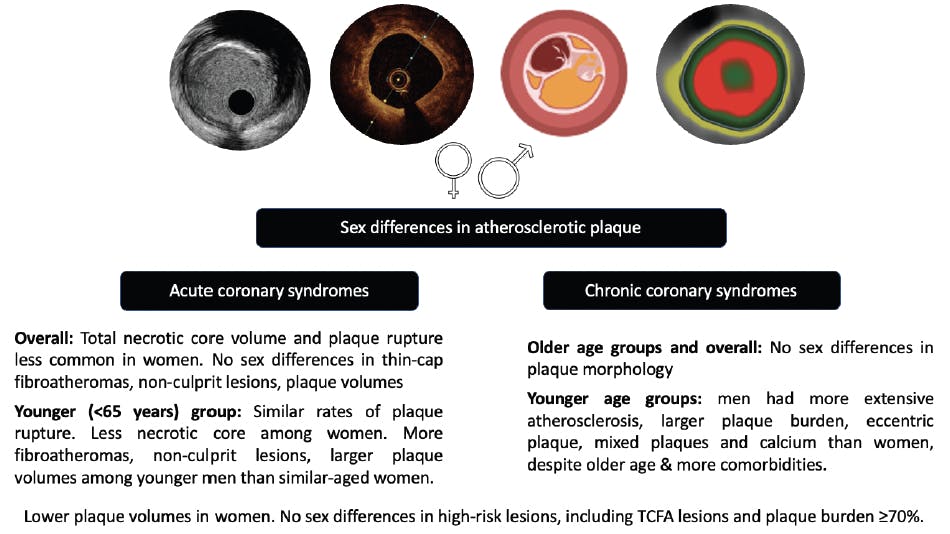
Figure 1. Sex differences in atherosclerotic plaque on intravascular imaging.
SEX DIFFERENCES IN PLAQUE VOLUME IN CCS
In a multimodality intravascular imaging study of 383 patients with stable CAD, Bharadwaj et al reported no sex differences in plaque morphology on OCT (including maximum lipid arc, lipid volume index, lipid length, TCFA incidence, and calcification). Similarly, sex was not an independent predictor of severe plaque burden by IVUS; there were no sex differences in plaque characteristics, except for an increase in the reference segment plaque burden in men. No difference in maximal lipid core burden index (LCBI) at the 4-mm maximal segment was noted on NIRS. Although women were older (66 ± 10 vs 62 ± 11 years) and had more comorbidities in this study, the totality of evidence generated suggests sex is not a determinant irrespective of the imaging modalities employed.11
Similarly, in a study by Kornowski et al of 169 women and 549 men with stable angina, no sex differences (quantitative or qualitative) in coronary atherosclerotic plaques could be identified on preinterventional IVUS; similar reference and lesion plaque burden, calcium, and eccentricity were seen for women and men.12
Nicholls et al undertook a sex-based serial IVUS comparison of extent of baseline coronary atheroma and its subsequent change in response to established medical therapies.10 Among the 978 participants, despite women being older and having more comorbidities (including diabetes, hypertension, total and low-density lipoprotein cholesterol), women had less atheromatous plaque, as reflected by a lower percent atheroma volume and total atheroma volume, both of which remained lower even after multivariate adjustment. Women also had smaller vessels and lumen volume, but there were no sex differences in arterial remodeling at lesions with the largest plaque burden. Notably, the median age of women and men in this study was 57 and 56 years, respectively, which is lower than other studies and may be a significant point given interactions of age with plaque characteristics in some studies.10
A smaller study (N = 93) in which plaque morphology was compared by both CCT and virtual histology (VH) IVUS, more extensive atherosclerosis in the form of larger plaque burden and more mixed plaques as well as larger arcs of calcium were seen in men than women, predominantly among those aged < 65 years, with no such differences in plaque patterns among those aged ≥ 65 years. On VH IVUS, TCFA prevalence was also higher among men aged < 65 years compared with women in that age group.13
Another study of simultaneous assessment of IVUS and endothelial function in 142 patients with early CAD also demonstrated a greater atheroma burden in the left main and proximal left anterior descending (LAD) artery, more eccentric atheroma, and more diffuse endothelial dysfunction in men compared with women. Sex was an independent predictor of atheroma burden in both the left main and proximal LAD arteries by multivariate analysis. This study, which enrolled a relatively younger population (mean age, 49.3 ± 11.7 years), and wherein male sex was an independent predictor of atheroma burden, is somewhat limited by its observational nature, referral bias, and nonuniformity of atheroma extent in the coronaries.5
SEX DIFFERENCES IN PLAQUE VOLUME IN ACS
Among ACS patients, the PROSPECT trial assessed plaque characteristics of both culprit and nonculprit lesions (NCLs) by multimodality imaging, including angiography, grayscale IVUS, and VH IVUS. In the PROSPECT sex-based analysis, although there were no sex differences angiographically in the overall number of culprit lesions, women had fewer NCLs and fewer vessels with NCLs compared with men. On IVUS too, although women had fewer NCLs, there were no sex differences in plaque burden per lesion (55.6% vs 55.3%; P = .35) and female sex was not a predictor of severe (> 70%) plaque burden. However, although women were less prone to plaque rupture (6.6% vs 16.3%) and had less total necrotic core volume than men, no sex differences were seen for other plaque phenotypes, including TCFA, thick-cap fibroatheromas, and pathologic intimal thickening. Despite there being no sex differences in major adverse cardiovascular events (MACE), NCL minimal lumen area ≤ 4 mm2, TCFA, and plaque burden ≥ 70% were predictive of nonculprit 3-year MACE among men, whereas only the latter two were predictive for women.14
A further subanalysis of PROSPECT evaluated sex differences in plaque characteristics and composition of 697 untreated NCLs among ACS patients aged < 65 and ≥ 65 years to further assess explanations for worse outcomes among young women despite less obstructive CAD. Men aged < 65 years had more fibroatheromas and NCLs per patient with larger plaque volumes and fewer fibrotic plaques than similarly aged women. No such sex differences were seen in those aged ≥ 65 years, although these patients overall had greater plaque burden, necrotic core, and dense calcium, potentially suggesting a differential sex-related effect on atherosclerosis progression.15
The OCTAVIA study used OCT for comparisons of culprit plaque characteristics of 140 age-matched ST-segment elevation MI patients undergoing primary percutaneous coronary intervention. Although an age-matching algorithm was used, which decreased the differences in the risk profiles between men and women, very few women aged < 50 years were included, reflecting inherent issues and challenges in obtaining representative sex-specific data in imaging-based trials. Two-thirds of culprit lesions in this study comprised atherosclerotic ruptured plaques with thrombus. Similar rates of plaque rupture were seen between men and women (50% vs 48.4%). At 9 months, there were no sex differences in strut coverage or amount of in-stent neointimal obstruction, with similar 30-day and 1-year follow-up clinical outcomes.16
Schoenenberger et al also examined the effect of age and sex on plaque burden of culprit and NCLs of 390 patients (27.6% women), one-quarter of whom presented with ACS, in a single-center Swiss study. The proximal 4 cm of all three coronary vessels were examined by VH IVUS. In nonculprit vessels in both men and women, plaque burden increased significantly with aging. Men had higher plaque burden than women at any age, although plaque morphology of nonculprit vessels was less rupture-prone. Necrotic core in nonculprit vessels among women was very low in younger age groups and increased with aging, leading to a plaque morphology similar to that of men. There were no sex differences in culprit vessel plaque morphology of young women and men. With aging, although there was no significant change in plaque burden in culprit vessels, men had increasingly rupture-prone plaque morphology, manifested as increasing percentages of necrotic core and dense calcium, as compared with women.17
In a single-center VH IVUS study of 362 ACS patients from South Korea, women were more likely to be diabetic, had greater proportions of necrotic core volume, and had a numerically higher incidence of TCFA compared with men. However, no differences in plaque components were seen between diabetic women and men and between women and men with elevated high-sensitivity C-reactive protein (hs-CRP) levels. Also, female sex was not an independent predictor of TCFA, suggesting that sex differences in vulnerable plaque components may indeed result from greater prevalence of diabetes and hs-CRP elevation, rather than female sex. This also underscores the need for well-powered randomized controlled trials to further explore these observational findings.18
SEX DIFFERENCES IN PLAQUE VOLUME IN ACS AND CCS
The prespecified IVUS substudy from the ADAPT-DES trial included ACS and stable CAD patients and compared lesion morphology of 588 men and 192 women according to two age groups (< 65 vs ≥ 65 years). Both plaque ruptures and TCFA were more common in men versus women overall (ruptures, 36.3% vs 23%; P < .01; TCFA, 53.3% vs 44.7%; P = 0.026); however, in patients aged < 65 years (but not ≥ 65 years), sex differences in plaque rupture and the prevalence of TCFA were detected with ACS, with male sex being an independent predictor on multivariate adjustment. No sex differences were noted among those presenting with stable CAD, regardless of age. There were also no sex differences in attenuated plaques or calcific nodules.19
In pooled data of the AtheroRemo-IVUS and IBIS-3 studies, sex-specific analyses of a nonculprit coronary artery found that women had lower VH IVUS–derived plaque burden than men, irrespective of a diagnosis of stable CAD or ACS (38.1% vs 40.5% in stable CAD and 35.9% vs 38.8% in ACS, for women and men, respectively). Plaque volumes remained lower in women when corrected for body surface area, although differences were smaller and did not reach statistical significance. Standardized total plaque volume, as well as volumes of fibrous tissue, fibro-fatty tissue, dense calcium, and necrotic core were also lower in women. However, there were no sex differences in the presence of high-risk lesions, including TCFA lesions or those with plaque burden ≥ 70%. NIRS-derived LCBI was slightly lower in women, notably in stable CAD. These differences remained significant after adjustment for comorbidities.20
MINOCA
Myocardial infarction with nonobstructive coronary artery disease (MINOCA) is an important entity of acute MI, particularly among women. Intracoronary imaging, either IVUS or OCT, is recommended in the workup of patients with MINOCA, as plaque disruption is not readily visible by coronary angiography.21
In a multicenter study of multimodality imaging (ie, OCT and cardiac MR) of 301 women diagnosed with MINOCA, an identifiable etiology of MINOCA was found in 84.5%. A definite or possible culprit lesion was identified by OCT in 46.2%, which was most commonly plaque rupture, intraplaque cavity, or a layered plaque. Although there were no comparisons with men in terms of MINOCA plaque morphology, this study showed the potential of intracoronary imaging in identifying plaque morphology and guiding medical therapy in this often underinvestigated subset of patients.22
SEX DIFFERENCES IN PLAQUE VOLUME: ARE THERE REALLY ANY?
With increasing focus on vulnerable plaque, the need to discern sex differences in plaque volume by state-of-the-art intracoronary imaging techniques is further enhanced. In addition to limitations such as small sample size and nonrandomized study designs from which conclusions on clinical outcomes cannot be drawn, there remain variations and limitations of each specific imaging modality in the identification of plaque characteristics. VH IVUS is limited in its ability to detect plaque erosion due to limitations in spatial resolution. Some of these limitations may be overcome by the newer NIRS technology, which has greater accuracy on plaque composition based on the specific chemical characteristics of the fibroatheroma. However, NIRS is limited in that it does not provide information on the depth of data acquisition. Despite its higher axial and lateral resolution, OCT has a lower penetration depth than IVUS, making visualization of the entire depth of plaque of a lesion difficult, especially in the case of lipid-rich tissue, in which the optical signal is attenuated significantly. Ethnicity of patients may be an additional confounder that has not been well studied. Future studies focusing on visualizing sex-related plaque changes ought to focus on this aspect, as well as combining various intravascular imaging techniques aimed at identifying vulnerable plaque at an early stage of the atherosclerotic process.
1. Chandrasekhar J, Mehran R. Sex-based differences in acute coronary syndromes: insights from invasive and noninvasive coronary technologies. JACC Cardiovasc Imaging. 2016;9:451-464. doi: 10.1016/j.jcmg.2016.02.004
2. Shaw LJ, Merz CNB, Pepine CJ, WISE Investigators, et al. Insights from the NHLBI-sponsored Women’s Ischemia Syndrome Evaluation (WISE) study: part I: gender differences in traditional and novel risk factors, symptom evaluation, and gender-optimized diagnostic strategies. J Am Coll Cardiol. 2006;47(3 suppl):S4-S20. doi: 10.1016/j.jacc.2005.01.072
3. Velagapudi P, Altin SE, Schneider MD, Alasnag MA. Sex differences in intracoronary imaging and functional evaluation of coronary arteries. Curr Cardiovasc Imaging Rep. 2021;14. doi: 10.1007/s12410-021-09557-3
4. Kindel M, Rüppel R. Hydrophilic-coated sheaths increase the success rate of transradial coronary procedures and reduce patient discomfort but do not reduce the occlusion rate: randomized single-blind comparison of coated vs. non-coated sheaths. Clin Res Cardiol. 2008;97:609‐614. doi: 10.1007/s00392-008-0658-5
5. Han SH, Bae JH, Holmes DR, et al. Sex differences in atheroma burden and endothelial function in patients with early coronary atherosclerosis. Eur Heart J. 2008;29:1359-1369. doi: 10.1093/eurheartj/ehn142
6. Merz CNB, Shaw LJ, Reis SE, et al. Insights from the NHLBI-sponsored Women’s Ischemia Syndrome Evaluation (WISE) study: part II: gender differences in presentation, diagnosis, and outcome with regard to gender-based pathophysiology of atherosclerosis and macrovascular and microvascular coronary disease. J Am Coll Cardiol. 2006;47(3 suppl):S21-S29. doi: 10.1016/j.jacc.2004.12.084
7. Virmani R, Burke AP, Farb A, Kolodgie FD. Pathology of the vulnerable plaque. J Am Coll Cardiol. 2006;47(8 suppl):C13-C18. doi: 10.1016/j.jacc.2005.10.065
8. Stone GW, Maehara A, Lansky AJ, et al. A prospective natural-history study of coronary atherosclerosis. N Engl J Med. 2011;364:226-235. doi: 10.1056/NEJMoa1002358
9. García-García HM, Mintz GS, Lerman A, et al. Tissue characterisation using intravascular radiofrequency data analysis: recommendations for acquisition, analysis, interpretation and reporting. EuroIntervention. 2009;5:177-189. doi: 10.4244/eijv5i2a29
10. Nicholls SJ, Wolski K, Sipahi I, et al. Rate of progression of coronary atherosclerotic plaque in women. J Am Coll Cardiol. 2007;49:1546-1551. doi: 10.1016/j.jacc.2006.12.039
11. Bharadwaj AS, Vengrenyuk Y, Yoshimura T, et al. Multimodality intravascular imaging to evaluate sex differences in plaque morphology in stable CAD. JACC Cardiovasc Imaging. 2016;9:400-407. doi: 10.1016/j.jcmg.2016.02.007
12. Kornowski R, Lansky AJ, Mintz GS, et al. Comparison of men versus women in cross-sectional area luminal narrowing, quantity of plaque, presence of calcium in plaque, and lumen location in coronary arteries by intravascular ultrasound in patients with stable angina pectoris. Am J Cardiol. 1997;79:1601-1605. doi: 10.1016/s0002-9149(97)00206-3
13. Pundziute P, Schuijf JD, van Velzen JE, et al. Assessment with multi-slice computed tomography and gray-scale and virtual histology intravascular ultrasound of gender-specific differences in extent and composition of coronary atherosclerotic plaques in relation to age. Am J Cardiol. 2010;105:480-486. doi: 10.1016/j.amjcard.2009.09.054
14. Lansky AJ, Ng VG, Maehara A, et al. Gender and the extent of coronary atherosclerosis, plaque composition, and clinical outcomes in acute coronary syndromes. JACC: Cardiovasc Imaging. 2012;5(3 suppl):S62-S72. doi: 10.1016/j.jcmg.2012.02.003
15. Ruiz-García J, Lerman A, Weisz G, et al. Age- and gender-related changes in plaque composition in patients with acute coronary syndrome: the PROSPECT study. EuroIntervention. 2012;8:929-938. doi: 10.4244/EIJV8I8A142
16. Guagliumi G, Capodanno D, Saia F, et al. Mechanisms of atherothrombosis and vascular response to primary percutaneous coronary intervention in women versus men with acute myocardial infarction: results of the OCTAVIA study. JACC Cardiovasc Interv. 2014;7:958-968. doi: 10.1016/j.jcin.2014.05.011
17. Schoenenberger AW, Urbanek N, Toggweiler S, et al. Ultrasound-assessed non-culprit and culprit coronary vessels differ by age and gender. World J Cardiol. 2013;5:42-48. doi: 10.4330/wjc.v5.i3.42
18. Hong YJ, Jeong MH, Choi YH, et al. Gender differences in coronary plaque components in patients with acute coronary syndrome: virtual histology-intravascular ultrasound analysis. J Cardiol. 2010;56:211-219. doi: 10.1016/j.jjcc.2010.05.009
19. Wang L, Mintz GS, Witzenbichler B, et al. Differences in underlying culprit lesion morphology between men and women: an IVUS analysis from the ADAPT-DES study. JACC Cardiovasc Imaging. 2016;9:498-499. doi: 10.1016/j.jcmg.2015.02.019
20. ten Haaf ME, Rijndertse M, Cheng JM, et al. Sex differences in plaque characteristics by intravascular imaging in patients with coronary artery disease. EuroIntervention. 2017;13:320-328. doi: 10.4244/EIJ-D-16-00361
21. Tamis-Holland JE, Jneid H, Reynolds HR, et al. Contemporary diagnosis and management of patients with myocardial infarction in the absence of obstructive coronary artery disease: a scientific statement from the American Heart Association. Circulation. 2019;139:e891-e908. doi: 10.1161/CIR.0000000000000670
22. Reynolds HR, Maehara A, Kwong RY, et al. Coronary optical coherence tomography and cardiac magnetic resonance imaging to determine underlying causes of myocardial infarction with nonobstructive coronary arteries in women. Circulation. 2021;143:624-640. doi: 10.1161/CIRCULATIONAHA.120.052008
Advertisement
Advertisement