Advertisement
Advertisement
January/February 2022
Sponsored By Philips
Mitigating Risk While Maximizing Success: Opening a New Cardiovascular ASC
Stephen A. Turner, MD, FACC, along with Steve Hockert, FACHE, and James Farmer from Solara Surgical Partners, discuss the process of opening an ambulatory surgical center, the challenges encountered along the way, and the benefits of partnering with industry.


The inexorable advancement of medical technologies has enabled migration of medical procedures from the hospital setting to ambulatory surgical centers (ASCs) across specialties. The ASC model is fostered by reasonable reimbursements from the Centers for Medicare & Medicaid Services (CMS), the lure of greater autonomy in the care and management of patients, and the gratification of knowing that patients will receive equivalent outcomes with likely higher satisfaction than from the big hospitals. This model will continue to play an increasing role in the delivery of health care services for the foreseeable future. This move of care settings is increasing for both independent physician-owned ventures, as well as hospital-invested joint ventures.
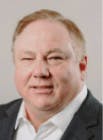
The decision to open an ASC and operate a profitable surgical business outside of the hospital requires significant upfront planning and analysis, decision-making, and investment funding to ensure ultimate success, which can seem overwhelming to a physician turned business owner. Many of the safety requirements of the hospital environment must be replicated or approximated in these surgical centers. Those who undertake this venture must certify that the many federal and state regulations are implemented properly and followed diligently. However, fledgling ASC owners are increasingly turning to industry and management companies that are highly experienced in building, operating, equipping, and providing niche support to ASC owners. The following discussion addresses key aspects of starting an ASC through the eyes of a cardiologist and co-owner of Coastal Cardiovascular Center (CCC) Dr. Stephen Turner, and Mr. Steve Hockert and Mr. James Farmer of Solara Surgical Partners serving as Chief Development Officer and Director of Business Development, respectively.
What key considerations do physicians need to open an ASC?
Dr. Turner: You need a certain number of physicians to make it work. Even before that, you need to know what procedures those physicians are skilled at to determine your collective ASC service offerings and estimated patient load, which then enables you to estimate your revenue. Comparing that to your cost estimates should indicate if you have a viable business opportunity.
For me, determining workload and number of physicians was straightforward. I had previously been one of several physician owners of an independent or “free-standing” cath lab just three blocks away from CCC, across from the main hospital. The hospital also had a share of ownership. Sometime around 2000, we put together a deal to have the hospital buy out our shares and then we entered into a management agreement with them to run their cath lab. We ended up managing it for about 6 years and although reimbursement was not nearly what it is today, we were profitable, saved the hospital more than $20 million through efficiencies, and made a decent living. Importantly, the experience afforded us more surety on what our workload would be, our required physician staff, and revenue expectations when we moved into our ASC.
Estimating startup costs were likewise a little easier based on our prior work in the same locale. We’re frugal, run a tight ship, and don’t like to carry a lot of overhead or debt. We knew our largest expense would be the facility and outfitting capital equipment. Serendipitously, the building we ended up buying was ideal in terms of location, size, versatility, and cost and it had been used as a physician’s clinic, so we were feeling smug at that point, and naively thought, “wow, it’s already up to code for medical purposing—it should be a breeze outfitting as an ASC!” Unfortunately, it doesn’t always work out this way. Luckily, we had the support of Solara Surgical Partners and Philips to overcome some of the obstacles we faced when converting this facility to an ASC. In fact, we saved about 6 to 8 months as a result of partnering with them.
In addition, you’re not necessarily thinking about an exit strategy when you are just getting started, but that is an important consideration that should be factored in at the onset. Solara Surgical Partners helped us set up our partnership structure, designate a board of directors, and establish how the partners would exit the practice. Certainly, a goal of some physicians is to invest in the ASC as a partner, participate in growing it into a profitable ongoing business, conduct succession planning, and hopefully pull out an (increased) equity share when you retire. This was important for us as we have physicians who are approaching retirement, some who are middle aged, and a few who are just starting out.
When and why did you approach a management company to begin the process?
Dr. Turner: Chance played a role. We’d been approached by an ASC south of town. They were looking for physician partners, but frankly the mix of skills they proposed seemed disjointed to us, so we passed. During the meetings, we’d been introduced to a Philips representative who was well versed in ASCs and office-based labs (OBLs) and how best to equip these models. He discussed a program called “SymphonySuite” whereby they make recommendations on how best to outfit our ASC, based on the types of procedures we employ, our estimated throughput, size of the facility, and available funding. What I appreciated most was his genuine interest in our long-term success. He didn’t try to upsell us, rather he’s been honest and frank since day one—and continues to be a valuable contributor to our success.
More pressing than the equipment, however, was the buildout of our facility based on federal and Texas requirements regarding ASCs. Our Philips representative introduced us to a few management companies, and Solara Surgical Partners was chosen.
What services does Solara Surgical Partners provide for physicians or hospital groups?
Mr. Hockert: Although not an explicit service, we feel two of our greatest values are that of stability and experience. We are a privately held, full-service management company that has been partnering with physicians for nearly 2 decades on projects throughout the United States, with an emphasis on ASC development over the last 10 years. We also manage primary care clinics, urgent care centers, and surgical hospitals. Broadening our responsibility into these areas makes us better ASC operators because we bring a more comprehensive understanding to the role that ASC’s play in the value-based landscape of today’s health care system. We deliver a fully transparent experience and therefore expect high engagement from our physician and industry partners, promoting the highest standard of business ethics in all that we do.
We bucket our core services into two areas: development and operations. Our development services team provides a turnkey solution for all the things necessary to open an ASC from project ideation to accreditation. In the case of CCC’s project, we performed project feasibility analysis; syndicated the project; served as tenant representative throughout construction; established the general business infrastructure (such as accounting systems, policies and procedures, governance, etc.); performed liaison services for local, state, and federal officials as needed; as well as myriad other services. Our operational services team provides both direct and indirect functional support throughout the life of the relationship. Direct functions include services such as accounting, billing, coding and collection services, commercial contract analysis and procurement, as well as physician recruitment. Indirect support manifests through surveillance activity (such as mock surveys, variance analysis, etc.), and bringing ideas to the partnership that may enhance their community position in some manner.
Mr. Farmer: At the very beginning, some physicians might see us as a cost or just a back-office function. However, over time they will understand that we’re here to help them run the business, brand the business, grow the business, enhance customer service, and recruit. They learn that they’ve partnered with a teammate to manage the business, provide best practices and innovation, and together make the ASC a success. That’s our goal.
What was the biggest challenge in setting up the ASC?
Mr. Farmer: The biggest challenge is always the facility design and construction, and the same is true for CCC—essentially repurposing a physician clinic into an ASC that will deliver interventional cardiology services. We conducted a thorough review of the building before we even had a signed partnership agreement with CCC. We met with Dr. Turner, walked the spaces, took some measurements, made some notes, and I departed to go conduct a full review of the building. That included pulling local city codes, as well as identifying state regulatory requirements. We worked with state officials and received state approval before Dr. Turner purchased it. We didn’t want him to buy a building he couldn’t make into an ASC.
As a big investment, with many things that can go wrong, we conducted extensive review of requirements and devised three conceptual options before putting the project out for bid. A best practice included sending the offer only to architects and general contractors (GCs) who have experience with surgical facilities and who are highly regarded by the State’s Department of Health. Each project has its own challenges and critical milestones, and we took nothing for granted.
Mr. Hockert: Undoubtedly, as James has suggested, every project involves a significant amount of risk. Our collective experience as a team can often predict circumstances before they arise and offer mitigating solutions. However, the inevitable pop up issues do surface and the CCC project was no different. The CCC physician team was great in that they gave us the freedom to do our job. James was the sole liaison to the GC which expedited sound decision-making and conflict resolution throughout the construction process. As such, we were able to complete the project on time, on budget, and followed with a successful Medicare accreditation survey and licensing issuance.
What is Solara Surgical Partners’ role in operations of the ASC?
Mr. Farmer: Our development process technically ends with a successful CMS survey. Our operational team begins integrating into the center during the development process, well before the construction is completed. It is at this time we begin interviews to fill the center’s leadership needs, initiate governance activity, and strategically plan for related orientation and training needs. As the operations team works through the transition, they’ll memorialize vendor agreements, mature committee structures, order supplies, finalize accounting infrastructure, tie-up any loose ends on the banking front, and queue up the many applications required to obtain licensure and commercial contracts.
Mr. Hockert: Management companies are a bit nuanced in that they may value certain activities over another and develop themselves around that. With nearly 2 decades of experience, we’ve chosen to focus on revenue cycle operations as one component of our core service. This service is included in our management fees and is not outsourced to a third party. We feel this is a true benefit for surgery centers that otherwise lack a system of “checks and balances.” We’ve also invested heavily in analytics and internally developed our own ASC analytics platform, which provides just-in-time access to all relevant ASC operational indicators, driving transparency in our partnerships.
How has partnering with industry helped you achieve your goals? Would you recommend leveraging the support of industry or management companies to others?
Dr. Turner: I certainly knew about Philips and the great equipment they sell to the hospitals. I was less knowledgeable, however, of the extent of services they offer. From capital financing to advisory services, to education and training, as well as a phenomenal vendor network, they are experts in virtually all things health care. We did go with Philips for our capital equipment, and we are participating in their rewards program that enables us to earn financial rebates for device purchases to put toward our equipment loan. They guided us on the type and size of equipment we needed based on our procedures, the floor to ceiling height, our energy capacity, space considerations, and so forth. Solara Surgical Partners has also been a great partner and a Philips recommendation. As an equity partner, they performed phenomenally for us during the retrofit. The extent of the buildout was a surprise to me. We bought a building, knew it had been a physician’s office, had it inspected, but still there were decisions to be made every step along the way. Solara Surgical Partners guided us through them all, giving the pros and cons to each of the options they presented. And, in terms of just every day dealings with the architects and the inspection and the contractors, Solara Surgical Partners drove them hard because we had a timeline we needed to stick to. Now, they are helping us manage the day-to-day business side of things, so yes, I would strongly recommend engaging with industry and management companies early in the planning process—to help steer clear of the inevitable, potentially expensive pitfalls.
What future do you see for ASCs?
Dr. Turner: I think ASCs are becoming institutionalized across the country. We know how much more efficient they are and the cost savings accruing to the health care industry are significant. So much so, that even hospitals are starting to invest in ASCs. Physicians know how to take care of patients, do it effectively, and garner high customer satisfaction. Combine this market growth with other advantages of having greater control over your practice, providing a level of service that patients really appreciate, and building a business asset that has value after you stop practicing and I believe we will see continued rapid expansion and adoption of the ASC model by other specialties, such as bariatric surgery and orthopedics. The one wildcard is reimbursement. I am old enough to have experienced significant movements both up and down. Certainly, a big swing down in reimbursement could substantially change the business model for ASCs, but I don’t see that on the horizon.
Mr. Hockert: Fundamental to the shift toward value-based care is a shift toward further ASC development throughout the United States, principally in two areas, cardiac and orthopedics. Cardiac was the most underdeveloped service heading into 2020 until CMS authorized a significant number of cardiac procedures to be executed in the ASC environment. In orthopedics, you have a lot of personnel wanting greater mobility in their twilight years and many joint repairs or replacements of shoulders and knees are now done as outpatient services. There are even serious ongoing discussions about the viability of doing some of the more complex spinal work on an outpatient basis.
This expansion of procedures is going to result in a lot of physicians entering the OBL/ASC market for the first time and making the transition from doctor to business owner. That is where management companies and industry partners with significant experience, like Solara Surgical Partners and Philips, can play a key role in mitigating risk and ensuring the successful launch and ongoing operations of the business. At Solara Surgical Partners we have very few “preferred vendor” relationships; however, with a standing history of sales and support, we consider Philips one of the premier vendors in this market.
Philips OBL and ASC Solutions – SymphonySuite – offers expertise in the out-of-hospital industry for cardiovascular and endovascular labs in addition to a full range of services, partners (such as Solara Surgical Partners), and a comprehensive portfolio of products with unique reward programs* to open an OBL, ASC or hybrid lab for hospital-affiliated or independent physician ventures. To learn more about the Philips SymphonySuite solution visit www.philips.com/OBL.
*Not all customers will qualify. Subject to program agreement.
Advertisement
Advertisement