Advertisement
Advertisement
September/October 2021
Balloon Aortic Valvuloplasty Through Radial Access
A step-by-step description.
Balloon aortic valvuloplasty (BAV) performed through the radial or ulnar artery is a novel technique that may expand the actual indications of aortic valvuloplasty due to the very low rate of vascular complications observed. When performed in patients screened for transcatheter aortic valve implantation (TAVI), this technique may discriminate between effective and futile procedures in the frailest population with severe aortic stenosis.1
WHY I DO IT
In the contemporary TAVI era, several scenarios exist for when standalone BAV (not performed immediately before or after TAVI) may be considered. The main indication for radial BAV is for “bridging” extreme- or high-risk patients who cannot undergo aortic valve intervention (TAVI or surgical aortic valve replacement) to a more stable clinical state to facilitate a more comprehensive evaluation and subsequent treatment decision.2
Additional uses of radial BAV include clinical instability in a non-TAVI center in which patient transfer is not feasible for clinical or logistic reasons, limited health care resources/insurances resulting in an excessively long waiting list, requirement for urgent noncardiac surgery, and, finally, in patients with a degree of diagnostic uncertainty (“bridge to decision”). If the patient’s risk profile and the frailty tests highlight the risk of futility, radial BAV may be performed to discriminate between patients who are likely to have favorable or unfavorable outcomes after TAVI.1
HOW I DO IT
The procedure can be summarized in the following four steps (Figure 1).
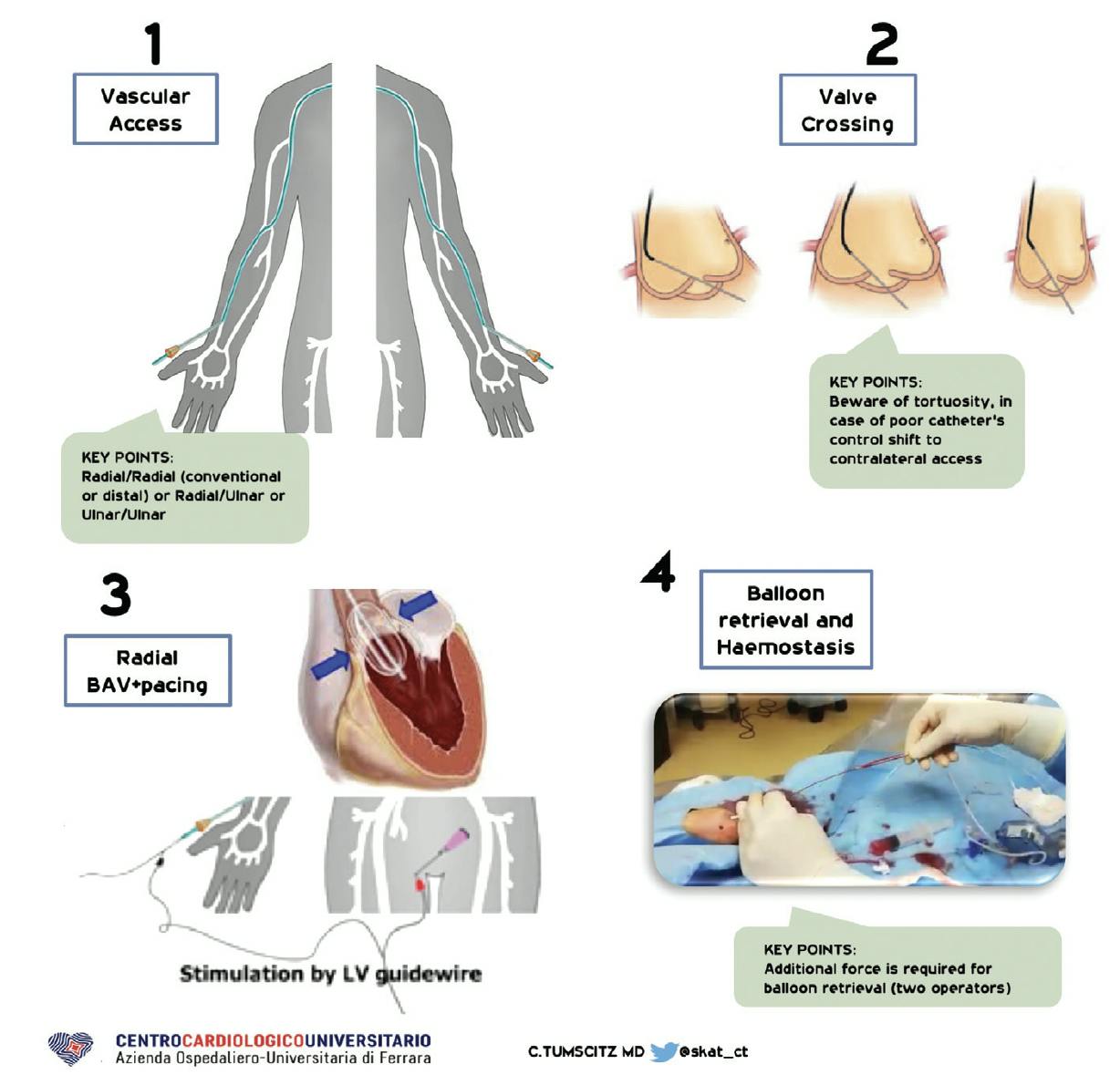
Figure 1. Mini-invasive aortic balloon valvuloplasty in four steps.
Step 1
We usually do not evaluate radial size with ultrasound prior to the procedure. This has not decreased the success rate, and the rate of vascular complications is very low.
Thus for the first step, it is advisable to secure two vascular access sites with conventional 5- to 6-F sheaths. Access sites could be biradial, biulnar, split radial and contralateral ulnar, or vice versa. If contralateral access (radial or ulnar) cannot be achieved, then it is possible to complete the procedure using only a single access site. The choice of a left versus right radial approach should be made according to the presence of the vessel’s tortuosity.
However, for single-access site procedures, specific limitations must be considered: (1) absence of blood pressure monitoring during the balloon inflation, and (2) inability to measure simultaneous peak-to-peak and mean transaortic gradients without a dedicated dual-lumen catheter (Langston catheter, Teleflex) and, in the case of severe tortuosity, an inability to switch to contralateral upper limb access. Nevertheless, in certain settings such as cardiogenic shock when a rapid procedure performed safely is desirable, this option can be considered. In this case, to easily measure the basal and postprocedural gradient, it is advised to use a dual-lumen catheter instead of the pullback maneuver.
Step 2
The aortic valve can be crossed using any conventional technique. Challenges can arise in elderly patients, particularly due to vessel tortuosity, when an early switch to the contralateral access site should be considered for valve crossing. When the catheter is in the left ventricle, basal peak-to-peak and mean gradients are obtained (simultaneous measurement using the two arterial lines), and a stiff exchange wire can safely be positioned in the left ventricular (LV) apex (eg, 260-cm, 0.035-inch Amplatz Super Stiff guidewire [Boston Scientific Corporation]).
Step 3
Next, the previously placed radial sheath is exchanged for an 8- to 10-F femoral sheath according to the compatibility of the aortic valvuloplasty balloon. Considering the absence of a dedicated radial sheath of this size, a hydrophilic-coated, short sheath (5.5-11 cm) is advised, which should be advanced into the subcutaneous tissue no more than 2 to 3 cm (ideally, deep enough to be in the artery but not deeper). The sheath’s size will depend on the compatibility chart of the balloon used.
An aortic valvuloplasty balloon is then advanced through the vessel toward the aortic root and across the valve (examples of 20-mm, 8-F–compatible balloons include Cristal balloon [Balt], VACS II [Osypka], and Valver [Balton]). Rapid ventricular pacing (180-200 bpm) is necessary to ensure balloon stability. This is set up using a two-pole wire, with one end connected to the distal tail of the stiff wire placed in the ventricle and the other end connected to a short 21-gauge needle inserted subcutaneously near the patient’s groin, as first described by Faurie et al.3 Three effective balloon inflations of 4 to 6 seconds each are then usually performed under rapid pacing.
In order to obtain a mean or peak-to-peak reduction of 30% to 50%, it is usually not necessary to use a 1:1 balloon diameter–to–annulus diameter ratio. In cases where there is not enough decrease of the gradient and an upgrade to a valvuloplasty balloon requiring a vascular sheath > 10-F is required, then crossover to femoral access is mandatory.
Step 4
After inflation, complete balloon refolding is critical to ensuring the safe, effective removal of the balloon from the arterial access site. Persistent negative pressure should be applied to the balloon with the aid of a luer-lock syringe. Removal of the balloon must be performed by two operators simultaneously. As one operator retracts the balloon while carefully maintaining the LV wire in position, the other operator facilitates balloon retrieval by pulling the device shaft. The balloon can typically be pulled into the sheath, and the sheath can be removed later. It is possible to remove the balloon and sheath together and then insert a new sheath; however, in our experience, this is not necessary.
Occasionally, during the final 5 to 10 cm of balloon retrieval and exit from the arterial access, patients may report discomfort or pain, which should be anticipated with the use of appropriate analgesia. Then, final gradient can be measured using two pigtail catheters, and hemostasis can be achieved for both arterial accesses according to local practice. After removal of the arterial lines, early mobilization is possible and will result in a faster discharge.
ANATOMY
Histologically, the radial and ulnar arteries differ from the femoral artery, particularly in elderly patients in whom arterial stiffness increases while the elastic tunica loses its compliance. The proportion of muscular tunica compared to the elastic tunica increases as the arteries get closer to the capillary bed. Although the radial and ulnar arteries are not classified as muscular arteries, their muscular component is greater and the arterial width thicker than that observed in femoral arteries. The increased muscular component of the arterial wall increases vessel compliance, enabling the vessel to accommodate arterial sheaths of a greater diameter than would be expected based on ultrasound measurement. The radial and ulnar arteries are seldom affected by atherosclerotic disease but, especially in patients with end-stage kidney disease, they can be affected by Monckeberg disease. Diffuse vessel calcifications, although uncommon, represent the main contraindication to the radial BAV procedure.
MATERIALS
Radial BAV procedures have been performed with balloons ranging in diameter from 18 to 23 mm, with sheaths up to 10 F and using conventional radial, ulnar, or distal radial approaches (anatomic snuffbox) (Figure 2). To preserve radial patency, it is preferable to use balloons with the smallest sheath compatibility while maintaining procedural success. In the SOFTLY II registry, most balloons were 20-mm, 8-F compatible (2- X 45-mm Cristal balloon). These semicompliant balloons can be expanded up to 22 to 23 mm.1
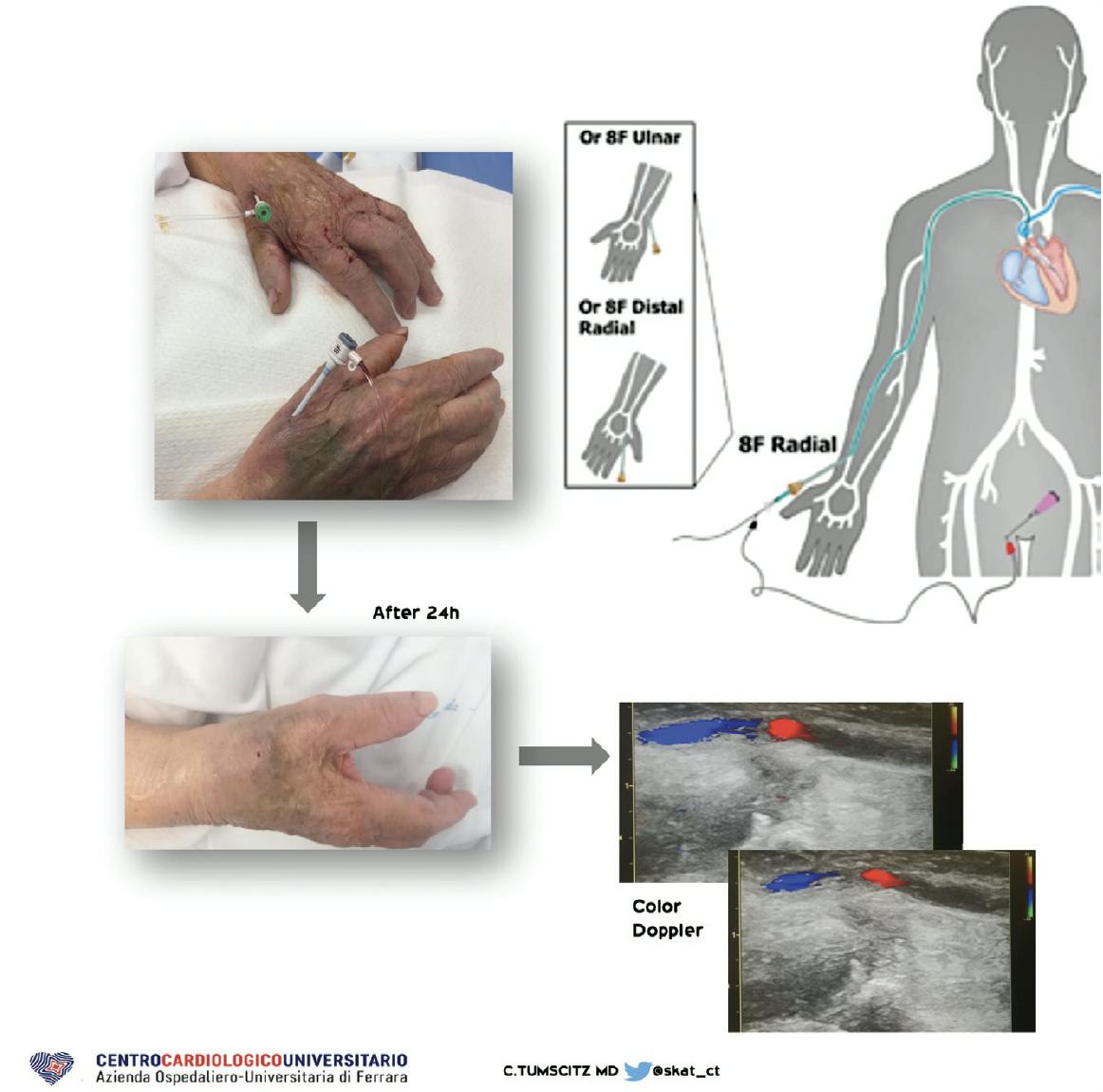
Figure 2. Vascular access for mini-invasive aortic balloon valvuloplasty.
COMPLICATIONS
The safety results from SOFTLY II showed a very low rate of vascular complications: zero of 330 patients had Valve Academic Research Consortium-2 (VARC-2) major vascular complications, and one of 330 VARC-2 patients had minor vascular complications.1 One patient experienced minor vascular surgery because of balloon rupture and consequent entrapment in the radial artery. Surgical removal was performed in the catheterization laboratory and had no subsequent impact on the in-hospital stay or need for blood cell transfusion. For this reason, special attention should be paid to avoid balloon rupture during radial BAV.
COnclusion
Mini-invasive transradial balloon aortic valvuloplasty can be performed in most patients as a safer alternative to the conventional femoral approach. Considering the short learning curve and the additional benefits of this novel technique, it may become a new standard approach in the future.
1. Tumscitz C, Di Cesare A, Balducelli M, et al. Safety, efficacy and impact on frailty of mini-invasive radial balloon aortic valvuloplasty. Heart. 2021;107:874-880. doi: 10.1136/heartjnl-2020-318548
2. Dall’Ara G, Tumscitz C, Grotti S, et al. Contemporary balloon aortic valvuloplasty: changing indications and refined technique. Catheter Cardiovasc Interv. 2021;97:E1033-E1042. doi: 10.1002/ccd.28807
3. Faurie B, Abdellaoui M, Wautot F, et al. Rapid pacing using the left ventricular guidewire: reviving an old technique to simplify BAV and TAVI procedures. Catheter Cardiovasc Interv. 2016;88:988-993. doi: 10.1002/ccd.26666
Advertisement
Advertisement