Advertisement
Advertisement
March/April 2021
TAV-in-TAV: Future Considerations for Intermediate- and Low-Risk Patients
Challenges to the transcatheter management of severe aortic stenosis across a lifetime.
By Akshay Kamath, MD; Shravan Rao, MD; Brett Sheridan, MD; Christian Spies, MD; and David Daniels, MD
Transcatheter aortic valve replacement (TAVR) has emerged as the standard of care for symptomatic severe aortic stenosis (AS) in patients at high risk for surgical aortic valve replacement (SAVR).1,2-5 Five-year outcomes from randomized control trials (RCTs) have demonstrated comparable safety and efficacy of TAVR to SAVR in intermediate-risk patients, and outcomes from two RCTs in low-risk patients have recently prompted FDA approval of transcatheter aortic valve (TAV) prostheses—namely the Sapien 3/Ultra balloon-expandable valves (BEVs; Edwards Lifesciences) and Evolut R/Pro self-expandable valves (SEVs; Medtronic)—for use in all risk categories.6-12
The expansion of TAVR to intermediate- and low-risk (ILR) patients has gained powerful momentum. This category comprises the largest proportion of patients with severe symptomatic AS, implying a leap in the pool of patients eligible for TAVR. The move beyond high-risk patients heralds the extension of TAVR to a younger population. In a series of patients who underwent isolated SAVR for AS between 1993 to 2004, 55% were 70 years old or younger.13 In both PARTNER 3 and the Evolut Low-Risk trial, mean age was approximately 74 years, with < 20% of patients in PARTNER 3 younger than the age of 70 years.11,12 Patients with bicuspid valves, complex coronary artery disease, aortopathy, and multivalvular disease were also excluded from both trials, highlighting the need for further RCTs to guide management within these subsets of the ILR group.
DURABILITY OF TRANSCATHETER AORTIC VALVES
The expansion of TAVR to younger patients presents a novel challenge for the heart team. Although candidates for TAVR generally have not lived long enough to experience structural valve deterioration (SVD), a significant subset of ILR patients will inevitably outlive their prostheses. With contemporary surgical aortic valves (SAVs), the incidence of reoperation for SVD at 5 years after SAVR is < 3%. At 10, 15, and 20 years after SAVR, the incidence reaches 5%, 10% to 20%, and 40% to 50% respectively.14-17 In TAVs, the incidence of severe SVD at 5 years after TAVR has been comparable, with reintervention rates generally < 4%, although these findings are tempered by the competing risk of death in the early cohort of TAV recipients.2-4,6,18,19 Durability studies beyond 5 years will have greater implications given the increase in SVD seen in SAVs after this period.
In an early analysis of the Valve-in-Valve International Data registry, the median time to reintervention for SAV SVD was 8 years.20 Assuming a similar timeline for TAVs, the management of SVD will be critical to the success of TAVR in patients with longer life expectancy. Redo-SAVR, the traditional standard of care for patients with SAV SVD, is associated with greater risk of operative mortality and major complications than primary SAVR.21 The technique of valve-in-valve TAVR within degenerated SAVs (TAV-in-SAV) was thus developed as an option for high-risk patients with SVD.
Although surgical replacement of degenerated TAVs may be a viable method of treating TAV SVD, extensive neo-endothelialization of chronically implanted TAVs (particularly SEVs) and the need for intensive endarterectomy may present a technical challenge.22 In 782 TAVR explants from the Society of Thoracic Surgeons (STS) registry, concomitant aortic repair was required in 45.8%, and 30-day postoperative mortality across all cases was 19.4%.23 Although this sample is skewed toward those at higher operative risk, the possibility remains that surgical explantation will not be the optimal strategy for patients with anticipated TAV SVD. Considering that some patients will need more than one redo intervention, the optimization of valve-in-valve TAVR in degenerated TAVs (TAV-in-TAV) will be critical to the success of TAVR as a routine method of bioprosthetic valve implantation through the lifetime of the ILR patient.
INSIGHTS FROM VALVE-IN-VALVE TAVR IN SURGICAL AORTIC VALVES
TAV-in-SAV has been shown to be an effective treatment for SAV SVD, achieving durable hemodynamic and functional improvement, lower stroke rates, and lower short-term mortality compared to redo-SAVR.24-28 In contrast to redo-SAVR, the degenerated valve is not explanted and affects outcomes in TAV-in-SAV. The presence of severe baseline patient-prosthesis mismatch is a key risk factor for mortality at 30 days and 1 year, as well as for reintervention in the long-term after TAV-in-SAV.29,30 Small host SAVs (label size < 20 mm or inner diameter < 21 mm) are also associated with increased mortality at 30 days, 1 year, and 8 years after TAV-in-SAV.30
Based on these findings, implantation of the largest valve possible during primary intervention should be pursued to maximize a young patient’s options for future valve-in-valve treatment. If SAVR is performed in a small annulus, consideration may be given to concomitant aortic root enlargement that may allow for a larger primary prosthesis without a significant increase in postoperative complications, mortality, or risk of aneurysm.31-33 SAV prosthesis designs that allow for controlled expansion at the time of TAV-in-SAV may also become preferable for these patients. If TAV-in-SAV is indicated in a patient with baseline prosthesis-patient mismatch, fracture of the SAV ring using a high-pressure balloon can be used as a rescue strategy to improve the hemodynamic outcome.34
MITIGATING THE RISK OF CORONARY OBSTRUCTION AND IMPAIRED ACCESS
Coronary obstruction is uncommon after primary TAVR (< 1% incidence), but the risk is greater in TAV-in-SAV (2% to 4%).20,35 The primary mechanisms of obstruction are displacement of a calcified host leaflet in proximity to a coronary ostium and sinus sequestration. The consequences of obstruction are severe, with 30-day mortality over 40%.35,36 In patients undergoing TAV-in-SAV, a virtual transcatheter valve–to–coronary distance (VTC) < 4 mm measured via CT is sensitive and specific for the detection of patients at risk of obstruction.36 TAV implantation within SAVs that are stentless or internally stented is also associated with increased risk of coronary obstruction.36
In TAV-in-TAV, host TAV leaflets are less likely to cause ostial obstruction because the stent frame serves as a boundary for displacement. However, the host leaflets are pinned open during valve-in-valve implantation, forming a cylindrical “neoskirt” in the aortic root. If the top of the neoskirt is close to the sinotubular junction (STJ), it can seal or significantly impair flow into the adjacent coronary sinus—a devastating complication known as sinus sequestration. In cases in which the valve-to-STJ distance (VTSTJ) allows for adequate flow, access to coronary ostia for angiography may still be severely impaired. Furthermore, access can be further limited by the presence of two overlapping layers of stent frame or a commissural post adjacent to a coronary ostium.
Simulations of TAV-in-TAV in patients after primary TAVR suggest that the risk of sinus sequestration and impaired coronary access is significant. In an analysis of post-TAVR CT studies from 411 patients by Ochiai et al, TAV-in-TAV was considered at risk of causing sinus sequestration if the host TAVR commissure was above the level of the STJ with a VTSTJ < 2 mm in at least one coronary sinus.37 Of 345 patients in the SEV cohort, 45.5% met this criteria, compared to 2% of 66 patients in the BEV cohort (P < .001).37 Although the cutoff of 2 mm is likely more reflective of the risk of impaired coronary access (using a 6-F catheter) than obstruction, a modified criterion using a VTSTJ cutoff of 1 mm was still met by 13.6% and 1.7% of patients in the SEV and BEV groups, respectively (P < .001).37
Analysis of post-TAVR angiography is similarly alarming. Nai Fovino et al performed coronary angiography in 137 patients after primary TAVR, deeming coronary access after TAV-in-TAV “feasible” if coronary cannulation was achieved below the “risk plane” (RP; the level under which the stent frame of the host valve would be covered by its neoskirt), “theoretically feasible” if achieved above the RP with a valve-to-aorta (VTA) distance > 2 mm, and “unfeasible” if the VTA was ≤ 2 mm.38 Predicted coronary access after TAV-in-TAV was unfeasible in 38.5%, 41.1%, and 23.6% of patients after Evolut R/Pro, Acurate neo (Boston Scientific Corporation), and Sapien 3 implantation, respectively.38 Unfeasible access was more frequently predicted in SEV host valves (P = .116).38 This difference in risk between SEVs and BEVs, present by nature of stent frame height and position relative to the annulus, is further supported by analysis of CT examinations performed after TAV-in-TAV in 45 patients (15 in host BEV, 30 in host SEV) by De Backer et al. In this study, impaired access (defined as the presence of at least two of the following: RP above a coronary ostium, VTA > 3 mm, or < 3 mm between stent struts at the guide catheter crossing zone) was demonstrated in 65% of patients with host SEVs, compared to 17% of patients with host BEVs (P < .001).39
These findings underscore the importance of CT simulation at the time of both index valve implantation and reintervention to identify patients at risk of impaired coronary access or coronary obstruction with TAV-in-TAV, as well as guide the choice of prosthesis if TAVR is chosen over SAVR as the primary intervention. Figure 1A shows a patient with anatomy that is favorable to TAV-in-TAV. While the RP lies above the left main coronary ostium (as it will in the majority of patients), the VTSTJ distance is 4.3 mm, incurring low risk of sinus sequestration with ample space for coronary access. Figure 1B shows a patient after TAVR with an exceedingly high risk of sinus sequestration by virtue of a neoskirt nearly apposed to the STJ.
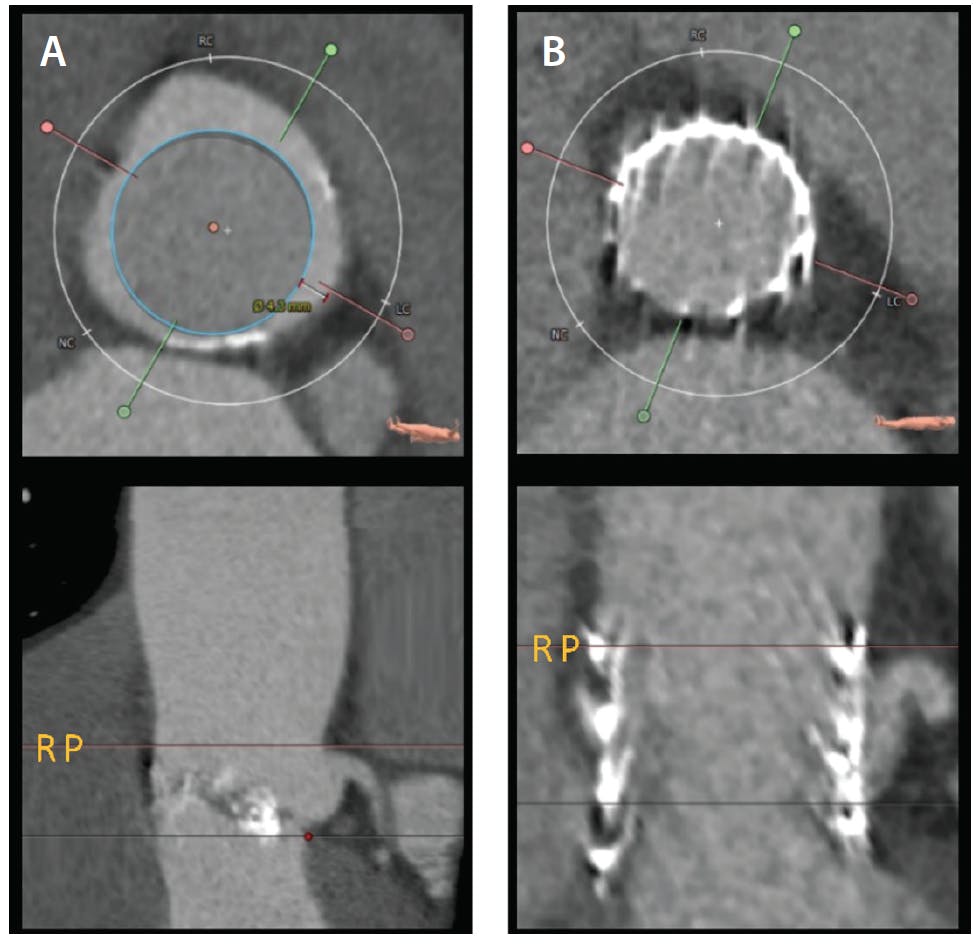
Figure 1. CT simulation of TAV-in-TAV in two patients with favorable (A) and unfavorable (B) anatomy.
RESCUE STRATEGIES FOR PATIENTS WITH THREATENED CORONARY ARTERIES
Although full effort should be made at the time of primary intervention to minimize risk to the coronaries during TAV-in-TAV, the development of rescue strategies for patients at established risk is equally crucial. Figure 2 shows a proposed approach to treatment of TAV SVD under both considerations.
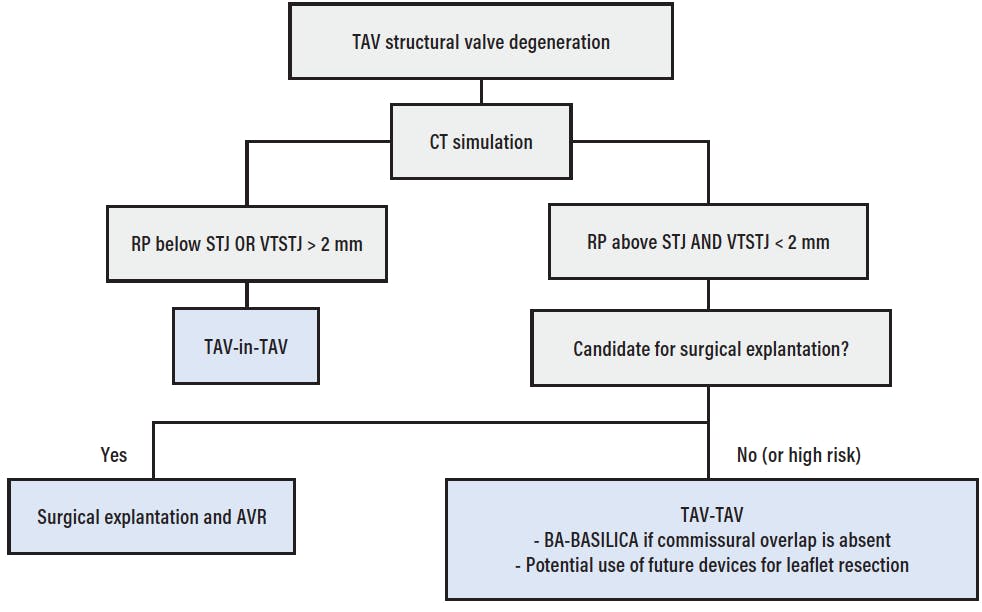
Figure 2. Treatment of TAV structural valve degeneration.
In patients undergoing primary TAVR or TAV-in-SAV, BASILICA (bioprosthetic or native aortic scallop intentional laceration to prevent iatrogenic coronary artery obstruction) can be used to maximize access to the coronaries.40,41 There are clear barriers to its applicability in TAV-in-TAV. The likelihood of achieving adequate leaflet splay is reduced in TAV prostheses, and the splayed leaflet may end up obstructed by the newly implanted TAV.42 A variation of BASILICA in which a balloon is inflated across the leaflet prior to laceration to maximize splay (balloon-assisted, or BA-BASILICA) has been described and may improve effective coronary protection.43
By its nature, BASILICA is less effective when a commissural post is adjacent to the coronary ostium of interest. Although this is not an issue in primary TAVR or TAV-in-SAV due to preserved commissural alignment, conventional TAVR implantation does not reliably align TAV commissural posts with those of the native valve. In the referenced CT study by Ochiai et al, commissural overlap with a coronary ostium was present in 45.2% of SEVs and 11.3% of BEVs.37 Development of alignment techniques, such as the “hat” marker technique demonstrated in Evolut valves by Tang et al in the ALIGN-TAVR study, may improve the utility of BASILICA in TAV-in-TAV.44
The inevitable impact of future technologic developments on TAV-in-TAV cannot be discounted. While surgical explantation of complete TAVs may prove to be challenging, endovascular removal of degenerated TAV leaflets may circumvent the issue of neo-endothelialization while facilitating TAV-in-TAV.45 Development of transcatheter devices designed to resect valve leaflets has already begun and may significantly expand the versatility of valve-in-valve TAVR.
CLINICAL OUTCOMES AFTER TAV-IN-TAV
Clinical experience with TAV-in-TAV for TAV SVD is thus far severely limited. In the Redo-TAVR registry, the mode of TAV SVD among 138 patients who underwent TAV-in-TAV more than 1 year after index TAVR was similar to that seen in SAVs (37% pure AS; 29.7% pure AR; 32.6% mixed).46,20 SEVs accounted for 61% of host TAVs and 50% of implanted TAVs.46 Device success was achieved in 85.5% of patients.46 At 30 days, there were two deaths, one stroke, 16 cases with residual mean gradients > 20 mm Hg, four cases of valve malposition, and one case of coronary obstruction. In 172 patients who underwent TAV-in-TAV for TAV SVD in the TRANSIT registry, mode of failure was skewed toward aortic regurgitation (AR; 33% pure AS, 56% pure AR, 11% mixed).47 SEVs accounted for 61% of implant TAVs, and device success was achieved in 79% of cases.47 Mortality was 7% and 10% at 30 days and 1 year, respectively, with no incidences of coronary obstruction.47 Although these findings are encouraging, the patients in both studies were likely chosen carefully based on clinical factors including CT simulation, thus falsely lowering the incidence of complications such as coronary obstruction. Further studies including RCTs are clearly needed.
DEVISING A LIFETIME STRATEGY AT THE TIME OF PRIMARY INTERVENTION
The nature of the index valve implantation has clear and lasting implications on future eligibility for TAV-in-TAV or TAV-in-SAV that must be considered when planning the primary intervention. Figure 3 shows a proposed approach to initial valve implantation in ILR patients with severe, symptomatic trileaflet AS; this is an expansion and modification of the approach proposed by Tarantini et al for younger patients based on coronary access.48
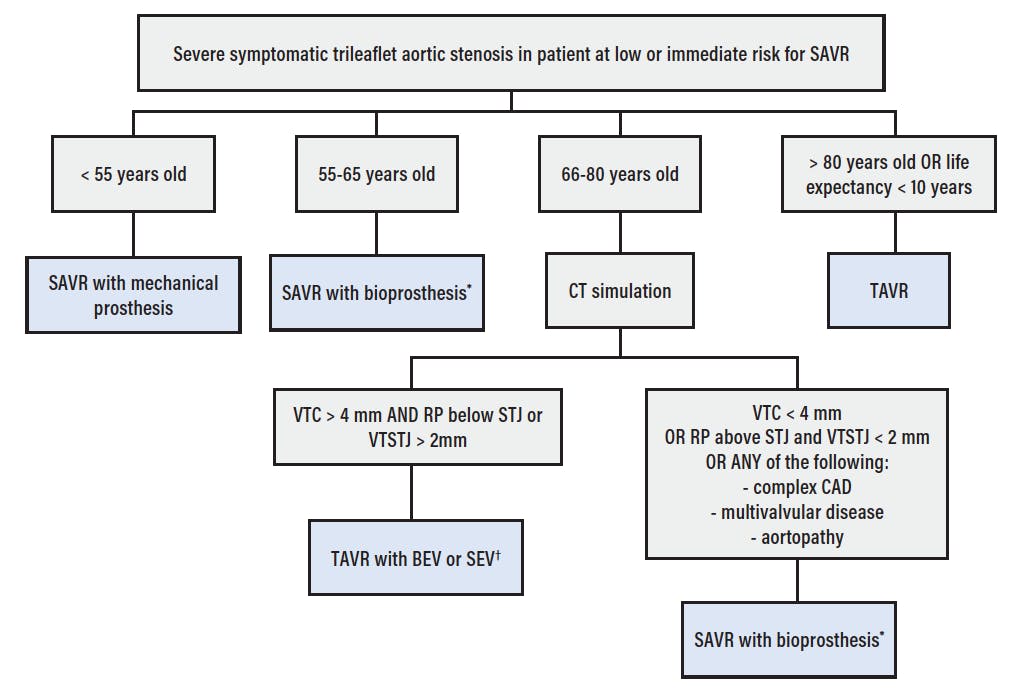
Figure 3. Treatment of severe symptomatic AS in patients at low or intermediate risk for SAVR. *Avoid stentless valves or valves with externally mounted leaflets; if annulus < 23 mm or will not accommodate > 21 mm prosthesis, consider aortic root enlargement. †Consider commissural alignment using “hat” orientation.
Although the decision between mechanical and biologic prosthesis entails a complex balance of the benefits of durability with risks of stroke and bleeding, the mortality benefit of mechanical valves does not clearly extend to patients older than 55 years.49 Thus, this is a reasonable age above which to consider a biologic prosthesis. For patients younger than 65 years, there are yet-insufficient data describing outcomes after TAVR, and a strong recommendation for TAVR in this group cannot be made until further studies are performed. The reality is that many patients will likely have a strong preference for TAVR over SAVR, and shared informed decision-making will be paramount. Conversely, for patients older than 80 years, the benefit of TAVR over SAVR with regard to mortality, stroke risk, major bleeding, and recovery clearly outweighs the unlikely need for reintervention.5 For patients aged between 65 and 80 years, CT simulation of TAV-in-TAV in the proposed TAV should be performed, including measurement of the VTC, simulation of the RP formed through the top of the host valve neoskirt, and measurement of the VTSTJ. In patients with VTC > 4 mm and either RP below the STJ or RP above the STJ with VTSTJ > 2 mm, TAVR is a reasonable choice as the primary intervention, with anticipated TAV-in-TAV at the time of SVD. If an SEV is chosen as the initial prosthesis, use of the “hat” marker technique should be considered to minimize neocommissure-coronary overlap. If all aforementioned criteria are not met with either a BEV or SEV, SAVR should be performed as the primary intervention, with consideration of concomitant aortic root enlargement and avoidance of a stentless or internally stented prosthesis.
The landscape of AS management will continue to transform through experience with TAV-in-TAV and TAVR in ILR patients. As TAVR expands to patients with increased longevity, the importance of developing a “lifetime strategy” at the time of primary intervention, with consideration to both native valve AS and anticipated SVD, cannot be overstated. Finding the ideal primary intervention for younger patients is no straightforward endeavor, particularly considering the yet-unknown risks of TAV explantation. For patients with TAV SVD at risk of sinus sequestration, the current and future rescue strategies will play a key role in the expansion of TAV-in-TAV. Above all, individualized and shared decision-making in conjunction with a heart team approach will remain of utmost importance in optimizing clinical outcomes.
1. Otto CM, Nishimura RA, Bonow RO, et al. 2020 ACC/AHA guideline for the management of patients with valvular heart disease: a report of the American College of Cardiology/American Heart Association joint committee on clinical practice guidelines. Circulation. 2021;143:e72-e227. doi: 10.1016/j.jacc.2020.11.035
2. Gerckens U, Tamburino C, Bleiziffer S, et al. Final 5-year clinical and echocardiographic results for treatment of severe aortic stenosis with a self-expanding bioprosthesis from the ADVANCE Study. Eur Heart J. 2017;38:2729-2738. doi: 10.1093/eurheartj/ehx295
3. Mack MJ, Leon MB, Smith CR, et al. 5-year outcomes of transcatheter aortic valve replacement or surgical aortic valve replacement for high surgical risk patients with aortic stenosis (PARTNER 1): a randomised controlled trial. Lancet. 2015;385:2477-2484. doi: 10.1016/S0140-6736(15)60308-7
4. Gleason TG, Reardon MJ, Popma JJ, et al. 5-year outcomes of self-expanding transcatheter versus surgical aortic valve replacement in high-risk patients. J Am Coll Cardiol. 2018;72:2687-2696. doi: 10.1016/j.jacc.2018.08.2146
5. Siontis GCM, Overtchouk P, Cahill TJ, et al. Transcatheter aortic valve implantation vs. surgical aortic valve replacement for treatment of symptomatic severe aortic stenosis: an updated meta-analysis. Eur Heart J. 2019;40:3143-3153. doi: 10.1093/eurheartj/ehz275
6. Makkar RR, Thourani VH, Mack MJ, et al. Five-year outcomes of transcatheter or surgical aortic-valve replacement. N Engl J Med. 2020;382:799-809. doi: 10.1056/NEJMoa1910555
7. Reardon MJ, Van Mieghem NM, Popma JJ, et al. Surgical or transcatheter aortic-valve replacement in intermediate-risk patients. N Engl J Med. 2017;376:1321-1331. doi: 10.1056/NEJMoa1700456
8. Thyregod HGH, Ihlemann N, Jørgensen TH, et al. Five-year clinical and echocardiographic outcomes from the Nordic Aortic Valve Intervention (NOTION) randomized clinical trial in lower surgical risk patients. Circulation. 2019;139:2714-2723. doi: 10.1161/CIRCULATIONAHA.118.036606
9. Siemieniuk RA, Agoritsas T, Manja V, et al. Transcatheter versus surgical aortic valve replacement in patients with severe aortic stenosis at low and intermediate risk: systematic review and meta-analysis. BMJ. 2016;354:i5130. doi: 10.1136/bmj.i5130
10. Lazkani M, Singh N, Howe C, et al. An updated meta-analysis of TAVR in patients at intermediate risk for SAVR. Cardiovasc Revasc Med. 2019;20:57-69. doi: 10.1016/j.carrev.2018.04.001
11. Mack MJ, Leon MB, Thourani VH, et al. Transcatheter aortic-valve replacement with a balloon-expandable valve in low-risk patients. N Engl J Med. 2019;380:1695-1705. doi: 10.1056/NEJMoa1814052
12. Popma JJ, Deeb GM, Yakubov SJ, et al. Transcatheter aortic-valve replacement with a self-expanding valve in low-risk patients. N Engl J Med. 2019;380:1706-1715. doi: 10.1056/NEJMoa1816885
13. Roberts WC, Ko JM. Frequency by decades of unicuspid, bicuspid, and tricuspid aortic valves in adults having isolated aortic valve replacement for aortic stenosis, with or without associated aortic regurgitation. Circulation. 2005;111:920-925. doi: 10.1161/01.CIR.0000155623.48408.C5
14. Bourguignon T, Bouquiaux-Stablo A-L, Candolfi P, et al. Very long-term outcomes of the Carpentier-Edwards Perimount valve in aortic position. Ann Thorac Surg. 2015;99:831-837. doi: 10.1016/j.athoracsur.2014.09.030
15. David TE, Armstrong S, Maganti M. Hancock II bioprosthesis for aortic valve replacement: the gold standard of bioprosthetic valves durability? Ann Thorac Surg. 2010;90:775-781. doi: 10.1016/j.athoracsur.2010.05.034
16. Forcillo J, Pellerin M, Perrault LP, et al. Carpentier-Edwards pericardial valve in the aortic position: 25-years experience. Ann Thorac Surg. 2013;96:486-493. doi: 10.1016/j.athoracsur.2013.03.032
17. Johnston DR, Soltesz EG, Vakil N, et al. Long-term durability of bioprosthetic aortic valves: implications from 12,569 implants. Ann Thorac Surg. 2015;99:1239-1247. doi: 10.1016/j.athoracsur.2014.10.070
18. Blackman DJ, Saraf S, MacCarthy PA, et al. Long-term durability of transcatheter aortic valve prostheses. J Am Coll Cardiol. 2019;73:537-545. doi: 10.1016/j.jacc.2018.10.078
19. Søndergaard L, Ihlemann N, Capodanno D, et al. Durability of transcatheter and surgical bioprosthetic aortic valves in patients at lower surgical risk. J Am Coll Cardiol. 2019;73:546-553. doi: 10.1016/j.jacc.2018.10.083
20. Dvir D, Webb JG, Bleiziffer S, et al. Transcatheter aortic valve implantation in failed bioprosthetic surgical valves. JAMA. 2014;312:162. doi: 10.1001/jama.2014.7246
21. Kaneko T, Vassileva CM, Englum B, et al. Contemporary outcomes of repeat aortic valve replacement: a benchmark for transcatheter valve-in-valve procedures. Ann Thorac Surg. 2015;100:1298-1304. doi: 10.1016/j.athoracsur.2015.04.062
22. Fukuhara S, Brescia AA, Shiomi S, et al. Surgical explantation of transcatheter aortic bioprostheses: results and clinical implications. J Thorac Cardiovasc Surg. Published online January 12, 2020. doi:10.1016/j.jtcvs.2019.11.139
23. Fukuhara S, Brescia AA, Deeb GM. Surgical explantation of transcatheter aortic bioprostheses: an analysis from the Society of Thoracic Surgeons database. Circulation. 2020;142:2285-2287. doi: 10.1161/CIRCULATIONAHA.120.050499
24. Tam DY, Dharma C, Rocha RV, et al. Transcatheter ViV versus redo surgical AVR for the management of failed biological prosthesis: early and late outcomes in a propensity-matched cohort. JACC Cardiovasc Interv. 2020;13:765-774. doi: 10.1016/j.jcin.2019.10.030
25. Sá MPBO, Van den Eynde J, Simonato M, et al. Valve-in-valve transcatheter aortic valve replacement versus redo surgical aortic valve replacement: an updated meta-analysis. JACC Cardiovasc Interv. 2021;14:211-220. doi: 10.1016/j.jcin.2020.10.020
26. Deharo P, Bisson A, Herbert J, et al. Transcatheter valve-in-valve aortic valve replacement as an alternative to surgical re-replacement. J Am Coll Cardiol. 2020;76:489-499. doi: 10.1016/j.jacc.2020.06.010
27. Webb JG, Murdoch DJ, Alu MC, et al. 3-year outcomes after valve-in-valve transcatheter aortic valve replacement for degenerated bioprostheses: the PARTNER 2 registry. J Am Coll Cardiol. 2019;73:2647-2655. doi: 10.1016/j.jacc.2019.03.483
28. Dauerman HL, Deeb GM, O’Hair DP, et al. Durability and clinical outcomes of transcatheter aortic valve replacement for failed surgical bioprostheses. Circ Cardiovasc Interv. 2019;12:e008155. doi: 10.1161/CIRCINTERVENTIONS.119.008155
29. Pibarot P, Simonato M, Barbanti M, et al. Impact of pre-existing prosthesis-patient mismatch on survival following aortic valve-in-valve procedures. JACC Cardiovasc Interv. 2018;11:133-141. doi: 10.1016/j.jcin.2017.08.039
30. Bleiziffer S, Simonato M, Webb JG, et al. Long-term outcomes after transcatheter aortic valve implantation in failed bioprosthetic valves. Eur Heart J. 2020;41:2731-2742. doi: 10.1093/eurheartj/ehaa544
31. Tam DY, Dharma C, Rocha RV, et al. Early and late outcomes following aortic root enlargement: a multicenter propensity score-matched cohort analysis. J Thorac Cardiovasc Surg. 2020;160:908-919.e15. doi: 10.1016/j.jtcvs.2019.09.062
32. Rocha RV, Manlhiot C, Feindel CM, et al. Surgical enlargement of the aortic root does not increase the operative risk of aortic valve replacement. Circulation. 2018;137:1585-1594. doi: 10.1161/CIRCULATIONAHA.117.030525
33. Celiento M, Saccocci M, De Martino A, et al. Stability of aortic annulus enlargement during aortic valve replacement using a bovine pericardial patch: an 18-year clinical, echocardiographic, and angio-computed tomographic follow-up. J Thorac Cardiovasc Surg. 2014;147:977-983. doi: 10.1016/j.jtcvs.2013.02.074
34. Chhatriwalla AK, Allen KB, Saxon JT, et al. Bioprosthetic valve fracture improves the hemodynamic results of valve-in-valve transcatheter aortic valve replacement. Circ Cardiovasc Interv. 2017;10:e005216. doi: 10.1161/CIRCINTERVENTIONS.117.005216
35. Ribeiro HB, Webb JG, Makkar RR, et al. Predictive factors, management, and clinical outcomes of coronary obstruction following transcatheter aortic valve implantation: insights from a large multicenter registry. J Am Coll Cardiol. 2013;62:1552-1562. doi: 10.1016/j.jacc.2013.07.040
36. Ribeiro HB, Rodés-Cabau J, Blanke P, et al. Incidence, predictors, and clinical outcomes of coronary obstruction following transcatheter aortic valve replacement for degenerative bioprosthetic surgical valves: insights from the VIVID registry. Eur Heart J. 2018;39:687-695. doi: 10.1093/eurheartj/ehx455
37. Ochiai T, Oakley L, Sekhon N, et al. Risk of coronary obstruction due to sinus sequestration in redo transcatheter aortic valve replacement. JACC Cardiovasc Interv. 2020;13:2617-2627. doi: 10.1016/j.jcin.2020.09.022
38. Nai Fovino L, Scotti A, Massussi M, et al. Coronary angiography after transcatheter aortic valve replacement (TAVR) to evaluate the risk of coronary access impairment after TAVR-in-TAVR. J Am Heart Assoc. 2020;9:e016446. doi: 10.1161/JAHA.120.016446
39. De Backer O, Landes U, Fuchs A, et al. Coronary access after TAVR-in-TAVR as evaluated by multidetector computed tomography. JACC Cardiovasc Interv. 2020;13:2528-2538. doi: 10.1016/j.jcin.2020.06.016
40. Khan JM, Greenbaum AB, Babaliaros VC, et al. The BASILICA trial: Prospective multicenter investigation of intentional leaflet laceration to prevent TAVR coronary obstruction. JACC Cardiovasc Interv. 2019;12:1240-1252. doi: 10.1016/j.jcin.2019.03.035
41. Lederman RJ, Babaliaros VC, Rogers T, et al. Preventing coronary obstruction during transcatheter aortic valve replacement: from computed tomography to BASILICA. JACC Cardiovasc Interv. 2019;12:1197-1216. doi: 10.1016/j.jcin.2019.04.052
42. Khan JM, Bruce CG, Babaliaros VC, et al. TAVR roulette: Caution regarding BASILICA laceration for TAVR-in-TAVR. JACC Cardiovasc Interv. 2020;13:787-789. doi: 10.1016/j.jcin.2019.10.010
43. Greenbaum AB, Kamioka N, Vavalle JP, et al. Balloon-assisted BASILICA to facilitate redo TAVR. JACC Cardiovasc Interv. Published online December 19, 2020. doi: 10.1016/j.jcin.2020.10.056
44. Tang GHL, Zaid S, Fuchs A, et al. Alignment of transcatheter aortic-valve Neo-commissures (ALIGN TAVR): Impact on final valve orientation and coronary artery overlap. JACC Cardiovasc Interv. 2020;13:1030-1042. doi: 10.1016/j.jcin.2020.02.005
45. Navarra E, Mosala Nezhad Z, Bollen X, et al. Endovascular resection of the native aortic valve before transcatheter aortic valve implantation: state of the art and review. Eur J Cardiothorac Surg. 2016;50:406-410. doi: 10.1093/ejcts/ezw027
46. Landes U, Webb JG, De Backer O, et al. Repeat transcatheter aortic valve replacement for transcatheter prosthesis dysfunction. J Am Coll Cardiol. 2020;75:1882-1893. doi: 10.1016/j.jacc.2020.02.051
47. Testa L. TRANSIT: Treatment of Failed TAVR With TAVR. Presented at: TCT 2020; October 17, 2020. https://www.tctmd.com/slide/transit-treatment-failed-tavr-tavr
48. Tarantini G, Nai Fovino L. Coronary access and TAVR-in-TAVR: don’t put off until tomorrow what you can do today. JACC Cardiovasc Interv. 2020;13:2539-2541. doi: 10.1016/j.jcin.2020.06.065
49. Goldstone AB, Chiu P, Baiocchi M, et al. Mechanical or biologic prostheses for aortic-valve and mitral-valve replacement. N Engl J Med. 2017;377:1847-1857. doi: 10.1056/NEJMoa1613792
Advertisement
Advertisement