Advertisement
Advertisement
January/February 2016
An Interview With Michael Reardon, MD
Dr. Reardon discusses the guidelines for managing patients with valvular heart disease, centers of excellence, and preparing future residents.
Is the concept of a heart team firmly established in contemporary practice, and, if not, what needs to be improved?
I think the concept is firmly established. Whether all sites believe in the concept has been a secondary question. The leading catheter-based structural heart programs believe in a heart team in the same way that leading oncology programs believe in multidisciplinary teams. For the leading centers, it’s a well-established concept, and the surgeons tend to be well integrated with the cardiologists.
However, that is not always true at all sites. We do have sites where surgeons are only ceremonially involved and some sites where they are more than ceremonial but not totally involved. At my site (and sites such as Columbia, Cedars, Cleveland Clinic, or Mayo), the surgeons are deeply involved. What needs to be improved is getting acceptance of the heart team concept at all sites that really want to be leading sites.
Do you think that all sites can be centers of excellence?
I don’t think all sites will be centers of excellence, but I hope that all sites will strive for that and have at least baseline criteria that would qualify them as a good site. We know right now there are sites across the country that are really good at some things—better than other sites—and they’re well-known centers of excellence. That doesn’t necessarily mean the sites that aren’t centers of excellence aren’t good sites. They just may not have programmatically developed that one area the way centers of excellence do.
What progress has been made regarding heart valve centers of excellence since the 2014 guidelines for the management of patients with valvular heart disease? Where do we stand on implementing those guidelines?
We’re actually doing a very good job. One thing that helps is that the national coverage decision said that if you want to be paid, you have to have a heart team, and the surgeons have to see the patients and be involved in the transcatheter aortic valve replacement (TAVR). If they ever take away that payment requirement, the question then becomes: “Once the money no longer says you have to have a team, how widespread is it going to be?” I think centers of excellence would do it with or without the money because they want to be centers of excellence. Right now, however, reimbursement is a big factor in making sure that there are heart teams out there.
What have been the obstacles to conforming to the guidelines, and what still needs to be accomplished?
One obstacle is taking physicians who are well known in their respective areas—interventional cardiologists and heart surgeons who have set practices and set egos—and then telling them they now have to play in the same sandbox and play nicely. Some sites have both a cardiologist and a surgeon who can do that, and some sites do not. Some sites have neither person who plays well in the sandbox with others, and those sites tend to be disasters. If you have at least one person, they can usually make it work. I would say that in centers of excellence, both the cardiologists and the surgeons buy into this concept and work well as a team.
When we started our valve program, one of the biggest challenges for me was to integrate my heart surgery team into the team of a long-established, interventional cardiologist—someone that I had known for 30 years. Most of the people in the TAVR room were going to be that cardiologist’s people, not my surgical people. One thing I did before we started our program was that I went and scrubbed on every balloon aortic valvuloplasty for about three-quarters of a year, until those people who would eventually become the TAVR team knew me by name and not as “the surgeon.” That helped establish something of a personal relationship with the team.
The fortunate thing for me is that our senior cardiologist, Neil Kleinman, is like me—more interested in program building than his own practice. I think that the real key is that some people are trying to build programs, and other people are trying to build practices.
What worked for you in setting up a center of excellence?
One of the challenges is that typically these aren’t cardiologists or surgeons who just graduated last year who are still forming the way they do things; they tend to be interventionists who have been out 10, 20, or 25 years, and surgeons who have been out 10 and 20 years (although often it’s an older interventionist with a younger surgeon). That said, it’s kind of like having two people who have been single for 30 years, and all of a sudden, they are trying to get married and blend together. There’s a lot of give and take. The sites that have leaders, on both the interventional cardiology and the cardiac surgery sides, who are more interested in building a successful program than their individual practice, those are the sites that are going to learn to cope well together, build a strong team, and end up as a center of excellence. There is a fundamental difference in how some people approach this. For some people it’s part of their practice, and for others, it’s part of a program.
What might the next set of guidelines look like?
The next set of guidelines is going to be about what risk level are we going to go down to, and should TAVR be a IIA or a IA recommendation for high risk? With the data we have out now, with PARTNER A being equivalent to 5 years and CoreValve (Medtronic, Inc.) high-risk randomized being superior at 2 years, and the data that we saw on SAPIEN 3 at the ACC meeting, the next set of guidelines will likely have TAVR be a IA recommendation for high risk (as it already is for extreme risk). If PARTNER IIA is positive or at least equivalent or noninferior at the ACC meeting (which I think it will be), and SURTAVI shows at least noninferiority (which I think it will), I think the FDA will give us an instructions for use for intermediate risk, and those will be written into the guidelines. However, there are enough data already that you could make a good case for including intermediate risk.
The next thing that will be in the guidelines will be some low-risk randomized trials, and 5 years from now, it may be that the guidelines will say that anybody who is a candidate for tissue valves is a reasonable candidate for TAVR. Therefore, the big issue is going to be “Where does the risk stop?”
Do you think that the current risk scores for valves are appropriate?
They’re reasonable for the data that we have right now. We’re continuing to refine them, because the risk score for STS is okay if you are in the middle of the risk crowd. By that I mean, say you’re 65 years old, and you don’t have comorbidities. Almost everyone who comes in with severe symptomatic aortic stenosis who looks like you is going to be sent to surgery. Therefore, the numbers we’ve developed in the STS pretty much apply to you.
The problem is that as people get older or sicker, (eg, an 83-year-old who has severe chronic obstructive pulmonary disease), some of those people may be sent to surgery, and some may not, depending on the primary care doctors, the patients, and the physicians at the place where they’re being sent. The only ones who make it into the STS are those patients who are thought to look good enough to be operated on. Therefore, as you get into higher risk, the STS does not give a true picture of what “real world” is. It’s increasingly just highly selected patients.
We’re really starting to understand that. The next thing that we need to develop, and is being developed, is a TAVR-specific risk score (not a surgical risk score used for TAVR, but a TAVR-specific risk score). When we started TAVR, we looked at patients and said, “Whoever is not a good candidate for surgery, let’s consider them for TAVR.” With the data we’re starting to see now, for the patients who are at increased risk, we’re starting to say, “Whoever is not a good candidate for TAVR, maybe we’ll operate on them.” It’s getting flipped on its head, and for that, we really need a TAVR-specific risk score.
What is the current focus of your research?
The TAVR-related research is twofold. One is transcatheter structural heart related. If you look at the CoreValve series of trials (I sat on the national steering committee for the CoreValve high risk and extreme risk), my site was the leading implanter for the extreme risk and the high risk. For SURTAVI, which is intermediate risk, I’m the national Surgical Principal Investigator of that. For the Evolut R (Medtronic, Inc.), which is the next-generation valve, I sat on the national steering committee. I will serve as the national Surgical Principal Investigator for the Medtronic low-risk randomized trial. I’m also doing another trial for Medtronic with their new pericardial valve. For Boston Scientific, I’m the national Principal Investigator on their REPRISE III trial for Lotus. For Direct Flow Medical, I sit on the national steering committee for the SALUS trial.
I’m fairly deeply involved in the transcatheter mitral valve replacement world, and I’m very interested in and hope to be leading a transcatheter mitral valve trial. I hope that happens, as I see this as our next great opportunity to help patients.
Do you have any words of advice for fellows who are just entering into the field or practice?
If you’re interested in transcatheter structural heart, this is not a great thing to build a practice on because it takes a whole team (and, quite frankly, it doesn’t pay all that well). However, it’s a great thing to build a program on, which will then bring in other things to your institution, and it has a lot of opportunity for academic endeavors for you and your team.
How do you prepare residents for future involvement in multidisciplinary teams?
We are starting to take residents in cardiothoracic surgery and expose them to the imaging modalities and knowledge that they will need to understand when working with the cardiologists, as well as develop the necessary wire skills. Our residents now spend time in the cath lab with our cardiologists and our vascular team doing EVAR and TEVAR. As a result, by the time these residents complete their residency, they’re going to have a lot of the necessary skills. Now, they’re not going to be general cardiac surgery people for the most part, they’re going to be structural heart people and aortic people. There is a growing cadre of heart surgeons, such as Matt Williams and Isaac George, who are fully trained in cardiology and have interventional cardiology privileges at their hospital, which is an interesting model, yet we are all waiting to see how well that works.
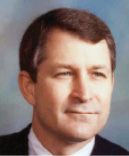
Michael Reardon, MD, is Professor of Cardiothoracic Surgery, Allison Family Distinguished Chair of Cardiovascular Research, Houston Methodist DeBakey Heart & Vascular Center in Houston, Texas. He may be reached at (713) 441-5200; mreardon@houstonmethodist.org.
Advertisement
Advertisement
Interested in reading more interviews?
To read more interviews with thought leaders in the interventional cardiology field, check out our Profiles & Perspectives hub.
Read More