Advertisement
Advertisement
September 18, 2023
Saranas SAFE-MCS Trial of Early Bird Bleed Monitoring System Completes Enrollment
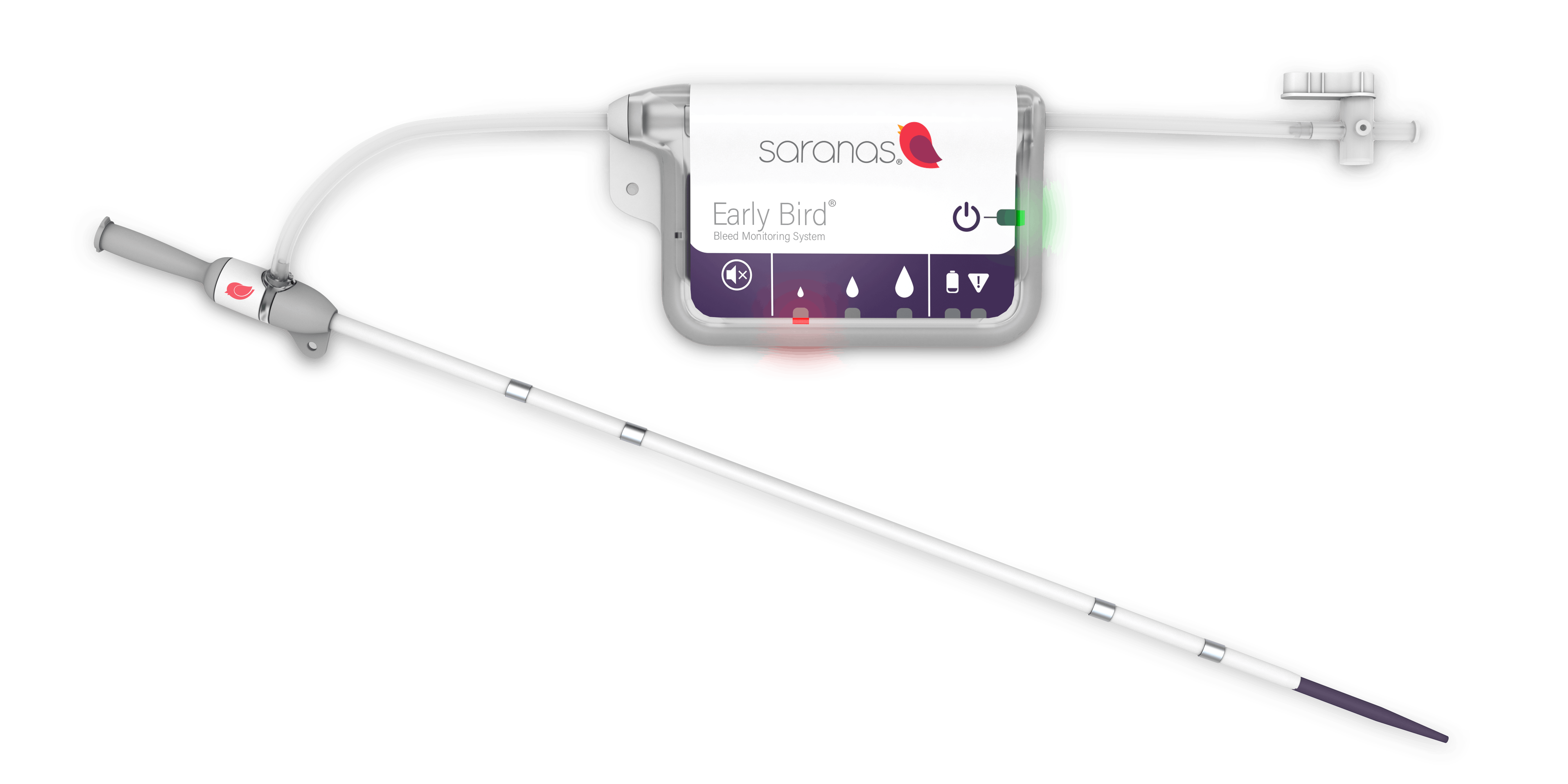 September 18, 2023—Saranas, Inc. announced that it has completed enrollment in the SAFE-MCS study evaluating the safety of complex high-risk percutaneous coronary intervention (PCI) using mechanical circulatory support (MCS) and surveillance with the company’s Early Bird bleed monitoring system.
According to the company, the multicenter, single-arm, open-label SAFE-MCS clinical trial is composed of 184 patients across multiple centers in the United States. The primary endpoint of the study is the incidence of access site–related Bleeding Academic Research Consortium type III or V bleeding. Patients in the study underwent complex high-risk PCI with MCS via the Impella heart pump (Abiomed, part of Johnson & Johnson MedTech) and a transfemoral arterial approach.
Philippe Généreux, MD, and Babar Basir, DO, are Coprincipal Investigators of SAFE-MCS. Dr. Généreux is an interventional cardiologist and Director of the Structural Heart Disease Program at Morristown Medical Center in Morristown, New Jersey. Dr. Basir is Director of Acute Mechanical Circulatory Support at Henry Ford Health System in Detroit, Michigan.
“With the global rise in utilization of MCS, the SAFE-MCS study aims to provide valuable understanding of the actual frequency of bleeding incidents during these procedures and strategies to enhance the safety of patients undergoing complex and high-risk treatments,” commented Dr. Généreux in the company’s press release.
Dr. Basir added, “Prompt detection of bleeding incidents is vital to prevent complications that can severely impact patients. The insights from SAFE-MCS will offer significant insight and guidance on how continuous monitoring can improve clinical outcomes by actively addressing bleeding events.”
In July 2023, the Society for Cardiovascular Angiography and Interventions announced that Dr. Généreux et al published the design and rationale of the SAFE-MCS study in JSCAI.
The Early Bird device was launched in 2019 after receiving FDA de novo classification.
The company stated that the Early Bird system uses bioimpedance sensors in the ipsilateral femoral vein to monitor and detect endovascular bleed complications after MCS removal in real time. The system includes a bleed detection array with integrated electrodes in a fully functional vascular access sheath. It is designed to measure changes in bioimpedance to detect and monitor bleeding from vessel injury during endovascular procedures, such as transcatheter aortic valve replacement, MCS device placement, or other complex endovascular interventions where the femoral artery or vein is used to obtain vascular access. Visual and audible indicators on Early Bird notify the clinician of the onset and progression of bleeding events. In the first-in-human clinical study of the device, bleed detection with the Early Bird was compared with CT scan, the gold standard, and level of agreement was nearly perfect with 100% sensitivity, noted the company.
Advertisement
Advertisement
