Advertisement
Advertisement
March 21, 2023
Procyrion’s Aortix Pump Therapy Evaluated in Pilot Study to Treat Cardiorenal Syndrome
March 21, 2023—Procyrion, Inc. announced findings from a pilot study of its Aortix percutaneous mechanical circulatory support device that demonstrated rapid decongestion in patients admitted to the hospital with acute decompensated heart failure and worsening renal function, which is known as cardiorenal syndrome (CRS). These patients, who were unresponsive to available medical therapy, demonstrated significant improvement in kidney function, cardiac function, and patient-reported assessment of shortness of breath at 30 days after treatment with the Aortix pump, noted the company.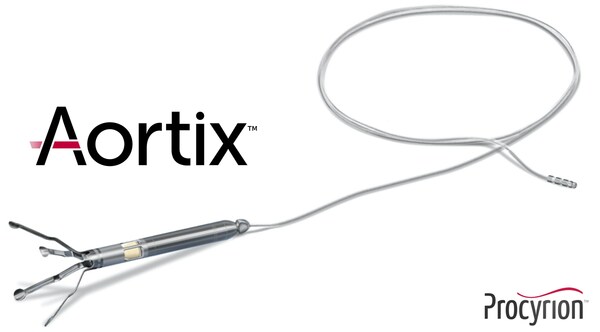
The Aortix CRS pilot study was presented during a late-breaking clinical science session at THT 2023, the second annual Technology and Heart Failure Therapeutics conference held March 20-23 in Boston, Massachusetts.
“Patients admitted to the hospital with CRS are the most difficult to treat,” commented Jennifer A. Cowger, MD, in Procyrion’s press release. “They often have persistent congestion even after aggressive intravenous diuretic therapy, leading to very poor outcomes with high rates of mortality and rehospitalization.”
Dr. Cowger, who is Section Head of Heart Transplantation and Mechanical Circulatory Support at Henry Ford Hospital in Detroit, Michigan, continued, “After being unresponsive to available medical therapy for more than a week, patients who were treated with the Aortix pump showed a significant increase in urine output resulting in a large loss of excess fluid and improvements in kidney function present at 30 days, indicating the potential of the Aortix therapy to disrupt the harmful cycle of CRS.”
As summarized in the company’s press release, the statistically significant observations from the Aortix CRS pilot study, which treated 18 patients at 10 centers in the United States and Australia, include the following:
- Rapid decongestion was demonstrated as patients shed on average 10.7 liters of excess fluid.
- Filling pressures (central venous pressure and pulmonary capillary wedge pressure) decreased by > 33%.
- Kidney function improved by a median of 29% at 30 days, as measured by estimated glomerular filtration rate.
- Cardiac function improved by a median of 34% at 30 days, as measured by N-terminal probrain natriuretic peptide.
- Shortness-of-breath symptoms were reduced by 46% at 30 days.
According to the company, the Aortix pump was placed in the descending thoracic aorta via a percutaneous catheter procedure and treated patients for a mean of 4.6 days to simultaneously unload and rest the heart and increase perfusion of the kidneys.
Procyrion’s Aortix device uses intra-aortic placement and harnesses fluid entrainment to pump blood without the need for a valve and provides physiologically natural delivery of therapy. The Aortix system can be implanted in approximately 45 minutes and retrieved in approximately 15 minutes at the completion of therapy. No fluid purges or expensive consoles are required to operate the device. Aortix is limited by Federal law to investigational use only and is not approved for sale in any geography, advised the company.
Eric S. Fain, MD, President and CEO of Procyrion, stated in the press release, “The consistent results from the pilot study indicate that Aortix therapy has the potential to be a major therapeutic advancement for CRS patients who have exhausted other treatment options. After years of development, it is very exciting to see how well the Aortix platform performs clinically, and we look forward to further demonstrating the effectiveness of the system in our upcoming DRAIN-HF pivotal trial, which the company plans to initiate later this year.”
Advertisement
Advertisement
