Advertisement
Advertisement
June 6, 2024
MiRus’ Siegel TAVR Device FIH Experience Presented
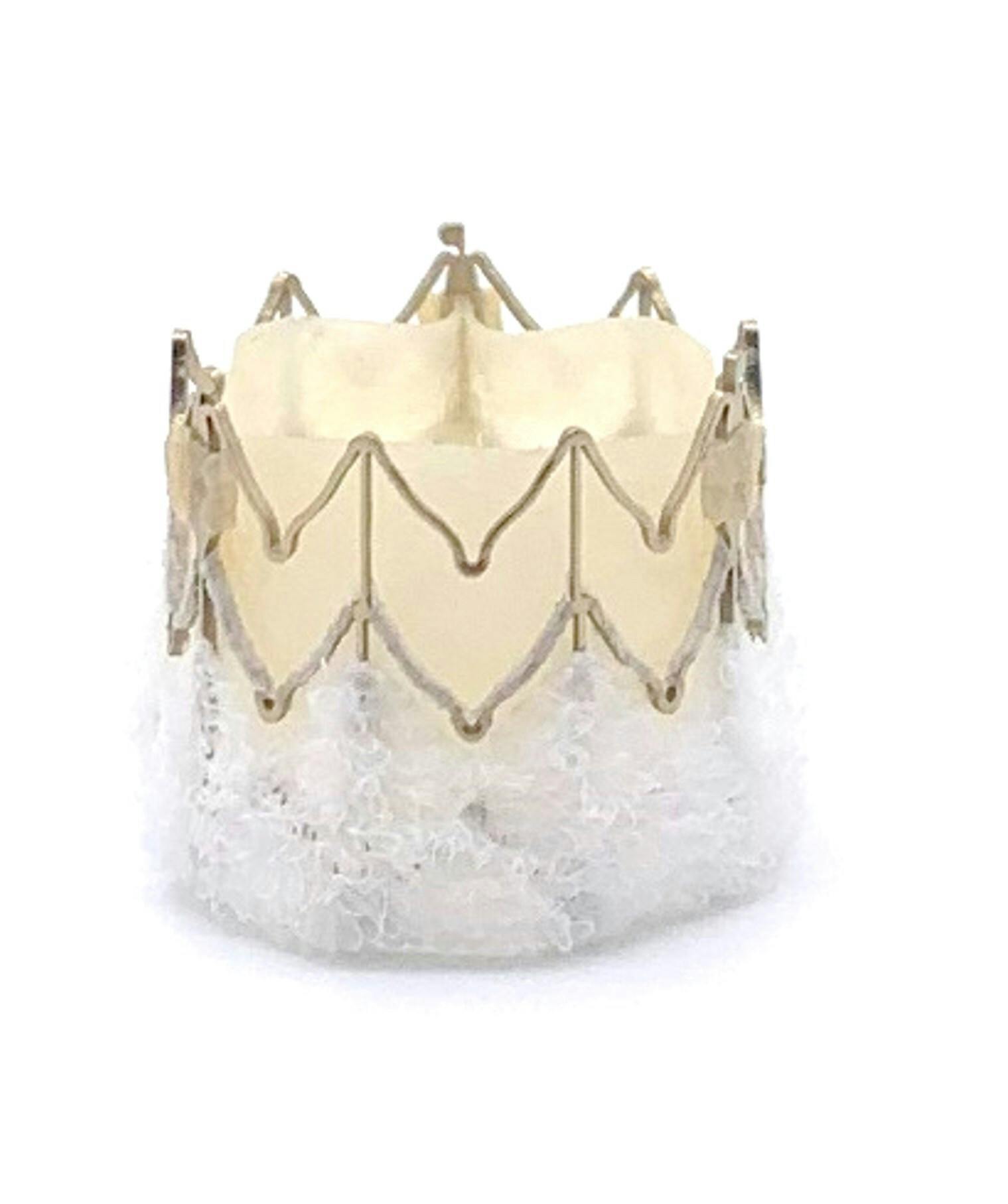 June 6, 2024—MiRus, LLC, which is headquartered in Marietta, Georgia, announced that the first-in-human (FIH) procedures were performed with the company’s Siegel 8-F transcatheter aortic heart valve.
Five sequential patients with severe, symptomatic aortic stenosis were treated by Christian Dauvergne, MD, Jorge Sandoval, MD, and Pradeep K. Yadav, MD, at the Instituto Nacional Del Torax in Santiago, Chile. Three cases were bicuspid aortic valves and two were tri-leaflet. Three patients had peripheral arterial disease with vascular access < 5.5 mm.
Dr. Yadav, who is Director of Structural Interventions at Piedmont Heart Institute in Atlanta, Georgia, presented the findings from the FIH experience with the device at New York Valves 2024: The Structural Heart Summit held June 5-7 in New York, New York.
According to the company, there was no mortality or stroke at 30 days and no patients required a permanent pacemaker or experienced vascular complications. At 30 days, the mean echo gradient was 6.7 mmHg; four of the five patients had no perivalvular leak (PVL); one bicuspid patient had trace PVL.
The nickel-free device’s rhenium alloys provide high yield strength, fatigue resistance, and minimal recoil, stated MiRus.
“The ease of use and hemodynamics were impressive,” commented Dr. Yadav in the company’s press release. “On the very first case, we comfortably achieved a deployment with 90% aortic and 10% ventricular positioning.”
Dr. Yadav further observed, “The lack of foreshortening is very helpful in precise deployment every time, a feature that implanters will love. Also, the frame strength and virtually no recoil allow cylindrical valve expansion with no waist even in complex bicuspid patients, which contributes to excellent hemodynamics and hopefully durability.”
Vinod H. Thourani, MD, Marcus Chairman of Cardiovascular Surgery and the Marcus Valve Center at Piedmont Heart Institute, stated in the press release, “This initial data is striking and potentially heralds a new age for transcatheter aortic valve replacement (TAVR). The ability to treat such complex patients with an 8-F system and without nickel exposure should make TAVR safer and more broadly accessible. From a surgical viewpoint, the very low pressure gradients and low PVL are critically important to implanters and our patients We are truly on the precipice of surgical-like outcomes with the Siegel transcatheter heart valve.”
Advertisement
Advertisement