Advertisement
Advertisement
December 13, 2023
MindMics’ Infrasonic Hemodynography Technology Studied for AS Detection in TAVR Procedures
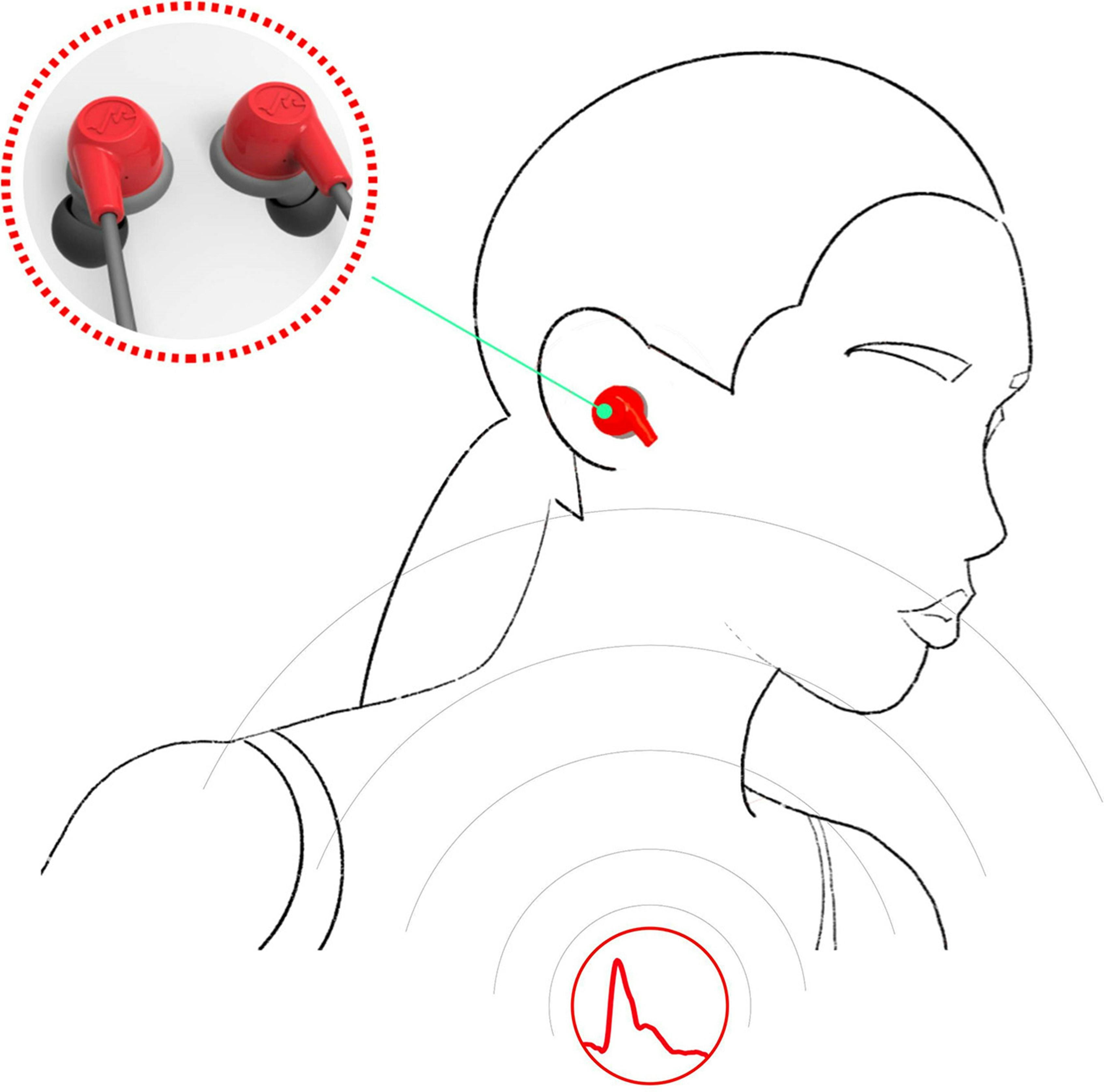 December 13, 2023—MindMics, Inc. reported results from a clinical study of its earbuds that use a new technology—noninvasive in-ear infrasonic hemodynography (IH)—to detect aortic stenosis (AS) murmur before and after transcatheter aortic valve replacement (TAVR) procedures.
MindMics’ next-generation health software platform is designed to monitor health by using every-day earbuds and repurposing existing microphones for noise cancellation and other embedded sensors.
According to the company, its IH technology monitors heart activity through detection of low-frequency acoustical vibrations in an occluded ear canal. The biosignals associated with the vascular hemodynamics that travel within arteries, fluids, bones, and muscles in proximity to the ear canal are amplified by a pressure increase of the sealed ear-canal cavity. These are passively detected as acoustic waveforms. The technology can be embedded into wearable devices, such as every-day in-ear headphones and hearing aids.
The company stated that the results from the ongoing prospective clinical study conducted by the Scripps Clinic in San Diego, California, indicate that MindMics’ IH technology can detect AS by capturing in-ear acoustic vibrations throughout the cardiac cycles.
The findings were published by Christine Shen, MD, et al in JACC: Case Reports.
“AS produces a typical systolic ejection sound detected on clinical auscultation,” commented Dr. Shen in the company’s press release. “We propose a new method of assessing AS through IH to detect its characteristic systolic ejection murmur.”
In the study, a patient with severe AS undergoing TAVR wore the MindMics IH earbuds and underwent simultaneous measurements with earbuds and echocardiography. The resulting IH waveform was limited to frequencies above 20 Hz.
Study Investigator Jal Panchal, who is Senior Data Scientist at MindMics, explained in the company’s press release, “Results showed that signals were detected at the start and end of systole, when the first (S1) and the second (S2) heart sounds are expected, respectively. Prior to TAVR, there was a midsystolic crescendo-decrescendo signal between S1 and S2, consistent with a characteristic AS murmur. Post TAVR, the S1 and S2 signals were present, but the midsystolic signal was no longer present.”
Robert Ciesielski, PhD, who is R&D Manager of MindMics, added, “We are grateful to our colleagues at Scripps and the patient for an opportunity to collect data during a highly invasive procedure of TAVR using our noninvasive in-ear device. We are excited to see that the features observed in our data closely follow those of the arterial pressure recorded with the cardiac catheter, both before and after the procedure of valve replacement. In addition, the data showed that our device is able to detect a characteristic structure of the AS heart murmur present before the procedure. This gives us strong motivation to continue our studies and expand them to include other types of heart murmurs.”
Advertisement
Advertisement
