Advertisement
Advertisement
March 11, 2024
Medtronic’s Evolut TAVR Platform Studied in Analyses of 4-Year EVOLUT Low Risk Trial Data
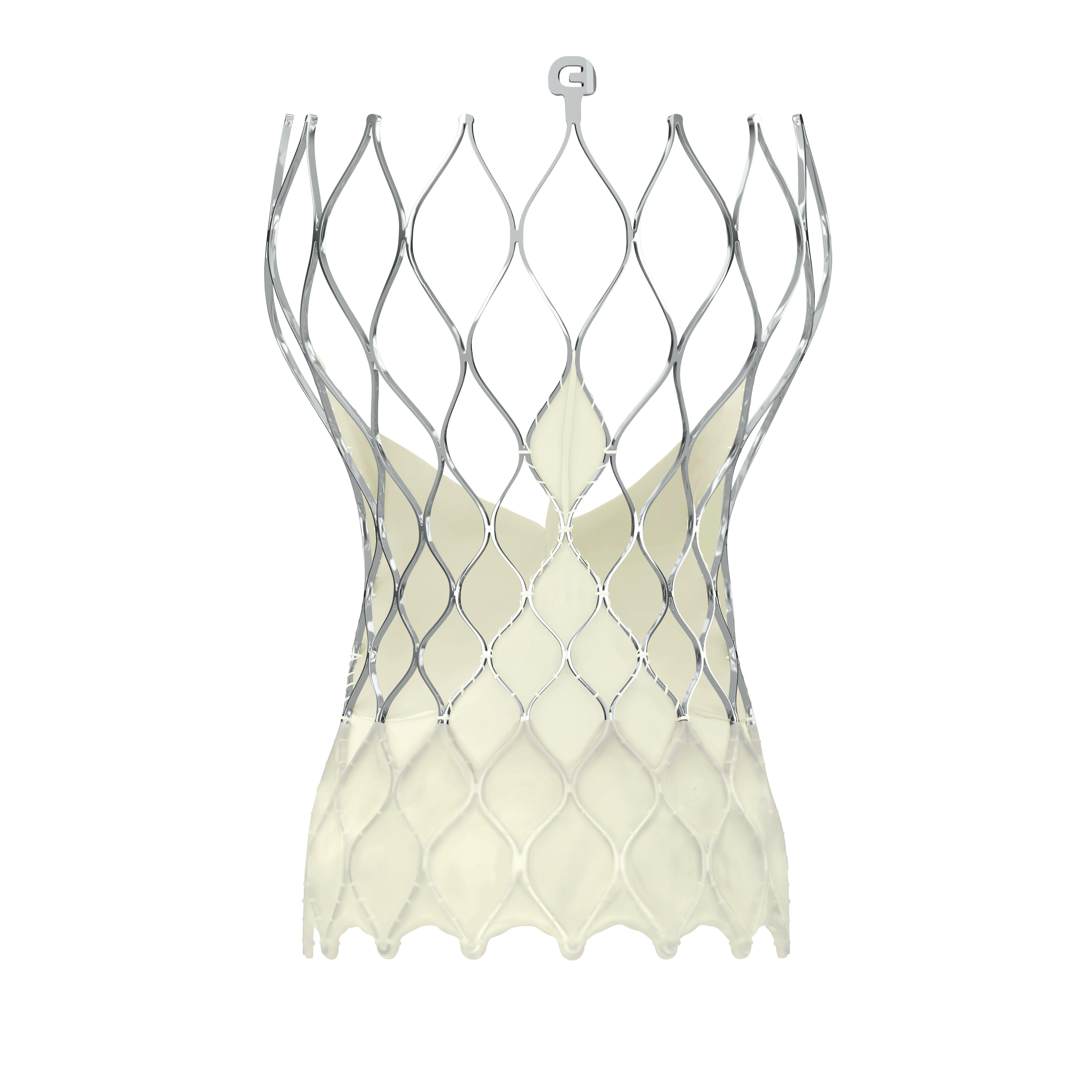 March 11, 2024—Medtronic announced two late-breaking data presentations on 4-year outcomes from the EVOLUT Low Risk trial of the company’s Evolut transcatheter aortic valve replacement (TAVR) platform for the treatment of symptomatic severe aortic stenosis.
A cost-effectiveness analysis demonstrated the positive economic value of TAVR using the Evolut device compared to surgical aortic valve replacement (SAVR) for low-risk patients. In addition, contemporary data from the EVOLUT Low Risk trial reinforced the long-term clinical outcomes of Evolut TAVR compared to SAVR in low-risk patients.
The EVOLUT Low Risk trial was a prospective, randomized, multicenter, noninferiority study to assess the safety and efficacy of the Evolut TAVR system compared to SAVR in low-risk patients.
The company advised that low-risk patients, defined as having a low predictive risk of 30-day surgical mortality, were randomized to TAVR with a Medtronic self-expanding, supra-annular Evolut R, Pro, or CoreValve bioprosthesis versus SAVR. A total of 1,414 patients underwent attempted implantation (730 TAVR, 684 SAVR).
The new findings were presented as late-breaking clinical trials at CRT 2024, the Cardiovascular Research Technologies annual meeting held March 9-12 in Washington, DC.
According to Medtronic, 4-year data from the EVOLUT Low Risk trial were analyzed to determine cost-effectiveness results of TAVR versus SAVR across the spectrum of surgical mortality risk. The findings showed a strong economic benefit of Evolut TAVR for low-risk patients from a United States health care system perspective.
The results demonstrate Evolut TAVR resulted in a lifetime incremental cost-effectiveness ratio (ICER) of $2,119 per quality-adjusted life year (QALY) gained, which is consistent with high economic value.
At 30 days, the estimated cost (including index procedure, hospitalization, and rehabilitation) was $5,189 lower with TAVR compared with SAVR ($45,887 vs $51,075, respectively).
Medtronic noted that within the United States health care system, current American College of Cardiology/American Heart Association guidelines consider an ICER < $50,000 per QALY gained to indicate “high value,” and an ICER between $50,000 and $150,000 per QALY gained is considered “intermediate value.” The investigators used 2022 Medicare data to obtain contemporary cost estimates for TAVR and SAVR index hospitalization along with key cost drivers.
In Medtronic’s press release, David J. Cohen, MD, discussed the cost-effectiveness findings from the EVOLUT Low Risk trial. Dr. Cohen is Director of Clinical and Outcomes Research at the Cardiovascular Research Foundation; Director of Academic Affairs at St. Francis Hospital, in Roslyn, New York; and a faculty member at Columbia University in New York, New York.
“As more and more patients are diagnosed with aortic stenosis and undergo TAVR, it is important to use devices that offer exceptional results for patients while also delivering economic value to the health care system,” commented Dr. Cohen. “These data complement the extensive body of clinical evidence for Evolut TAVR and demonstrate that it is a solution that provides substantial benefit to our patients in a highly cost-effective manner.”
In the second analysis from the EVOLUT Low Risk trial presented at CRT, investigators reevaluated the 4-year data with the exclusion of Trifecta surgical valves (Abbott) that were previously withdrawn from the market because of durability concerns. This analysis included the evaluation of 1,292 attempted implantations in patients who were randomized to TAVR with a self-expanding, supra-annular CoreValve/Evolut R/Pro valve or to SAVR.
In this contemporary analysis, all-cause mortality or disabling stroke rates at 4 years were 10.7% in the Evolut TAVR cohort versus 14.2% in the SAVR cohort (P = .06). Evolut TAVR had significantly better hemodynamics, an indicator of valve durability, compared to SAVR using contemporary valves (mean gradient, 9.8 mm Hg for TAVR vs 11.8 mm Hg for SAVR; P < .001) at 4 years.
“The Evolut TAVR system continues to demonstrate positive clinical outcomes compared to SAVR,” commented Basel Ramlawi, MD, in Medtronic’s press release. “These new data support the growing body of evidence for TAVR at a time when aortic stenosis is the most common surgically managed heart valve disease.”
Dr. Ramlawi, System Chief of Cardiothoracic Surgery at Main Line Health System and Codirector of the Lankenau Heart Institute in Wynnewood, Pennsylvania, stated further, “We are encouraged by the results of this contemporary data, showing that we can help improve outcomes in patients with less risk of mortality and disabling stroke compared to the surgical option.”
Advertisement
Advertisement