Advertisement
Advertisement
January 14, 2026
In Memoriam: Medtech Pioneer Dr. Thomas J. Fogarty, 1934-2025
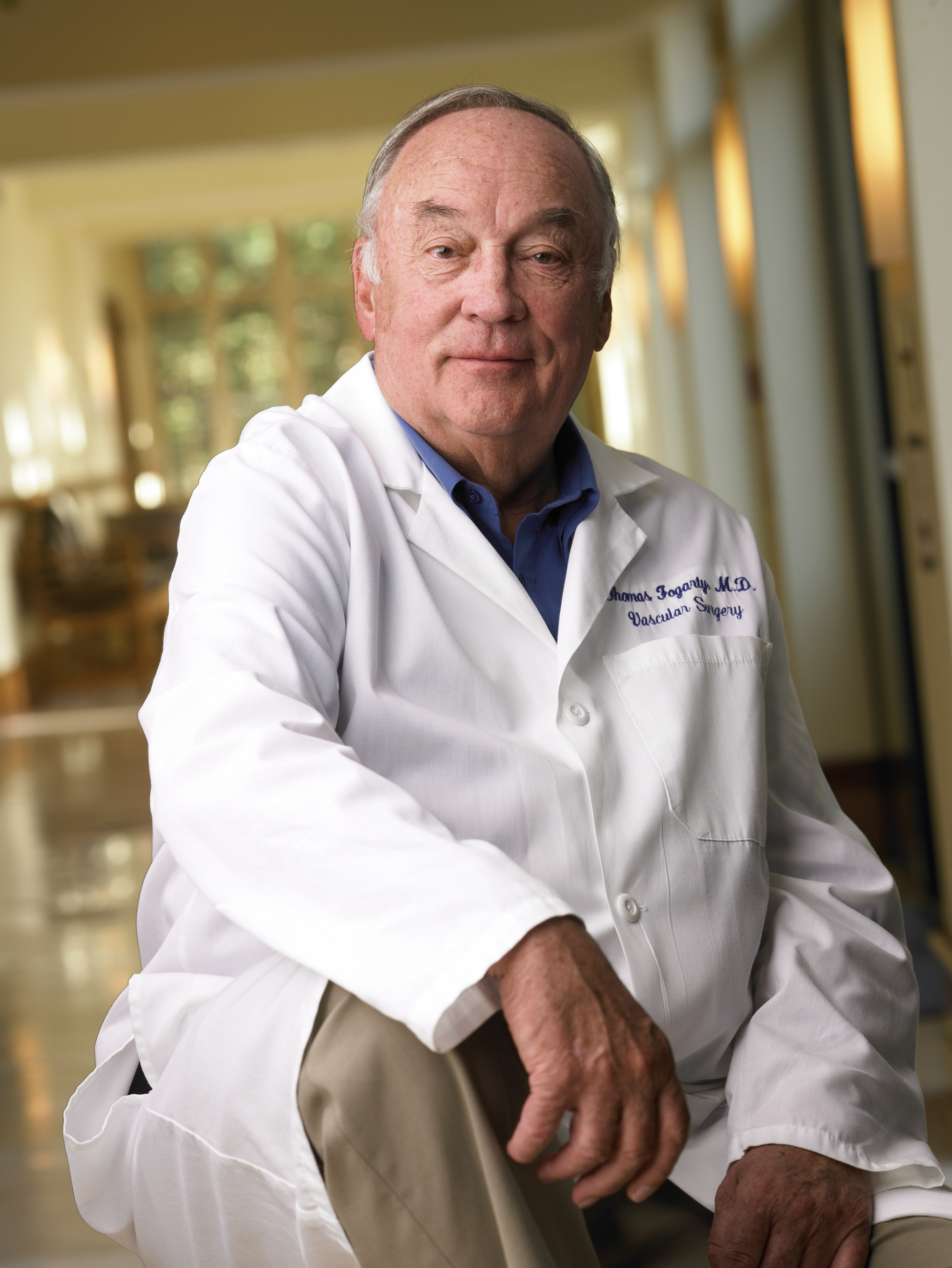 January 14, 2026—Family, friends, and colleagues are remembering Thomas J. Fogarty, MD, who died at age 91 on December 28, 2025.
Dr. Fogarty was a surgeon, prolific medical device inventor, and founder of Fogarty Innovation, which is a nonprofit education incubator dedicated to advancing medical innovation. He is survived by his wife, Rosalee; four children; and 10 grandchildren.
Dr. Fogarty’s passing was announced by Fogarty Innovation, who described the cardiovascular surgeon as a gifted engineer with an innate ability to envision practical solutions to the problems he observed at the bedside: “As an innovator and entrepreneur, his relentless pursuit of ‘a better way,’ fueled numerous inventions that fundamentally changed surgical practice.”
“We are immensely grateful for all Tom did for patient care, for the medtech innovation ecosystem, and for so many of us personally—as a leader, a mentor, and a friend,” colleagues from Fogarty Innovation shared. “His relentless curiosity, refusal to accept the status quo, and boundless imagination reshaped the field and continue to inspire generations of innovators. We will miss him more than we can say.”
Dr. Fogarty’s numerous inventions include the Fogarty balloon embolectomy catheter, the Hancock tissue heart valve, and the AneuRx endovascular aortic stent graft. Fogarty Innovation noted that he was awarded more than 190 medical patents and founded or cofounded more than 45 medical technology companies. In the days after his passing, inventors and past and present employees of these companies shared their gratitude and colorful memories of his unique and effective approach to mentorship.
Throughout his career, Dr. Fogarty received numerous honors recognizing his contributions to medical science, including the Lemelson-MIT Prize and induction into the National Inventors Hall of Fame. In October 2014, he was awarded the Presidential Medal of Technology and Innovation, the country’s highest honor for achievement and leadership in advancing the fields of science and technology.
In 2024, the Thomas J. Fogarty Innovation Prize was launched by Fogarty Innovation with the support of the Linda & Mike Mussallem Foundation to honor Dr. Fogarty by recognizing transformational medical technologies and the collaboration and grit required to bring new therapies to patients and improve human health, stated Fogarty Innovation.
We at Endovascular Today enjoyed Dr. Fogarty’s friendship, accessibility, and the invaluable insights he freely shared. In the days since his passing, we have received remembrances from friends and colleagues from throughout his career.
Dr. Fogarty worked closely with Edwards Lifesciences, including directly with their engineering teams and CEO to develop interventional devices. He was an inventor first (starting while quite young), but no less a friend and mentor to his surgical colleagues. Although many of Dr. Fogarty’s contributions have been and will continue to be recognized, his efforts to aid the FDA in supporting innovation are less familiar but no less remarkable.
Mike Mussallem
Former Chairman and CEO of Edwards Lifesciences and Co-Founder of the Linda and Mike Mussallem Foundation
While Tom Fogarty is rightfully well known for the lifesaving inventions he developed, another big part of his inspiring legacy includes the countless people he empowered to think differently and act boldly to solve health care’s toughest problems. Tom was one of a kind, with a great sense of humor, and those who knew him well can attest that his candor was legendary. He believed that with the right innovation, medicine could always do better for patients, and he lived that conviction with integrity, generosity, and unwavering drive. I am deeply grateful for his friendship, and the standard he set for all of us who strive to make a difference in health care.
Rodney A. White, MD
Director, Vascular Surgery Services at the MemorialCare Heart & Vascular Institute at Long Beach Medical Center
I met Tom at an NIH contractors meeting in the mid-1970s. With our common interest in biomaterials and device development, we established an immediate collaboration. Using intravascular imaging technologies in our animal laboratory at Harbor-UCLA, we developed a means to evaluate his new vascular implant ideas in a qualitative manner, including an infrarenal aneurysm model that allowed us to make serial improvements to Tom’s bifurcated infrarenal graft. This enabled successful FDA evaluation and approval of the AneuRx endograft for clinical use in 1999.
Beyond our clinical and investigational activities, Tom became a mentor and trusted friend, with frequent contact regarding everything from personal financial to legal and health-related issues, and much more. He was instrumental in guiding me to Barrow for cervical fusion when I was losing motor and sensory function of my right arm and subsequent lumbar spine fusion that threatened my career. He helped my recovery by providing a 10-day stay at his guest house, complete with catered meals and physical therapy.
Beyond medicine and science, Tom tried to expand my interests to hunting and fishing. He invited me several times to his excursions, even going so far as to send an invitation on Fogarty letterhead via certified mail.
Tom’s unprecedented contributions to science and medicine are overshadowed only by his compassion and dedication to family and friends.
Christopher K. Zarins, MD
Vascular Surgeon and Professor of Surgery Emeritus, Stanford Medicine; Co-Founder, HeartFlow
Tom Fogarty was a dear friend, mentor, and a constant source of inspiration. He was a visionary who was not satisfied by the status quo and he challenged us to find better ways to care for our patients, with new medical device innovations, better diagnostics, less-invasive interventions or simply with improved bedside care. Nothing was too big a problem or too small a problem for Tom to consider. He was the first to try new ideas and the first to discard ideas that did not benefit patients. “The patient always comes first” was Tom’s mantra and I abide by that. Tom was an extraordinary man and he will be greatly missed.
Frank Arko, MD
Director, Endovascular Surgery and Co-Director of the Aortic Institute at Carolinas Medical Center, Sanger Heart and Vascular Institute
Dr. Fogarty was a true titan of vascular surgery and medical innovation. My career was forever shaped by that first clinical encounter when, with the quiet confidence of a master, he joined me for a bilateral popliteal embolectomy. When I thought I could handle it alone, he didn’t just watch; he taught—showing me the subtle, brilliant technique of using air instead of saline in the catheter, a practice I carry with me to this day.
Beyond the operating room, Tom was the architect of my entrepreneurial spirit. From the early days of AneuRx and Bacchus Vascular to guiding my first company from a mere idea to a successful exit, he demystified the worlds of patents, angel investors, and team building. My lifelong focus on the aorta and thrombus is a direct legacy of his influence. Alongside mentors like Clifford Buckley and Christopher Zarins, Tom stands as a foundational pillar of my professional life—a man who taught me that a surgeon’s impact should be measured not just by the lives they save, but by the innovations they leave behind.
Megan Moynahan, MS
Executive Director, Institute for Functional Restoration, Case Western Reserve University
Most people who knew Tom Fogarty remember him as a mentor, guiding medtech start-ups with wisdom while promoting innovation. But he shaped more than the entrepreneurs themselves. He had a lasting impact on the entire innovation ecosystem, including many of us at the FDA.
In 2010, Dorothy Abel and I, and a small group of staff at the FDA, were tasked with creating the “Innovation Pathway” for medical devices. Envisioned as a program that would change FDA’s approach in order to facilitate true innovation, the program featured a hand-picked group of Entrepreneurs-in-Residence who were tasked with guiding the FDA. In brainstorming possible members of the Entrepreneurs-in-Residence, Tom’s name instantly came to mind, and we reached out to ask him to join the program.
Tom did not suffer fools. The idea that the FDA—the regulatory foot stomping on the brakes of the medtech industry—was going to somehow spur innovation must have seemed ludicrous to him. He nevertheless agreed to join the Entrepreneurs-in-Residence advisory team, most likely as a favor to Dorothy, and thus began a crash course many of us would never forget.
In a presentation to our team at that time, Tom recounted his experience developing the first balloon catheter around 1960. As Tom described hand-tying the finger of a latex glove to a urethral catheter to create the first balloon catheter, I remember listening with a combination of amazement and horror. Amazement at the sheer ingenuity of his methods, and horror that there would have been no safety oversight by the FDA at that time; FDA’s center overseeing medical device approvals would not be formed until 1976.
In reminiscing about those days, Tom decried the increasingly oppressive state of regulatory oversight. I remember Tom saying that having your innovative product reviewed by the FDA was like having the “pupils lecture the teacher.” Tom asserted that FDA reviewers lacked real-world experience in device design, manufacturing, and clinical practices. He wasn’t wrong, but the words stung. During the Q&A, I called for the mic to ask what the FDA could do to facilitate medical device innovation. In his typical brusque style, he replied that FDA should “get out of the way.” Then, possibly remembering his new role as Entrepreneur-in-Residence, he quickly added a few kind words about the Innovation Pathway program.
Taking Tom’s words to heart, however, those of us designing the Innovation Pathway program were keen to integrate his thinking. Giving people at the FDA “permission” to think outside the box, challenge norms, try new ideas, and make decisions that facilitate forward progress were hallmarks of the program that were inspired by Tom’s thinking. During our time on the Innovation Pathway program, many of us at the FDA were permanently changed by our relationship with Tom, and we count ourselves among the many people shaped by his mentorship.
Dorothy Abel, BS
Partner, Abel and Wolf Consulting; Past Senior Scientific Reviewer and the FDA CDRH Vascular and Endovascular Prosthesis Expert
Although there are many adjectives to define Thomas J. Fogarty, MD, and his demeanor, candor stands out as an illustrative descriptor. Of course, candor in absence of comprehension, wisdom, and expertise is not remarkable; fortunately, none of these limitations were applicable to Tom. Whether on a panel, in an FDA meeting, or during a social interaction, one never had to guess what Tom was thinking, and what he was thinking was consistently profound and often entertaining.
The first time I saw the legendary doctor (circa mid 90s), it was at a Research Initiatives in Vascular Disease meeting where I gave my first presentation representing the FDA. There was a crowd around him, hanging on his every word. I learned quickly that Tom brought out intense attentiveness in any audience. If I’m being honest, for me it wasn’t just that he had so much to offer, it was that he had so much to offer that I could barely follow. Fortunately, Tom didn’t hold that against me (or my lack of presentation skills) and that same year he invited me to participate in the Stanley Crawford Critical Issues session at the SVS meeting. I believe he saw an opportunity to get FDA integrated into the world of vascular surgery, an effort that continued over the years, having a significant impact on the collaborative efforts to appropriately evaluate vascular devices.
Tom and I got to know each other soon after that SVS meeting when we had an opportunity to socialize during a VEITH meeting. During our casual conversation, Tom asked what I did before joining the FDA. Even though I feared there was a high likelihood of severing our new connection, I answered honestly. I was a cocktail waitress at the Sea Galley Restaurant while in college. Tom instantly and enthusiastically exclaimed that everyone should work in some sort of service industry to learn about people and respect. Who would have thought that my waitressing experience would provide the foundation for such an important relationship? Many years later he worked with me while he was participating as an Entrepreneur-in-Residence to define guidelines for FDA and industry communication that were deeply seated in the need for mutual respect.
It has been amazing to have had the opportunity to interact with Tom over the years, whether brainstorming about device evaluation challenges, discussing changes in FDA leadership, listening to stories about the old days at NIH where there would be cookouts when the animal studies were completed, or comparing Labradors to Chesapeake Bay Retrievers. Although he will be greatly missed, all the world has been and will continue to be blessed through Tom’s life.
Advertisement
Advertisement
