Advertisement
Advertisement
October 24, 2023
EVOLUT Low-Risk Trial Compares TAVR and SAVR Outcomes at 4 Years
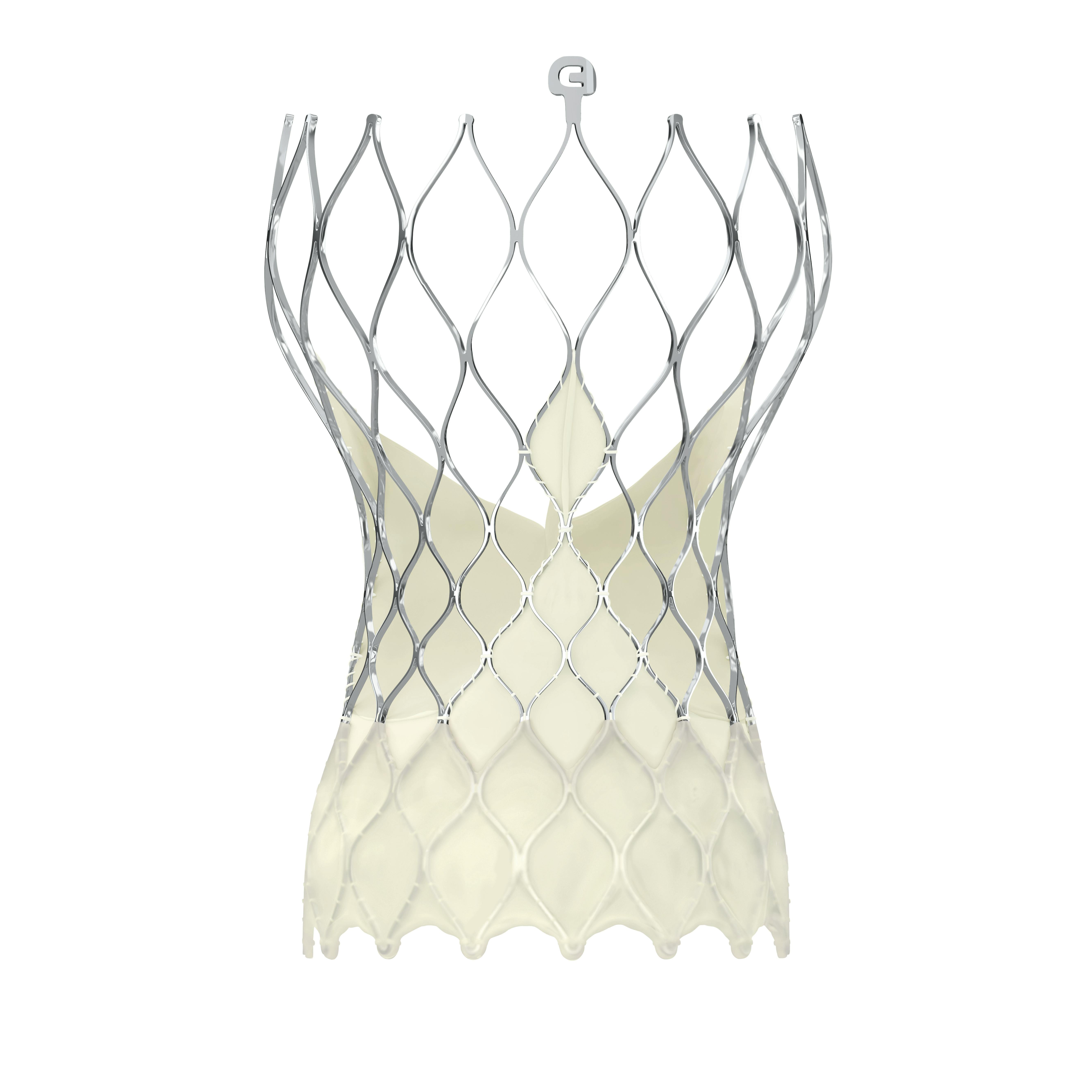 October 24, 2023—Four-year data from the EVOLUT trial found that patients who have severe aortic stenosis and are at low surgical risk had better valve performance and demonstrated clinical outcomes diverging with transcatheter aortic valve replacement (TAVR) compared with surgical aortic valve replacement (SAVR). The Evolut Low-Risk trial is funded by Medtronic, manufacturer of the Medtronic Evolut TAVR system used in the comparison.
Michael J. Reardon, MD, presented the findings at TCT 2023, the 35th annual Transcatheter Cardiovascular Therapeutics scientific symposium held October 23-26 in San Francisco, California. The findings were simultaneously published online as a research letter by John K. Forrest, MD, et al in Journal of the American College of Cardiology.
According to the TCT press release, this longer-term data from EVOLUT, which has shown favorable early results, will help determine if the self-expanding, supra-annular valve continues to be beneficial over time. In March 2023, Dr. Forrest presented the 3-year data from the Evolut Low Risk trial at ACC.23/WCC, the American College of Cardiology’s annual scientific session together with the World Congress of Cardiology held in New Orleans, Louisiana. The 3-year findings were simultaneously published by Dr. Forrest et al in Journal of the American College of Cardiology (2023;81:1663–1674).
As summarized in the TCT 2023 press release, the study randomized 1,414 patients 1:1 to undergo TAVR (n=730) or SAVR (n=684) from May 2016 to May 2019. At 4 years, 94.7% of TAVR and 89.2% of SAVR patients were available for evaluation.
The primary endpoint of all-cause mortality or disabling stroke at 4 years was 10.7% for TAVR versus 14.1% for SAVR (Hazard ratio, 0.74; 95% CI, 0.54-1.00; P = .05).
In addition, the difference between the two groups for the primary endpoint continued to increase over time. At 1-year follow-up the difference between the two groups was 1.8% and at 4 years, the difference was 3.4%.
The results for the individual components of the primary endpoint were 9.0% compared to 12.1% (P = .07) for all-cause mortality and 2.9% versus 3.8% (P = .32) for disabling stroke for TAVR versus SAVR. The composite of all-cause mortality, disabling stroke, or aortic valve rehospitalization was 18.0% with TAVR and 22.4% with SAVR (P = .04).
Furthermore, TAVR had significantly better hemodynamics (P < .001, at all timepoints) as well as significantly less mean gradients ≤ 20 mmHg (4.0% vs 8.9%; P = .002) or severe prosthesis-patient mismatch (1.1% vs 3.5%; P = .008).
“This longer-term data from the EVOLUT trial can help guide treatment decisions for low-risk patients with severe aortic stenosis,” commented Dr. Reardon in the TCT press release. “Not only did TAVR provide better initial outcomes compared to SAVR, but the benefit also continued to increase over time. Patients will be followed for 10 years to determine whether there is additional divergence of the clinical outcomes.” Dr. Reardon is Allison Family distinguished chair in cardiovascular research and professor of cardiovascular surgery at Houston Methodist in Houston, Texas.
Advertisement
Advertisement
