Advertisement
Advertisement
October 26, 2023
Edwards Pascal Precision System Evaluated at 1-Year in CLASP IID RCT and Registry Data
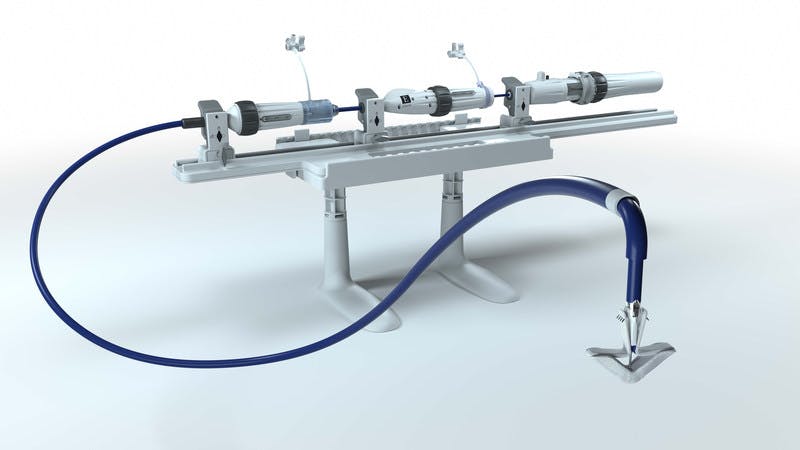 October 26, 2023—Edwards Lifesciences announced 1-year results from the CLASP IID randomized controlled trial (RCT), which is directly comparing two contemporary mitral transcatheter edge-to-edge repair (TEER) therapies, as well as 1-year results from the CLASP IID registry.
The prospective CLASP IID RCT is comparing the safety and effectiveness of Edwards’ Pascal Precision system versus the MitraClip system for mitral regurgitation (MR) reduction. Results were reported on 300 patients with 2:1 randomization (204 Pascal and 96 MitraClip) with clinical events committee and echo core lab adjudication.
The CLASP IID registry enrolled 98 patients.
The trial and registry included 57 sites in the United States, Canada, and Europe, with most clinical operators new to using the Pascal Precision system and all having experience with the MitraClip system.
According to the company, the studies confirm the clinical and quality-of-life benefits of MR reduction with Edwards’ Pascal Precision system in a broad population of patients with degenerative MR.
Results from the CLASP IID RCT and the registry were presented in a late-breaking clinical trial session at TCT 2023, the 35th annual Transcatheter Cardiovascular Therapeutics scientific symposium held October 23-26 in San Francisco, California. Simultaneously, the findings from the RCT were published by Firas Zahr, MD, et al online in JACC: Cardiovascular Interventions. The registry data were published by Robert L. Smith, MD, et al online in JACC: Cardiovascular Interventions.
As summarized in Edwards’ press release, patients enrolled in the CLASP IID pivotal trial had significant symptomatic, degenerative MR and were determined to be at prohibitive surgical risk. Patients enrolled in the CLASP IID registry met those same criteria but were deemed ineligible for randomization.
At 1 year, the CLASP IID RCT showed a freedom from major adverse events rate of 84.7% and significant and sustained MR reduction, with 95.8% of patients achieving MR ≤ 2+ with the Pascal Precision device.
The company noted that increasingly, the goal of MR reduction with TEER is to achieve MR ≤ 1+ because contemporary evidence suggests reduced regurgitation may correlate with improved long-term patient outcomes.
At 1 year, 77.1% of Pascal Precision patients in the trial achieved a MR rate of ≤ 1+. The Pascal system also showed sustained outcomes of high survival, low heart-failure hospitalization, and meaningful quality-of-life improvements.
“These data from the CLASP IID randomized trial and registry further advance mitral edge-to-edge repair as an important treatment option for a wide range of very sick patients who suffer with debilitating symptoms,” commented study investigator Dr. Zahr in Edwards’ press release “Patients receiving the Pascal system experienced significant improvements in functional capacity and quality of life that were sustained for 1 year.”
Dr. Zahr is director of Interventional Cardiology and codirector of the Complex Heart Valve Program at Oregon Health & Science University in Portland, Oregon.
To build robust real-world evidence, Edwards conducting a 5-year postmarket registry enrolling patients in the United State who receive the Pascal Precision system. Additional ongoing studies of the Pascal system include the single-arm CLASP trial and European postmarket MiCLASP registry.
The Pascal Precision system is approved for degenerative mitral regurgitation in the United States and Japan. In Europe, it has received CE Mark approval for the treatment of degenerative and functional MR and tricuspid regurgitation, advised Edwards Lifesciences.
Advertisement
Advertisement
