Advertisement
Advertisement
July 20, 2022
Cathbot, Joint Venture of Robocath and MicroPort, Concludes Clinical Study in China of R-One Robotic System for PCI
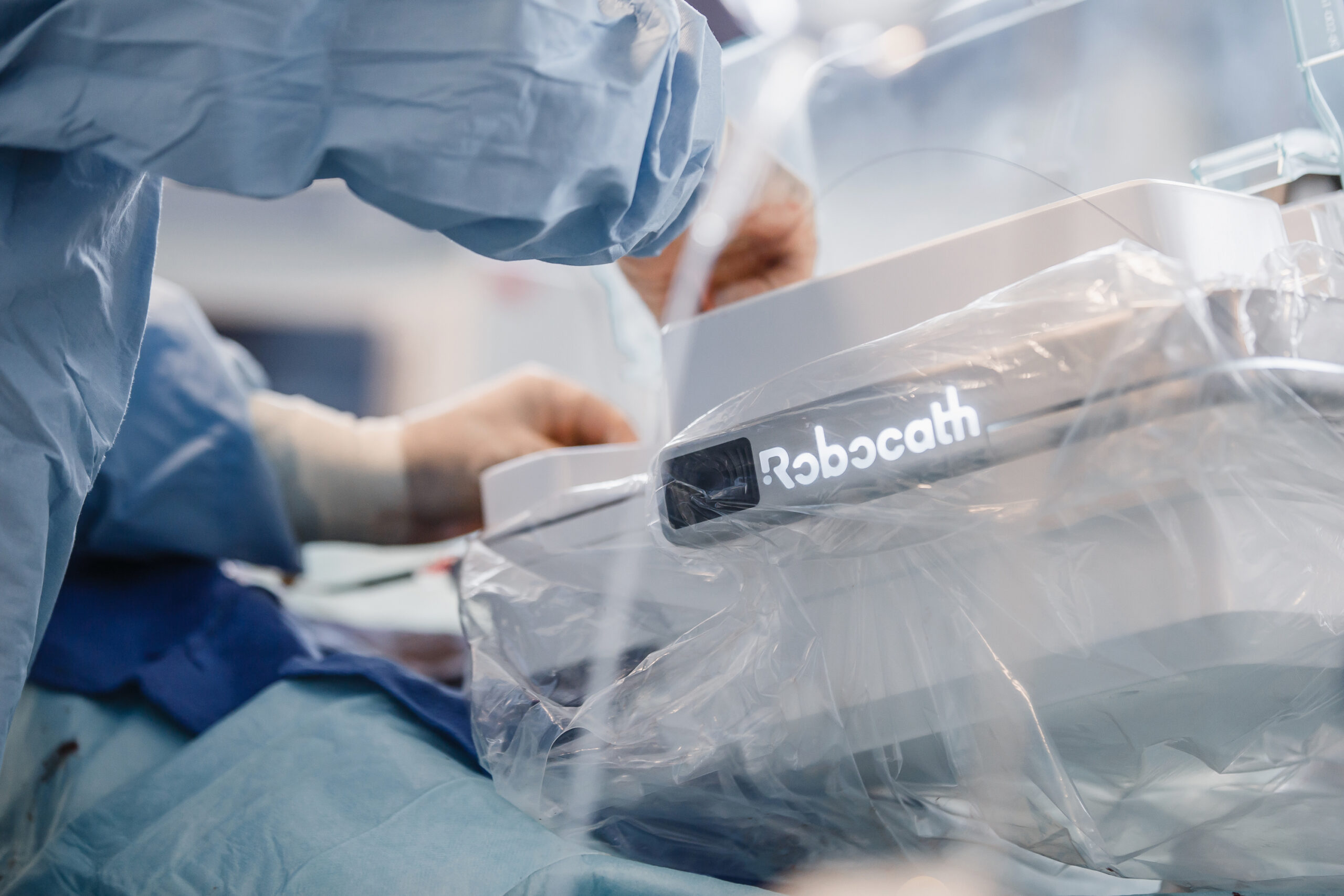 July 20, 2022—Robocath, a developer of robotic platforms for the treatment of vascular diseases based in Rouen, France, announced that its joint venture, Cathbot, has enrolled the last patient in its clinical study in China. Robocath established Cathbot in 2020 with Shanghai, China-based MicroPort through its robotic subsidiary MedBot.
According to the company, this is the first step towards obtaining approval from China’s National Medical Products Administration for the commercialization of its R-One robotic solution for percutaneous coronary intervention (PCI) in the Chinese market, where this is the first clinical study conducted on this scale in the field of vascular robotics.
R-One received European CE Mark approval in 2019. In a prospective, multicenter, nonrandomized, single-arm clinical trial, R-One demonstrated safety and efficacy as it achieved more than 95% technical procedure success with no major adverse cardiovascular events.
Robocath stated that the multicenter clinical study began in November 2021 and has enrolled 149 patients in 6 months as scheduled despite conditions linked to COVID-19. The last patient was enrolled in May 2022.
Results of the study will be published in March 2023 and commercialization in China is expected to begin in 2023, the company advised.
The following four hospital centers participated in the trial:
- No. 301 Hospital with Professor Yundai Chen, Director of the cardiology department
- Shanxi Cardiovascular Hospital with Professor Jian An, of the department of cardiovascular medicine and Dean of the hospital
- Meizhou People’s Hospital with Professor Zhixiong Zhong, Dean of the hospital
- People’s Hospital of Xinjiang Uygur Autonomous Region with Professor Yining Yang, dean of the hospital
In Robocath’s press release, Prof. Chen commented, “I am deeply impressed by the accuracy and quick learning curve of R-One. Not only can it complete the positioning of the balloon and stent catheter precisely, but it also enables manipulation of two guidewires, one of them being parked in a stand-by path, facilitating complex PCI presenting tortuous and/or calcified lesions. This could reduce the risk of intraoperative and postoperative complications, which would benefit both patients and operators.”
Prof. An added, “The simple and intuitive design of R-One is very convenient for doctors to operate with. We can get started after only short-term training. Additionally, we can complete the intervention whilst being totally protected by sitting in front of the x-ray–proof console and manipulating the devices using only the joysticks. We look forward to working with R-One on a daily basis to benefit more patients and doctors.”
Prof. Zhong stated, “R-One drastically improves our working conditions. First, we can operate while fully protected from radiation; compared to manual interventions where we need to stand for long hours, only a few centimeters from the x-ray tube, which can induce serious diseases, like cancer, and orthopedic injuries. Second, it offers a high level of precision which directly benefits the patient.”
Prof. Yang commented, “During the clinical trial, R-One has been reliable in several consecutive PCI procedures. This technology will benefit doctors and many patients living with cardiovascular diseases all over the country: today, in China, more than one million procedures are performed annually across roughly 2,000 PCI centers.”
Philippe Bencteux, President and Founder of Robocath and President of Cathbot, advised in the press release, “The completion of this clinical trial is a crucial milestone in our development. It is the first PCI robotic multicenter trial completed in China. I am very impressed with the commitment of the Cathbot team and the medical staff. They worked very hard to make it happen on time and to maintain our strategic plans despite the lockdowns. I sincerely thank all of them. Our greatest global ambition is to be able to better treat cardiovascular diseases. R-One will allow the medical staff to work safely while bringing precision to the intervention.”
Lucien Goffart, CEO of Robocath, added, “We look forward to receiving the results of this study, that will undoubtedly confirm the ease of use and intuitiveness of R-One. This clinical trial is the first step towards the commercialization of R-One in China.”
Finally, Dr. Chao He, who is President of MicroPort MedBot, stated in the press release, “In the field of vascular robotics, the successful completion of this multicenter clinical trial project with R-One is an important milestone for Cathbot. It is of extraordinary significance for promoting more accurate and intelligent interventional medicine. In the future, R-One will be equipped with 5G and artificial intelligence features and combined with technologies such as vascular structure imaging and hemodynamic monitoring to achieve more innovative breakthroughs. Our ambition is to provide the best treatment for patients thanks to accurate, intelligent, and better integrated robotic solution.”
Advertisement
Advertisement
