Advertisement
Advertisement
July 21, 2021
Boston Scientific’s Watchman FLX Meets 24-Month Secondary Efficacy Endpoint in PINNACLE FLX Trial
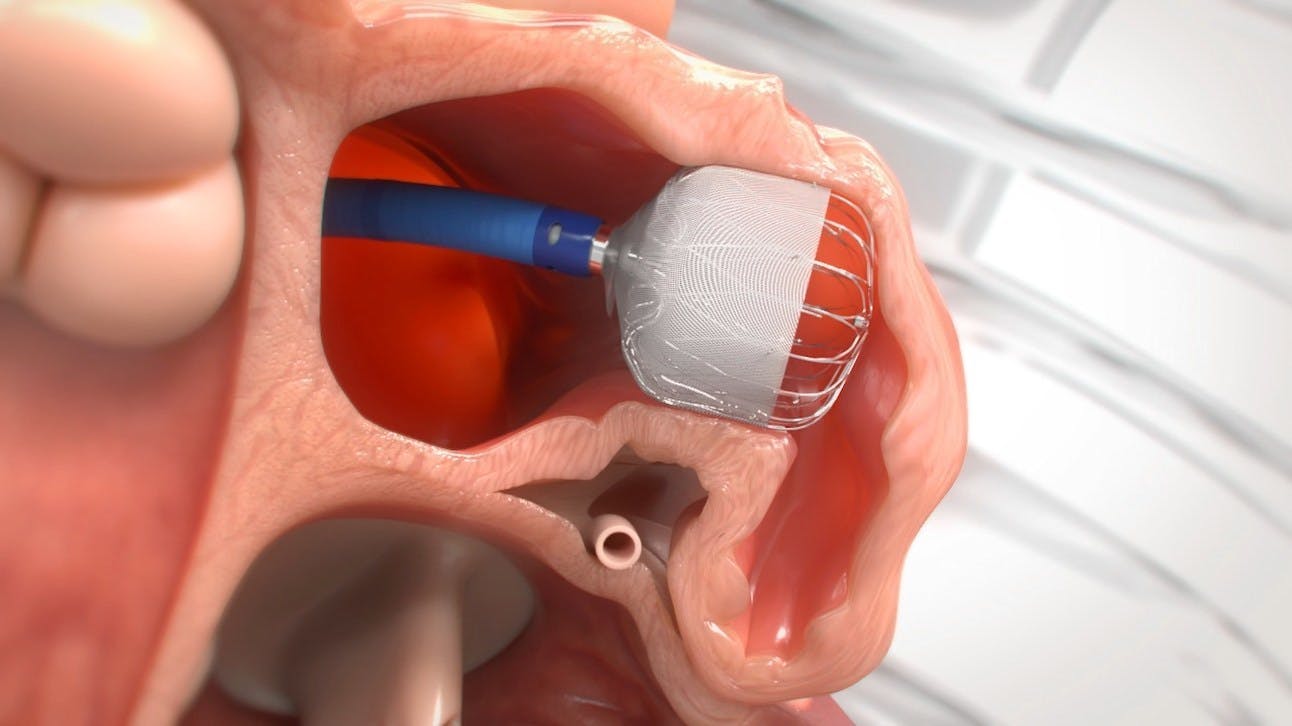 July 21, 2021—Boston Scientific announced the 24-month results from the PINNACLE FLX clinical trial assessing the safety and efficacy of the company’s next-generation Watchman FLX left atrial appendage (LAA) closure device for patients with nonvalvular atrial fibrillation (NVAF). The study evaluated the Watchman FLX device as an alternative to long-term oral anticoagulation therapy, including nonvitamin K antagonist oral anticoagulants (NOACs), for stroke risk reduction in patients with NVAF.
The data were presented as late-breaking clinical science at TVT: The Structural Heart Summit held July 20-22, 2021, in Miami Beach, Florida.
According to Boston Scientific, the prospective, nonrandomized PINNACLE FLX trial included 400 patients in the United States with NVAF who were eligible for anticoagulation therapy to reduce the risk of stroke but had appropriate rationale to seek a nonpharmaceutical alternative. Previously, the trial met its 12-month primary safety and efficacy endpoints.
Now, PINNACLE FLX met its secondary effectiveness endpoint—defined as the occurrence of ischemic stroke or systemic embolism over 24 months—with a rate of 3.4% compared to the performance goal of 8.7%. In addition to the low rate of ischemic stroke, the data through 24 months demonstrated that no patients experienced a device embolization or pericardial effusion requiring cardiac surgery, all of which is favorable in the context of previous clinical studies.
Saibal Kar, MD, a coprincipal investigator of the study, is an interventional cardiologist at Los Robles Regional Medical Center and Bakersfield Heart Hospital, California.
“These findings demonstrate sustained device performance over 2 years and reinforce the excellent safety and efficacy profile of the Watchman FLX technology,” commented Dr. Kar in the company’s press release. “Building upon the low complication rates and 100% rate of effective LAA closure seen at 12 months, the 3.4% rate of ischemic stroke and systemic embolism at 24 months is very encouraging in this complex, elderly patient population.”
The company advised that it continues clinical research on the Watchman FLX device for use in patients with NVAF via two large prospective, randomized controlled trials the OPTION and CHAMPION-AF clinical trial.
The OPTION trial is comparing the Watchman FLX device to oral anticoagulants in patients who also undergo a cardiac ablation procedure. CHAMPION-AF is studying a broader anticoagulant-eligible patient population to evaluate the device against NOACs for embolic stroke prevention, stated Boston Scientific.
The next-generation Watchman FLX device, which received FDA approval in July 2020 and CE Mark in March 2019, is now used in lieu of the previous-generation device in approximately all implantations in the United States and Europe, advised Boston Scientific.
Advertisement
Advertisement
