Advertisement
Advertisement
March 1, 2024
Boston Scientific’s Agent Drug-Coated Balloon Receives FDA Approval
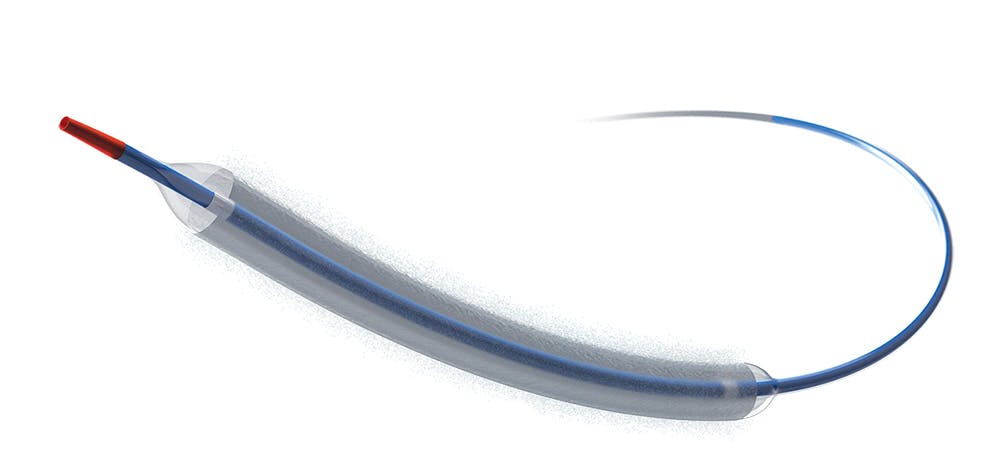 March 1, 2024—Boston Scientific Corporation announced it has received FDA approval for the Agent paclitaxel drug-coated balloon (DCB), which is indicated to treat coronary in-stent restenosis (ISR) in patients with coronary artery disease.
The company advised that it plans to launch the Agent DCB in the United States in the coming months. Currently, the Agent device is available in Europe, parts of Asia Pacific, and Latin America to treat patients with ISR and previously untreated small vessel coronary disease.
According to Boston Scientific, the FDA approval of the device was supported by positive results from the AGENT investigational device exemption (IDE) trial, which the company commenced in May 2021. The multicenter, prospective, randomized controlled trial enrolled 600 patients at 40 sites in the United States. The technology received an FDA Breakthrough Device designation in early 2021.
As summarized in the company’s press release, in the prespecified interim analysis of the first 480 patients enrolled, the study met the primary endpoint of target lesion failure at 12 months with the Agent DCB demonstrating statistical superiority to uncoated balloon angioplasty (17.9% vs 28.7%; P = .006). Findings also included zero definite/probable cases of clotting within the stent (0.0% vs 3.9%; P = .001), a 49% risk reduction in heart attack at the target vessel (6.4% vs 12.3%; P = .03), and low adverse event rates at 12 months.
These primary endpoint findings were presented in a late-breaking clinical trial session at TCT 2023, the 35th annual Transcatheter Cardiovascular Therapeutics scientific symposium held October 23-26 in San Francisco, California.
The trial's principal investigator is Robert W. Yeh, MD, Section Chief of Interventional Cardiology at the Beth Israel Deaconess Medical Center in Boston, Massachusetts.
“The AGENT IDE trial demonstrated that the Agent DCB is an effective and safe treatment option for coronary in-stent restenosis, even in a high-risk population, which included many individuals with multilayer stents or diabetes,” commented Dr. Yeh in Boston Scientific’s press release. “Treating ISR has been challenging in the United States with limited therapies available, and this new technology will help physicians reduce the risk of restenosis without radiation or introducing additional metal layers, which do not provide an adequate result for some patients.”
Advertisement
Advertisement
