Advertisement
Advertisement
2024 Digital Exclusive No. 1
Sustainability in the Cath Lab: The Next 5 Years
Challenges, solutions, and future directions for implementing sustainability in the cardiac catheterization lab.
By Sadeer Al-Kindi, MD; Bina Ahmed, MD, FACC, FSCAI; and Mirvat Alasnag, MD, FACC, FACP, FSCAI, FRCP
The carbon footprint of health care now accounts for 4% to 5% of global emissions and is projected to triple by 2050 if left unabated.1 The United States health care sector is particularly carbon-intensive, responsible for > 10% of the nation’s greenhouse gas output.2 Within hospitals, procedure-heavy departments like operating rooms and cardiovascular catheterization laboratories (CCLs) are among the most resource-intensive spaces with substantial environmental footprints. CCLs present immense potential for emissions cuts through increasing efficiency and reducing unnecessary waste. More than a million catheterization procedures take place annually in the United States alone.3
As interventional cardiology practice expands in complexity, there will be increased utilization in product use and subsequent waste generation. Environmentally sustainable solutions are rarely discussed even in advanced health care centers and tertiary hospitals. This stark contrast between the health care sector’s increasing climate impacts and the lack of mitigating strategies underlies an urgent need to develop greener CCL practices. Sustainability considerations have also been markedly absent in quality improvement metrics and consensus statements on CCL best practices. There currently exist no established standards for evaluating CCL resource utilization, waste generation, or carbon emissions. Quantifying these sustainability parameters is essential for identifying high-yield areas for reduction. Tracking metrics over time and benchmarking against national standards further enables constructive feedback to incentivize continued improvements.
The lack of implementation of sustainable solutions also creates risks in the future. Supply chain disruptions like those seen during the COVID-19 pandemic can precipitate shortages of key CCL supplies. Decreasing CCL-related material consumption (even modestly) would considerably reduce pollution and landfill contributions. However, minimizing the climate impacts of CCLs requires engagement from all stakeholders—physicians, administrators, device manufacturers, medical societies, group purchasing organizations, and regulatory agencies. Having comprehensive sustainability programs in place improves resiliency by reducing overall utilization and ensuring judicious reuse strategies. Implementing these initiatives before the next crisis or shortage is imperative.
THE CHALLENGES
The concepts of “sustainability” and “green practices” remain poorly understood and implemented in modern day CCLs. This naturally limits discussion around improvements and solutions. Initiatives across the globe have largely been individual efforts to increase awareness, reduce waste production, and establish sustainable green solutions. One of the major rate-limiting steps is the absence of quality programs that track and identify waste management as a key performance indicator. This requires engagement of multiple stakeholders in the supply chain of any institution. Quality metrics should be standardized across multiple departments and organizations. Often, inhomogeneous waste thresholds, infection control restrictions, particularly for the re-sterilization of single use items, and concerns over interruption of existing familiar supply systems limit progress at an institutional level.
Furthermore, there is a significant awareness and knowledge gap on the issue of environmental footprint of CCLs especially among clinicians, with the most common misconception being that “going green” is more expensive and may limit patient care. Few CCL managers are familiar with programs facilitating reuse and recycling and even fewer have established buy-back programs with industry partners offering such programs. In addition, operators commonly fall into wasteful habits that are not addressed by the system. These habits develop early during the training years as most fellowship programs are focused on the development of technical skills without addressing waste production. At the level of medical societies, sustainable options are not included in best practice statements.
GREEN SOLUTIONS
The “reduce, reuse, recycle” sustainability paradigm forms a useful framework for guiding the development of greener CCL practices (Figure 1). Comprehensively reducing overall supply utilization, safely reusing appropriately sterilized items, and ensuring stringent commitment to capturing 100% of recyclables can significantly decrease waste generation while cutting costs. National sustainability benchmarks and metrics are imperative to systematically track progress on these targets at the lab, hospital, and health system levels.
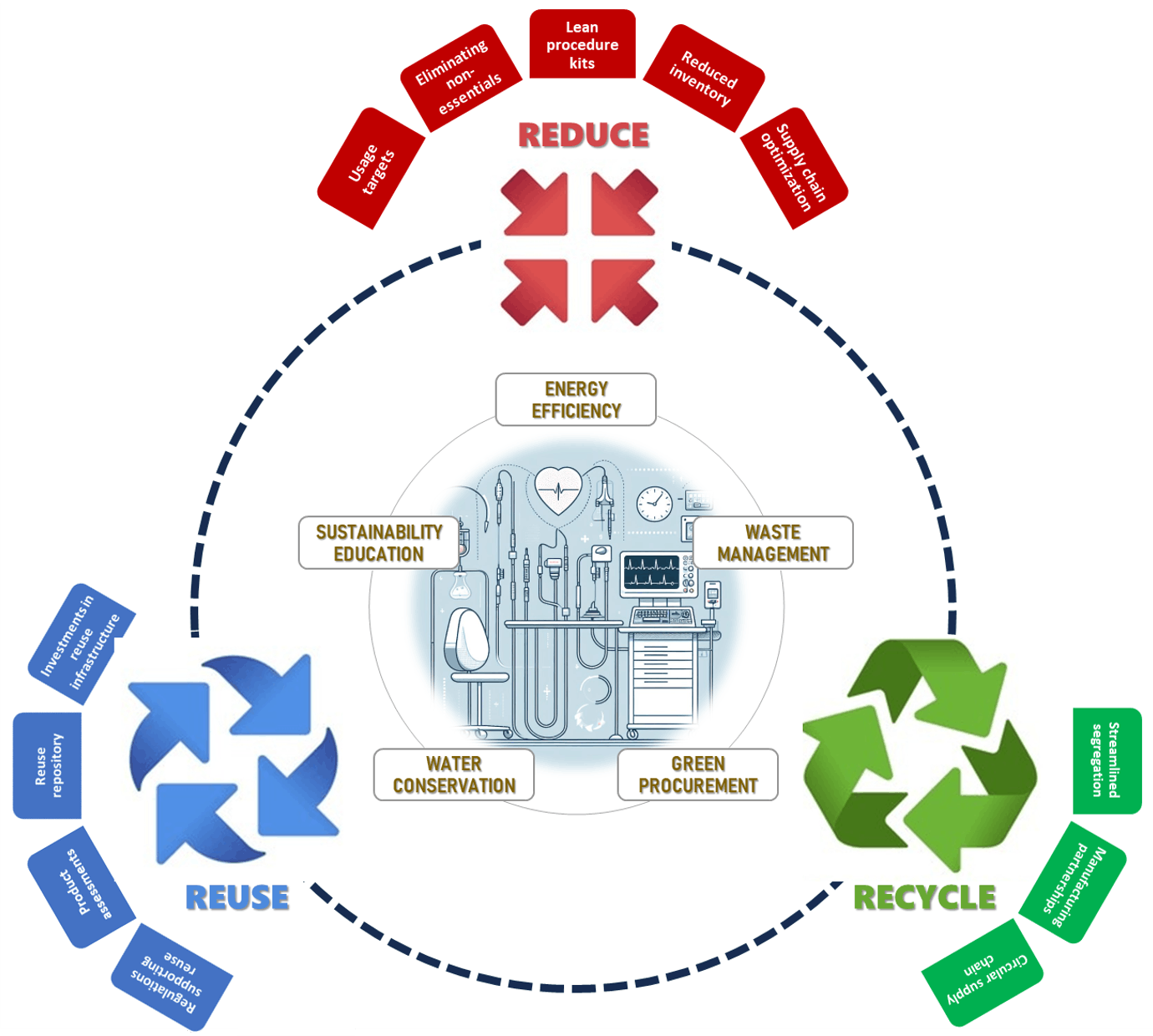
Figure 1. The “reduce, reuse, recycle” sustainability paradigm.
Reduction Strategies
Specific reduction solutions require setting lab-wide usage targets, eliminating nonessential materials, developing leaner procedure kits, and curbing excess inventory. Establishing quality metrics to quantify resource utilization and waste production is pivotal for identifying priority areas for reduction. Adding sustainability parameters to existing CCL dashboards transparently ties conservation to the lab’s performance scorecards monitored by administrators. Optimizing supply chain management by improving demand forecasting, inventory tracking, and just-in-time delivery models further minimize waste from overstocking and product expiration.
Transitioning away from single-use disposable items also offers enormous reduction potential.4 Identifying opportunities to replace common wasteful plastic devices with reusable variants allows significant recurring savings. Engaging group purchasing organizations and device manufacturers to expand greener product options and provide comparative carbon footprint data guides procurement reform.
Reuse Models
Safely reusing appropriately sterilized medical equipment after use can shift disposal of single-use items from landfills and allow them to be reused. Exploring reuse for select single-use device items requires updating regulatory standards and balancing infection control concerns with sustainability goals. Centralized institutional repositories on various products’ recyclability, reuse potential, and lifecycle assessments further assist reuse decisions.
Effective reuse program implementation demands upfront investments in collecting, sorting, cleaning, packaging, and sterilizing equipment. Alternatives, such as reusable pulse oximeter sensors, electrocardiography leads, blood pressure cuffs, and more sustainable transport stretcher models warrant consideration. Quantifying the return-on-investment business case helps secure administrator support. Gradual phase-in allows ironing out logistics before scaling. Close coordination with other departments, such as infection control, central sterilization, and surgical units, establishes optimal unified reuse protocols.
Recycling and Recovery
Finally, robust recycling and recovery systems prevent postprocedure materials from being discarded as medical waste. Streamlined segregation infrastructure and collection bins facilitate compliance. Partnerships with device manufacturers to operate buy-back programs and repurpose used devices close the loop on the circular supply chain.
NEXT STEPS AND FUTURE DIRECTIONS
Multistakeholder collaboration is key to achieving meaningful and lasting solutions. Top-down commitments from hospital leadership paired with grassroots advocacy by cardiology department green teams provide complementary pressure. Incorporating sustainability training into medical education and amending practice guidelines also foster large-scale change.
Beyond the core reduce, reuse, and recycle principles, additional dimensions of a comprehensive sustainability strategy include lowering energy consumption, responsible waste management, green procurement, water conservation, removing paper use from practice, and prioritizing green staff breakrooms. Implementation solutions, such as installing LED lighting; heating, ventilation, and air conditioning upgrades; and motion sensors, reduce energy use in the CCL. Technology-enabled green smart building design can integrate many of these concepts and applications and can significantly reduce emissions.5 Establishing medical waste segregation systems and maximizing recycling helps divert materials from landfills. Prioritizing environmentally friendly supplies and partnering with sustainable manufacturers transforms purchasing practices. Fixing water leaks promptly and utilizing water-sparing cleaning equipment curtails utilization. Staff breakrooms should also undergo sustainability checks to ensure that compostable materials replace single-use plastic items when possible. Finally, conducting staff training sessions on proper waste disposal techniques, energy conservation habits, and the overall environmental impact of medical procedures raises awareness and builds an institutional culture valuing sustainability. Collectively pursuing initiatives across these domains creates a paradigm shift cementing environmental stewardship as a core principle in delivering high-quality cardiovascular care.
A pivotal step toward health care sustainability is developing standardized methodologies to assess environmental footprints across facilities. Cath labs currently lack defined metrics quantifying resource utilization, waste generation, and carbon emissions over time. Expanding existing health care quality dashboards to incorporate sustainability parameters provides a model for universal benchmarking. The United Nation's Sustainable Development Solutions Network has established global health care decarbonization targets that can inform goal setting. Universal emissions reporting also allows for comparing labs, hospitals, and health systems to identify best practices. Transparent public disclosure builds accountability, enabling consumers and policymakers to make environmentally conscious choices. Just as open data has driven airlines toward carbon neutrality, sustainability scores may incentivize greener delivery models in health care. Ultimately, aligned quality and sustainability indicators reinforce their interdependence rather than trade-offs. Standardized sustainability assessments coupled with open environmental performance data can catalyze sweeping health care decarbonization.
The time for action on health care sustainability is unequivocally now. The scientific data on the health impacts of pollution and climate change grow increasingly alarming by the day. As hospitals and health systems face mounting climate adaptation pressures, the irony of the health care industry's disproportionate contributions to the problem becomes ever starker. CCLs represent both a microcosm of the sector's broader resource intensive, carbon-heavy footprint as well as a prime opportunity for targeted interventions. The solutions span the innovation spectrum from technological device upgrades to reuse models to physician behavior change. Materializing these solutions requires commitment from all stakeholders—physicians, administrators, manufacturers, group purchasers—to reimagine a circular health care economy centered on conservation. With determined leadership, strategic investment, and multisector collaboration, rapid progress is within reach. Health care has overcome monumental quality and safety challenges before when called upon. Climate change marks perhaps the definitive challenge of this generation—calling upon health care professionals to apply our evidence-based rigor, technical capacity, and care orientation toward bending our sector's emissions curve and protecting public health from existential environmental threats. The time for pilot studies and incremental measures has passed. Achieving net zero emissions necessitates immediate large-scale transformation of health care's climate footprint across every department. The future health of our patients and communities hangs in the balance.
1. Pichler PP, Jaccard IS, Weisz U, Weisz H. International comparison of health care carbon footprints. Environ Res Lett. 2019;14:064004. doi: 10.1088/1748-9326/ab19e1
2. Eckelman MJ, Huang K, Lagasse R, et al. Health care pollution and public health damage in the United States: an update. Health Aff (Millwood). 2020;39:2071-2079. doi: 10.1377/hlthaff.2020.01247
3. Writing Group Members, Mozaffarian D, Benjamin EJ, et al. Heart disease and stroke statistics-2016 update: a report from the American Heart Association. Circulation. 2016;133:e38-360. doi: 10.1161/CIR.0000000000000350
4. Thiel CL, Woods NC, Bilec MM. Strategies to reduce greenhouse gas emissions from laparoscopic surgery. Am J Public Health. 2018;108:S158–S164. doi: 10.2105/AJPH.2018.304397
5. Pramanik PKD, Mukherjee B, Pal S, et al. Green smart building: requisites, architecture, challenges, and use cases. In: Research anthology on environmental and societal well-being considerations in buildings and architecture. IGI Global; 2021:25-72.
Advertisement
Advertisement
Latest Digital Exclusives